
NBA’s top performers across 15 categories: Scoring, shooting, and additional metrics
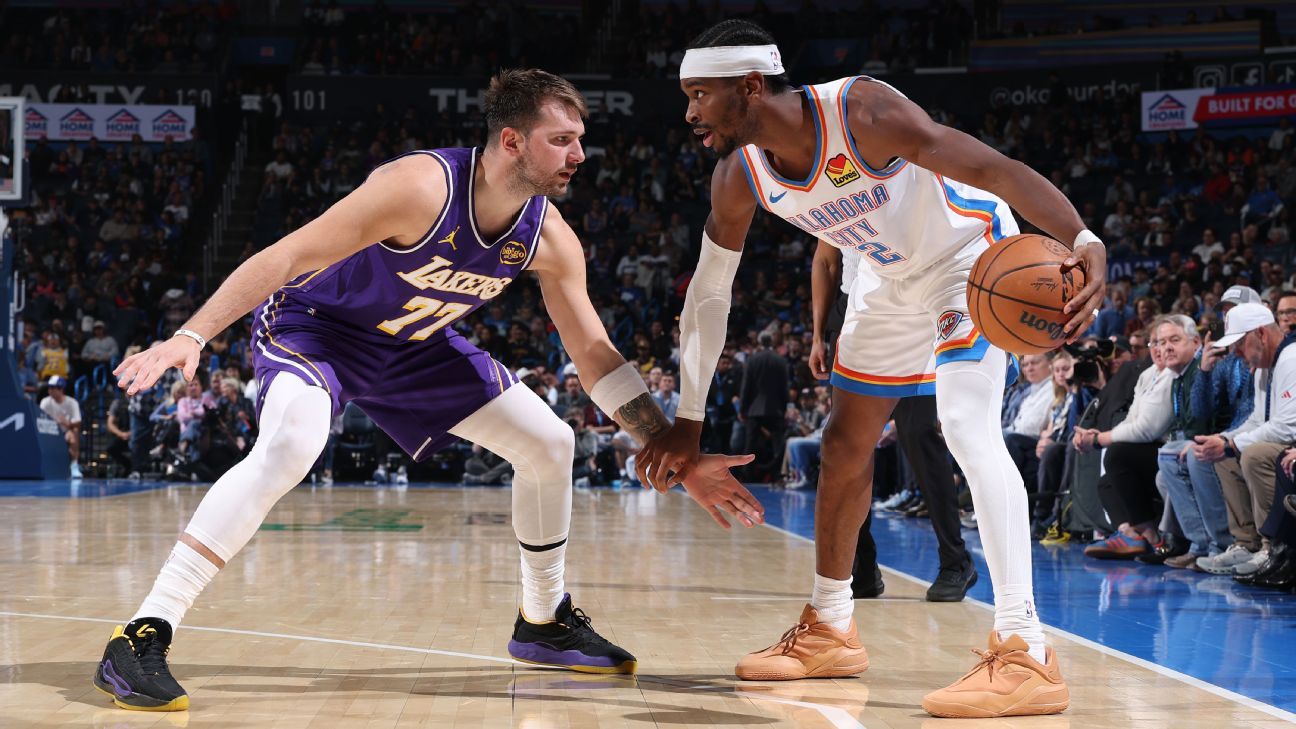
This NBA season has seen nearly 60,000 minutes of basketball action. That equates to over 40 consecutive days without rest. Such is the extreme life of an NBA coach—a demanding existence, as I can personally confirm. However, even coaches do not observe 60,000 minutes of games. I found it necessary to rely on statistics to grasp what I couldn’t visually perceive.
This leads to a well-known saying in analytics: People perceive games better than the statistics, but the statistics encompass all the games. The algorithms continuously analyze incoming data, not flawlessly but consistently and dependably.
In this article, the statistics will narrate stories about players’ strengths in various aspects of the game—midrange shooting, floaters, passing, clutch performance, and more. For this purpose, it is beneficial to utilize metrics that capture all games and provide context. While your memory may not recall the air-ball floater that Jalen Brunson attempted recently against Charlotte, the statistics do, and they compile those instances. Ultimately, these figures prove valuable at the season’s conclusion.
We will begin with some of the less frequently discussed facets of the game and progress to the top overall players at the end. It resembles the Oscars, starting with categories like Best Short Films and culminating with Best Picture.
The metric employed here is Net Points, which combines volume with efficiency to calculate teams’ scoring margins. There are automatic leaderboards available, allowing you to choose whether to view total net points, per game, or per 100 possessions. For this list, we opted for per game:

Ball hawk: Best at forcing turnovers
 Toumani Camara, Portland Trail Blazers
Net points: plus-3.2 per game, plus-255 total
Why he ranks No. 1: Camara distinguishes himself by generating numerous dead ball turnovers, particularly through drawing fouls. While I wouldn’t suggest watching the “highlights” of his foul-drawing, it could be insightful for players aiming to be a nuisance. Camara frequently draws charges and adeptly provokes players off the ball into pushing him before falling down for effect. It’s a form of ugly genius.
The runners-up: Tyrese Maxey (plus-3.1), Dyson Daniels (plus-3.0), Nickeil Alexander-Walker (plus-3.0)
Top rookie: VJ Edgecombe (plus-2.6)
Darth Fader: Best fadeaway
 Luka Doncic, Los Angeles Lakers
Net points: plus-0.3 per game, plus-20 total
Why he ranks No. 1: The league’s classification of shot types can be somewhat subjective, and “fadeaways” are often categorized with step-backs. Luka is certainly associated with step-backs, which he executes more than anyone else, according to Genius IQ. While he may not be the most efficient, his proficiency combined with volume positions him at the top.
The runners-up: Cade Cunningham (plus-0.2), Tobias Harris (plus-0.1), De’Aaron Fox (plus-0.1)
Top rookie: Edgecombe (plus-0.1)
Spark plug: Best off the bench
 Ajay Mitchell, Oklahoma City Thunder
Net points: plus-2.0 per game (off the bench only, not starting), plus-83 total (off the bench)
Why he ranks No. 1: The Thunder are known for developing talent, aren’t they? Mitchell was a second-round selection in the 2024 draft, and his rookie season went largely unnoticed while he played off the bench. This year, he made a significant impact as a starter when called upon.
Defensively, among the many strong defenders in OKC, he allowed the second-lowest shot quality to his matchup—only behind Alex Caruso. While Caruso has seven nicknames, according to Basketball-Reference, Mitchell has none and is now performing at a level that merits one.
The runners-up: Mitchell Robinson (plus-1.7), Isaiah Joe (plus-1.5), Keldon Johnson (plus-1.3)
Top rookie: Ryan Kalkbrenner (plus-1.1)
Facilitator: Best passer
 Cade Cunningham, Detroit Pistons
Net points: plus-1.3 per game, plus-81 total
Why he ranks No. 1: Cunningham’s two teammates with whom he has the most assists this season are Jalen Duren and Duncan Robinson, known as Mr. Inside and Mr. Outside. They are shooting 69% and 66% effectively off his passes, according to Genius IQ. His ability to create and recognize both options without making excessive errors is why he surpasses Denver’s Nikola Jokic this year.
The runners-up: Jokic (plus-1.3), Jalen Williams (plus-1.0), LaMelo Ball (plus-0.9)
Top rookie: Cooper Flagg (plus-0.7)
Rainmaker: Best 3-point shooter
 Jamal Murray, Denver Nuggets
Net points: plus-2.3 per game, plus-163 total
Why he ranks No. 1: Murray has been proficient at shooting 3-pointers for several years, but this season he has excelled. According to Genius IQ, he is shooting 46% on catch-and-shoot 3s, which is 2% higher than his previous best. He is also shooting 42% off the dribble, matching his career high, but with an additional 1.5 attempts per game. Defending players who can create 3s off the dribble is challenging, especially for players like Murray, who can also drive past defenders. This capability has contributed to his most productive offensive season to date.
The runners-up: Stephen Curry (+2.1), Kon Knueppel (plus-1.9), Anthony Edwards (plus-1.8)
Top rookie: Knueppel (plus-1.9)
Surgical: Best midrange
 Shai Gilgeous-Alexander, Oklahoma City Thunder
Net points: plus-1.0 per game, plus-67 total
Why he ranks No. 1: Few players can significantly contribute to a team with midrange shots, which is why this shot has gradually been phased out by most. Gilgeous-Alexander still generates +1.0 net points per game, surpassing all but 42 players shooting 3s. If we factor in the fouls he draws on midrange attempts (imagine every coach shouting, “Don’t foul a midrange shooter!”), his value on midrange shot attempts doubles to +2.1 per game. He has perfected a skill that few can even attempt.
The runners-up: Jokic (+0.5), T.J. McConnell (+0.4), Kevin Durant (+0.4)
Top rookie: Knueppel (+0.0)
Soft touch: Best floaters
 Donovan Mitchell, Cleveland Cavaliers
Net points: plus-0.6 per game, plus-38 total
Why he ranks No. 1: Floaters are essential for shorter guards, who may struggle at the rim due to the presence of taller defenders. However, shooting from around 10 feet away can mitigate some of the height disadvantages. Mitchell stands at 6-foot-2, yet his explosiveness at the rim can sometimes make him appear larger. When he cannot reach the rim, he possesses the floater skill as well.
The runners-up: Jokic (plus-0.5), Tyler Herro (plus-0.4), Doncic (plus-0.3)
Top rookie: Maxime Raynaud (plus-0.1)
Juggernaut: Best shooting at the rim
 Giannis Antetokounmpo, Milwaukee Bucks
Net points: plus-3.8 per game, plus-136 total
Why he ranks No. 1: No 65-game requirement for us! Even in just 36 games, Antetokounmpo will finish among the top three in total net points for the season on shots at the rim. His ability to reach and finish at the rim is exceptional. Only Duren comes close to him in terms of volume at the rim, but Giannis shoots 5% better there, and 62% of his attempts are self-created compared to 35% for Duren (Genius IQ).
The runners-up: Jokic (plus-2.3), Zion Williamson (plus-2.1), Gilgeous-Alexander (plus-2.0)
Top rookie: Flagg (plus-1.2)
Glass cleaner: Best rebounder
 Amen Thompson, Houston Rockets
Net points: plus-1.1 per game, plus-88 total
Why he ranks No. 1: Awards shows need a bit of controversy, don’t they? This is the category. Thompson ranks 22nd in rebounds per game, so how does he come in first for net points? Net points account for the rebounds players allow. Thompson is securing rebounds as a wing and preventing his opponent from obtaining them—on both ends of the court. This is largely due to an emphasis from the coaching staff, as the Rockets excel in this area of the game.
The runners-up: Tari Eason (plus-1.0), Donovan Clingan (plus-0.8), Moussa Diabate (plus-0.8)
Top rookie: Knueppel (plus-0.6). Yes, I was surprised too, but you can verify this; he secures a significant number of rebounds compared to what he allows individually and as a team (per GeniusIQ).
Cleanup crew: Best at converting putbacks
 Jalen Duren, Detroit Pistons
Net points: plus-1.0 per game, plus-66 total
Why he ranks No. 1: Putback specialists excel when their defender helps off them and onto the ball. They compel a defender to attempt to intimidate a shooter while also needing to return to box out. Duren is that strong, big player who can leap for a lob or patiently wait for a miss to rebound and put back. His interior off-ball gravity ranks around 65th, according to the NBA, but perhaps some of those defenders should remain closer to their assignments.
The runners-up: Jokic (plus-0.9), Day’Ron Sharpe (plus-0.7), Clingan (plus-0.7)
Top rookie: Kalkbrenner (plus-0.4)
Speed demon: Best transition offense
 Tyrese Maxey, Philadelphia 76ers
Net points: plus-1.5 per game, plus-101 total
Why he ranks No. 1: Coaches frequently express dissatisfaction with how transition is defined due to the lack of a clear rule. However, in my experience, coaches often concur on who the top players in transition are.
LeBron James has consistently been near the top of their lists, and he remains a legitimate candidate even at age 41. However, this accolade goes to Maxey over LeBron primarily because he has generated more opportunities himself. LeBron has the second-most transition shots that are assisted, and his shots are typically dunks, while Maxey has to create more opportunities on his own with a lower shot quality, yet he still converts.
The runners-up: Kawhi Leonard (plus-1.5), James (plus-1.4), Doncic (plus-1.3)
Top rookie: Flagg (plus-0.8)
Cold-blooded: Best offense at clutch time
 Shai Gilgeous-Alexander, Oklahoma City Thunder
Net points: plus-33 offensive net points in clutch situations
Why he ranks No. 1: Last year, Gilgeous-Alexander did not qualify as a clutch player because the Thunder often won games by such margins that he sat out many fourth quarters. This year, starting from the opening game against Houston, which went into double overtime, he has had to perform in close contests. He made shots, drew fouls, assisted, and minimized turnovers—he found numerous ways to drive the offense.
He also recorded only 7 of 27 games where his offensive performance was below average in clutch situations, a lower percentage than any of the players ranked behind him. The runners-up: Jamal Murray (plus-26), Nikola Jokic (plus-23), Anthony Edwards (plus-22)
Top rookie: Edgecombe (plus-9)
Stopper: Best on defense
 Victor Wembanyama, San Antonio Spurs
Net points: plus-2.6 per game, plus-164 total
Why he ranks No. 1: “What makes him rank No. 1?” Have you seen this player? No one intimidates offensive players more than Wembanyama. He makes NBA players experience what it’s like to be shorter than they are.
The net points metric operates on the principle of tracking what a big player does defensively. Wemby’s intimidation factor is not easily quantified by the metric since intimidation reflects what offensive players refrain from doing—such as avoiding layups when he is present in the paint. However, one aspect that can be incorporated into net points is how much he enhances his teammates’ defensive performance, and Wemby excels in this regard.
His teammates can apply more pressure on the ball with him backing them up. Including that would elevate his number by nearly another point… not that he requires it.
The runners-up: Isaiah H
