
How Cooper Flagg revitalized the Mavericks following the Davis-Doncic trade
Just moments into his debut with the Dallas Mavericks, Anthony Davis executed a powerful putback dunk and made an unscripted declaration to a fan base still grappling with the aftermath of an unprecedented trade in NBA history.
“I’m here!” Davis exclaimed as he confidently approached the sideline, energetically gesturing toward the American Airlines Center court. “I’m here!”
However, that excitement was short-lived. After a dominant first half, during which the primary narrative revolved around a significant pregame protest by frustrated fans outside the arena, Davis suffered an adductor strain midway through the third quarter. This injury sidelined the 10-time All-Star for six weeks and set the tone for his limited time with the Mavericks.
Davis, the centerpiece of the major trade that sent the beloved face of the franchise, Luka Doncic, to the Los Angeles Lakers just months after he led the Mavericks to the NBA Finals, ultimately spent little time on the court.
He participated in only 29 regular-season games for the Mavericks, along with a few appearances in the play-in tournament, due to a series of injuries. The anticipated Davis-Kyrie Irving partnership, which then-Dallas general manager Nico Harrison believed would serve as the foundation for a championship contender for “three to four years,” played together for less than three quarters, as Irving sustained a torn ACL in early March and currently has no definitive timeline for his return.
Davis’ tenure in Dallas concluded quietly at the trade deadline. He was traded to the Washington Wizards in what was essentially a significant salary dump, occurring a few months after fan discontent led to governor Patrick Dumont’s decision to dismiss Harrison.
Nothing executed by Dallas’ front office, led by co-interim general managers Michael Finley and Matt Riccardi, could mitigate the disastrous nature of the Doncic trade. The financially driven move they opted for was viewed solely through the lens of teenage talent Cooper Flagg.
A silver lining in the Mavericks’ struggles emerged through sheer fortune. A team constructed to win now performed poorly enough to secure a 1.8% chance of winning the draft lottery, resulting in Flagg joining Dallas and providing the franchise another opportunity to build around a generational talent. The onus is now on the organization to make prudent choices and not waste this chance.
“It’s crystal clear what our intent is: It’s the Cooper Flagg era, no ifs, ands, or buts,” a high-ranking team source informed ESPN.
THE MAVS’ RETURN from trading Davis amounted to nearly nine figures in financial relief and the roster-building flexibility that accompanies it, along with some average draft assets, including Oklahoma City’s first-round pick in the upcoming June draft and Golden State’s top-20-protected pick in 2030. The only player the Mavericks acquired in the trade who is not on an expiring contract is second-year guard AJ Johnson.
Dallas transitioned from having the NBA’s fourth-highest payroll to falling below the luxury tax threshold this season by including guards D’Angelo Russell, Jaden Hardy, and Dante Exum in the trade. The franchise’s estimated payroll decreased from $326 million, including luxury tax, to roughly half that amount. Additionally, it gained access to the $15.1 million nontaxpayer midlevel exception and a nearly $21 million trade exception, both of which could assist in building a future around Flagg.
“We had to take a hard look at ourselves and assess where we were and where we wanted to be,” Riccardi stated following the trade. “Sometimes the path is not straightforward. Occasionally, you have to take a more circuitous route to reach your destination.”
Upon being drafted, Flagg expected to start his career on a playoff team alongside Davis and eventually Irving, both former No. 1 overall picks and future Hall of Famers.
Instead, Davis participated in only 20 games this season. Irving remains a crucial part of the Mavericks’ plans, but it is uncertain if he will play at all this season. Many rival executives believe that the Mavericks, currently seventh in the lottery standings with a 19-34 record, would be wise to delay Irving’s return until training camp, even if he is cleared to play this season.
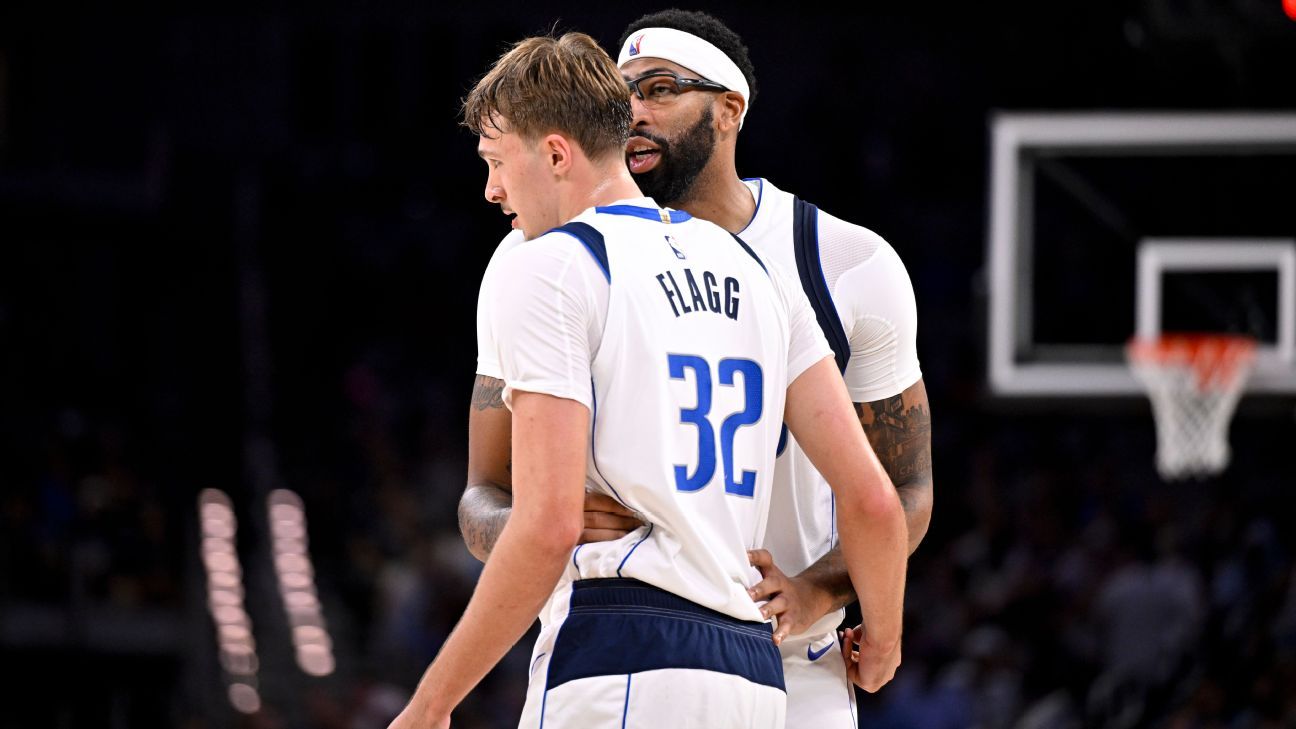
“It has been different from what I anticipated, but I’m just doing my best,” said Flagg, the front-runner for Rookie of the Year, averaging 20.3 points, 6.6 rebounds, and 4.2 steals per game. “The losing was tough at first… and it still is. I’m a competitor, but for me, it’s about learning from the losses and taking the positives away.”
The Mavericks began exploring trade options for Davis immediately after Harrison was dismissed in November, when Dallas held a 3-8 record and Davis was recovering from a calf strain. Davis’ maximum contract—which includes a $62.8 million player option for the 2027-28 season—and his desire for a lucrative extension, coupled with durability concerns, made it challenging to find value.
Rich Paul, CEO of Klutch Sports and Davis’ agent, was intent on positioning his client for another lucrative deal when he becomes eligible for an extension this summer. He attempted to assist the Mavericks in negotiating trades with the Atlanta Hawks and Toronto Raptors, but discussions with the Hawks stalled after Davis suffered ligament damage in his left hand during a January 8 loss to the Utah Jazz, an injury the Mavericks announced would heal by late February. The Mavericks would have had to accept significant salary beyond this season in any deal with the Raptors, complicating Toronto’s viability as a trade partner.
The Mavericks negotiated with the Wizards without informing Davis and Paul, who were unaware that Washington was a serious contender until the trade was finalized.
Sources indicated that there was some apprehension from Dumont regarding how Mavericks fans would respond to a Davis trade that did not include premium draft picks or players aligned with the franchise’s long-term vision as part of the return.
However, Flagg’s presence and performance—he is on track to join Doncic, Michael Jordan, and Larry Bird as the only rookies to average at least 20 points, 6 rebounds, and 4 assists per game since the 1976 ABA-NBA merger—offer hope and some patience. The fan base, for the most part, appears willing to support building around Flagg. It was beneficial that Flagg had just completed the highest-scoring three-game stretch by a teenager in NBA history when the Davis trade occurred.
“The runway is long,” remarked Mavs coach Jason Kidd, whose input on personnel decisions is respected by Dumont. “He’s 19, developing his understanding of the NBA, the schedule, and the physicality. His game is very impressive, and now it’s our responsibility to find pieces that complement him.”
IT REMAINS TO be seen who will be responsible for identifying those players to fit around Flagg.
Dumont is currently evaluating several candidates in a broad search. This includes internal candidates and multiple executives with proven success in managing a team’s basketball operations department, including some who are presently in those roles for other franchises, sources reported.
There is an expectation that Dumont will select Harrison’s permanent successor after the conclusion of Dallas’ season. The pre-draft process will be crucial for the 19-34 Mavericks, who seem likely to land in the middle of the lottery standings and will also possess Oklahoma City’s pick, likely the last selection in Round 1.
“Looking at our roster now, we have an incredible player in Cooper Flagg,” Finley stated last week. “It’s our responsibility to surround him with the right pieces. When you have the draft capital, it enables you to go out and assemble the appropriate components to make our team—a point I keep emphasizing—a championship contender.”
However, Dallas cannot pursue a traditional rebuild during Flagg’s early years; this is the final season the team will have control of its own first-round pick while Flagg is on his rookie contract.
The picks were part of transactions the Mavericks made to build around Doncic: Dallas’ 2027 pick is protected if it falls within the top two but is otherwise owed to the Charlotte Hornets as part of the P.J. Washington trade. Oklahoma City holds swap rights with the Mavericks in 2028 from serving as a facilitator in the Daniel Gafford deal in 2024. The 2029 pick the Mavericks sent to the Brooklyn Nets in the Irving trade is now owned by the Houston Rockets. The San Antonio Spurs have 2030 swap rights with Dallas, acquired for taking on Reggie Bullock Jr.’s expiring contract in a three-way sign-and-trade deal for Grant Williams, whose tenure in Dallas was even shorter than Davis’.
 play2:14Stephen A. weighs in on Jason Kidd’s comments to the media
Stephen A. Smith reacts to Jason Kidd’s comments to the media regarding playing Cooper Flagg at point guard.
Coincidentally, on the night following the Davis trade, the Mavericks observed a franchise that has successfully built around a highly anticipated No. 1 overall pick.
Thanks to years of planning—including a deliberate roster teardown to initiate the rebuilding process—the Spurs had the advantage of possessing a surplus of first-round picks before Victor Wembanyama’s arrival, providing them with options far beyond what Dallas currently has and significantly enhancing their flexibility with trade deadline strategies.
Nevertheless, the Mavericks can replicate the two most significant transactions the Spurs made in transitioning from a 22-win team in Wembanyama’s rookie year to second place in the West at this stage of his third season.
Irving’s eventual return could serve as the Mavericks’ equivalent to the Spurs’ acquisition of former All-Star point guard De’Aaron Fox.
The Spurs’ difficulties a couple of years ago positioned them to draft Stephon Castle with the No. 4 pick, giving San Antonio a co-star on the same timeline as Wembanyama. It is crucial for the Mavericks to identify a young talent worthy of pairing with Flagg long-term with their forthcoming lottery pick in a draft that is widely regarded within the league as rich in talent at the top.
The most challenging aspect of constructing a contender is securing a legitimate cornerstone. The Mavericks were fortunate to find that—but now, patience will be essential.
“You can’t make everything happen just like this,” Wembanyama remarked, snapping his fingers and drawing from experience. “You have to trust your organization.”
