
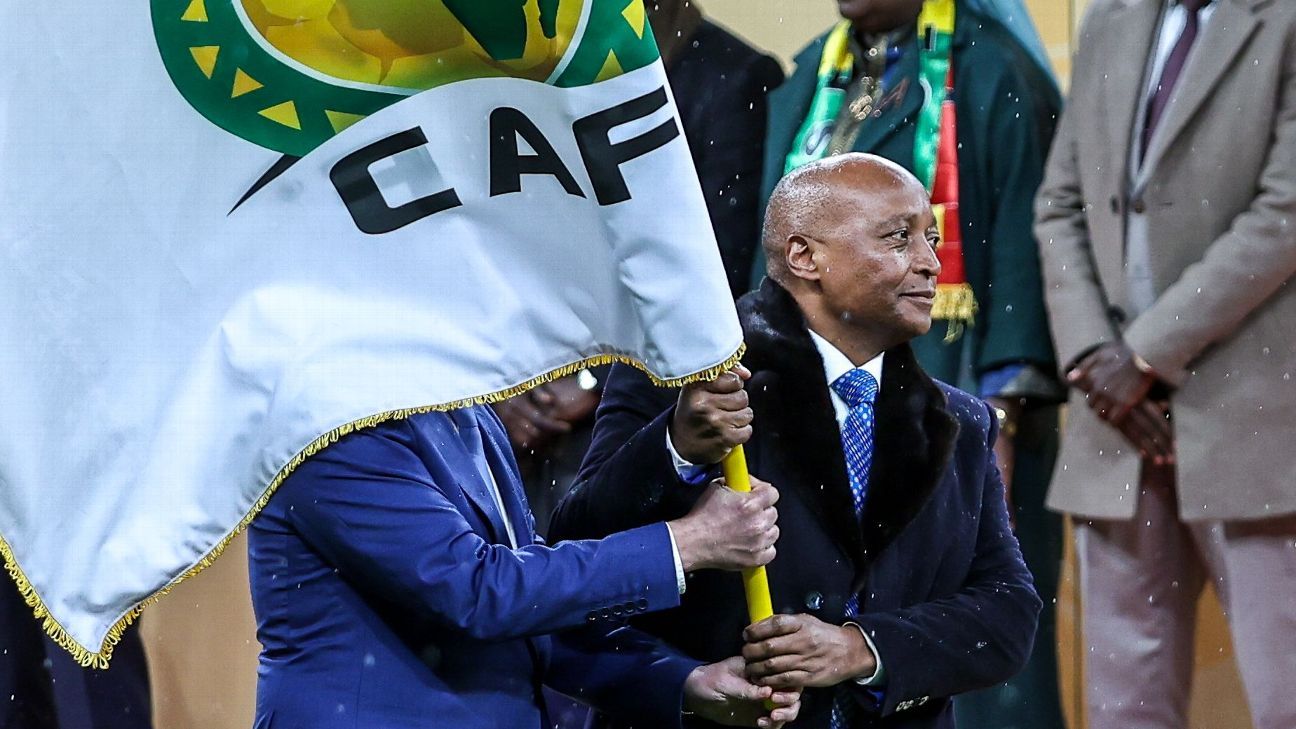
On Thursday, the Confederation of African Football confirmed the speculation that the 2026 Women’s Africa Cup of Nations would not occur in Morocco as initially scheduled on March 17.
Instead, it has been rescheduled to later in the year, taking place after the men’s FIFA World Cup in late July.
The announcement addressed the most urgent question regarding the tournament: Will it be held in March? The answer is no.
This is particularly significant for the players and coaches currently in pre-tournament training camps, as well as for supporters, media, officials, sponsors, broadcasters, and other stakeholders—though many questions remain unanswered.
Not for the first time, as a CAF announcement extinguished one issue, it sparked numerous others.
WAFCON 2026: What has been confirmed?
Rather than occurring between March 17 and April 3, the tournament has now been postponed by over four months, and will be held from July 25 to August 16, akin to a train diverted to a more distant track while more significant traffic moves ahead.
This is a year and a month after last year’s tournament, which took place during the northern summer, and begins only six days after the conclusion of the men’s World Cup.
This development alleviates the concerns of players and coaches who had been training and preparing for the tournament just under two weeks before it was set to start, and also—at least for now—relieves worries that the competition might be entirely canceled.
At least a date has been established, allowing teams to prepare, while the rescheduling also mitigates fears that qualification for next year’s World Cup in Brazil will be jeopardized, as the tournament serves as CAF’s pathway to that event for the four semifinalists.
In this era of African football, where certainty is often elusive, these small steps are significant.
What remains uncertain?
CAF’s brief statement—concise and cautious—has outlined the revised schedule for the event, but much remains unclear.
While the confederation announced a new date, they did not confirm or deny whether Morocco would still host the event, raising serious questions about where the 16 teams will convene in four and a half months.
On one hand, Morocco remains the frontrunner. The kingdom possesses excellent facilities, robust infrastructure, growing local enthusiasm, and the administrative capacity, making it one less late adjustment on CAF’s agenda.
If the intention was to relocate the tournament from Morocco, then South Africa—still evidently on standby—could have been granted hosting rights in early February when Peace Mabe, Member of the South African Assembly, declared that her country was prepared to take charge of the competition.
CAF did not take action then—by substituting Morocco with South Africa and maintaining the original March-April schedule—and the reasons for this remain unclear.
Thus, Morocco is favored, but South Africa cannot be dismissed, especially following Minister of Sports, Arts & Culture Gayton McKenzie’s assertive remarks on Wednesday.
“If Morocco is prepared to host the WAFCON because they had a successful AFCON, they should proceed,” McKenzie stated at a press conference, “but if they are not ready, we want to emphasize that we are not a country lacking stadiums or infrastructure. We will not be held hostage by nations that have less than we do.
“I’m not afraid to say it,” he added. “If Morocco is unable to host it, South Africa is ready, but [Dr. Patrice Motsepe] did not say this, so do not attribute it to him.”
It remains to be clarified why and how this situation arose.
CAF’s statement mentioned “unforeseen circumstances” but provided no further details, refraining from publicly assigning blame, while Morocco has cited a congested domestic and international schedule.
On the surface, this explanation seems reasonable. Their stadiums are under heavy demand due to the rearrangement of the 2025 calendar, squeezed between the Club World Cup, Arab Cup, Africa Cup of Nations, and a series of international friendlies scheduled across the kingdom in March.
The outcome, according to officials, is a logistical bottleneck; too many teams, too few days, and too many pitches already booked.
Does this narrative withstand scrutiny?
As CAF noted in Thursday’s statement, the tournament was awarded to Morocco in October 2024, providing ample time to raise scheduling concerns and objections before the countdown reached these final weeks.
Why were these logistical challenges not highlighted earlier, when the Botola fixture backlog has been apparent for months?
Why has Morocco consented to allow nearly a dozen men’s national teams to train and/or play on their territory later this month, a generous act of hospitality that has ultimately (perhaps inadvertently) impacted the WAFCON?
Even if Morocco only indicated their difficulties as late as February, was there not still enough time to shift the tournament to South Africa and retain the original dates?
The calculations seem incomplete, and here, suspicion may arise in the void left by silence. Some might be forgiven for quietly questioning whether the tensions from the men’s AFCON, and the penalties imposed on Senegal—perhaps not as severe as Morocco might have anticipated for the Teranga Lions’ incident—have affected their relationship with CAF.
If any such speculation were to be unfounded, CAF has done little to dispel it, although it does not alter the perception that the Atlas Lionesses may be seen as collateral damage in a convoluted administrative situation.
What are the repercussions?
Across Africa and beyond, national teams had already gathered for their pre-tournament preparations. Training camps were filled with enthusiasm, even for Ghana, who find themselves training amidst missile strikes in the United Arab Emirates.
Now, those camps must be disbanded; players will return to their clubs, and coaches must shelve their tactical plans for another time.
Federations may be assessing the costs of organizing camps for a March tournament that will no longer occur.
Even before Thursday’s announcement, frustration had begun to mount within the African football community, with ire directed at delayed communication, prolonged silence, and broken promises.
“If someone [from CAF] is listening, can they just provide us with a ‘yes’ or a ‘no’ [about whether the competition will take place in March],” an exasperated South Africa head coach Desiree Ellis appealed earlier this week.
“Some players haven’t even returned to their countries due to the uncertainty, and it’s not really fair.
“I’ll pose one question,” she added. “Would this happen in the men’s game?”
Since Thursday’s announcement, the criticism has intensified.
“It’s actually embarrassing at this point,” Nigeria and Roma forward Rinsola Babajide expressed on her X handle following the statement, while her sentiment was echoed by Super Falcons captain Rasheedat Ajibade.
“African women[‘s] football deserves better,” the Paris Saint-Germain forward posted on her social media later in the day.
African women football deserves better. ?#CAF #WAFCON2026
— Rasheedat Ajibade OON, OLY (@Rasheedat08) March 5, 2026
More reactions are expected, and while all involved in and supporting the women’s game will hope that there are no further changes to the schedule, it is evident that damage has been inflicted.
How can stakeholders trust CAF and their repeated commitments to the women’s game after this incident? Motsepe had identified the women’s game as a key focus of his administration’s efforts to reshape the continent’s favorite sport, but actions have spoken far louder than words in this case.
Communication has faltered, leadership has felt remote, and Motsepe’s repeated assertion that African football must be “as good as the best in the world” becomes increasingly difficult to reconcile with the reality.
Ellis questioned whether such chaos would occur in the men’s AFCON, and another relevant comparison could be made with the Women’s Euros. Prior to the last WAFCON, there were tentative discussions about whether the tournament was beginning to rival the Euros… those comparisons now seem painfully optimistic.
Beyond the immediate disruption lies a broader concern; how much damage has this situation caused to the WAFCON?
With African football still recovering from the violent incidents that overshadowed January’s AFCON final, another controversy threatens to undermine confidence among sponsors, broadcasters, and investors.
If the continent’s governing body cannot prioritize the women’s game sufficiently to avoid leaving teams, players, and coaches feeling disappointed and humiliated, why should external stakeholders care? Why should they invest?
The new schedule presents additional challenges; hosting the WAFCON immediately after the World Cup and alongside the Commonwealth Games risks relegating the tournament to the periphery of the global sports calendar, further diminishing its commercial appeal.
It is not doomed; the talent and narratives are present for the tournament to build on the successes of recent editions, but increasingly, it seems that any success would arise not from the clarity and organization of the game’s administrators, but in spite of them.
