
Formula 1 chief responds to Verstappen and Hamilton regarding rule objections
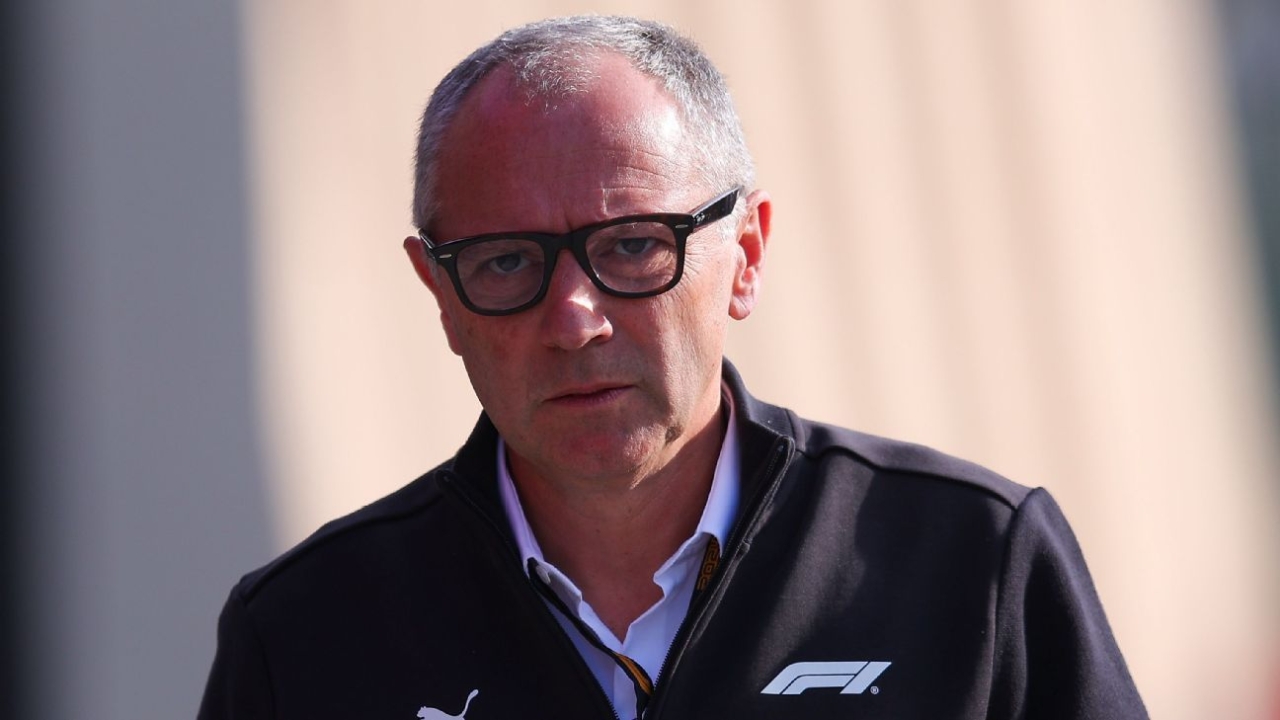
Formula 1 CEO Stefano Domenicali has responded to drivers who have criticized the sport’s new regulations, stating it is “incorrect” for figures like Max Verstappen and Lewis Hamilton to express negative views about F1.
This weekend’s Australian Grand Prix will signify the beginning of a new chapter in F1, which has been described as the most significant regulatory change in the sport’s 76-year history.
Several aspects of the regulations have been modified to support new hybrid engines that generate 50% of their power from sustainable fuels and 50% from an electric motor.
During preseason testing in Bahrain, several drivers voiced concerns regarding the increased focus on electrical power and the necessity to manage energy throughout the lap instead of pushing the car to its limits.
Verstappen referred to the new formula as “anti-racing,” while Hamilton remarked that “none of the fans are going to understand it.”
In an interview with Sky Sports prior to the new season in Australia, Domenicali addressed the drivers’ reactions to F1’s updated rules.
“I believe it’s generally inappropriate to speak negatively about an incredible world that allows all of us to progress,” he stated. “And that’s the only thing I would say is not right.
“However, I always listen [with] caution. There is an evolution in driving, which means that the best driver will be able to be the fastest.”
During Thursday’s media day in Melbourne, Verstappen reiterated his stance, asserting that the limitations of the new power units were evident to F1 insiders long before the cars began testing on track.
– 2026 F1 rules: What’s new on the cars; how will changes affect the racing?
– Bold predictions for F1 in 2026: Ferrari will end its title drought
– Bahrain, Saudi Arabia races at-risk due to U.S.-Israel attacks on Iran
The concern is that certain circuit layouts, such as Melbourne’s Albert Park, offer limited opportunities to recharge the battery during heavy braking, forcing drivers to harvest energy in areas of the track—like high-speed corners—where they previously drove at full throttle.
By sacrificing lap time to strategically recharge the battery in specific sections of the track, the recovered energy can then be utilized to reduce the overall lap time through extended periods of energy deployment during acceleration.
Despite the focus on energy management under the new formula, Domenicali expressed that it is beneficial for F1 that fans are concentrating on the track.
“I feel positive,” he added. “I feel positive because we have the responsibility of fostering optimism in this moment of what we are experiencing. I feel positive because there is significant attention on what is occurring on the track.
“I feel positive because we are in Melbourne with an incredible crowd, passionate people. We have observed another step towards being very appealing to the younger generation, and that is thanks to our collaborative efforts.
“That is why I believe that the strategy we have adopted is the correct one. To continue to push forward, knowing that we can remain focused on delivering more for our fans.”
The increase in electrical power was agreed upon by F1 stakeholders in 2022 at a time when governments worldwide were legislating against the long-term viability of petrol-powered vehicles, compelling manufacturers to shift their focus towards the production of electric cars.
Eager to attract Audi to the sport as a factory team, F1 included the German manufacturer in discussions with existing power unit manufacturers regarding the direction of the new regulations, which ultimately resulted in the three-fold increase in electric power and a transition to advanced sustainable fuels.
The regulatory change also persuaded Honda to reverse its decision to exit F1 at the end of 2025 when its agreement with Red Bull concludes.
“This year we are introducing a new power unit for the reason that was clear a couple of years ago: We aimed to attract more manufacturers,” Domenicali clarified.
“We recognized that sustainable fuel was an element that would appeal to manufacturers, understanding that in terms of mobility, manufacturers should concentrate not only on electrification. And that is why this project commenced.”
In Friday’s second practice session for the Australian Grand Prix, the fastest lap time recorded by McLaren’s Oscar Piastri was 3.3 seconds slower than the fastest time from the same session last year.
Domenicali is confident that this gap will decrease as the cars evolve and stated he remains open to any adjustments to the regulations that could enhance the sport overall.
“I believe that the potential to develop this car, both from an engineering perspective and also from the driver’s standpoint, will allow us to see a car that will be faster very soon,” he remarked.
“The engineering community behind F1 is remarkable. The approach we have already discussed in the last F1 Commission with the FIA, with the teams, has been very transparent. If we identify something that needs to be addressed, we will address it appropriately.
“But I think that we are now on a path where everyone recognizes that if there is something clear that needs to be done to enhance [F1], why not? Let’s proceed.”
Source: espn.com
