
Innovative soccer jersey features: Glow-in-the-dark elements and scratch-and-sniff technology!
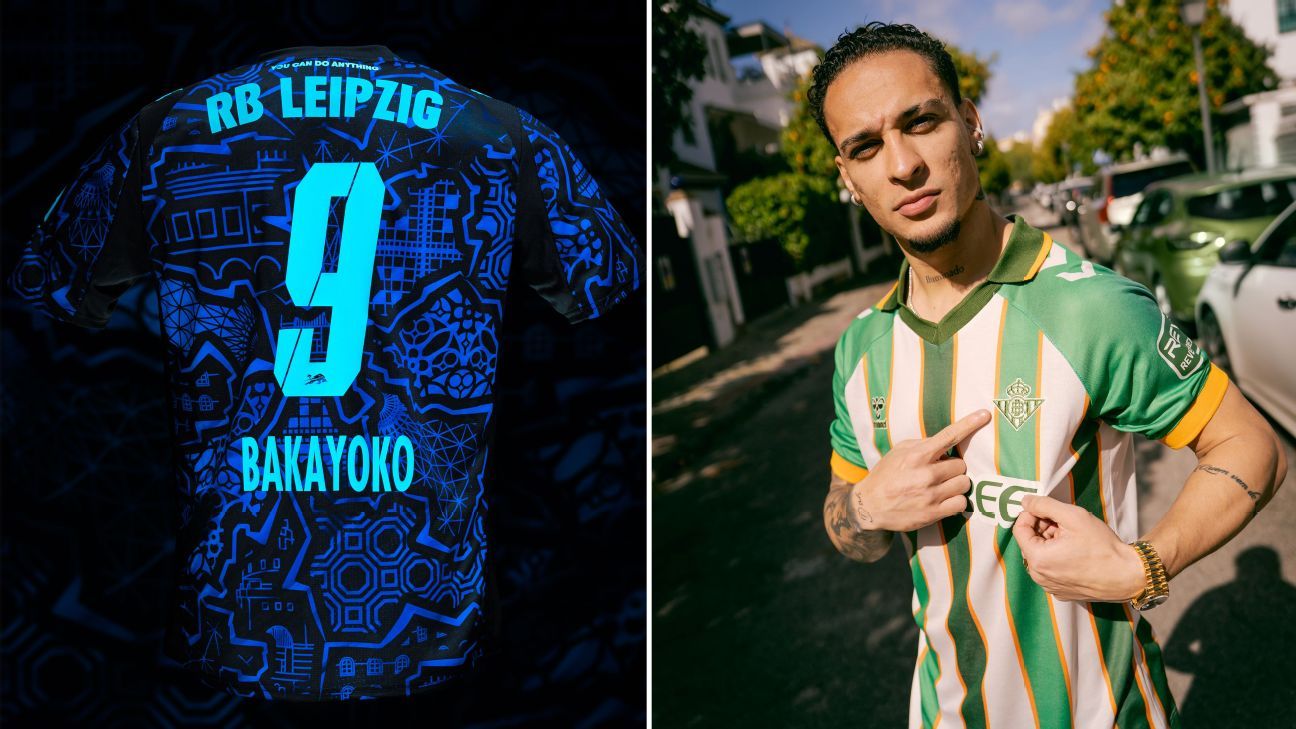
Just when it seemed we had witnessed everything in soccer kit designs, two clubs have taken innovation to new heights by introducing new uniforms featuring some of the most unusual concepts to date.
This time, Bundesliga team RB Leipzig and LaLiga club Real Betis have discovered fresh methods to utilize their jerseys to captivate fans and encourage purchases, both of which will be showcased in action for the first time this weekend.
Leipzig has launched a shirt that literally outshines its rivals, while Betis has introduced a pair of kits that emit the fragrance of fresh fruit!
– Leipzig vs. Dortmund: Stream LIVE 2/21, 12:30 p.m. ET on ESPN+ (U.S.)
– Betis vs. Rayo: Stream LIVE 2/21, 10:15 a.m. ET on ESPN+ (U.S.)
– Man City, Spurs, PSG celebrate Lunar New Year with special kits
You might notice something a bit unusual when RB Leipzig steps onto the field this weekend in their new fourth alternate kit. In fact, it would be difficult not to observe the jersey’s distinctive design feature, as the high-tech garment actually glows in the dark.
Resembling something from the “TRON” universe, the shirt features a black base with a blue graphic overlay composed of abstract patterns. The logos and sponsorships are applied using a UV-sensitive material that is designed to emit a turquoise glow in low-light conditions.
This is not the first instance of glow-in-the-dark elements being integrated into football kit design; Napoli’s recent Halloween jersey showcased a similar luminescent effect with skeletal hands surrounding the club crest on that special edition shirt.
However, Leipzig and manufacturer Puma have elevated this concept further, with the entire kit adorned in glow-in-the-dark details. This includes the back, where the names and squad numbers of players such as Johan Bakayoko, Lara Marti, and Rômulo (who were chosen to model the jersey for its launch) are illuminated.
View this post on Instagram
Leipzig will debut the kit when they compete against Borussia Dortmund under the stadium lights on Saturday, although Die Roten Bullen will have to wear a modified, non-glowing version due to the stringent Bundesliga regulations governing kit design.
As specified in the German league’s kit regulations (specifically rule 8.4), playing uniforms cannot be made from reflective materials or any material that alters color or appearance due to external factors (i.e., light, water, temperature, etc.). This rule also applies to the logos, names, numbers, and badges attached to the kits.
Thus, the Leipzig players may don a simplified, non-reactive version of their new fourth kit when they face Dortmund. However, the replica shirts for fans will glow, allowing them to stand out in the crowd and on their local five-a-side pitch.
Meanwhile, Real Betis and manufacturer Hummel have made a significant effort to emphasize the club’s ongoing dedication to sustainability.
Their new special-edition fourth-alternate outfield kit and fifth-alternate goalkeeper jerseys are literally made from oranges—the citrus fruit for which their home city of Seville is renowned.
In an effort to minimize plastic usage in the production process, the shirts and shorts are crafted from low-impact materials, including approximately 16% organic fibers derived from orange peel.
View this post on Instagram
The theme is further enhanced with a texture woven into the shirt that aims to replicate the surface of the citrus fruit itself.
There are also accents of orange used to highlight Betis’ iconic green stripes on the outfield jersey and the blue and black bands on the goalkeeper shirt.
To top it off, the names and numbers on the kits are applied using a chemical-free printing method and also feature a unique scratch-and-sniff element that releases the scent of orange blossom flowers.
Betis will wear the kit for the first time in Saturday’s home match against Rayo Vallecano. Whether the shirts will retain their pleasant aroma by the end of a 90-minute match in the heat of southern Spain remains to be seen (or, rather, sniffed).
