
2026 MLS season outlook: Will Messi’s Miami secure consecutive titles?
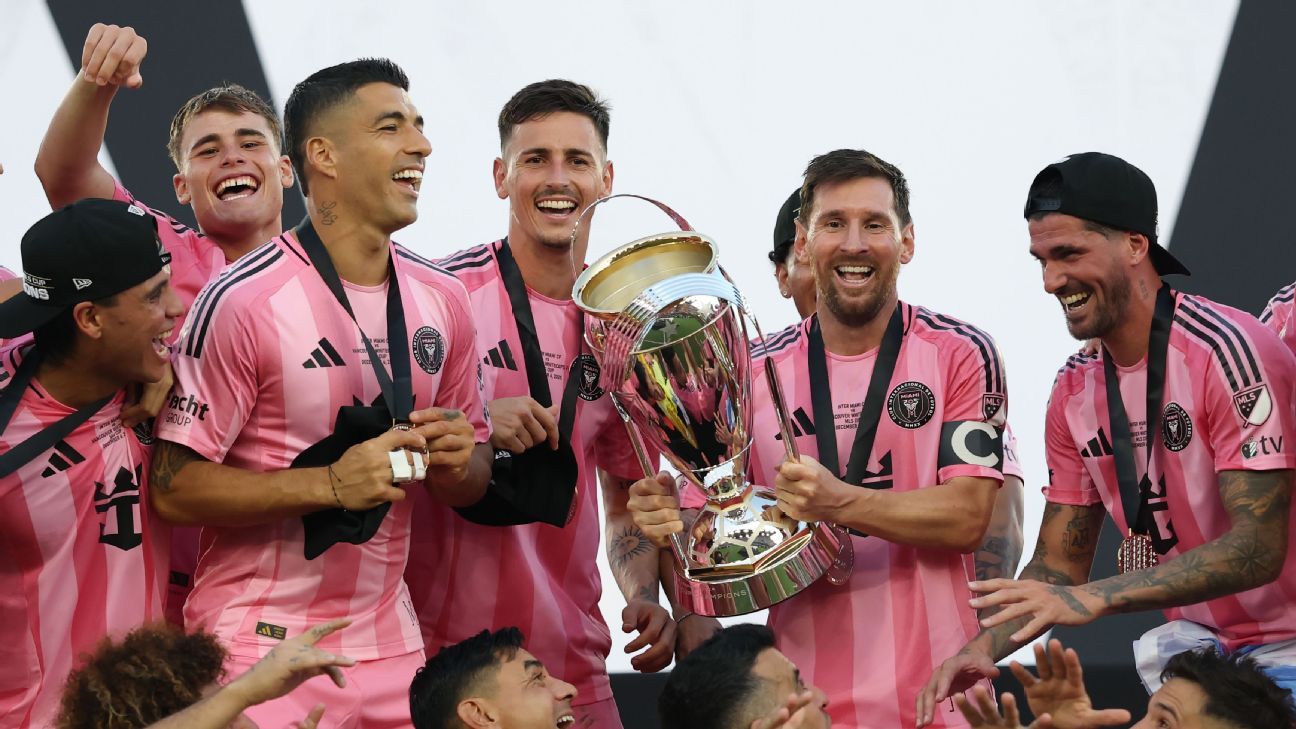
MLS returns this weekend, commencing Saturday with a full schedule highlighted by the matchup between LAFC and Inter Miami at the Coliseum in Los Angeles.
These two clubs increasingly embody the essence of MLS. Both are spearheaded by international superstars utilizing league play in the U.S. as preparation for this summer’s World Cup. Lionel Messi guided his Miami squad to the league championship last year, while Son Heung-Min joined in the summer and, following an impressive half-season, is now aiming to dethrone Messi and Miami.
Alongside this duo are numerous other elite players, both from North America and overseas, who may not possess the same level of fame as the Argentine and South Korean stars but have played for top clubs globally—or will soon—after leveraging MLS as a stepping stone to a larger league.
– No more Rivalry Week? Here’s why MLS changed its 2026 calendar
– MLS jersey Power Rankings: Who’s the best dressed in 2026?
– Minnesota’s James deal is a low-risk marriage of convenience
Of course, several teams not involved in Saturday’s prominent match will seek to demonstrate that their rosters are equally as strong, if not stronger, than those title contenders.
Will Messi and Miami withstand these challenges to repeat? Can Son lead his team to a trophy? Or will another contender rise during the demanding season? Here’s what you may have missed over the winter, along with the narratives that will shape the 2026 season.
Can anyone stop Miami and Messi?
As Messi lifted the MLS Cup, marking the first domestic title in Miami’s brief history, he also said goodbye to two long-time companions. Sergio Busquets and Jordi Alba, former Barcelona teammates who joined him in MLS, had announced it would be their final season. They exited on a high note, and Miami’s management already had a strategy to replace them and aim for greater achievements.
Sergio Reguilón, with experience at Tottenham Hotspur and Real Madrid, has come on board as the Herons’ new left back. Concurrently, David Ayala was recruited from the Portland Timbers to compete for the midfield position now available alongside world champion Rodrigo De Paul.
In addition to addressing those gaps in the starting lineup, the title-holders aimed to strengthen their defense, which had been notably inconsistent. Miami acquired Dayne St. Clair, the MLS Goalkeeper of the Year, from Minnesota United, and he is expected to start immediately. Micael, a former center back for Houston Dynamo who spent the last season with Palmeiras in Brazil, has returned to MLS to enhance Miami’s defensive lineup.
With a designated player slot still available, Miami made another significant acquisition, bringing in Germán Berterame from Monterrey. The forward, who consistently scored in Liga MX with Rayados, will enable manager Javier Mascherano to utilize Luis Suárez as a super-sub and allow Messi to return to his usual No. 10 position instead of functioning as a false 9.
This impressive overhaul positions Miami with the strongest roster—at least on paper—heading into an MLS season in recent history. The club is motivated to pursue additional trophies, especially with the opening of the new Miami Freedom Park near the Miami Airport scheduled for early April.
However, there is a reason these matches are played. Not only will Miami face the best efforts from opponents as it defends its title, but it is also aiming to win the Concacaf Champions Cup for the first time in club history and secure a spot in the next Club World Cup in 2029 after hosting the event in 2025.
Their opponent on Saturday, Son’s LAFC, is a strong contender to unseat Miami. In addition to having a rested and prepared Son, the Black and Gold successfully resisted offers from Brazilian clubs and, reportedly, from Miami itself, for Gabon international Denis Bouanga. The dynamic forward has netted 20 goals or more in each of the last three seasons for LAFC and has formed a solid partnership with Son despite initial concerns about compatibility.
Under new manager Marc dos Santos, a Montreal native, LAFC has also become a hub for Canadian internationals. The most notable addition is midfielder Stephen Eustáquio, who was signed on a short loan through the World Cup, with an option for a full transfer. If he can replicate his national team performances, LAFC will likely seek to secure the versatile 29-year-old on a longer contract.
Center back Aaron Long’s much-anticipated return from an Achilles injury could occur in the first half of the year, as he has been registered on the club’s roster for the CCC.
The challenge lies in how Dos Santos will manage this star-studded roster. While he possesses MLS managerial experience, he has been serving as an assistant under Steve Cherundolo. The former Bundesliga player chose to leave the team for personal reasons and return to Germany with his family. Rather than hiring an unknown, LAFC opted for Dos Santos, but expectations are high, and the pressure will mount if results are not favorable from the outset.
Big stars continue to shine even outside South Florida and Hollywood
The Vancouver Whitecaps will also benefit from a full season with their summer signing, as Thomas Müller prepares for an entire year in MLS. The Caps reached the finals of both the CCC and MLS last season, only to fall short in both matches. Most key players have returned, although attacking talents Ali Ahmed (to English club Norwich City) and Jayden Nelson (to Austin FC) have departed. They will aim to overcome the final hurdle after a strong 2025.
Familiar names continue to view MLS as an appealing destination. Most notably, James Rodríguez has joined a Minnesota United team in transition following manager Eric Ramsay’s departure to West Bromwich Albion in the EFL Championship. The Colombian star will hope that the set-piece-oriented team is the ideal environment for him to prepare for the World Cup.
Timo Werner may not re-enter the Germany picture, but he will at least be playing for the San Jose Earthquakes after a tumultuous final period with RB Leipzig and a loan to Tottenham Hotspur. The Quakes lost winger Cristian Espinoza to Nashville in free agency and will need Werner to help shoulder some of the attacking duties.
A familiar face returns to MLS as Austin FC invested to bring Facundo Torres back to the league. The Uruguayan winger had transitioned from Orlando City to Palmeiras but signed a long-term deal this winter as a designated player with the Verde and Black.
Even teams with limited recent success are looking to strengthen with international players. D.C. United signed Romanian forward Louis Munteanu, who will aim to invigorate D.C.’s attack and hopefully assist Romania in advancing through the World Cup playoff and into the tournament this summer.
Intra-league market also continues to grow
It’s not just players arriving from abroad who are enhancing MLS’s competitiveness. The relaxation of rules regarding cash transactions for signing players from other clubs has led to a significant increase in intra-league transfers compared to previous years in MLS’ three-decade history. While most of the names may not be as renowned as James or Werner, they are players that their new clubs hope will deliver consistent performances.
D.C. United acquired Tai Baribo from the Philadelphia Union after he netted 18 goals last season, which is only a dozen fewer than D.C. United scored as a team last season.
The LA Galaxy sought to bolster their attack following another injury to Riqui Puig and brought in João Klauss from St. Louis City. After moving midfielder Ayala to Miami for cash, the Portland Timbers quickly acquired Cole Bassett from the Colorado Rapids to fill that gap. A pair of U.S. youth internationals also switched teams, with Brooklyn Raines moving to the New England Revolution from Houston and Reed Baker-Whiting joining Nashville SC from Seattle Sounders.
This approach allows teams to acquire players who have proven themselves in MLS while also freeing up individuals who may be sidelined behind others for playing time at one club to move elsewhere and earn minutes.
World Cup, international duties will test managers in new ways
MLS will pause for nearly the entire World Cup, releasing players to their national teams in late May and resuming play the weekend before the tournament final in July. Several MLS stadiums will host matches for the sport’s premier tournament, with some serving as venues like Atlanta, Seattle, Vancouver, and New England, while many others will act as training sites.
Additionally, numerous players will participate, from Messi and De Paul representing defending champions Argentina to a trio of players from tournament underdogs Haiti. MLS managers will need to collaborate with these players to ensure they arrive in optimal condition for the summer. Following the tournament, they will hope that regardless of the players’ experiences on the grandest stage, they can refocus on the latter part of the season and the Leagues Cup tournament that follows.
Moreover, managers will be keen to ensure that players not participating in the World Cup—likely the majority of their squads—remain sharp ahead of the league’s resumption.
Whether it involves strategizing to overcome one of the deepest teams in recent memory, planning how to prepare players for various trophies, or attempting to break into the favorites category with a strong run of results, this season promises to be intriguing and will demand much from managers and the players they guide.
