
Understanding the Background of the Muhammad Ali Boxing Revival Act
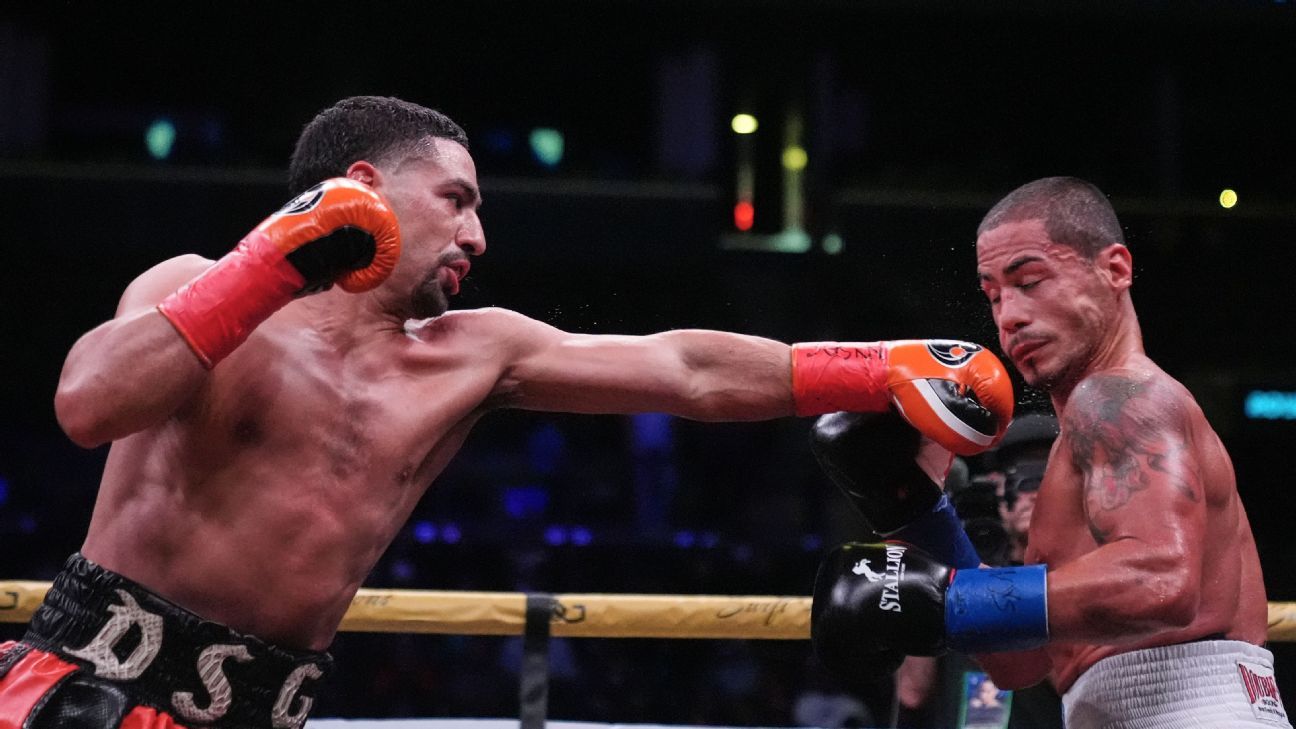
Congress is considering significant federal reforms that advocates argue would enhance health protections for boxers, increase their earnings, and revitalize the sport’s declining popularity. Opponents contend that the proposed legislation would undermine essential elements of existing federal regulations and might ultimately strip away certain protections for boxers, favoring major promoters like UFC’s Dana White and his Saudi Arabian associate, Turki Alalshikh.
The Muhammad Ali American Boxing Revival Act has successfully passed key milestones, with the House of Representatives approving the bill by voice vote on Tuesday, following a 30-4 vote in January by the House Committee on Education and the Workforce. During discussions, only one member of the House voiced opposition.
The absence of dissent in what is typically a highly polarized Congress serves as a potential indicator of how the bill might perform in the Senate.
The bill is now set to move to the Senate, and if it secures approval there, combined with White’s close relationship with President Donald Trump, it stands a strong chance of becoming law.
The two existing laws governing boxing, the Muhammad Ali Boxing Reform Act of 2000 and the Professional Boxing Safety Act of 1996, have faced criticism for being overly vague and lacking consistent enforcement authority. States like California, New York, and Texas frequently have to enforce their own regulations, resulting in a patchwork of inconsistent rules, especially regarding health and safety.
Former heavyweight champion Mike Tyson, a close ally of White, endorsed the new revisions to the Revival Act in December, highlighting its mandatory health insurance provisions. He claimed that some promoters have exploited loopholes in current legislation to “regain monopolistic control over fighters’ careers.”
The influential California State Athletic Commission also unanimously backed the bill, despite opposition from fighters and other stakeholders during public hearings.
USA Boxing, the governing body for amateur boxing in the United States, initially supported the bill but retracted its endorsement last month in favor of a neutral stance.
Numerous current promoters and sanctioning organizations have raised concerns regarding the bill.
The existing Ali Act, which has been in effect since 2000, would remain unchanged. The Revival Act would instead introduce the option of a unified boxing organization to complement the current offerings for fighters.
What are unified boxing organizations and why are they important?
The most significant alteration in the legislation is the introduction of unified boxing organizations as an “alternative system for compliance.” This would enable an organization to serve as a comprehensive resource for fighters, covering promotion, ranking, and sanctioning of fights, akin to the existing structure in the UFC. The UFC manages its own rankings and titles and handles all matchmaking, which could diminish the influence of the current sanctioning bodies in boxing.
According to the proposed legislation, a UBO would not depend on any of the major independent boxing sanctioning bodies—the WBC, WBO, IBF, and WBA—for titles or rankings.
In January, White described Zuffa Boxing, the new boxing promotion he established with Alalshikh, chairman of the Saudi Arabian General Entertainment Authority. White leads it, referring to it as “a work in progress.” It is widely assumed that if the Revival Act is enacted, White would establish a UBO.
White previously indicated that he did not wish to collaborate with the sanctioning bodies that currently oversee boxing’s ranking and title systems. This stance shifted after Zuffa’s most significant signing, former IBF cruiserweight champion Jai Opetaia, expressed his desire to become the undisputed champion, meaning he would hold all four major current titles simultaneously.
A UBO would represent a shift from the current framework, which has created a division of authority between promoters and sanctioning bodies regarding control over rankings, matchmaking, and titles. It also barred employees of boxing commissions from simultaneously working for promoters, sanctioning bodies, or managers.
However, the legislation does prohibit a UBO from also serving as a boxer’s manager if the fighter opts to hire one.
What are the concerns about UBOs?
The existing Ali Act prohibits “coercive contracts” and established disclosure rules requiring promoters to disclose their earnings from fight nights to ensure transparency.
It set forth contract requirements between fighters and promoters, separated the promotion and management of a fighter, mandated consistent ranking criteria for professional fighters, and required the publication of changes in a fighter’s ranking.
Pat English, an attorney involved in drafting the 1996 and 2000 boxing legislation, informed Congress in December that the Revival Act represents “a betrayal of the current act” because it would not extend similar coercive-contract and promoter-disclosure protections to UBO fighters and does not mandate a written explanation of the ranking system.
“There is no justifiable reason for there to be different language regarding the firewall between promoters and managers established by the Muhammad Ali Act and the proposed revision,” English stated in written testimony to Congress.
Top Rank chairman Bob Arum also sent a letter to Congress in December expressing apprehension about the inclusion of UBOs. “The Amendment strips away these and other protections for fighters set forth in the Ali Act for any fighter that signs with a newly created Unified Boxing Organization …” Arum wrote. “As presently drafted, the conditions required for an entity to qualify as a UBO do not include the protections for fighters set forth above.”
Arum asserted “there is no reason for a UBO to be exempt” from adhering to the same requirements that non-UBOs must follow.
How could the Revival Act favor certain promoters?
A larger financial backing increases the likelihood of success. If a single promoter were able to sign the majority of fighters, it could evolve into a dominant controlling entity—overseeing rankings, title shots, and fighter compensation—utilizing a UBO. This mirrors how the UFC became the leading MMA promotion globally, synonymous with the sport itself.
The UFC effectively functions as the major league in MMA, akin to the NFL, NBA, NHL, and MLB in their respective sports. Boxing currently lacks an organization of that nature.
MMA, where White rose to prominence through the UFC, is not governed by the Ali Act. The late Sen. John McCain, a long-time advocate of the Ali Act, attempted to expand the act to MMA in 2007, but the UFC opposed it, and McCain’s initiative failed. Then-Rep. Markwayne Mullin, a former MMA fighter who is now the newly confirmed Homeland Security secretary, made a similar attempt in 2016, but that effort also did not succeed.
WBC president Mauricio Sulaiman issued an open letter to the boxing community in January, accusing “a powerful entity worth billions of dollars” of trying to infiltrate boxing and dominate it.
“Their aim to alter the landscape of boxing in the pursuit of profit cannot be ignored, and it needs to be recognized for what it is: an attempted takeover of the people’s sport, which should not be owned or dominated by a single entity,” Sulaiman wrote, without directly naming the UFC, Zuffa, or White.
White believes the provisions in the new act, which would enable an organization to function more like the UFC, represent a different approach to how the sport operates.
“They were very concerned about the Muhammad Ali Act, all these other things. None of that is going to change for them. Nothing is going to change. We’re not changing one word of that, it’s going to be intact,” White stated at a news conference prior to his first Zuffa Boxing event. “Now fighters are going to have more options. Why is that a bad thing? Why are more options a bad thing? It’s not.”
Would the new bill improve or hurt fighter pay?
Proponents of the bill highlight the increased minimum payments per round that fighters will receive, suggesting it could benefit all but the top tier of fighters. Critics point to the UFC, which has faced multiple lawsuits for pay suppression, expressing concerns about the extent of control a single organization could exert.
Matchroom CEO Eddie Hearn stated to Boxing Scene in July that the Ali Act in its current form is “nearly always there to protect the fighter and make sure they are not taken advantage of.” He cautioned that any potential changes through this new bill could grant more authority to promoters over fighters.
Under the existing structure, elite fighters can earn hundreds of millions of dollars and have opportunities to receive substantial shares of the proceeds from their bouts. For instance, Sportico reported that Tyson Fury and Oleksander Usyk earned over $100 million each for their two encounters. In this framework, fighters also pay a percentage of their earnings to one of the sanctioning bodies—an issue that has caused frustration among high-profile fighters like Terence Crawford and Shakur Stevenson in the past year. A UBO would not be permitted to charge sanctioning fees.
Top female boxers in recent years have achieved seven-figure salaries—contrasting sharply with previous years when they earned minimal amounts even for title fights. However, the vast majority of fighters earn significantly less than the elite level, especially after deducting fees for managers and trainers from their earnings.
The act could provide assistance to lower-tier fighters with a $200-per-round minimum, offering some financial guarantees for them.
High-profile events feature fighters receiving six-figure paychecks, according to financial data from the California State Athletic Commission, including a $1 million payout for WBO junior lightweight title defender Emmanuel Navarette. However, many smaller MMA and boxing events had no fighters earning over $10,000.
If a fighter does not have a bout within a six-month timeframe, they would receive $2,000. This compensation would not be available if the fighter is receiving insurance payments due to an injury or if they decline a fight.
Opponents of the bill, including many prominent boxing promoters, view it as a means for promotional giant TKO Group Holdings, which includes the UFC and WWE, to bypass the current system that safeguards fighters. Some argue that the bill may ultimately restrict rather than enhance fighter compensation.
The UFC has previously faced allegations of undercompensating fighters, settling a landmark antitrust lawsuit in 2024 for $375 million.
The Guardian’s Thomas Hauser obtained a contract for a Zuffa fighter, revealing that the contract granted the organization the right to utilize a fighter’s “identity” to promote Zuffa and its sponsors’ products. Fighters would receive an unspecified percentage.
Currently, fighters often sell sponsorship space on their fight trunks, T-shirts, and hats. According to The Guardian, Zuffa fighters are restricted to wearing only Zuffa-approved equipment and gear, which could result in lost sponsorship opportunities for fighters. This mirrors the UFC’s model.
Are there health care provisions for boxers?
At present, fighters typically bear the responsibility for their health care unless it is stipulated in contracts with promoters for their bouts. Promoters are required to provide a minimum of $10,000 in health insurance and $10,000 in accidental death benefits for injuries sustained during fights—the Association for Boxing Commissions recommends $100,000 in health and accidental death benefits per fighter.
Fighters must pass a prefight physical examination certified in writing to the state commission, confirming that the fighter can compete safely. Female fighters must also provide documentation of a negative pregnancy test conducted less than two weeks prior to a fight. A physician must be present ringside, along with an ambulance and emergency personnel on-site.
Otherwise, prefight and postfight medical testing varies depending on state commissions, which may impose more stringent requirements.
Under the Revival Act, all fighters would be mandated to undergo annual medical examinations, including a yearly physical, brain, eye, and heart evaluations, and blood work every six months, in addition to the already-required pregnancy test for female fighters. Furthermore, it necessitates brain MRIs “at least every three years” and more frequent testing if a fighter is knocked out. UBOs would be responsible for covering these costs. It remains unclear who would be accountable for non-UBO fighters.
If a fighter is over 40 and competing in a UBO, they must undergo yearly bloodwork and urine tests, as well as a chest X-ray at least once every six years. State boxing commissions have their own regulations for fighters over 40, including neurological assessments.
The UBO must cover costs and provide training and rehabilitation facilities for fighters, health insurance during training periods, and medical coordinators to assist with requirements. It must also cover expenses for any anti-doping program testing incurred during training for a fight.
Fighters still hold responsibilities for health insurance deductibles from the UBO-provided insurance.
Drug testing will also be mandated for any title bout and “at random for all other matches.”
Could states still impose their own regulations?
The bill does not prohibit state regulations as long as they meet the baseline requirements of the Ali Act. States would also retain the authority to determine whether to permit a fight based on their own standards.
What other major changes would this bill add?
The bill would empower the Association of Boxing Commissions and Combative Sports and the Association of Ringside Physicians to establish consistent standards across the sport, including a legislative and regulatory model aimed at safeguarding the “safety, health, wellbeing, and economic opportunity” of boxers, strict authority guidelines for medical suspensions, and consensus statements from sports medicine experts. The ABC currently has limited powers and primarily makes recommendations to state commissions, lacking enforcement authority over states.
It would also generate recommendations for best practices along with annual compliance reports for boxing commissions adhering to those practices.
The ABC would also gain the ability to certify judges or officials for fights alongside state commissions. Under existing law, only state commissions possess that authority.
“I wanted to ensure the ABC was included in the federal law,” Mike Mazzulli, the ABC’s former president, told ESPN. “I wanted to prioritize fighter safety and ensure that judges and referees received proper training. I aimed to guarantee minimum payments to the fighters.”
The Revival Act could also simplify title distribution. Under the current system, some sanctioning bodies award belts excessively rather than designating one champion per weight class. The Revival Act stipulates that “a sanctioning organization or unified boxing organization shall award only 1 championship title for each weight class.”
There is an exception for interim titles in cases of injury, illness, refusal to defend a belt, or inability to travel. This could prevent delays in some weight classes where fighters do not defend titles for extended periods, sometimes exceeding a year.
