
Strategic Moves and Final Plays: Exploring the Subtle Rise of Chess in the NBA
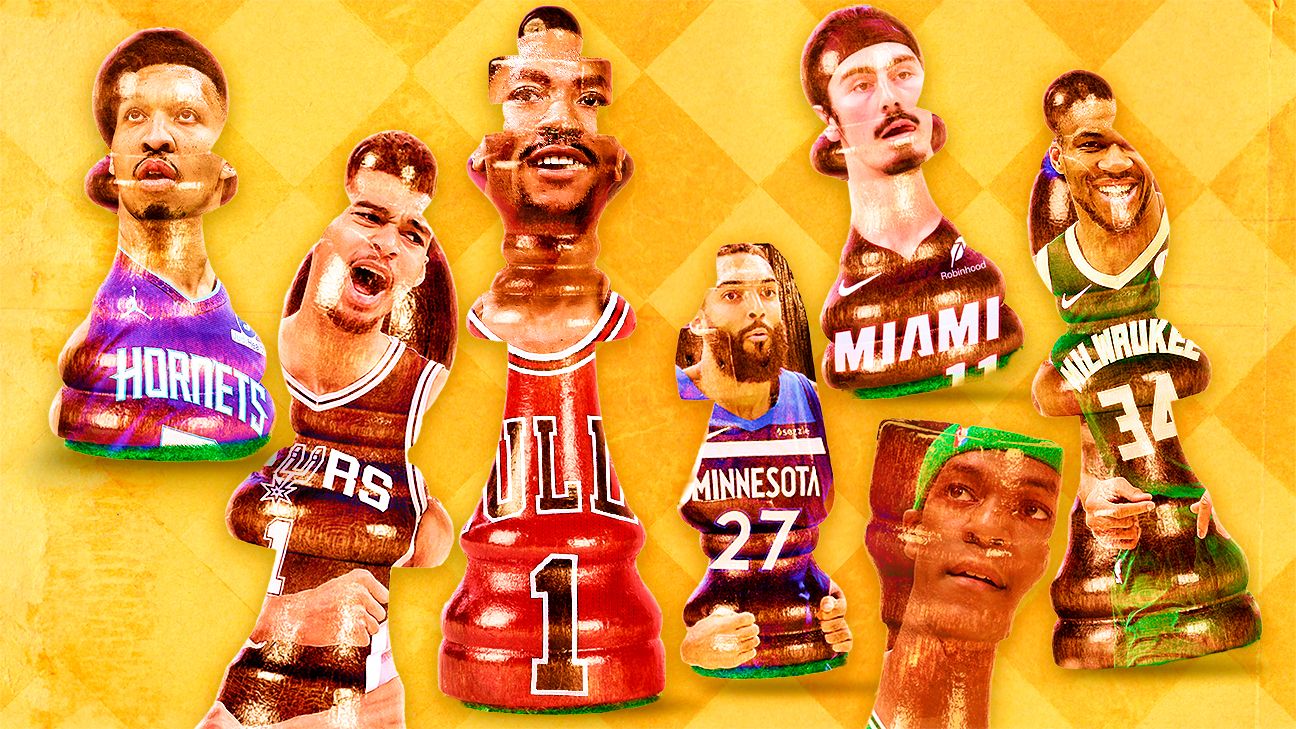
Ten seconds remaining. The ball is in LeBron James’ possession.
As the Milwaukee Bucks held a narrow two-point advantage over the Los Angeles Lakers, Bucks forward Giannis Antetokounmpo anticipated the play. While guarding James, he maneuvered around a screen and managed to knock the ball away from behind, clinching a 105-101 victory on January 9.
Later that evening, in the depths of Crypto.com Arena, Antetokounmpo elaborated on his thought process during the play.
“I was aware that LeBron would get the ball in the closing moments. I understood he aimed to drive and create a play. I anticipated he would call for a pick-and-roll,” Antetokounmpo shared with ESPN. “Having faced him numerous times, I was just planning ahead to position myself effectively for the play.”
Anticipation has consistently been a key aspect of Antetokounmpo’s game. It contributed to one of the most remarkable moments in NBA Finals history, a pivotal block against Deandre Ayton in Game 4 of the 2021 series.
“I could see the play developing,” he remarked after the game.
At the age of ten, he learned chess at a church in Greece. He attended services on Sundays, while Mondays, Wednesdays, and Fridays were reserved for activities like table tennis and chess, where he was taught by church members.
“Then I became quite skilled at it,” Antetokounmpo stated.
Chess taught him the significance of foresight—both on the board and on the basketball court.
That night, Antetokounmpo outmaneuvered the King. Checkmate.
The two-time NBA MVP is not the only player in the league advocating for the benefits of chess.
A community has emerged among players across the league promoting the advantages of chess. While skill levels vary, one constant remains: the age-old game provides a unique perspective on court dynamics. Current and former players highlight that the strategic components—anticipating moves, identifying patterns, and staying ahead of an opponent—carry over from the chessboard to the basketball court. Lessons learned from losses also resonate in life.
Several NBA players have publicly embraced chess. Luka Doncic, Jaylen Brown, and Jaime Jaquez Jr. have interactive bots on Chess.com that fans can challenge.
Others have engaged directly with the community.
In December 2024, Victor Wembanyama invited fans to play against him at Washington Square Park in New York City. Rain did not deter the San Antonio Spurs forward from moving pieces with anyone willing to face him across the board. Following the event, Wembanyama proposed “an NBA players-only chess tournament.”
Months later in Las Vegas, former NBA guard Derrick Rose organized just that.
Wembanyama’s enthusiasm for the game extends to his training. A common offseason workout for him involves conditioning while playing chess simultaneously.
Minnesota Timberwolves center Rudy Gobert mentioned that he competes against Wembanyama in chess “almost every time” their teams meet. He is aware of Wembanyama’s conditioning and chess training, noting that it revolves around making decisions during physical exertion.
This mimics the action on the basketball court.
“When you’re simply sitting and playing chess, you only need to concentrate on the board,” Gobert told ESPN. “However, when you start to experience fatigue—both mental and physical—it becomes more challenging to make the right decisions, which adds an extra layer of difficulty.”
For Wembanyama, chess serves as a mental reset.
“I see it as hitting two birds with one stone. Sometimes you just need a break,” he explained to ESPN. “When you lack the focus to read or study something, chess is beneficial in that regard.”
Many in the NBA share this sentiment.
Why has this traditional board game, played on an 8-by-8 grid with 64 squares of alternating colors, gained traction as a popular activity within the NBA? The answers lie in the narratives of the NBA stars themselves and how they connect to their experiences on and off the court.
Rajon Rondo, a two-time NBA champion, mentioned he learned chess during the 2020 COVID-19 bubble. Rondo, who retired in 2022, stated to ESPN that he was unaware of NBA peers playing throughout his 16-year career.
Rose—who was notably seen on Chess.com during a Drake concert—expressed a desire to have started playing earlier. He learned the game over a decade ago after discovering its potential benefits in preventing Alzheimer’s and dementia.
He became serious about chess as his career progressed, carrying a board during his final five seasons. While with the Detroit Pistons, he played against then-teammates Isaiah Stewart and Svi Mykhailiuk. He continued this trend in New York, playing against Knicks staff or “anybody” on the plane.
Rose concurred with Rondo that he had never heard of chess being widely played in the NBA, struggling to articulate why.
“I always say it’s somewhat like reading. People typically don’t discuss it unless the conversation naturally arises, then you discover who reads and who doesn’t…” Rose told ESPN. “But many simply don’t like to talk about it.”
For numerous players in the league now, chess offers a mental challenge and an alternative to mindless scrolling. Some athletes who spoke to ESPN learned the game earlier in life and returned to it later.
Jaquez often played with teammates after practices at UCLA. San Antonio Spurs forward Ingram joined a chess club while at North Carolina. Charlotte Hornets forward Grant Williams participated in chess clubs and tournaments during his youth.
Given the frequent travel in the league, the chess app has provided an accessible entry point to the sport, allowing anyone to engage in a match within seconds. Atlanta Hawks forward Onyeka Okongwu—who took a chess class while at USC—observes teammates playing on the plane.
“It’s just a way to keep your brain engaged, right?” Golden State Warriors center Quinten Post told ESPN. “As athletes, we’re always striving for improvement, and chess allows you to visibly track your progress through your rating. For me, monitoring my development is enjoyable. Additionally, I appreciate the game’s nature. There’s an endless amount to learn, which makes it fascinating to explore.”
Some locker rooms are filled with chess enthusiasts—from multi-time NBA champions like Draymond Green and Klay Thompson to younger players like the Timberwolves’ Jaylen Clark and Sacramento Kings’ Maxime Raynaud.
Rondo believes the chess community remains underutilized in the league. However, he emphasized that Rose’s tournament was “a brilliant idea to raise awareness about chess participation.”
Post triumphed over Ingram in the finals, but chess emerged as the true winner—just as Rose intended.
Levels and habits vary throughout the league.
Antetokounmpo does not play frequently during the season, but he used to play with former Bucks teammate Sterling Brown “all the time,” as well as with training staff members. During a January West Coast road trip, Rondo, now an assistant on the Bucks’ staff, brought a board in hopes of finally challenging Antetokounmpo.
“I told him that whenever he has some free time, I’m available,” he said.
Jaquez—who aims to become a grandmaster—dedicates more time to chess during the season. Okongwu used to play more regularly, but not as much currently.
Post truly focuses on chess during the offseason. He enters a three-month phase where he intensively practices and enjoys the game. Last summer, he visited the San Francisco Chess Club and received online coaching from international master Ladia Jirasek.
It’s a different scenario when the season begins.
“When I play, I’m obviously trying to win, and it can be quite mentally intense, right? … You become deeply engaged and can’t stop thinking about anything else,” Post said. “During the season, it’s challenging for me to play seriously. However, I’ll still be on Chess.com solving puzzles.”
Conversely, Williams plays “every two minutes,” stating he could even be seen on the bus playing moments after finishing our interview. However, he acknowledges his shortcomings. Williams explained that his rating isn’t as high as it could be because he doesn’t dedicate time to studying.
“I play games when I’m not focused. I rush through games,” he admitted. “I just need to improve in that area.”
While with the LA Clippers in his second-to-last NBA season, Rondo’s game-day routine concluded with chess matches.
For instance, if a game was scheduled for 7 p.m., pregame rituals and warmups would last until around 6 p.m. Rondo would then head to the locker room, set up the chess board, and play a game with then-teammate Ivica Zubac right before tip-off. They would engage in matches “before every game,” Rondo noted.
This served as a form of mental preparation, activating his mindset.
“It helped me get my thinking cap on a bit earlier. And of course, strategizing for the start of the game,” Rondo explained.
Rose did the same, listening to Bob Marley and playing chess “right up until I step onto the court.”
“It was more about being a point guard—seeing two or three plays ahead or maintaining composure when facing adversity,” Rose said. “So being able to push through that.”
Gobert, Jaquez, and Williams follow similar routines.
A three-minute blitz match calms Williams. While consuming his pregame meal or on the training table, Jaquez ensures he plays.
“I believe it sharpens my focus. It helps me anticipate and react to opponents’ moves,” said Jaquez, who is averaging a career-high 15.1 points per game this season. “Observing patterns on the chessboard, I think it all aids in relating to basketball in a unique way.”
Gobert has a similar approach, often squeezing in “a couple of games” while on the massage table. When his teammate Anthony Edwards sat next to Gobert during our conversation, he was asked if he plays chess, to which he replied to ESPN: “Hell nah.”
“Maybe one day,” Gobert said.
The Bulls held a 3-0 lead in the first-round series of the 2014 playoffs, but Game 4 was tied with 1.3 seconds remaining. The Bucks inbounded the ball on their side of the court. Jerryd Bayless faked a move toward the corner before cutting under the basket, outmaneuvering Rose and receiving a pass from Jared Dudley for a game-winning layup.
Years later, while sitting near the Chicago River on the opposite side of DuSable Bridge, Rose reclines in his chair and reflects on that play. He explains that then-Bucks head coach Jason Kidd targeted him. The moment haunted Rose throughout his career, illustrating the significance of being singled out and how “everything can hinge on a single action on the court.” This parallels chess.
In the postseason, the similarities between the two sports intensify due to the significance of each possession, Rose noted. Every move carries substantial weight.
“That one move requires careful consideration before making the next move, as it could potentially disrupt the entire game. Even if it seems trivial at the moment, it could affect your guard,” he explained. “By placing that one piece in a certain position, you’re either leaving space for someone to defend or creating an opportunity. Depending on that player, they can exploit that.”
Players throughout the league echo similar sentiments.
During his NBA tenure, Rondo became recognized for deciphering opposing plays and identifying advantages. He established that reputation before he began playing chess; thus, chess did not significantly impact his on-court performance.
Instead, his film study allowed him to gain an edge during games. He likened it to improving in chess.
“Studying film is always a beneficial habit to develop, much like in chess,” Rondo stated. “The only way to improve is by reviewing your games and analyzing your opponent’s moves.”
Bullet and blitz chess assist Gobert in making quick decisions. It has taught him that sometimes the perfect option may not be available, but a decision must still be made.
He pointed out the parallels between the strategic aspects of chess and defensive play. When evaluating games over a season or playoff series, “it’s very strategic,” he elaborated.
“There’s always a mental game involved in basketball, especially for me as a big man executing my defensive role,” said Gobert, who shares the NBA record for most Defensive Player of the Year awards with Dikembe Mutombo and Ben Wallace. “When opponents attempt to bait me or read my movements, it becomes a significant intimidation and strategic game.”
Ingram noted that chess aids in understanding positioning, akin to recognizing the placement of pieces on the board. The defense may shift when one player has the ball. If the ballhandler fails to identify the shift correctly, they may commit a turnover. He likened it to blitz chess.
Recognizing your opponent is equally crucial in both sports. Williams stated that preparing for what lies ahead based on consistent tactics or strategies creates a similarity between the two sports. It can determine the difference between a successful basket and a costly mistake.
Jaquez articulated it differently: in chess, sometimes what you anticipate your opponent will do does not occur.
“You prepare for one scenario, but numerous factors can change throughout a game or chess match, so you must adapt and be ready for anything,” he explained. “You always aim to predict the next move or moves ahead. Ultimately, it all comes back to identifying the best move in that moment. I believe that also applies to basketball.”
In terms of coaching, chess has instilled patience in Rondo. He remarked that the NBA revolves around countering and executing the right moves.
However, it also involves minimizing mistakes.
“And if you do make a mistake, figure out how to capitalize on it,” Rondo advised. “Because sometimes you might lose your queen. Do you panic? How do you manage adversity? These are all life lessons.”
Most NBA players possess a natural basketball skill set that has been honed through years of practice and competition. However, various factors can be beyond their control when the game begins. Legs may feel heavy from travel, or shots may simply not fall. Conversely, the opposite can happen, with the rim appearing to be an ocean after a successful basket.
Chess is incomparable.
“There are no bad nights,” Ingram stated. “It’s chess. I make the moves. I make the final decision.”
On the basketball court, teammates collaborate. A coaching staff on the sidelines provides real-time adjustments and suggestions. Interruptions occur throughout the 48-minute game.
In contrast to any other individual sport, chess lacks these so-called advantages. It’s a one-on-one battle. Losing in chess differs from losing in basketball.
In fact, for some players, losing in chess can be more painful.
“I’ve never been a boxer, but I can imagine it’s similar to boxing. There’s no one else to blame…” Rondo, a self-proclaimed “sore loser,” remarked. “This is a game of intellect. It doesn’t rely on physical attributes or anything else. It’s about your mental acuity.”
Jaquez explained that “you can’t really compensate” for a loss. While in basketball, a hustle play is an option, in chess, a mental blunder is challenging to recover from.
During our conversation, Jaquez vividly expressed his frustration with his recent defeats. He leaned back in his chair, his long hair tucked under his headband as he passionately recounted the journey to his current chess rating, exasperated with the mind that got him to the NBA—but not beyond a rating of 1000, as of last November.
“Recently, I was at around 998. I reached 1004 and then dropped all the way back down to 920. And that’s where I am now,” he said. “I can’t believe it. I’m making the most foolish moves, like, what am I doing? I get so frustrated I want to throw my phone against the wall.”
Chess employs an Elo rating system that assesses a player’s strength relative to others. The higher a player’s Elo, the stronger their skills. Various time controls exist, such as bullet (20 seconds to two minutes), blitz (three to five minutes), and rapid (10 to 60 minutes). Each mode has a specific rating. For instance, world No. 1 Magnus Carlsen has a blitz rating of 2,869 and a rapid rating of 2,832.
Post echoed Jaquez’s sentiments regarding improving his rating while indirectly offering advice to the forward and other chess players facing challenges.
“It’s a frustrating grind to improve. However, you must overcome the mindset of being results-oriented, which is the same in basketball,” Post stated. “Throughout your youth, whether winning or losing, you need to focus on improving every day. That’s how you progress.”
Rose concurred on the heightened frustration of losing in chess, particularly when competing against friends. The intimacy of the sport significantly contributes to the bitter feelings. Losing in chess does not bother Antetokounmpo since it is not his profession.
However, those experiences and emotions have captivated the NBA’s aspiring grandmasters—and motivated them to share its benefits.
Rose’s Chesstival tournament in Las Vegas marked the initial step in raising awareness about chess. It may also foreshadow future developments.
He collaborated with a freestyle chess organization to host the event during the Freestyle Chess Grand Slam Tour last July. The tournament featured two competitions, including one where current or former NBA players teamed up with a grandmaster. Rondo and Rose participated, alongside Morey, Williams, Post, Ingram, Okongwu, Tony Snell, and others.
For Rose, it represented the culmination of a two-year effort. He announced in April 2023 that Chesstival would launch in July of that year, but it did not materialize.
He then encountered the freestyle chess group, specifically founder Jan Henric Buettner and COO Thomas Harsch. The two explained freestyle chess—a variant also known as Chess960 that legendary grandmaster Bobby Fischer endorsed—to
