
NBA rookie standings: 10 players to monitor before the playoffs
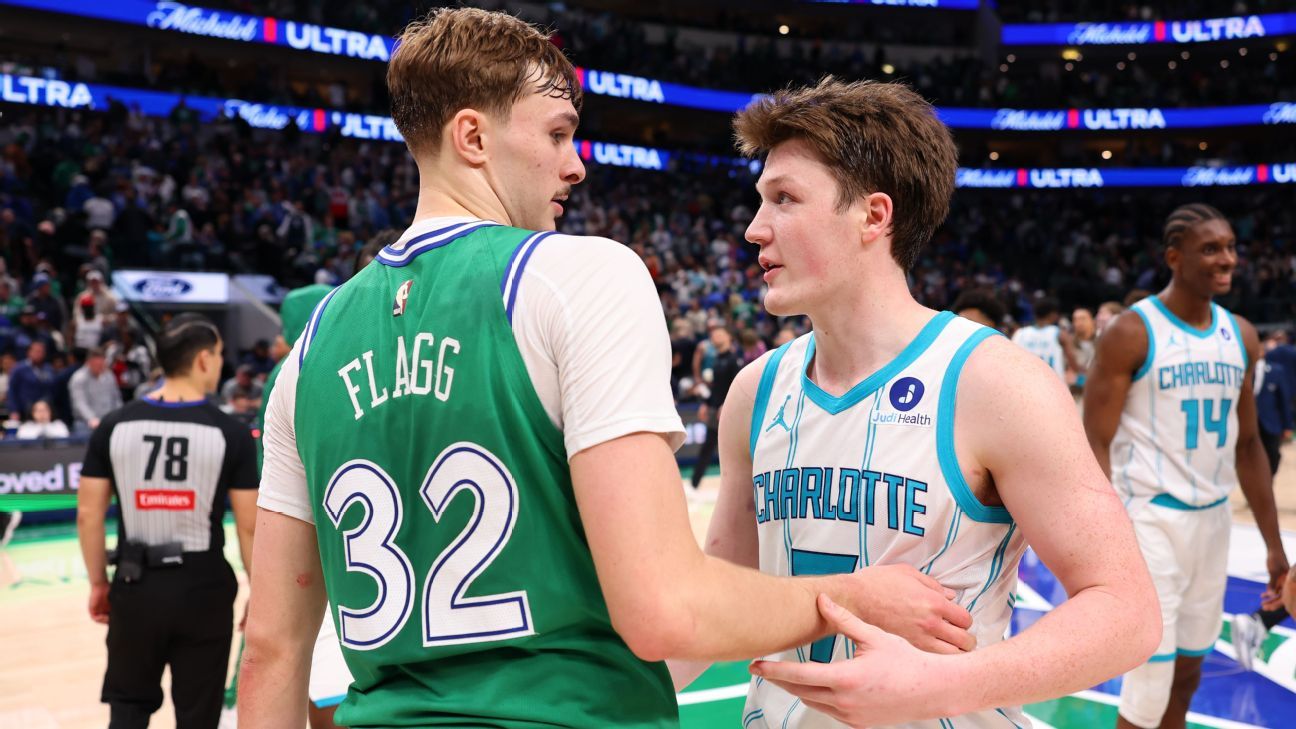
The topic of tanking is prevalent in the NBA as team executives focus on the exceptionally talented 2026 draft class. This focus is justified, as they can observe the current rookie class and how a single promising young player can enhance a team’s future prospects.
The top four selections from the 2025 draft have emerged as the standout rookies this season, and as the regular season approaches its conclusion, it’s time to evaluate the entire rookie class.
We have previously ranked the top 10 rookies this season twice, once in November and again in January. It is important to note that this ranking reflects the quality of the rookies’ performance this season, rather than a long-term forecast.
Tre Johnson, who was ranked eighth in the latest rankings, has dropped out of the top 10 in this update. Kings center Maxime Raynaud, who has been performing exceptionally well since the All-Star break, was the final player removed from this list. Let’s delve into the revised rankings:

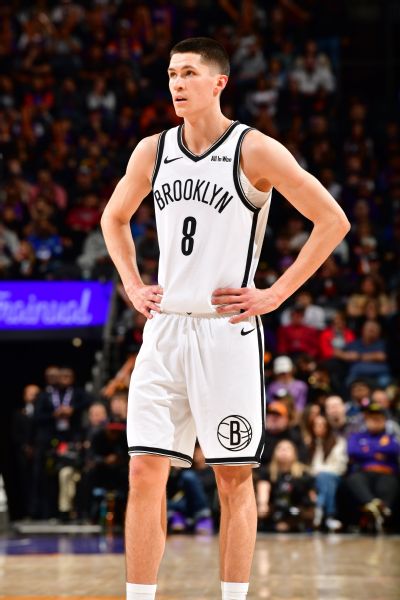
10. Egor Demin, Brooklyn Nets
January ranking: No. 10
Demin’s season concluded on February 27 due to plantar fasciitis. Prior to his injury, the No. 8 pick from last year’s draft demonstrated enough talent on a struggling Brooklyn squad to secure the No. 10 position.
The primary concern regarding Demin coming out of college was his shooting ability, as he converted only 27% of his 3-point attempts at BYU. However, in the NBA, Demin has made 38.5% of his 6.2 long-range attempts per game, placing him among eight qualified rookies in league history to achieve at least 38% on a minimum of five attempts. The others include Kon Knueppel, Keegan Murray, Tyrese Haliburton, Saddiq Bey, Tyler Herro, Landry Shamet, and Rudy Fernandez. While this level of shooting as a rookie does not guarantee future stardom, it is a positive sign.
Additionally, Demin showcased his advanced passing abilities, and at 6-foot-8, he possesses the size to evade being targeted defensively. Whether Demin can enhance his offensive game in his second season—having shot 39.9% from 2—will be crucial in determining his role in the Nets’ rebuilding efforts.
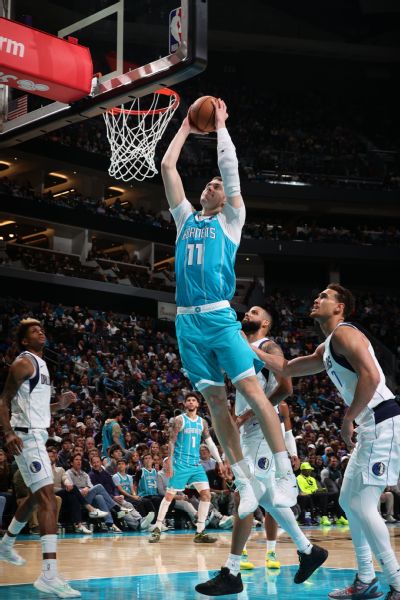
9. Ryan Kalkbrenner, Charlotte Hornets
January ranking: No. 7
Kalkbrenner was ranked fifth in the initial edition of these rankings, but he has not sustained his impressive statistical start. For example, he averaged 2.6 blocks in his first nine games, but that number has dropped to 1.3 since then.
The Hornets have also performed significantly better with Moussa Diabate playing center instead of the larger, slower Kalkbrenner.
Nonetheless, the rookie second-round pick has surpassed all reasonable expectations and delivered one of the finest seasons in his class. Kalkbrenner remains an exceptionally efficient scorer, boasting a true shooting percentage of 75%, which would lead the league if he qualified, and his rim protection continues to be a positive aspect, even if he is no longer blocking shots at an overwhelming rate.
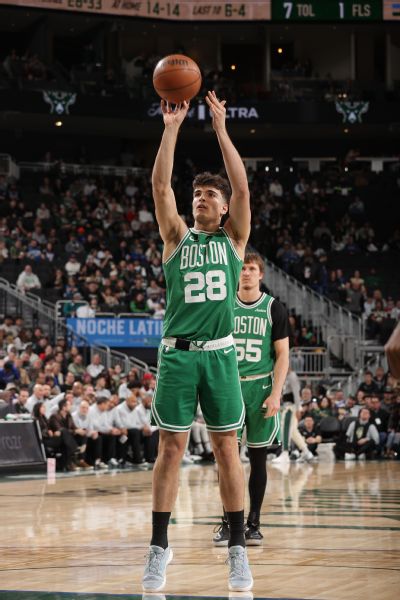
8. Hugo Gonzalez, Boston Celtics
January ranking: Not ranked
Gonzalez may not rank among the most skilled rookies in this class, and his basic statistics—4.0 points, 3.5 rebounds, and 0.6 assists per game—are unremarkable.
However, Gonzalez possesses one advanced statistic that stands out: when he is on the court, the Celtics have a plus-12.6 net rating. This is the highest mark on one of the NBA’s top teams and ranks fourth among all players with at least 50 games this season, trailing only Victor Wembanyama, Shai Gilgeous-Alexander, and Chet Holmgren.
Some of Gonzalez’s impressive net rating can be attributed to Boston’s strong depth and rotations, while some is due to shooting luck. However, with 1,009 minutes played, Gonzalez’s on-court sample size is substantial enough to warrant a significant share of the credit. His energy and defensive skills contribute to winning plays. While he may not have the highest long-term potential among the players on this list, he is likely to earn a spot on the All-Rookie team.
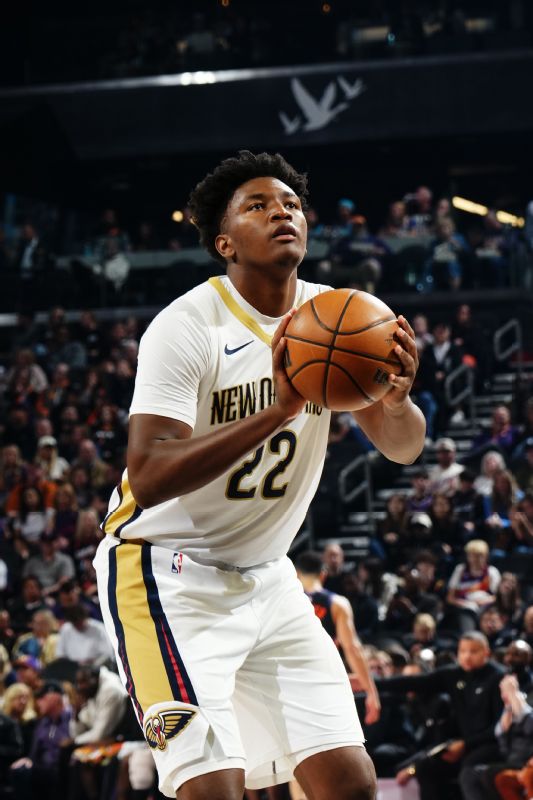
7. Derik Queen, New Orleans Pelicans
January ranking: No. 4
Queen has dropped in this ranking due to experiencing the rookie wall more severely than others. Before the All-Star break, he averaged 12.2 points, 7.2 rebounds, and 4.1 assists in 26 minutes; since the break, those numbers have decreased to 8.5 points, 5.4 rebounds, and 2.5 assists in 20 minutes.
Queen and fellow lottery pick Jeremiah Fears have recorded the lowest on/off ratings among New Orleans’ rotation players, leading Pelicans interim coach James Borrego to increasingly favor his veterans over the rookies. It is no coincidence that the team’s best stretch of the season has coincided with increased playing time for its experienced players.
Nevertheless, the No. 13 pick exhibited enough playmaking potential and notable offensive moments during his midseason hot streak to remain a strong candidate for a spot on the All-Rookie second team. He may not be a long-term fit alongside Zion Williamson—New Orleans has a negative-11.7 net rating with that pairing on the floor, according to databallr—which complicates his immediate future. However, he still possesses considerable potential for the long term.
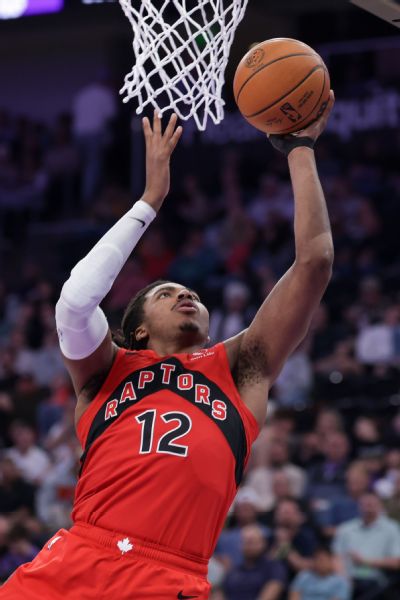
6. Collin Murray-Boyles, Toronto Raptors
January ranking: No. 9
Murray-Boyles has just returned from a nearly month-long absence due to a thumb injury, so it may seem unusual that he has moved up a few spots from the last edition. However, there is a clear distinction after the top five rookies in this class, followed by a group of eight or so rookies who could be arranged in nearly any order. Murray-Boyles rises to the top of that second tier due to having the highest floor among the group.
It is possible that Demin’s offensive skills may never develop sufficiently for him to be a true starting point guard, or that Gonzalez may only reach the level of an eighth man, or that Queen’s defense may hinder his progress. However, Murray-Boyles’ size and defensive versatility suggest he should, at the very least, be a reliable rotation player for years to come.
The No. 9 pick could benefit from expanding his offensive game, as he has made only 17 total 3-pointers and 24 total unassisted shots. This limitation could impose a ceiling on his potential. Nevertheless, Murray-Boyles has contributed to a contending team and has adapted well as a viable small-ball center on a veteran-laden roster. This bodes well for his future in the league.
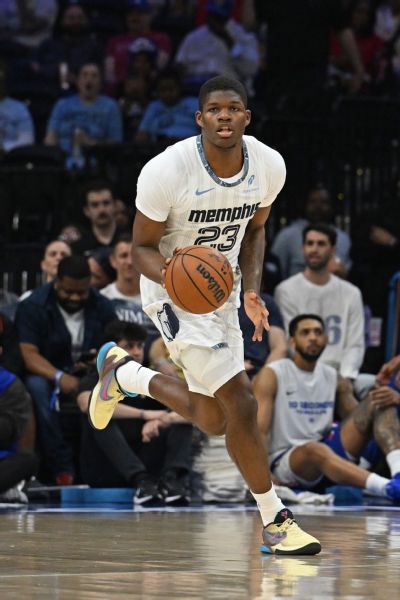
5. Cedric Coward, Memphis Grizzlies
January ranking: No. 5
Coward no longer has a realistic chance to compete for a top-three Rookie of the Year finish, but he has nonetheless delivered a solid debut season, averaging 13.4 points, 6.2 rebounds, and 2.8 assists in 26 minutes. He merits a position on the All-Rookie first team.
Coward possesses all the attributes of a strong 3-and-D wing. He has the size (if not the counting stats) of an effective defender, and with his excellent shooting form, it is surprising that he has fallen to 33.6% on 3-pointers—though his 85% free throw percentage indicates he should improve in the coming seasons.
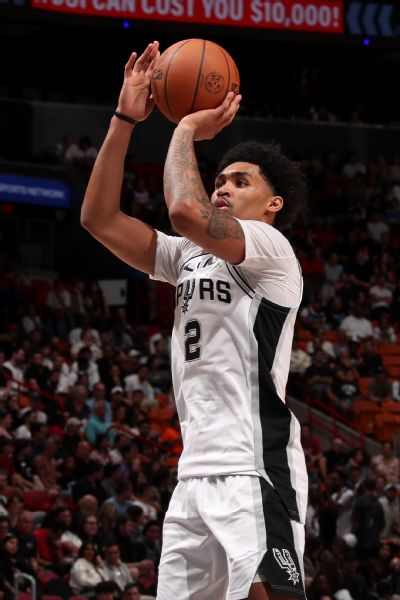
4. Dylan Harper, San Antonio Spurs
January ranking: No. 6
After a midseason slump, Harper has rebounded into the top half of these rankings, thanks to his enhanced production amid increased responsibilities for the NBA’s second-best team. Unlike several rookies ranked below him, Harper has actually played more since the All-Star break, even earning his first start over the weekend, while San Antonio has continued to thrive as the No. 2 team in the West.
From a long-term perspective, the most promising statistical indicator for Harper is that his 3-point shooting percentage has risen to 31.4%—still not ideal, but an improvement from the 23.7% he had in late January. (He has made 43.3% of his 3-pointers, albeit on a still limited volume, since late January.) A dependable jump shot would solidify his backcourt partnership with former Rookie of the Year Stephon Castle.
Despite concerns about his shooting, Castle and Harper are flourishing. Lineups featuring that duo alongside Victor Wembanyama have an impressive plus-34.5 net rating, according to databallr, although this comes with significant shooting luck in a relatively small sample.
Harper’s recent improvement has been so notable that he nearly moved into the top three of these rankings, but ultimately, the next player on the list has a more established full-season track record.
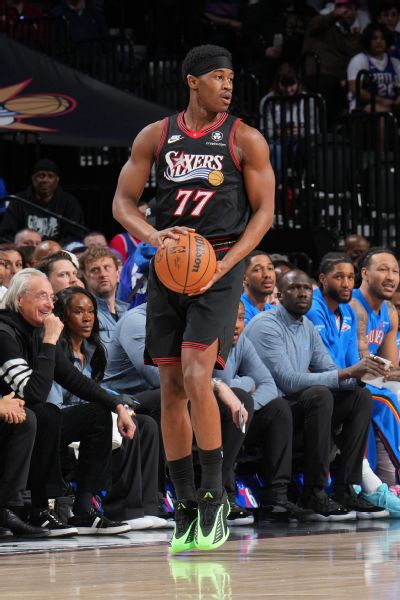
3. VJ Edgecombe, Philadelphia 76ers
January ranking: No. 3
Edgecombe has made contributions across various aspects of the game this season, but perhaps his most underrated achievement is enduring the rigors of his first lengthy NBA season. Edgecombe is averaging 35 minutes per game—Scottie Barnes is the only rookie in the past decade with more playing time. Before that, the most recent rookies to average at least 35 minutes were Andrew Wiggins, Damian Lillard, Blake Griffin, and John Wall.
Edgecombe’s playing time is sufficient to indicate he appears to be a future All-Star.
In addition to Edgecombe’s better-than-anticipated shooting, playmaking, and defensive contributions (1.4 steals, 0.6 blocks per game), there is every reason to believe he will develop a formidable backcourt partnership with Tyrese Maxey for years to come.
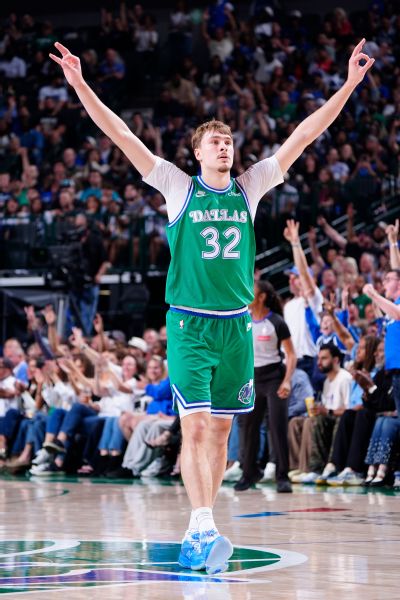
2. Cooper Flagg, Dallas Mavericks
January ranking: No. 2
Flagg is averaging 20.3 points, 6.6 rebounds, and 4.6 assists. Only seven rookies in NBA history have averaged 20-6-4: Luka Doncic, Michael Jordan, Larry Bird, Sidney Wicks, Kareem Abdul-Jabbar, Oscar Robertson, and Elgin Baylor.
Thus, Flagg’s statistical profile positions him as a potential Hall of Famer—and this does not even take into account his significant defensive potential, or the fact that he and Doncic are the only teenagers on that list.
The sole reason Flagg is not ranked No. 1 on this list, or the favorite for Rookie of the Year, is that his former Duke teammate has outperformed him this season. However, this does not diminish Flagg’s accomplishments in a challenging season for the Mavericks. He appears to be every bit the franchise cornerstone expected of a No. 1 pick, and he would still be selected first in a 2025 redraft, one year later.
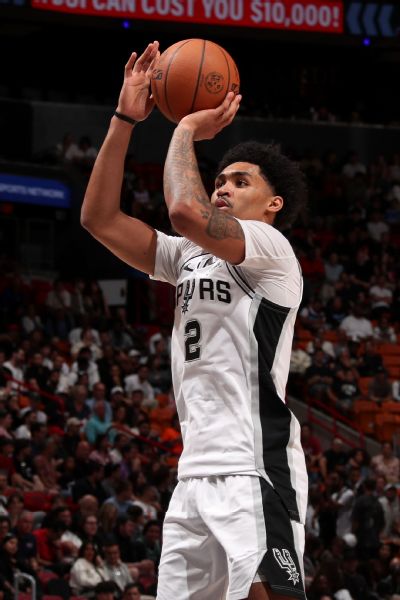
1. Kon Knueppel, Charlotte Hornets
January ranking: No. 1
According to ESPN’s net points metric, Knueppel has generated 153 points above average on offense this season. No other rookie has surpassed 18.
Knueppel’s performance is remarkable even when compared to the entire league, not just rookies. He ranks 11th overall in offensive net points; the two players directly ahead of him are Anthony Edwards and Jalen Brunson, while Cade Cunningham and Tyrese Maxey are directly behind him.
In simple terms, Knueppel has been among the best players in the NBA this season. He leads the league in total 3-point makes and ranks third among qualified perimeter players in true shooting percentage, trailing only Gilgeous-Alexander and Sam Merrill. Additionally, he is a significant contributor to a surprisingly successful team.
Knueppel is poised to win the Rookie of the Year award, and despite Flagg’s strong performance, the decision should not be particularly close.
