
NBA Offseason 2026: Draft, Free Agency, and Trade Prospects for Each Team
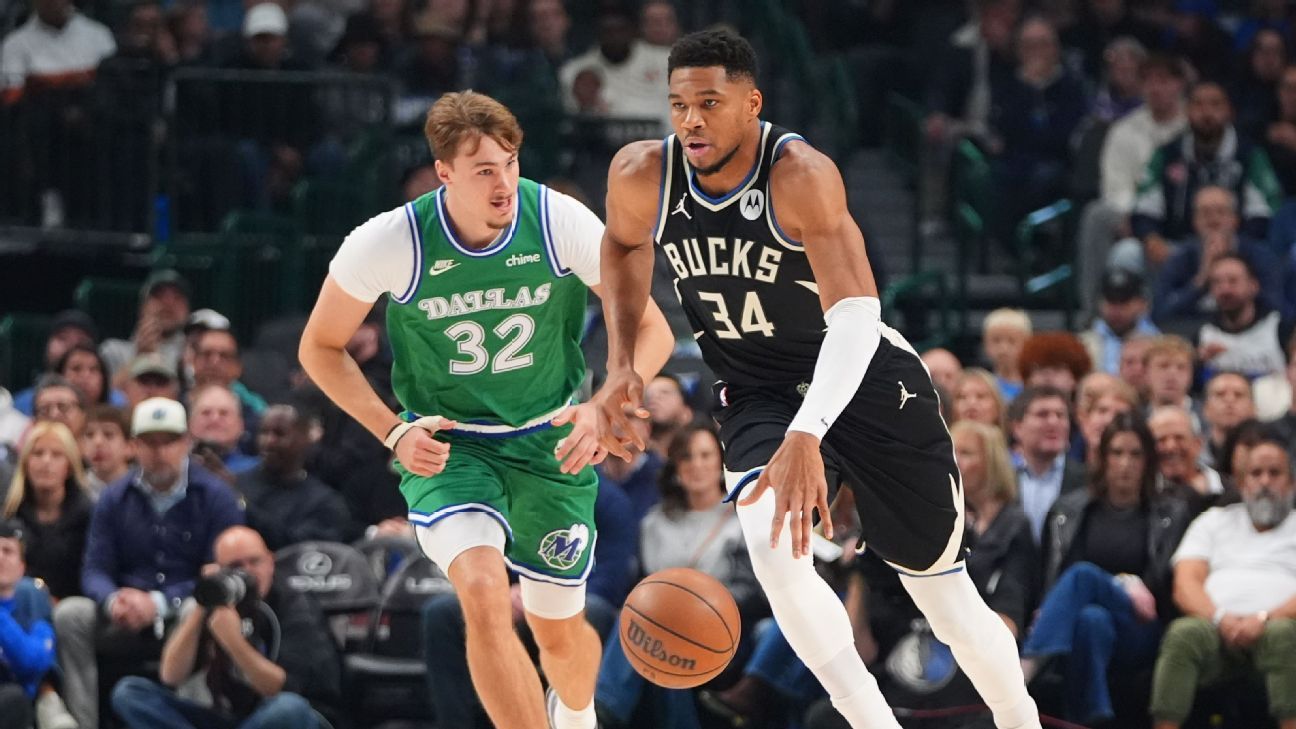
For 10 NBA teams, the 2026 offseason has commenced.
Which franchises are poised to advance in their rebuilding efforts? Which face significant draft and trade choices? Will prominent players like Giannis Antetokounmpo and Ja Morant be traded this summer?
We are analyzing the possible actions for each team that has been eliminated, including an overview of the roster status, financial situation, front office objectives, candidates for extensions, team requirements, and future draft assets. (Note: 2026 draft picks are determined by current league standings.)
Jump to a team:
ATL | BOS | BKN | CHA | CHI | CLE
DAL | DEN | DET | GS | HOU | IND
LAC | LAL | MEM | MIA | MIL | MIN
NO | NY | OKC | ORL | PHI | PHX
POR | SAC | SA | TOR | UTAH | WAS


Washington Wizards
2025-26 record: 17-64
Draft picks in June: No. 1, No. 51 (via MIN), No. 60 (via OKC)
Odds at the No. 1 pick: 14%
2026 free agents
-
Anthony Gill
-
D’Angelo Russell ($6 million, player option)
-
Jamir Watkins ($2.2 million, team option)
-
Trae Young ($49 million, player option)
-
Sharife Cooper (restricted)
State of the roster
Following 21 trades in under three years, a solid foundation has been established. Since assuming control in May 2023, president of basketball operations Michael Winger and general manager Will Dawkins have strategically enhanced Washington’s draft assets, financial flexibility, and expiring contracts in anticipation of acquiring a star player, such as Trae Young or Anthony Davis.
The Wizards capitalized on the financial flexibility gained from trading Kyle Kuzma and Jordan Poole for expiring contracts (CJ McCollum and Khris Middleton) to pursue Young and Davis. The two first-round picks sent to Dallas were obtained in earlier trades, ensuring the franchise did not compromise its future by relinquishing its own draft picks or former first-round selections Bilal Coulibaly, Alex Sarr, and Tre Johnson.
Washington remains in a position to secure a lottery pick and balance its salary cap. Aside from Young and Davis, no Wizard will earn more than $12.5 million in 2026-27. The roster includes seven players on rookie contracts and nine players under the age of 24.
However, these roster enhancements should be approached with caution.
Young and Davis would bolster an offense and defense that ranked 29th in the NBA. Yet, the league’s second-youngest roster must cultivate winning habits. This season, the Wizards managed to win consecutive games only four times, with no streaks of three or more victories. They began the season with a 1-15 record and concluded it by losing 24 of their last 25 games.
Offseason finances
Before adding Young and Davis, the Wizards were projected to have nearly $80 million in cap space this summer. With both players under contract (Young has a $49 million player option) and a lottery pick, Washington is $19 million below the luxury tax threshold. They will have access to the $15 million non-tax midlevel exception in free agency and two substantial trade exceptions of $26.8 million and $13.5 million.
Top front office priority
Reaching an agreement on new contracts for Young and Davis. Wizards fans should mark two dates on their offseason calendar: June 23 and August 6.
June 23 is the deadline for Young to either exercise his $49 million player option or become an unrestricted free agent this summer.
“We have good relationships with his representatives,” Wizards GM Will Dawkins informed Mark Medina of EssentiallySports. “So we’ve had discussions about what it would look like to be a Wizard because he genuinely wants to be here, which is important to us. We want to ensure everyone feels comfortable and fosters that partnership and relationship until we have any substantial conversations.”
Young is eligible to sign a three-year, $156.9 million extension until June 30, with the first year of that contract replacing the player option for the upcoming season. Young could also opt-in and sign an extension after free agency begins, delaying the start of a new contract until the 2027-28 season. Alternatively, Young could decline the option, signing for less but securing up to five guaranteed years.
Young played the fewest games of his career this season but remains one of the premier playmakers in the NBA. His career average of 9.8 assists per game ranks only behind Magic Johnson and John Stockton. Last season with Atlanta, he recorded an NBA- and career-high 11.6 assists.
Davis, on the other hand, cannot become a free agent but is eligible to sign a four-year extension on August 6. The first year of the extension would replace a $62.8 million player option for 2027-28.
The 33-year-old Davis did not play since the trade and has failed to reach 60 games in five of the last six seasons. However, when healthy, Davis continues to be a two-way powerhouse. According to ESPN Research, Davis has averaged at least two blocks and one steal in 11 seasons, trailing only Hall of Famer Hakeem Olajuwon since blocks and steals were first tracked during the 1973-74 season.
Extension candidate to watch
Coulibaly, drafted in 2023, is the first player eligible for a rookie extension under the current front office. According to Cleaning the Glass, Coulibaly ranks in the 94th percentile among all wings in blocks and the 84th percentile in steals. Offensively, Coulibaly is averaging a career-high 14.1 points per game since the All-Star break.
Other extension-eligible players:
-
Davis (four years, $275 million, eligible to sign on August 6)
-
Young (three years, $156.9 million, through June 30)
-
Cam Whitmore (rookie scale)
-
Jaden Hardy (four years, $92.8 million, as of October 22)
Team needs
Roster flexibility. The Wizards enter the offseason with 14 players already under contract for next season, excluding their 2026 first-round pick and two second-rounders.
Future draft assets
In previous seasons, trading for Young and Davis would likely have depleted the Wizards’ future first-round picks. However, Washington has eight first-rounders still available over the next seven years, five of which are tradable. The franchise also possesses 10 second-round picks.
First-round picks owed to Wizards:
-
2028: Second most favorable among Boston, Milwaukee, and Portland
-
2028: Can swap their own with the least favorable among Brooklyn, Philadelphia (if 9-30), and Phoenix. Washington can then swap that pick for the less favorable between Milwaukee and Portland (if 15-30)
-
2030: Swap rights with Phoenix

Indiana Pacers
2025-26 record: 19-62
Draft picks in June: No. 2
Odds at the No. 1 pick: 14% (Note: Pick will be conveyed to the LA Clippers if it falls to No. 5.)
2026 free agents
-
Kobe Brown
-
Micah Potter ($2.8 million, team option)
-
Jalen Slawson (restricted)
State of the roster
The Pacers are expected to enter the summer as one of the favorites to contend in the Eastern Conference despite concluding the 2025-26 season with the fewest wins in franchise history. However, the Pacers differ from other lottery teams for several reasons.
Indiana retains 10 players, including All-Stars Tyrese Haliburton and Pascal Siakam from the roster that pushed Oklahoma City to seven games in the 2025 Finals. Haliburton tore his right Achilles in Game 7 and missed the entire 2025-26 season, turning it into a “gap year” for the franchise. The Pacers were plus-4.1 points per 100 possessions in the regular season and plus-7.8 in the postseason with Haliburton on the court. He had 33 games with at least 10 assists and an assist-to-turnover ratio of 5.61 in 2024-25.
After losing center Myles Turner in free agency, Indiana traded for Ivica Zubac. Zubac averaged double-doubles in points and rebounds for three consecutive seasons and was named to the All-NBA Defensive second team last season with the Clippers. Zubac suffered a season-ending rib injury and played only six games after being traded to Indiana at the deadline.
More importantly, if the Pacers retain their first-round pick, they would be positioned to draft from a pool of top prospects, including AJ Dybantsa, Darryn Peterson, Cameron Boozer, Darius Acuff Jr., and Caleb Wilson.
Offseason finances
The acquisition of Zubac came at a considerable financial cost. If their first-round pick is retained, the Pacers will enter the offseason $11.7 million over the luxury tax, $3.2 million above the first apron threshold, and $9.8 million below the second.
The Pacers face a decision regarding Potter’s team option and the partially guaranteed salaries of Kam Jones and Quenton Jackson. Indiana has until June 29 to exercise the $2.8 million Potter option and the following day to guarantee the $2.2 million contract of Jones, who already has $1.1 million guaranteed. On July 15, the salary protection for Jackson’s deal increases from $275,000 to $2.6 million if there are no waivers.
Top front office priority:
The draft is a priority, especially if the Pacers retain their first-round pick. Indiana has never held the first overall pick and has drafted second three times (Steve Stipanovich in 1983, Wayman Tisdale in 1985, and Rik Smits in 1988).
President of basketball operations Kevin Pritchard and general manager Chad Buchanan should be commended for selecting Andrew Nembhard in the second round of the 2022 draft, but the Pacers’ history of selecting players in the lottery is average at best.
Since the 2021 season, Indiana has selected Chris Duarte, Bennedict Mathurin, and Jarace Walker in the lottery. Duarte was traded to the Sacramento Kings for two second-round picks, and Mathurin was traded to the Clippers in the Zubac deal. Walker, who was not part of the rotation during his first two seasons, averaged career highs in minutes (25.6) and points (11.5) this season as the Pacers dealt with a series of injuries. Only Walker, Ben Sheppard, and Jay Huff played more than 65 games after Indiana had eight such players last season.
Coach Rick Carlisle will need to reestablish an offensive identity with Haliburton returning and the addition of Zubac. The Pacers experienced a significant decline in offensive performance from last season, attributed to 41 different starting lineups.
The Zubac fit will be worth monitoring, considering he is not a perimeter threat — he has taken 12 3-pointers in his 10-year career — and the Pacers play at a much faster pace than the Clippers. Indiana ranked ninth in pace last season, while the Clippers were 28th.
Extension candidate to watch
The Pacers have been among the more proactive teams in signing their own players to extensions. Since the 2024 offseason, Nembhard, Aaron Nesmith, and TJ McConnell have signed long-term deals before their original contracts expired. Nine players are eligible this offseason, including Siakam. Despite the Pacers’ record, Siakam has still managed to average 24 points per game this season (his highest since 2022-23). The 32-year-old forward has two years remaining on his contract and is eligible to extend for three additional years.
Other extension-eligible players:
-
Obi Toppin (three years, $72.7 million, eligible the day after the NBA Finals)
-
Johnny Furphy (four years, $92.8 million, day after NBA Finals)
-
Nembhard (three years, $95.2 million, as of July 26)
-
Huff (four years, $92.8 million, as of October 28)
-
Haliburton (two years, $121.6 million, as of July 6)
-
Walker (rookie scale extension)
-
Ben Sheppard (rookie extension)
-
Ivica Zubac (three years, $95.2 million, as of September 3)
Team needs
With Zubac, the Pacers’ starting lineup is established. However, the bench could benefit from a combo guard and consistent perimeter scoring.
Future draft assets
If Indiana retains its first-round pick in the lottery, it would be allowed to trade its 2027 and 2033 first-rounders. If the pick is conveyed to the Clippers, the Pacers would then be permitted to trade up to three firsts. Indiana has seven second-round picks available.
First-round picks owed by Pacers
-
2029: To LA Clippers
-
2031: To LA Clippers (if 2026 isn’t conveyed)

Brooklyn Nets
2025-26 record: 20-61
Draft picks in June: No. 3, No. 33, No. 43 (via LAC)
Odds at the No. 1 pick: 14%
2026 free agents
-
Ochai Agbaji (restricted)
-
Josh Minott ($2.6 million, team option)
-
Day’Ron Sharpe ($6.3 million, team option)
-
Ziaire Williams ($6.3 million, team option)
-
Jalen Wilson (restricted)
-
E.J. Liddell (restricted)
-
Tyson Etienne (restricted)
-
Chaney Johnson (restricted)
-
Malachi Smith ($2.1 million, team option)
State of the roster
From an evaluation perspective, the Nets currently resemble an expansion team.
They concluded the season with the NBA’s youngest roster, half of which is under 24 years old and included a league-record five players selected in the first round of the 2025 draft. The assembled roster significantly contributed to Brooklyn finishing with its fewest wins since 2009-10.
However, considering Brooklyn’s two major transactions in the 2024 offseason — the Nets traded Mikal Bridges to the New York Knicks and then reacquired their 2025 and 2026 first-round picks from the Houston Rockets — the strategy of bottoming out while prioritizing youth, draft assets, and financial flexibility has been intentional.
The offseason presents an opportunity for Brooklyn to make substantial improvements. Heading into the May 10 lottery, there is a 40% chance that the Nets will select in the top three for the first time since 2010. For the second consecutive offseason, the Nets will have over $30 million in cap space to utilize in trades or free agency. Last summer, the Nets acquired Terance Mann and Michael Porter Jr. with that flexibility. Brooklyn also possesses draft assets to expedite a rebuild: nine tradable future first-rounders, including a total of four unprotected picks from New York and the Denver Nuggets.
It is important to note that, unlike the previous two seasons, Brooklyn has no incentive to tank in 2026-27. The Rockets can swap first-rounders with the Nets in 2027.
Offseason finances
<
