
Five essential strategies for success in the fantasy basketball playoffs
Congratulations, fantasy basketball managers! You’ve reached the playoffs, and once we enter this stage, anything is possible.
As fantasy transitions from the regular season to the playoffs, here are some strategies to help those seeking every possible advantage. While we cannot predict with certainty which players will be active or what their performance will be, we can enhance our teams’ chances of success.
What proved effective during the regular season, such as keeping all the top options active, may not be applicable in March.
Championship banners last forever, so let’s get started!
Maximize your opportunities
Numerous factors are important in the fantasy playoffs — and we will cover them — but capitalizing on the NBA schedule is essential. Most teams have three or four games each week, but not all do, which may lead to some tough choices for your roster. Here’s a general overview of the league schedule highlighting discrepancies for the upcoming month.
-
Week of March 9: 5 games (76ers). 2 games (Pelicans).
-
Week of March 16: 5 games (Suns, Wizards).
-
Week of March 23: 2 games (Timberwolves, Suns).
-
Week of March 30: 2 games (Nuggets, Trail Blazers).
-
Week of April 6: All teams play 3 and 4 games.
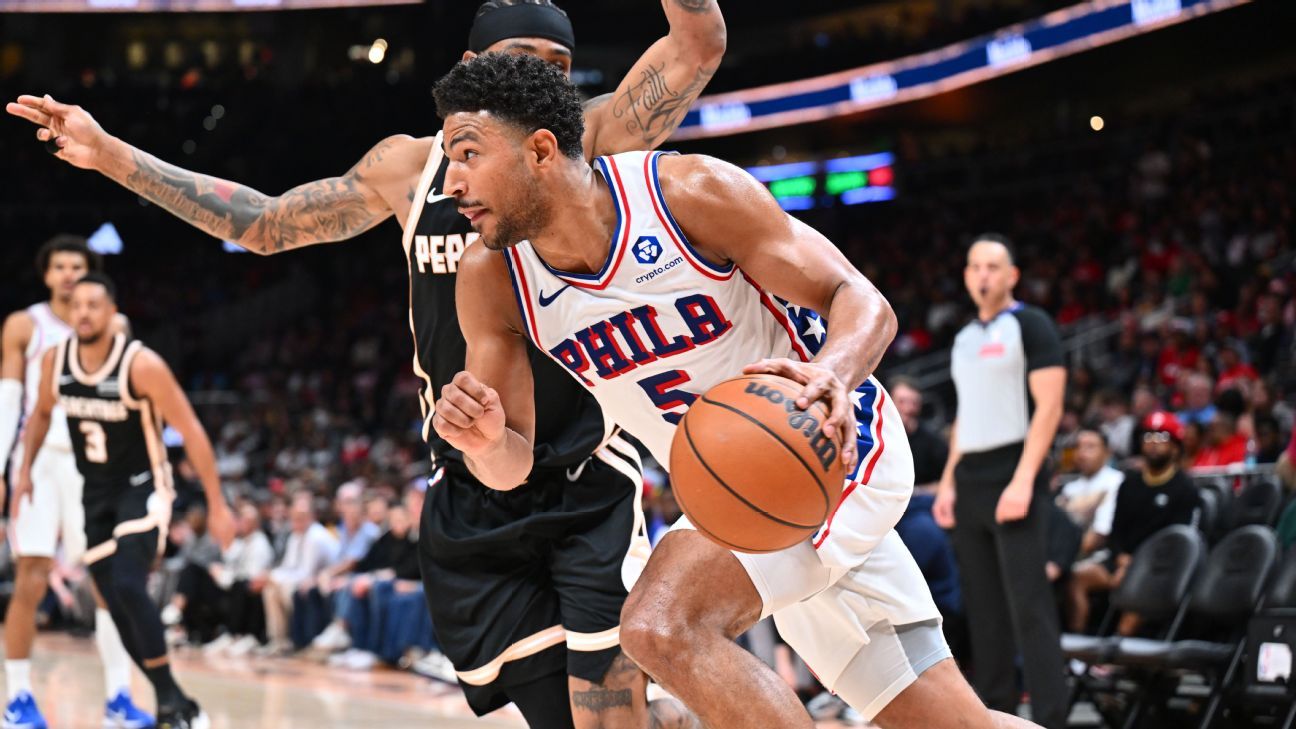
The Philadelphia 76ers have five games scheduled for the week of March 9, while the New Orleans Pelicans have only two. Sixers SG Quentin Grimes, primarily a bench player averaging 24.6 fPPG and rostered in just 22.6% of ESPN leagues, is likely to accumulate significantly more fantasy points that week — assuming he participates in all five games — compared to top Pelicans players like PF Zion Williamson, SF/SG Trey Murphy III, and SG/PG Dejounte Murray. It may seem inequitable, but those are the rules. It’s unfortunate timing for a team with a two-game week!
Volume is crucial in fantasy, and this could pose a larger issue in a weekly format, where one sets their lineup before Monday’s games and later wonders why they are lagging in counting stats. This could be the reason. The daily transaction aspect allows a proactive manager to capitalize on games. No one is suggesting you should drop these Pelicans, especially in a two-week playoff, but it is much simpler to accumulate fantasy points with more games than your opponent. Some teams have limited games during the latter part of March. Consider adding Phoenix Suns players for playoff Week 2, such as PG Collin Gillespie and SF Royce O’Neale, and … then release them for Week 3? Absolutely!
Understand the rules and regulations
ESPN’s standard league playoff guidelines are straightforward and transparent. The top four teams qualify for the playoffs, with the No. 1 and No. 4 seeds competing against each other, and the No. 2 and No. 3 seeds facing off, each for two weeks with daily roster adjustments allowed. The winners then meet for the two-week championship. In ESPN points leagues, all the statistics players generate — points, rebounds, blocks, 3-pointers, etc. — contribute to a single final score. Score the most points. However, not every league operates this way, so ensure you are familiar with your league’s rules.
You might be surprised by how many fantasy managers reach the playoffs without being aware of the most fundamental rules, whether regarding league scoring, transaction limits, or deadlines, and then inundate the poor commissioner with complaints. ESPN’s standard is a points league. Roto/category formats differ significantly. A fantasy manager lacking blocked shots, for instance, might choose to forgo that category, as the objective is simply to win more categories than your opponent. Many daily leagues also impose weekly transaction limits.
Regardless, before making any roster changes, we encourage you to review your league rules, even if you believe you are well-versed in them. Then review them again. You do not want to discover later in the week that your plans were incorrect — or that you did not plan at all — while your opponent executed all the right moves, ones you could have orchestrated.
Observe what NBA teams are doing … and might still do
This is the moment to take more risks and pursue potential. Monitor what NBA teams are doing with their rotations and respond accordingly. Many assume that top contenders have stable lineups, but that is not always true. The Oklahoma City Thunder, currently leading the West, may not push star Shai Gilgeous-Alexander if he is not fully healthy. C Isaiah Hartenstein (calf) is not fit to play. When Thunder C Jaylin Williams receives minutes, he excels. However, his playing time is quite erratic. No one is dropping the reigning league MVP Gilgeous-Alexander, but determining when Williams, for example, will receive significant minutes can be a game-changer.
Underperforming teams can also generate fantasy points, so even though several key Sacramento Kings players have been sidelined for the season, someone still needs to play. A typical role player like Precious Achiuwa, for instance, has become a reliable fantasy contributor. Check ESPN’s most added/dropped lists for trending players, which include names from both strong and weak teams. Be proactive with your lineups, maximizing game opportunities, which may involve some unconventional player swaps. Chicago Bulls PF Guerschon Yabusele might have a greater impact than his former 76ers teammate and frequently injured Joel Embiid in your fantasy league.
Make every roster spot count
ESPN managers in standard leagues have three bench spots and one injured reserve (IR) spot. Rotating through players without transaction limits is the most effective strategy during the fantasy playoffs, if allowed. Managers should focus on healthy players who are expected (as best as we can estimate) to accumulate minutes, both for active and bench roles. When uncertain between two free agents for that evening, consider future days. Perhaps one of them has a game scheduled for the following night, or three out of four days. This can help resolve difficult decision-making.
Embiid is indeed IR-eligible, but if it seems he will not be contributing to his team or yours in the upcoming fortnight — and it certainly appears that way — you may need to part ways with his roster spot. Golden State Warriors PG Stephen Curry last participated in an NBA game in January. If it seems he might not return in March, you may need to move on. There are several players who could return this season, and with IR eligibility, who might be worth holding for future value, such as Suns C Mark Williams (foot), Kings C Dylan Cardwell (ankle), and Denver Nuggets SF/PF Cameron Johnson (ankle).
Plan ahead but … not too far
Perhaps you are the type of fantasy manager who simply keeps the best players active and hopes for favorable outcomes. This strategy may have worked for months, but it may not be effective now. Embiid is a clear game-changer when he is on the court, but no one knows when that will be. The 76ers seem to be playoff-bound, so they are unlikely to take risks with Embiid’s health just to avoid the play-in tournament. You may need the roster spot more than Embiid’s sporadic participation. Knowing when to move on from highly rostered players, whether they are injured or simply underperforming, is challenging, but if you need to win this week to progress, do not focus on what Embiid might achieve in three weeks.
In a similar vein, astute fantasy managers analyze the schedule to add players in advance. This is a sensible approach. What does not make sense is jeopardizing an early playoff loss simply because you have a player with a favorable schedule the following week. Your team must qualify and advance to compete next week first. If you have secured the semifinal victory, then certainly, make those moves ahead of the championship round, but proceed with caution as well.
We all aspire to win and enjoy the experience along the way, but do so responsibly! Best of luck!
