
Exploring the strained dynamic between Giannis and the Bucks
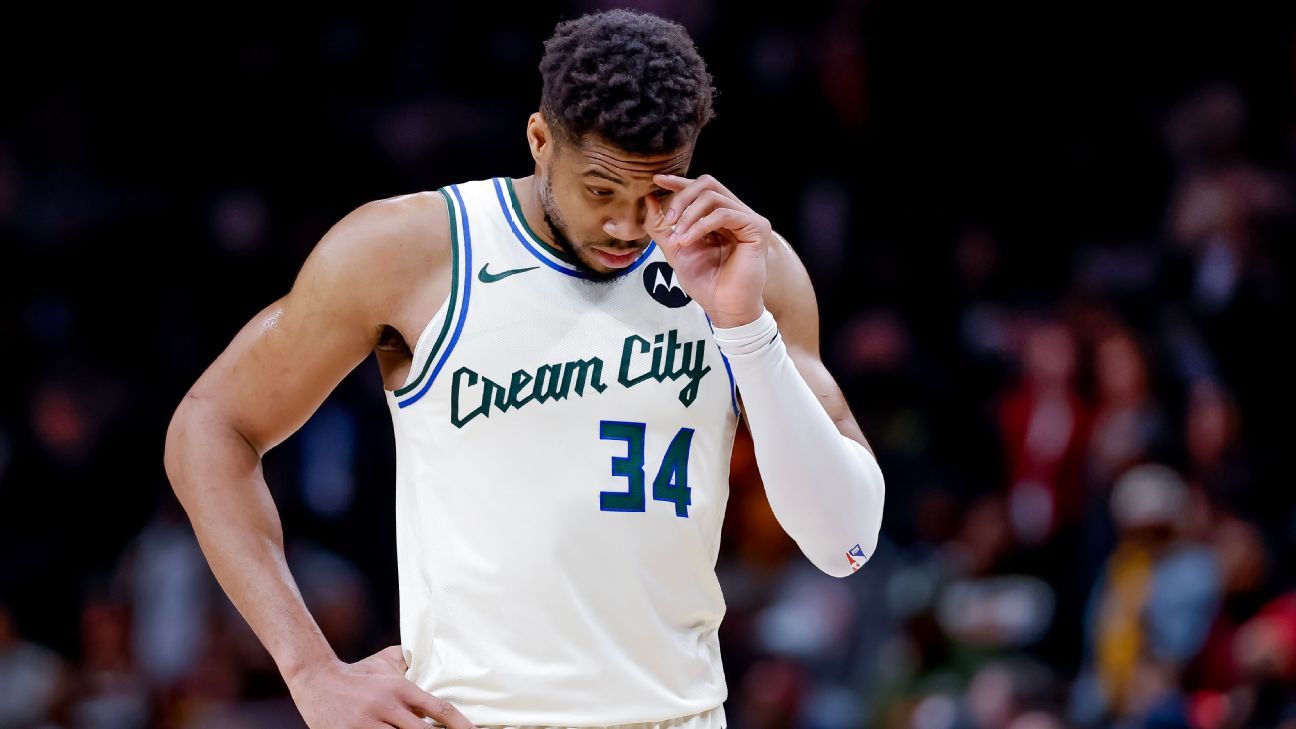
MILWAUKEE BUCKS PLAYERS arrived at the team’s practice facility on Dec. 16, just two days after enduring a 45-point defeat on the road against the Brooklyn Nets. The team held a record of 11-16, placing them 11th in the Eastern Conference, and was competing without star Giannis Antetokounmpo, who had been sidelined due to strains in his right calf and groin.
The atmosphere during practice was tense as the urgency to improve the season increased. Players seemed to be merely going through the motions, and Bobby Portis observed this, as reported by sources familiar with the situation. Milwaukee’s emotional leader confronted his teammates during practice.
“This is why we are struggling — we act like everything is okay, and we lack urgency,” Portis stated. “We just lost by 45. Everyone’s body language is poor. No one is heeding the coaches’ instructions.”
Portis, who joined the franchise in 2020, is among the few remaining players and coaches from the team that secured the 2021 championship. He and Antetokounmpo have experienced the pinnacle of success together and understand what constitutes a championship-caliber team.
Last summer, general manager Jon Horst and coach Doc Rivers attempted to convince Antetokounmpo — and team ownership — about contending in the Eastern Conference after waiving Damian Lillard. They spread the remaining $113 million on Lillard’s contract over five years to acquire Myles Turner on a four-year, $108 million deal. This was the largest contract ever to be waived and stretched, resulting in the Bucks carrying $22.5 million annually in dead money through 2030. Following extensive discussions — including a meeting in Antetokounmpo’s home country of Greece in late July, after which the New York Knicks emerged as the only team he would consider playing for besides Milwaukee — and the Bucks’ refusal to trade him, Antetokounmpo agreed to give the new roster a chance to develop. However, this commitment was short-lived.
Within two weeks, the Bucks had suffered embarrassing losses in Washington and Brooklyn, received a passionate appeal from one of their leaders, and once again faced pressure regarding their franchise icon. After falling to 9-13 on Dec. 1, Antetokounmpo and his agent, Alex Saratsis, reopened discussions with Horst and reiterated the message they had conveyed since last May: it was time to part ways.
Confounding losses persisted, including a 33-point home defeat to the Minnesota Timberwolves on Jan. 13, during which Antetokounmpo and the Bucks’ fans exchanged boos.
“It feels like a funeral,” one team source remarked following that loss.
The Bucks were mathematically eliminated from playoff contention on March 28 after spending most of the season in 11th place in the Eastern Conference. They recorded 13 losses by 25 or more points as of Tuesday, the highest number in a single season in franchise history. During a four-game losing streak from Feb. 27 to March 4, the Bucks were outscored by 97 points, marking the largest combined margin of defeat in any four-game stretch in team history.
This season, the Bucks have a record of 17-19 with Antetokounmpo in the lineup and 14-28 without him, ranking 25th in offensive rating and 26th in defensive rating overall. They are one of six NBA teams positioned in the bottom five in both categories.
Throughout this period, the uncertainty surrounding Antetokounmpo’s future in Milwaukee persisted. The Bucks engaged in trade discussions ahead of the Feb. 5 trade deadline but opted to retain him, even as it became increasingly evident that they had little hope of contending for a play-in spot. Milwaukee is now heading to the draft lottery for the first time since 2016, ending a streak of nine consecutive playoff appearances. The Bucks have not won a postseason series since 2022. Antetokounmpo, who is under contract for one more season, has participated in a career-low 36 games and has privately clashed with the organization for several months, culminating in rejecting the team’s requests to shut him down in the final month of the season and setting the stage for another contentious summer.
“When your best player is one foot in, one foot out,” said one team source, “you’re not going to win.”
ANTETOKOUNMPO EXPRESSED SERIOUS doubts and concerns about the Bucks’ roster months before the season commenced. The Bucks had constructed contending rosters for over half a decade, but the blockbuster trades to acquire Jrue Holiday, who played a pivotal role in their 2021 championship, and Lillard in 2020 and 2023, respectively, helped persuade Antetokounmpo to sign multiple extensions at the expense of depleting their assets. They surrendered three first-round picks and four pick swaps in those transactions, leaving them without high-value tradeable contracts and draft picks to facilitate a significant move following their third consecutive first-round exit last spring.
This is why Antetokounmpo reiterated to the Bucks for several months leading up to the Feb. 5 trade deadline that he was open to being traded. He chose not to make a public trade request but made it clear to all involved parties behind the scenes that he believed both sides needed to part ways immediately, as the franchise was not positioned to compete.
“Giannis has wanted to handle this professionally by being very upfront with the team,” one source with direct knowledge of the situation stated. “This could have been a positive resolution but instead may result in a contentious breakup.”
When contacted by ESPN on Monday, the Bucks declined to comment on the record for this story.
Multiple league sources indicated that Antetokounmpo and Saratsis took further steps in pursuit of an amicable separation. In late January, two weeks before the deadline, they met with team owners Jimmy Haslam and Wes Edens to discuss how the Bucks should “do right” by Antetokounmpo. The player and agent recalled a handshake agreement made by ownership and high-ranking officials to collaboratively trade him if the situation arose, after Antetokounmpo signed contract extensions with the organization in 2020 and 2023.
Shortly after the meeting, Antetokounmpo and Horst spoke at the team’s practice facility, and Horst suggested he was exploring trade negotiations, according to multiple sources. Horst also informed Antetokounmpo that he might not be on the Bucks’ roster by the start of the 2026-27 season following recent discussions with ownership.
With the trade deadline approaching, more than a dozen teams reached out to the Bucks. The Timberwolves, Miami Heat, and Golden State Warriors were among the primary contenders for Antetokounmpo. League sources reported that executives from each of those teams believed Horst was sincere in his discussions about moving Antetokounmpo in a deal that met the Bucks’ criteria of acquiring young blue-chip talent and/or a surplus of draft picks.
For some teams, however, Horst and the Bucks took several days to respond to inquiries, leading those executives to conclude that Milwaukee was not prepared to execute a franchise-altering move. For others, the Bucks’ demands proved to be excessive: Milwaukee sought Evan Mobley from the Cleveland Cavaliers and VJ Edgecombe from the Philadelphia 76ers, along with additional assets from both teams, as reported by ESPN’s Ramona Shelburne on March 20.
Antetokounmpo’s preferences in all trade discussions were also significant. He has the 2026-27 season guaranteed in his contract before a player option in 2027. He becomes eligible for a four-year, $275 million contract extension on Oct. 1 if he is not traded, or six months after being traded to a new team.
“One of two outcomes will occur: Either he will be extended, or he’ll be traded,” Edens told Shelburne.
However, no team would relinquish the necessary players and draft picks without assurance that Antetokounmpo has a long-term plan to remain.
As the deadline approached, Minnesota and Golden State began to sense that Milwaukee was retaining Antetokounmpo, prompting both to pursue other deals. Team sources indicated that the Bucks seriously evaluated the Heat’s offer, which centered around Tyler Herro, Kel’el Ware, other players, and multiple draft picks and pick swaps. Milwaukee considered proceeding with Miami on Feb. 4. Ownership, however, believed the optimal decision was to retain Antetokounmpo and wait for better offers in the summer. The Bucks informed the Heat on the morning of Feb. 5 that they would not accept a deal.
The Bucks celebrated Antetokounmpo’s decision to stay with the team, even as they remained outside the play-in picture and had a player many within the organization described as “distant” at times. No one questioned Antetokounmpo’s commitment on the court. However, management, coaches, and players were fatigued by the ongoing discussions and uncertainty surrounding his future this season, creating a strained atmosphere in the locker room, according to team sources.
“The core issue is the perception that Giannis doesn’t want to be here on any given day,” one team source stated.
At the time of the trade deadline, Antetokounmpo was sidelined due to a right calf injury that ultimately caused him to miss 15 games. Rival executives suggested that the 20-29 Bucks’ best strategy would have been to shut him down and aim for a high lottery pick. Milwaukee will receive the lesser of its own pick and the one belonging to the New Orleans Pelicans in June’s draft (the better pick will go to the Atlanta Hawks).
Antetokounmpo, Horst, and Rivers all agreed on him continuing to play this season, however. Antetokounmpo aimed to help the Bucks achieve as many wins as possible after they chose not to trade him. The Bucks remained steadfast in their desire to make a postseason push and demonstrate to Antetokounmpo that this roster could be competitive.
Horst and Rivers consistently encouraged players and staff to maintain focus, believing the season would improve. Players had urged coaches to hold them accountable and expressed the need for specific adjustments, but by the second half, everyone recognized the direction the season was heading.
“We have no identity,” a team source remarked.
THE MORNING AFTER the Bucks squandered a double-digit lead, resulting in a blowout loss in Chicago on March 1, Rivers convened a team meeting. If the Bucks were to make a push for a play-in spot, this week was crucial. The Bucks were set to face a short-handed Boston Celtics team in Milwaukee on a back-to-back set on March 2, followed by a significant matchup against the Hawks.
Rivers, who won an NBA title as coach of the Celtics in 2008 and will be inducted into the Naismith Memorial Basketball Hall of Fame later this year, began the meeting by urging his players to review his résumé, as reported by six individuals present in the room.
“I took teams to the playoffs and to the championship that weren’t expected to. I believed this was one of them,” Rivers told players during the session. “Either you’re with us or against us. If you’re not playing hard, we won’t play you anymore.”
“I know everything that happens in this building.”
Rivers presented clips of forward Kyle Kuzma’s mistakes in recent games. Kuzma was a DNP-Coach’s Decision later that evening in the Bucks’ 27-point home loss to the Celtics, marking the first DNP-CD of his career.
The meeting was one of several instances that left many in the locker room feeling uneasy and continued the theme of a season-long disconnect between Rivers and the players, according to team sources. When asked by ESPN to describe his relationship with his team, Rivers declined to comment on the record.
The night prior, the Bucks’ coaching staff addressed the players in the postgame locker room, delivering a message to guards Ryan Rollins and Kevin Porter Jr. about selfish play and the need to elevate their teammates. They had combined for just 21 points on 9-of-27 shooting against the Bulls.
Rollins, who is averaging 17.2 points, is a candidate for Most Improved Player and has quickly become one of the Bucks’ top young talents. When Milwaukee pursued Memphis star Ja Morant during the season, the team refused to include Rollins in any offer, believing in the 23-year-old’s potential, sources indicated. Porter, who signed a two-year deal in July to return to the team after being traded to Milwaukee last February, has averaged 17.4 points.
Rollins and Porter bore the primary responsibility for facilitating and managing the offense. Antetokounmpo had remarked in January that the Bucks’ “chemistry’s not there. Guys are being selfish, trying to find their own shots instead of seeking the right shot for the team. Players are attempting to do it individually.”
Thus, on this night in Chicago, the coaches believed the responsibility should have fallen on their guards to lead the way.
The coaching staff’s message was intended to serve as a rallying cry. It was also meant to empower Rollins and Porter to take on leadership roles, according to team sources. However, the messages did not seem to resonate, and the team felt fragmented in the postgame locker room, leading to a players-only meeting.
The players expressed their thoughts to one another and called each other out in an effort to overcome their struggles. Multiple sources reported that Kuzma advised teammates, particularly Rollins and Porter, not to take the coaches’ comments too personally, encouraging them to focus on being their best selves moving forward. Coaches learned of Kuzma’s message within the next 24 hours, and Kuzma did not play in the subsequent game against the Celtics. Rivers stated after the game that it was a coach’s decision, and sources indicated that the two had a conversation later in the week to resolve the situation before Kuzma’s return to the lineup.
Antetokounmpo sat on the bench during the first half of the Bucks’ loss in Chicago but left the United Center at halftime and was absent for the players-only meeting. He returned from his calf injury for the game against the Celtics on March 2, but it made little difference. Ultimately, the Bucks finished with a 1-4 record against the Bulls, Celtics, Hawks, Utah Jazz, and Orlando Magic. Four of the five losses during this stretch were by significant margins, dropping the Bucks to 27-36 and well out of the play-in race.
“Something feels off about this season,” Antetokounmpo told ESPN sideline reporter Vanessa Richardson before the Bucks’ 131-113 loss to the Hawks on March 4.
Heading into the March 12 game against the Heat, the Bucks had lost three consecutive games and seven of eight. NBA scouts observed increasingly disjointed play from the Bucks. Several team sources questioned why Antetokounmpo had not been shut down given his injuries, and with the Bucks falling in the standings, they concluded it was best for both the team and player to avoid risking further injury.
“The leadership aspect is lacking; someone needs to step up and do the right thing,” a team source stated the week of March 9.
Ultimately, it took one more injury — Antetokounmpo’s fifth of the season — and additional losses for the Bucks to consider resting their star player.
ON MARCH 15, Antetokounmpo sustained a hyperextended left knee during the Bucks’ home victory over the Indiana Pacers. He was diagnosed with a bone bruise in the knee. The Bucks requested that he shut down for the remainder of the season, according to sources, believing it would benefit both parties by preserving his health and allowing the team to prioritize a higher draft pick. The issue, however, was that the two sides were not aligned — once again.
Antetokounmpo declined the Bucks’ requests to shut down and informed the team that he intended to return when he felt healthy enough to play. On March 17, multiple sources reported that he pushed to play against the Jazz and told the team he believed he was fit to compete. The Bucks overruled him, and their medical staff did not clear him to play. Antetokounmpo then informed several individuals around the team that he hoped to participate later in the road trip (March 21 in Phoenix, March 23 in Los Angeles, March 25 in Portland), but he never returned to action.
On March 24, the NBPA issued a statement suggesting that Milwaukee was “tanking” and compromising the league’s integrity by shutting down Antetokounmpo. The NBA initiated an investigation and interviewed Antetokounmpo, his representatives, Bucks officials, and team doctors — a probe prompted by Antetokounmpo’s push for the union and league to scrutinize his own team.
“For someone to come and tell me not to play or not to compete, it’s like a slap in my face,” Antetokounmpo told reporters on April 3. “I’m available to play, but I’m not in the game. I’m available to play today. Right now. I’m available.
“So, I don’t know where the relationship goes from here.”
Antetokounmpo expressed a desire to play again this season to share the court with his brothers, Thanasis and Alex. Giannis Antetokounmpo is making efforts to participate in Friday’s home finale against the Nets.
The Bucks and Antetokounmpo provided differing accounts to the league during the investigation interview process, however: Milwaukee claimed he was not ready to return and did not genuinely want to; Antetokounmpo asserted he was healthy enough to play, but the team would not clear him.
The Bucks informed investigators that Antetokounmpo declined the opportunity to scrimmage as part of the return protocol from his knee injury.
“The investigation has found that the Bucks scheduled Giannis to work out … in three-on-three scrimmages as part of his return-to-play process, but he declined to participate,” an NBA spokesperson stated on April 4. “There is a disagreement regarding whether the team requested that Giannis take part in a group workout earlier this week, and the league is continuing to monitor the situation.”
In the hours before they were mathematically eliminated from the play-in tournament on March
