
Anthony Davis dealt to Wizards: Evaluation of the trade, next moves for Dallas
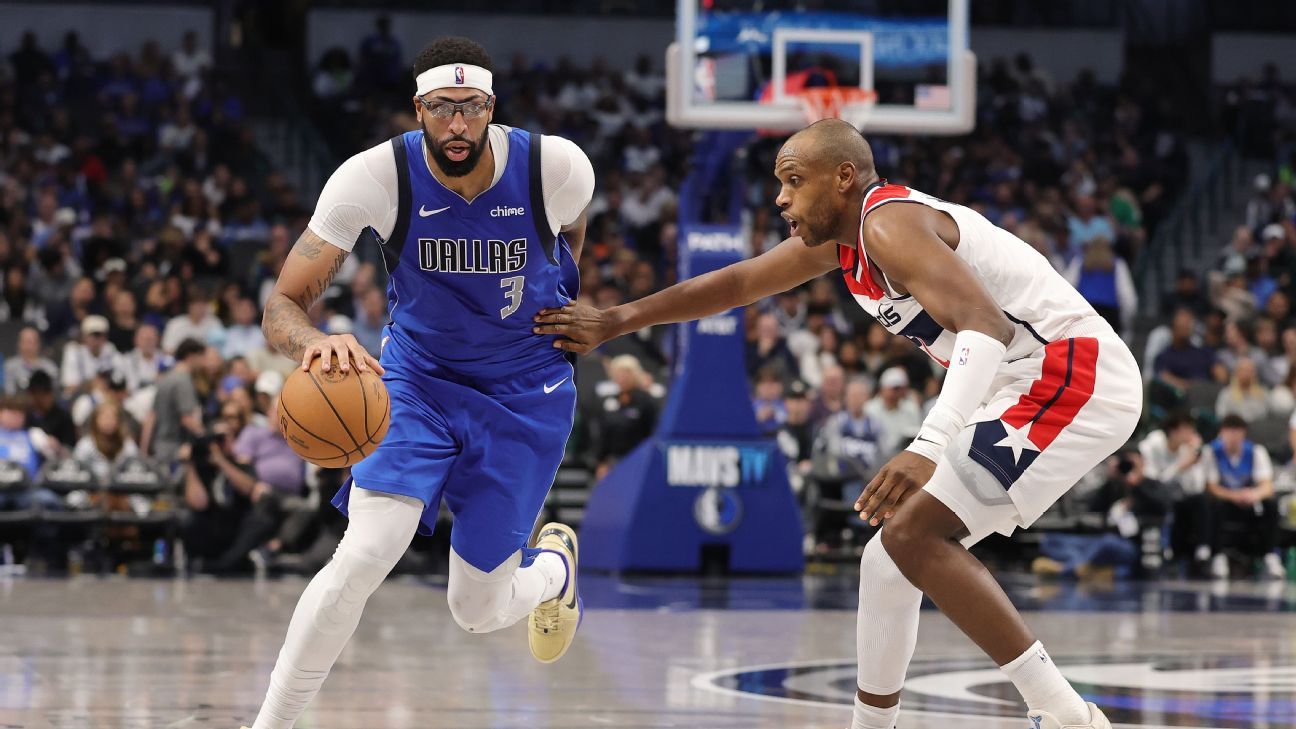
The Anthony Davis chapter in Dallas has concluded just a year after the Mavericks surprised the NBA by trading Luka Doncic to the Los Angeles Lakers in exchange for a package centered around the 10-time All-Star.
With their roster now focused on No. 1 pick Cooper Flagg, the Mavericks have emphasized salary cap flexibility, a shift from the previous year when former GM Nico Harrison claimed that Davis’ two-way excellence made him a more viable option for leading Dallas to a championship than Doncic. This trade eliminates the remaining $120 million on Davis’ contract while acquiring some late first-round selections.
At the same time, the Washington Wizards are continuing their rebuild with another significant trade for a veteran star. They will team Davis with newcomer Trae Young and a collection of young talent, including 2024 first-round picks Kyshawn George and Alex Sarr.
How will the revamped Wizards come together in the 2026-27 season? And what are the Mavericks’ next steps as they aim to support Flagg with younger players? Let’s analyze the implications of this surprising transaction.

The Trade: Davis sent to Wizards in players, picks package for Mavs
Dallas Mavericks receive:
F Khris Middleton
G AJ Johnson
G Malaki Branham
F Marvin Bagley III
2026 first-round pick (from OKC)
2030 first-round pick (from GS, top-20 protected)
2026 second-round pick (from PHX)
2027 second-round pick (from CHI)
2029 second-round pick (from HOU)
Washington Wizards receive:
F Anthony Davis
G Jaden Hardy
G D’Angelo Russell
G Dante Exum
Grades

Dallas Mavericks: B
This grade reflects the Mavericks’ decision to trade away Davis based on his current market value, rather than the initial choice to acquire him. (That trade was previously graded an F.)
It is improbable that any team would have valued Davis as highly as Dallas did a year ago, and the series of injuries he has faced since, including a hand sprain that has kept him out for the past month, has diminished his marketability. Rather than being seen as the two-way powerhouse he once was, teams likely now view Davis as an inconsistent contributor with one of the largest salaries in the NBA.
In a time when apron restrictions have made teams more aware of managing their salary cap effectively, this made it challenging to trade Davis for substantial draft assets or equivalent young talent. The Mavericks likely had to choose between deals like this that focused on reducing salary, acquiring players with similarly large contracts, or waiting to move Davis until the summer.
Among those options, proceeding with this deal now seems prudent, as it allows Dallas to avoid incurring a significant luxury tax bill for a lottery team. The Mavericks have saved a considerable amount in 2025-26 salary through this trade, bringing the Wizards closer to the tax threshold.
There was speculation that Dallas could have retained Davis and aimed for success in 2026-27, when Kyrie Irving is expected to return from his ACL injury and Flagg appears ready to play a significant role on a competitive team. The Mavericks are likely to lose their 2027 first-round pick unless it lands in the top two, so from that perspective, there was no clear downside to striving for as many wins as possible.
However, that approach risks repeating the errors of teams that have rushed to build around their young stars. Attempting to peak when Flagg is just 20 years old may not be as beneficial as accumulating players who align with his timeline to compensate for the draft picks Dallas has already lost.
It should be noted that this deal does not yield any premium picks. The Mavericks are expected to receive what will likely be the No. 30 pick in this year’s NBA draft—though the Detroit Pistons could push it down to No. 29—and a 2030 pick that cannot be higher than No. 21 due to the protections in place.
Having additional opportunities is still advantageous for Dallas: They do not control their first-round picks from 2027 to 2030, having traded away two and swapped the other two with likely contenders. The Mavericks now possess up to three incoming first-round selections from other teams, including the sole one acquired from the Los Angeles Lakers in the Doncic trade.
Further changes may be on the horizon, depending on how committed Dallas is to a rebuild. Role players Max Christie, Daniel Gafford, Naji Marshall, and P.J. Washington are on manageable contracts that could yield pick compensation. Irving might also be a candidate for trade once the Mavericks are ready to make that decision. Among these players, Irving is the least likely to remain on the roster as Flagg develops toward the end of this decade.
The cap flexibility created by reducing up to $67 million in 2026-27 salary—depending on whether Russell exercises his player option—could also be utilized to acquire more draft picks. The Mavericks would need to trade additional players under contract to generate cap space this summer but should be able to structure this deal to create a trade exception exceeding $20 million, the difference between the salaries of Davis and Middleton.
For now, it is crucial for Dallas to optimize its own 2026 first-round pick, which would be seventh entering the lottery if the season concluded today. However, the Mavericks face considerable competition for that position, with the Milwaukee Bucks likely to end their season and the Memphis Grizzlies trading away star Jaren Jackson Jr. All three teams currently have 19 wins, with Dallas in last place due to two additional losses.
The Mavericks can achieve this goal while also gaining insight into Johnson’s future by providing him with extended playing time for the remainder of the season. Johnson, selected No. 23 in the 2024 first round, has been traded twice in as many deadlines and has logged just 853 minutes in his NBA career thus far. He has demonstrated potential in recent extended appearances, scoring a total of 31 points on 11-of-21 shooting and eight assists (though with seven turnovers) in his last two games for the Wizards.

Washington Wizards: C
What does Washington look like now after acquiring Young and Davis in recent trades?
Bringing in Davis, who is currently injured, aligns with the Wizards’ goal of finishing with a bottom-four record, ensuring they retain a first-round pick that would go to the New York Knicks if it falls outside the top eight. Washington is currently tied for fourth in the lottery standings but may swap positions with the New Orleans Pelicans, who have the same number of wins and no incentive to lose games for better draft positioning.
With Davis likely to miss the remainder of this season, the Wizards will enter training camp with a different style to implement. They have spent most of this season employing a four-out offensive strategy centered around center Alex Sarr, who has played only 7.4 minutes as a power forward according to my analysis of lineup data from NBA Advanced Stats.
We did observe Sarr alongside a big man at times during his rookie season, when he started four games next to Jonas Valanciunas, totaling 138 minutes at the 4 position. Whether Davis or Sarr is technically classified as the center in Washington’s starting lineup is less significant than how the team integrates the two players.
Defensively, they should form a formidable duo, well-suited to mitigate Young’s defensive weaknesses. Sarr has made significant progress as a rim protector in his second NBA season, ranking just outside the league’s top 10 in opponent shooting accuracy on shots within five feet as a primary defender, according to GeniusIQ tracking on NBA Advanced Stats. Davis ranks just ahead of him. The only team with two players in this category was … Dallas, with Davis and Daniel Gafford. (Somewhere, Harrison shed a single tear reflecting on this statistic.)
I have more questions regarding how Davis and Sarr will collaborate offensively. Primarily an outside-in player during his rookie year, when he shot 39% from the field, Sarr has enhanced his efficiency in his second season by operating closer to the basket. His average shot distance has decreased from over 14 feet to under 10, according to Basketball-Reference.com.
If Davis acts as the primary screen setter for Young’s pick-and-rolls, that places Sarr back in the role of spacing the floor for those plays. He has improved to 33% from beyond the arc after shooting 31% as a rookie, but defenses would likely prefer to see Sarr shooting from three rather than finishing at the rim.
From a broader perspective, there is concern that the Wizards are prematurely advancing their rebuild. Adding Davis and Young will create pressure to be competitive next season, especially if both players secure the new contracts they are pursuing. (Young can opt out of a $49 million player option this summer, while Davis will seek an extension ahead of his $62.8 million player option in 2027-28.)
Sarr and George appear to be foundational pieces, while Carrington and 2025 lottery pick Tre Johnson have shown promise. Nevertheless, Washington lacks any prospect comparable to Flagg. Sarr, ranked 22nd, was the only Wizards player included in ESPN’s top 25 under 25 rankings in December.
Perhaps the Wizards can leverage youth and depth to create a balanced lineup capable of competing in the East. More likely, they will need one of their young stars to emerge or to secure a top-four pick in the 2026 lottery. Absent that outcome, I would have preferred a more measured approach after acquiring Young before making a move of this scale.
