
A decade following ‘Mamba out,’ the impact of Kobe Bryant’s last game continues to resonate.
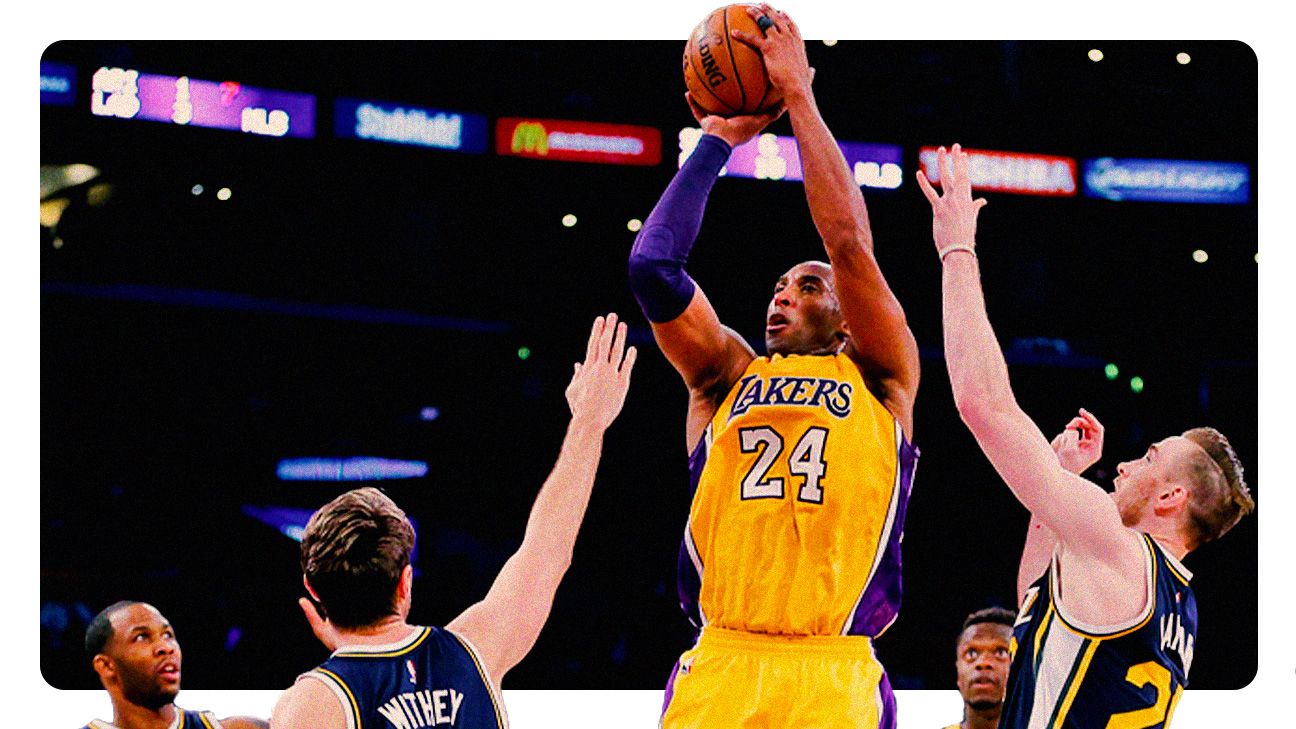
The initial five attempts Kobe Bryant made in the concluding game of his two-decade NBA career all ended in failure: each shot missed.
A three-pointer from the left wing came up short. A mid-range jumper overshot the mark. His third and fourth attempts in the paint were unsuccessful. The fifth, an 18-foot shot, ricocheted off the rim.
With every miss, the audience in Los Angeles on April 13, 2016, expressed their discontent. However, when his first successful shot—a 10-footer with 5:12 remaining in the first quarter—finally went in, the atmosphere shifted positively.
“When he made that shot, we knew it was about to just keep pouring,” said Bryant’s teammate Jordan Clarkson to ESPN.
Bryant quickly followed up with five consecutive baskets, transforming the crowd’s groans into resounding chants of “Kobe.”
“After he made that first shot and the crowd just [sent] like a surge of encouragement, support and probably a little bit of relief, too,” remarked Naismith Basketball Hall of Fame photographer Andrew Bernstein to ESPN. “Like he’s off the schnied, he’s on the board. Even if he left with four points, nobody cares at this point.”
Nearly a decade later, Julius Randle’s recollection of the game remains vivid. Randle, now a forward for the Minnesota Timberwolves, spent two seasons with Bryant and played 33 minutes in his final game.
One aspect of that farewell performance continues to resonate with him.
“He transformed into the Black Mamba really quickly,” Randle stated. “You could just see it in his eyes. He was determined to win that game as if it were a championship.”
By the end of the night, everyone in the arena—from Jay-Z and Shaquille O’Neal sitting courtside to Utah Jazz players attempting to contain Bryant—felt the impact of the Black Mamba.
He scored an astonishing 60 points on 22-of-50 shooting as the Lakers triumphed over the Jazz 101-96. While it may not have been a flawless performance, it provided a sweet reprieve for many Lakers fans following a franchise-worst 17-65 regular season.
For that one night, nothing else mattered except witnessing one of the league’s all-time greats turn a celebration into a crowning moment. Ten years later, many present still find it hard to believe what they experienced.
“I can’t say we expected that. But it’s Kobe,” teammate Larry Nance Jr. told ESPN. “You expected something.”
Bernstein captured the first headshot of the five-time NBA champion in October 1996. April 13, 2016, not only marked the conclusion of a chapter in Bryant’s career but also one in Bernstein’s. He aimed to make the most of it.
As the NBA’s senior photographer, Bernstein reached out to Bryant’s management about spending the day with him, and they agreed. He departed his home at 4 a.m., drove to the arena, and took a rideshare service to Bryant’s office in Newport Beach, where Bryant was already engaged in a meeting.
Hours later, Bryant, accompanied by his camera crew and Bernstein, traveled to the arena in Bryant’s helicopter. The early moments of the journey showcased Bryant’s composed demeanor on a day that was anything but ordinary.
Five minutes into the flight, Bryant fell asleep.
“This guy had a heart rate like it was a constant chill,” Bernstein told ESPN. “Just incredible on that day of all days that he was just so relaxed and at peace. It was wonderful to see, actually.”
Bryant arrived at the arena dressed in an all-black suit and sunglasses, smiling as he made his way to the locker room. His ease continued there, as he signed autographs and generously spent time with fans. Bernstein did not sense any nervousness or tension from him.
In his 29th season as the Lakers’ color analyst, Stu Lantz visited the locker room before the game, where he encountered Bryant with a message: “I’m going to have some fun tonight.”
“When Kobe would say things like that, you knew something special was going to happen,” Lantz told ESPN.
As tipoff neared, Jazz forward Joe Ingles exited the visitors’ locker room to warm up. A typical game night atmosphere had an entirely unusual vibe.
Ingles and his Jazz teammates found themselves in the challenging position of being on the opposing side of Bryant’s final game.
“No one even cared that we were in the arena, which is understandable,” Ingles told ESPN.
Lakers public address announcer Lawrence Tanter, now in his 43rd season, recalled to ESPN that the pregame scene was “pretty hectic.” Clarkson noted that the overwhelming crowd made it difficult for players to warm up properly.
“When we got to the arena, it was a little bit more than usual, I would say as we were walking in,” NBA official David Guthrie, one of three referees for the game, told ESPN. “But once we walked out onto the floor pregame, as soon as you walked out, it’s like the building was already full of people. There were celebrities everywhere. There was media everywhere, all over the floor.”
The game warranted special festivities before tipoff.
Magic Johnson delivered a speech in which he referred to Bryant as “the greatest Laker ever.” A video tribute featured notable figures such as Shaquille O’Neal, LeBron James, and Stephen Curry. Lakers fan and Red Hot Chili Peppers bassist Flea performed the national anthem.
Tanter announced Utah’s starting lineup, and when it was time for the Lakers’ introduction, another video followed showcasing current teammates expressing their gratitude. When asked how they prepared to play after the lengthy introduction, Nance admitted: “You don’t.”
“You just appreciate it. … It was his night,” Nance stated. “If they needed us to perform at halftime, shoot, we would’ve performed at halftime. It was a night to honor him.”
ESPN’s Lisa Salters reported from the sidelines that the plan for Bryant was to play 36 minutes, depending on the game’s flow and how he felt.
Los Angeles began the game looking like a team with only 16 wins. Fortunately, the Jazz—eliminated from playoff contention just before the game started—struggled as well. They held a 6-4 lead before Bryant blocked Trevor Booker and then made his first basket.
His fourth of five consecutive makes—a contested corner three-pointer over Jazz forward Rodney Hood—sent him hopping in front of the Lakers bench, acknowledging the successful shot.
For Lantz, that basket served as a positive sign.
“I’m thinking, ‘That shot has no chance of going in.’ It went in,” he said. “I’m like, ‘This is his night. This is Kobe Bryant’s night.'” Utah quickly responded, and Hood assisted a wide-open Ingles three-pointer, which he made. Lakers guard Marcelo Huertas received the inbounds pass and swiftly threw an outlet to Bryant, who gathered it and sank another three-pointer, sending the crowd and Lakers bench into a frenzy.
Ingles contested the shot and still recalls what happened right after. Bryant let out a small laugh toward Ingles.
“Obviously now, especially after [Bryant’s death in 2020], you’ll always remember those moments,” Ingles said. “I didn’t think I’d play in the NBA, let alone play in his last game. Really, really special moment.”
Bryant played the entire first quarter, scoring 15 points on 5-of-13 shooting. As he sat on the bench to start the second quarter, his teammate nearly created his own highlight.
With 7:18 left in the frame, Nance attempted to dunk on Jazz center Jeff Withey. The crowd’s reaction was loud enough for Jack Nicholson to quickly turn his head while being interviewed by ESPN during the broadcast.
When reminded of the near dunk, Nance laughed before dismissing it.
“I don’t even remember it. That night had nothing to do with me,” he said, encapsulating the sentiments of Bryant’s teammates.
It was clear that the Lakers’ game plan was straightforward. This was Bryant’s night, after all.
Lakers coach Byron Scott approached every timeout in the same manner. Longtime Lakers trainer Gary Vitti—also in his final game before retirement—would hand Scott the drawing board. The coach entered the huddle with a message that was quick to convey. “All right, here’s the play, guys. Kobe got the ball here. Rest of y’all, get the hell out the way,” Scott said on Power 106 Los Angeles in February. “I said, ‘Kobe, if you want to pick and roll, just call one of them up.’ I said, ‘Everybody get the hell out the way.’ Simple as that.”
Bryant returned in the second quarter and scored 7 points on 2-of-7 shooting. He found his rhythm after halftime, adding 15 in the third quarter, bringing his total to 30 points. During an interview with Salters before the fourth quarter, Scott mentioned that Bryant told him, “Coach, let me go, I feel good.”
However, Bryant showed signs of exhaustion, occasionally gasping for air. He played the entire second half for a season-high 42 minutes, his most since November 2014.
Lantz often joked with Bryant that the star had a third lung because he never seemed to tire. That night proved to be an exception. Lantz believed Bryant wouldn’t last until the end without taking a break, telling Bryant postgame he was “sucking air.” The guard replied: “I was dying,” according to Lantz, yet Bryant managed to give everything he had on the court.
And his teammates recognized the task at hand.
Despite taking 50 shots, it required a collective—and selfless—effort to ensure Bryant received the ball.
“It was just rebound and give the ball to him,” Nance stated. “We were getting stops strictly to give the ball to him. We were setting screens strictly to get him shots. It was just all-out sacrifice for one common goal, and that was this guy.”
A layup for Bryant’s 46th and 47th points narrowed Utah’s lead to eight with 3:05 remaining, initiating what Guthrie described as a “really intense final stretch.”
Bryant made two free throws, the Jazz scored, and then two more layups from Bryant followed, bringing the Lakers within four with 1:27 left. The Golden State Warriors achieved an NBA-record 73 wins at Oracle Arena that night, but all eyes were on Los Angeles.
After another Lakers stop, Nance—staying true to his word—grabbed the rebound and quickly found Bryant. Bryant dribbled up the court, received a screen from Randle on the left wing, dribbled three times to his left, then rose to sink a three-pointer over Lyles, stunning the sellout crowd and pulling the Lakers within one.
Nicholson leaned back, excitedly raised his hands, and clapped. Cameras captured Jay-Z with raised eyebrows mouthing “wow.” Snoop Dogg danced in the audience. Hubie Brown repeatedly exclaimed “Oh!” on the ESPN broadcast, and Lantz found himself in an entirely different atmosphere.
“I was in la la land. I was like, ‘I’m not seeing this. I’m just not seeing this.’ I’ve seen every game the kid has ever played in the pros, but I’ve never seen anything like this on your last game,” he said. “I mean, for him to be able to do what he did, again, is just mind-boggling.”
Utah had the seventh-best defensive rating in the league that season but was missing its top defensive player, center Rudy Gobert. Ingles played for head coach Quin Snyder for eight years.
“Some of the shots he was making, it didn’t f—ing matter if we sent five people to him, he was going to make some of those shots,” Ingles stated. “It honestly felt like the second half, the more he made shots, at that point it was like he’s not f—ing missing now. He’s in that mode now.”
Bryant’s final field goal, a 19-foot mid-range jumper, put the Lakers ahead for good and sent the crowd into new heights of excitement as Utah called a timeout. The Jazz then missed a layup, and Bryant went to the free-throw line for his 59th and 60th points.
He scored the last 17 points for the Lakers, going from 47 to 60, within 1:12 of game time.
On the court to finish the game, Ingles was in awe of what Bryant was accomplishing at 37 years old and after everything his body had endured.
Scoring 60 points in Game 82 of his 20th season was one thing. Achieving that was another.
Numerous injuries plagued the final years of Bryant’s career. A torn Achilles tendon near the end of the 2012-13 season initiated a stretch in which he played only 41 games over the next two seasons.
Scott had a straightforward objective for Kobe’s final season: keep him healthy until Game No. 82. Nance recalls Bryant icing his knees, elbows, wrists, and “any joint you could think of.” Nevertheless, Bryant reached the finish line, appearing in 66 games.
Ingles entered the league in 2014-15 and hadn’t faced Bryant at his absolute peak. The second half revealed to him what he had missed.
Similarly, for the young Lakers who hadn’t played alongside Bryant in his prime, they experienced the essence of the Black Mamba.
“You could see him willing himself. Because we had seen the bumps and bruises and aches and pains he had gone through all year to get to that point,” Nance noted. “But when he locked in, you could tell there was another gear he went to.”
The final statistic of Bryant’s career came on an outlet pass to Clarkson for an assist. It put the Lakers up five with four seconds remaining.
Bryant tapped his chest nine times, then opened his arms to Nance. Following Nance, the Lakers’ other young players with high potential—Randle, Clarkson, and D’Angelo Russell—soon joined in a memorable embrace.
Ten years later, Clarkson described it as a moment of foreshadowing. Randle, Clarkson, and Russell went on to have successful careers due to “the insights of what he told us playing alongside him,” Clarkson stated. Being responsible for Bryant’s last statistic carries additional significance as well.
“Something he passed down to all of us young dudes that were there, I think that’s like the symbolism of it,” Clarkson remarked. “His knowledge and everything. So it’s pretty dope for me. I’ll hold that and cherish it.”
After Utah’s final timeout, Bryant exited to a thunderous standing ovation. Bernstein had a prime spot next to the Lakers bench as Bryant departed.
“The players and the crowd were just going bananas,” he said. “And I do remember thinking, wow, that’s the last time I’ll see him check out of a game. I mean, it was really bittersweet.”
The significance of Bryant’s extraordinary performance struck Guthrie, who until that moment had been too occupied officiating the game to fully appreciate it. He high-fived and embraced fellow officials Monty McCutchen and Haywoode Workman, proud to be part of the moment.
Then, someone brought over the box score—the only one Guthrie saved in his 21-year NBA officiating career.
“That’s the one thing that I have from the game is that box score,” he said. “And that’s really the only thing that I ever want from it is just that box score, which is just a normal thing you get every game. But that one’s just a little bit, it’s more special.”
Others concur.
Ingles called it one of the top games he has participated in. For Nance, that night ranks No. 1 outside of facing his brother in the NBA. Clarkson has appeared in the NBA Finals, but “in terms of energy and everybody in the place showing love to one person,” nothing compares.
After the final buzzer sounded and Bryant embraced his teammates, he shared a moment with O’Neal on the baseline. Bryant’s former teammate posed a question that thousands of others wondered: “How’d you do that s—, man?”
“I have no idea,” Bryant replied.
Before taking the microphone for a nearly four-minute speech, Bryant embraced his family, sharing a quick handshake with Gianna, his second-oldest daughter, as former teammates gathered on the court.
Then he addressed the crowd with his sweat-soaked No. 24 jersey still on, expressing his gratitude for Lakers fans, reflecting on the 20-year journey, and concluding by thanking his family.
Running out of words on a night when his 60 points left the sports world similarly speechless, Bryant kept his closing statement straightforward.
“What can I say? Mamba out,” dropping the mic on his final performance.
