
2026 NBA Draft: Key Observations from Scouts and Executives on the Leading Five Selections
The NBA’s regular season has over a week left, yet many team executives are already looking ahead to May 10. This date marks the league’s annual lottery, which will establish the draft order for what could be a remarkable 2026 class.
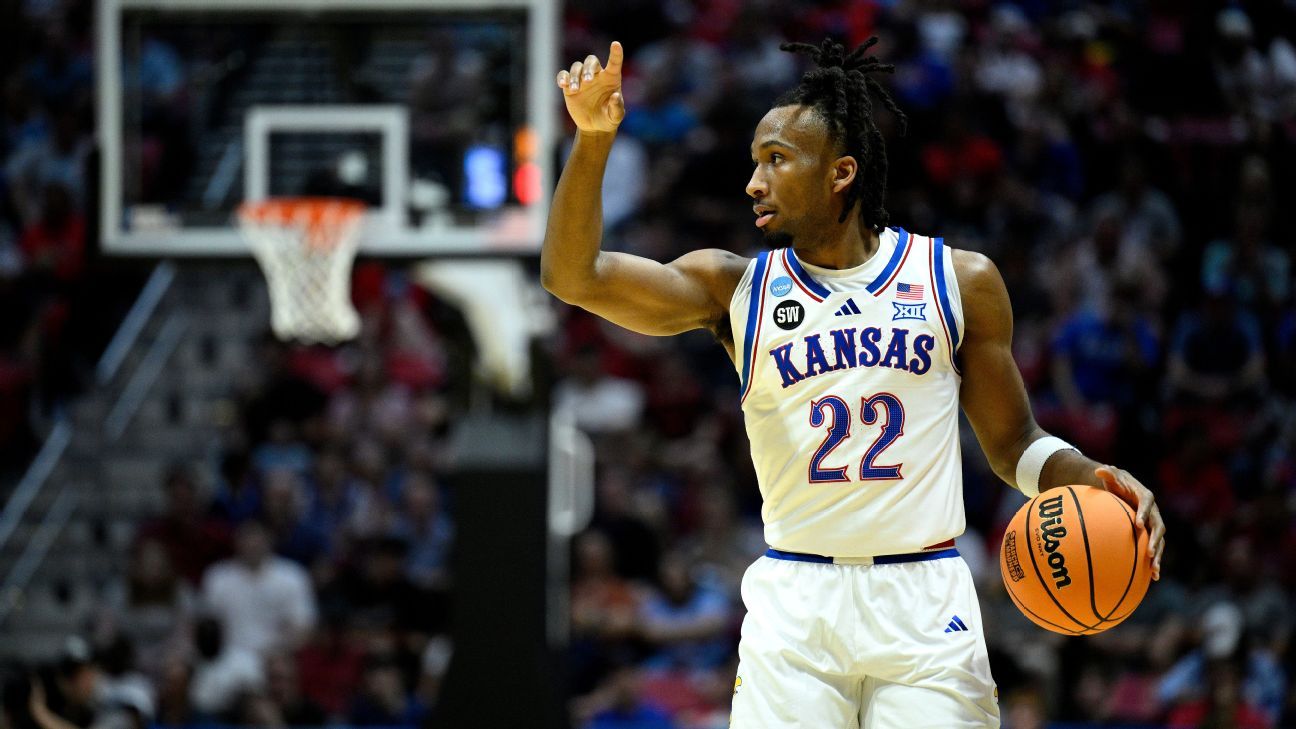
With the men’s Final Four taking place this weekend, what insights are league insiders sharing regarding BYU wing AJ Dybantsa, Kansas guard Darryn Peterson, Duke forward Cameron Boozer, and other leading prospects?
We consulted more than a dozen NBA scouts and executives for their perspectives on the likely draft order, standout players, and the abundance of point guards who may shape the early stages of Round 1.

Who do you anticipate will be the No. 1 pick?
With Dybantsa, Peterson, and Boozer having completed their freshman seasons, a competitive battle for the No. 1 selection will unfold behind closed doors.
While teams emphasize that next month’s lottery will significantly influence the outcome, most scouts and executives surveyed view Dybantsa as the frontrunner.
“I suppose you’d prefer to take a chance on [AJ] and his potential rather than not,” a general manager from the Western Conference remarked to ESPN. “I recognize Peterson has potential, and perhaps Boozer’s potential is slightly lower. … I just believe that [AJ], standing at 6-9 and possibly reaching 6-10, 230 [pounds] by age 25, could become a dominant force. You have to go down fighting with him if you choose to take that risk.”
“I consider Peterson to be the most skilled player,” an executive from the Eastern Conference stated, “but the injury concerns are legitimate. That’s a real issue, and this year has been unusual. However, he possesses immense talent, and he was ranked No. 1 at the beginning of the season for a reason.”
Some executives favored Peterson, who had an inconsistent season at Kansas characterized by moments of brilliance interspersed with injury absences and periods of minimal impact.
Others leaned towards Boozer, who recently concluded one of the most statistically impressive seasons in college basketball history—Boozer is the only player nationwide to rank in the top 12 for both points (22.5) and rebounds (10.2) per game—leading Duke to within a single 35-foot miracle of the Final Four.
Regardless, as a Western Conference executive articulated, the rich talent pool presents numerous possibilities for this year’s draft.
“I believe this draft is, in some respects, akin to the [2024 Zaccharie] Risacher year, but at a higher level,” they noted. “That year raised questions about whether anyone would truly excel. This year, it’s more like, ‘Wow, there are numerous talented players.’ You can be confident that at least some of them will be outstanding, though it’s uncertain which ones.”
“You don’t want to be selecting at 1 and end up with the fifth-best player.”
What is your assessment of Peterson’s draft stock?
Even as Dybantsa has strengthened his case for the top pick, no one is entirely dismissing Peterson. The most gifted scorer in this freshman class, Peterson faced leg injuries and cramping issues that limited him to 24 games.
“It’s definitely a concern,” an East scout commented. “If you’re a team vying for the No. 1 or 2 pick, you’ll need to gather extensive information on what transpired and why.”
Acquiring more details about Peterson’s physical condition, particularly whether any of the issues will pose long-term challenges, was deemed by many league insiders as a crucial aspect of the pre-draft evaluation. When healthy, as demonstrated when he significantly outperformed Dybantsa in the first half of their matchup in Lawrence, Kansas, in front of numerous NBA executives, he appears to be a remarkable talent.
“I think it compels you to start asking a series of questions that you typically wouldn’t need to for a player like [Peterson],” a Western executive stated. “Just managing his situation and health has subjected him to a level of scrutiny beyond what a typical No. 1 pick would encounter.”
“In the upcoming months, there is a non-zero chance that the underlying cause of this issue, depending on its nature, could influence his draft stock.”
 play0:46How much did Darryn Peterson hurt his draft stock?
Seth Greenberg joins “Get Up” to discuss Darryn Peterson’s performance against St. John’s on Sunday night and its potential impact on his draft stock.
Where should Boozer be positioned?
Few players have entered the draft process in a more intriguing situation.
The son of an All-Star power forward, Boozer will join the league with a strong track record of success. He has excelled at every level, including a dominant statistical season that propelled Duke to the Elite Eight.
All of this suggests a top pick, yet Boozer’s draft profile is filled with uncertainties regarding his potential lack of explosiveness and speed, as well as whether he is limited to playing power forward.
“I’m not particularly fond of a one-position 4,” an East scout remarked. “If that is his role, then you must construct your team specifically around that, given his limited versatility.”
One Eastern executive likened the discussion surrounding Boozer’s draft stock to that of another highly regarded player who won at every level but faced athleticism questions entering the league: Luka Doncic.
“He doesn’t possess the athletic appearance, leading people to impose limitations on him,” they said of Boozer. “I don’t understand why people continue to set a ceiling on him before he turns 19. There are various ways to evaluate athleticism, not solely based on vertical leap, and he consistently plays in the most efficient manner to aid his team’s success.”
Nearly everyone interviewed concurred that Boozer’s game has the highest baseline of any player in the draft.
“I think people have become desensitized to him and his production and archetype,” another Eastern executive noted. “The versatility he offers offensively is unparalleled in this class.”
“I recognize the concerns: finishing, lack of rim protection, heavy legs. However, to me, he is an offensive catalyst—think Domantas Sabonis, Alperen Sengun, or others who have faced scrutiny for their athleticism. Basketball IQ and feel have overcome numerous obstacles. I believe he has addressed every question he could.”
Is Wilson secure at No. 4?
North Carolina’s Caleb Wilson, ranked No. 4 in ESPN’s top 100, emerged as a breakout star this season, making significant strides as a freshman and establishing himself as a probable top-five selection. The physical, versatile forward has drawn comparisons to Pascal Siakam and Aaron Gordon—high-energy, adaptable defenders capable of contributing to secondary offense.
Wilson’s draft momentum has been hindered by a series of unfortunate injuries: breaking his left hand on February 10, followed by a right thumb injury during practice in early March while preparing for a postseason return.
Nonetheless, he has garnered many supporters along the way.
“Caleb has been more productive and played with greater intensity in college than [Atlanta Hawks All-Star] Jalen Johnson, who was more perimeter-oriented in college,” an Eastern executive stated. “If you viewed Cam [Boozer] as comparable to Al Horford, and you considered Caleb similar to Jalen, then you might lean towards Caleb.”
Numerous scouts and executives believe Wilson’s game, due to his combination of length, potential, and athleticism, suggests significant upside and could elevate him into the top three of the draft between now and late June. His candidacy is seen as more dependent on fit, ultimately influenced by how the lottery unfolds and team requirements.
“The intelligence aspect regarding him is exceptional,” another Eastern executive remarked.
“I think he could easily be selected third,” an East scout noted. “I could envision him being favored over Boozer in that scenario.”
Which guard is the best fit at No. 5?
A clear consensus is beginning to form for Dybantsa, Peterson, Boozer, and Wilson at the top of draft boards. Beyond that, there is a surplus of ballhandling guards who will shape the draft’s trajectory.
Depending on who you ask, there are varying rankings among Arkansas’ Darius Acuff Jr., Houston’s Kingston Flemings, and Illinois’ Keaton Wagler, with some also favoring Louisville’s Mikel Brown Jr. and Arizona’s Brayden Burries.
Several executives highlighted the significance of combine measurements in this process, particularly for Acuff (listed at 6-3) and Flemings (6-4). This duo, along with Wagler (6-6), is widely regarded as the strongest candidates for the No. 5 position.
Starting with Acuff, an explosive scoring guard, concerns about his size and defense at the next level persist. His final two months of the season, which included a run to the SEC tournament title, won over many in the NBA, but these shortcomings will make team construction and fit crucial factors.
“Just the shot-making and killer instinct he’s displayed, along with his ability to score at all three levels,” an Eastern executive commented. “His defense does raise some concerns, but he has had to shoulder a significant load.”
“I believe there has never been a worse time to build around defensively challenged guards,” a Western executive stated. “We see this repeatedly—the most eye-catching offensive impact in the draft doesn’t necessarily lead to the most success.”
“It often turns out to be players like Derrick White, Jrue Holiday, and Alex Caruso. We have current proof of this on the trade market. Trae Young was traded for essentially nothing. … Teams often become enamored with guards, and I know of several teams currently captivated by Acuff.”
Flemings, on the other hand, is a strong and agile two-way player who has received praise for his willingness to play for Houston coach Kelvin Sampson, known for his old-school approach and discipline. However, his shooting and size are potential concerns.
“Kingston operates somewhat differently—he presents a better overall package when considering both ends of the floor,” a Western executive remarked. “He’s truly impressive … to step in as a freshman and fulfill the role he has on one of the top teams in the nation, especially on a team that notoriously demands hard work.”
“It’s remarkable that he takes the big shots on a team with experienced guards who have succeeded at that school,” an East scout noted. “You can see his shooting form, but I would bet on all the other aspects, and we can refine his jump shot.”
Wagler, conversely, has an inspiring story, having emerged during the Illini’s run to the Final Four, transforming himself into a mid-lottery pick in the process. A three-star high school recruit who began the season without a national profile, Wagler’s ability to play both on and off the ball at his size provides him with added versatility.
“When discussions arise about ceiling arguments, they often focus on physical attributes,” an Eastern executive stated. “However, the common thread among all top [NBA] players is elite mental acuity, which tends to be underrated in these discussions.”
“[Wagler] will need to strengthen his physique,” a Western executive noted, “but I would take my chances on a 6-6 player who can essentially run the show. He plays with exceptional pace and feel.”
