
2026 NBA Draft: Key Inquiries Regarding Leading Nine Freshmen
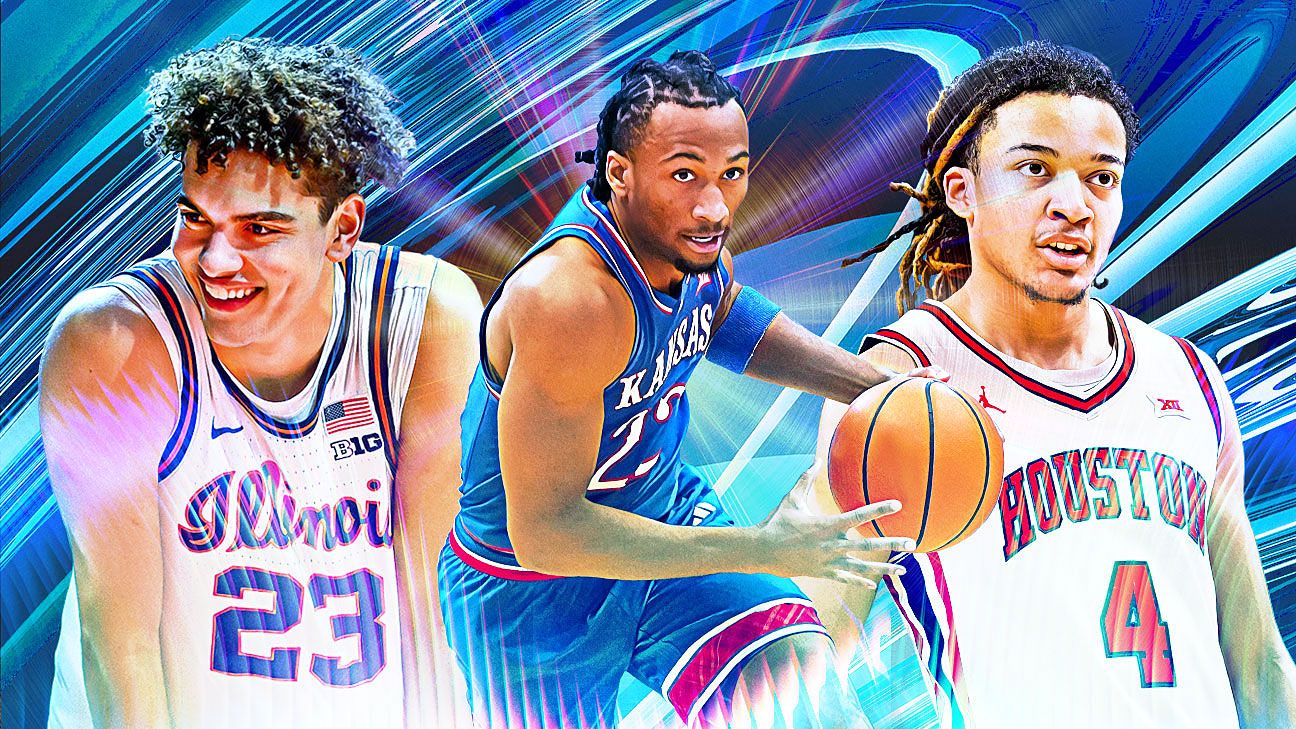
The caliber of a historically strong freshman class has maintained a high level of enthusiasm surrounding the 2026 NBA draft, as evidenced by the actions of several teams striving to lose games in order to enhance their lottery odds.
In 2017, a record-setting 11 freshmen were chosen among the 14 lottery selections. This year’s cohort is poised to challenge and possibly surpass that figure: The top nine prospects in ESPN’s rankings are all freshmen, with five additional players within the top 20 also in contention. All but one, Hannes Steinbach (Washington), are anticipated to participate in the NCAA tournament, marking this as one of the most talent-rich groups ever.
Whether you have been tracking the draft throughout the year or are just now paying attention as March approaches, here is an overview of the leading freshman prospects, what they still have to achieve in the season’s final phase, and the most pressing questions regarding their draft profiles.


Darryn Peterson, PG/SG, Kansas
Latest rank: 1
Age: 19.1
The season so far: Peterson is recognized as the draft’s most talented shot creator and an elite perimeter shooter, giving him the highest offensive potential in the class. Consequently, he was widely regarded as the frontrunner for the No. 1 pick at the start of the season. However, his time at Kansas has not unfolded as anticipated, as he has dealt with injuries and illnesses, leading to scrutiny regarding his inconsistent availability. Peterson has averaged 27.9 minutes per game while starting 19 of the Jayhawks’ 30 contests, with occasional cramping issues preventing him from completing games.
Despite this, there are few weaknesses in Peterson’s skill set. Scouts I have spoken with have not raised significant concerns about his passing or explosiveness, attributes they believe have been hindered by his role in Kansas’ offensive system and his fluctuating health. The circumstances have made the situation more intriguing than initially expected.
The big question: How secure is Peterson’s position at No. 1?
The uncertainty surrounding Peterson’s health has left NBA teams with more inquiries than resolutions. Amid public skepticism, scouts and executives I have consulted have consistently highlighted the importance of patience, as a comprehensive assessment of his health will not occur until NBA teams receive his medical evaluations at the combine.
There remains substantial NBA backing for Peterson as the draft’s most gifted prospect, but his freshman season has complicated the decision at No. 1. Ultimately, draft night will hinge on the risk appetite of the team that secures the lottery pick and how they perceive Peterson’s future trajectory. While there has been little doubt regarding his talent, it must outweigh the health considerations, especially with AJ Dybantsa presenting a viable and less complicated option.
Peterson has logged over 30 minutes in four consecutive games, yet he has shot only 32% during that span. If he can regain his form, a strong and healthy March would serve as a reminder of why many in the league were enthusiastic about him at the start of the season. The most effective way for Peterson to reshape his narrative is through strong performances.

AJ Dybantsa, SF, BYU
Latest rank: 2
Age: 19.1
The season so far: Dybantsa has had an impressive February, demonstrating significant growth and addressing concerns regarding his decision-making, shot selection, and jump shooting. He is arguably the most athletically gifted prospect in the class, a dynamic slasher averaging 26.2 points, 6.4 rebounds, and 3.8 assists over 17 Big 12 games, leading the league in scoring. As scouts have focused on his jump shooting, Dybantsa has been taking three-point shots with increased confidence, achieving a respectable 34.7% from beyond the arc. He has made better choices and displayed greater assertiveness as the season has progressed.
On his best nights, Dybantsa certainly appears to be a No. 1-caliber prospect, presenting a strong option at the top of the draft and potentially a more reliable choice given Peterson’s tumultuous season. Due to his size and physical attributes, many NBA scouts believe Dybantsa possesses the highest two-way potential in the class.
The big question: How can Dybantsa further bolster his case for No. 1?
Dybantsa has already made significant strides to narrow the gap, and with Richie Saunders sidelined for the remainder of the season, he has been called upon to contribute even more. However, the Cougars have lost four of their last five games and are struggling as they head into the postseason. He will need to help turn their fortunes around on a significant stage. Additionally, if he can elevate his defensive performance, an area where he has considerable potential but can be selectively engaged, it would enhance his case. Some of this is attributable to his heavy offensive responsibilities, but reminding NBA executives of his defensive upside, given his 7-foot wingspan and ability to guard multiple positions, would be beneficial.
The competition for the No. 1 pick is shaping up to be a subjective decision for whichever team wins the lottery. If Dybantsa continues to perform at a high level and positions himself as a safer alternative to Peterson while maintaining similar upside, it should strengthen his argument. NBA teams are closely analyzing the details behind the scenes.

Cameron Boozer, F/C, Duke
Latest rank: 3
Age: 18.6
The season so far: Boozer has met high preseason expectations, affirming his long-standing reputation as a contributor to winning basketball. His consistency and remarkable productivity — he is on track to surpass Zion Williamson’s record for box plus-minus, according to the analytics site BartTorvik.com — as the youngest prospect in this group significantly influences projection models. He makes a compelling case for being the most NBA-ready player in the class, serving as a key player in Duke’s elite offense, which boasts a 28-2 record. Scouts have drawn comparisons to All-Star-level players such as Domantas Sabonis, Kevin Love, and Al Horford, with the potential for him to become an even bigger star given his age and statistical performance.
Although Boozer is often characterized as a post player, it is his capacity to face the basket, make quick decisions, create opportunities for teammates, and stretch the floor (40.4% from three) that distinguishes him as a unique offensive asset. Much of his value is derived from his perimeter play, where he excels in two-man actions and possesses the strength to exploit mismatches. The further Boozer can lead the Blue Devils into March, the stronger his case will be as the safest pick in the draft.
Boozer is having the most successful season among the top three prospects, and he is the only one leading a team with realistic championship aspirations. Despite his dominance, he is projected to be the third name selected in June.
The big question: Why isn’t Boozer a frontrunner?
Boozer’s offensive skills are beyond question, as he is expected to be a versatile, high-impact player from the outset. The hesitation among NBA evaluators has stemmed from the physical aspects of his game, as he lacks explosiveness, does not protect the rim effectively, and often struggles to contest shooters due to his foot speed — factors that tend to be scrutinized during the NBA postseason. Although he possesses a 7-foot wingspan at 6-foot-9, he does not have a significant height advantage for a big man and lacks the quickness to consistently guard on the perimeter. Boozer’s excellent positioning and instincts will need to bolster his value defensively.
While it seems less likely that Boozer will end up at No. 1, it would not be surprising to see him considered for that position in certain scenarios. For instance, an analytically driven team like the Memphis Grizzlies could strongly contemplate him at the top of their board. If the LA Clippers’ pick, currently belonging to the Oklahoma City Thunder, makes an unexpected leap to No. 1, the Thunder — rich in perimeter talent — would have the luxury to prioritize fit, making Boozer a natural complement alongside Chet Holmgren.
 play2:00Seth Greenberg: Cam Boozer is NBA-ready
Seth Greenberg explains to Stephen A. Smith why he is so impressed by Cam Boozer’s mentality.

Caleb Wilson, PF, North Carolina
Latest rank: 4
Age: 19.6
The season so far: Wilson’s breakout season faced a setback when he fractured his hand on February 10, but he has already made a significant impact, establishing himself as a top-five prospect capable of influencing play on the interior with his energy and explosiveness, while also showcasing untapped skill potential. He is aiming for a return in March, with the Tar Heels poised to return to the NCAA tournament, providing NBA teams one last opportunity to evaluate him in a high-pressure setting.
Exceptionally quick off the ground, Wilson has excelled largely due to his relentless effort, securing extra possessions on the boards and finishing effectively within 15 feet (72% at the rim with 67 dunks, and shooting 61% inside the arc). He remains raw as a ball handler and is not a dependable three-point shooter. His potential for growth involves more projection than his peers. However, he has a slim chance of breaking into the top three, depending on which teams advance in the lottery.
The big question: What is the case for Wilson in the top three?
Wilson is still developing his skills, and his projection as a top-three pick requires some imagination, making him a polarizing evaluation. He is the type of explosive athlete who could evolve into a matchup challenge on both ends of the court, with strong passing instincts and shot creation ability for his size while operating in the midrange. An absolute best-case scenario would involve a leap in his skill set that allows him to better utilize his 6-foot-10 frame as a mismatch creator, while also maintaining consistent focus on the defensive end, enhancing his positioning and becoming a true asset on both sides of the floor.
Some NBA evaluators rank Wilson ahead of Boozer based on those potential upside outcomes, valuing how his vertical explosiveness and shot-blocking could translate into two-way impact. Boozer is the more polished player, but a team aiming to construct a more athletic, defensively versatile frontcourt might consider Wilson and take a chance on his development.

Kingston Flemings, PG, Houston
Latest rank: 5
Age: 19.2
The season so far: Flemings began the season with modest expectations, ranked as the 22nd-best player in his class on the SC Next Top 100. That quickly changed as NBA teams took notice of Houston, with a series of strong performances elevating him toward the top of the draft board. His explosive speed, ability to navigate to scoring spots, vision as a passer, and leadership qualities have all been on display, as he has emerged as the best player on a team that reached the NCAA title game in 2025.
While Flemings’ impressive early-season efficiency has leveled off, the excitement surrounding his potential remains, with elite change of pace and the ability to play above the rim giving him a chance at stardom. Houston has a genuine opportunity for another Final Four run, and they will need him at his best to achieve it, providing him a platform to assert his case in March as the potential second guard selected.
The big question: How legitimate is Flemings’ shooting improvement?
Shooting was the primary concern for Flemings coming out of high school, particularly from three-point range, where his unconventional mechanics are challenging to project. Currently, he boasts shooting splits of 48%/37%/84% for the season, performing well above expectations, but his release resembles a one-motion forward fling that incorporates extra movement in his elbow and arms. He is much more comfortable in the midrange, where his natural touch and ability to elevate and create separation from defenders shine. However, being an elite NBA playmaker necessitates the ability to keep defenders honest from long range, and Flemings will need to continue proving this to unlock his full potential.
Life has become somewhat more challenging for Flemings recently, as Houston’s other perimeter players have struggled to convert shots, allowing defenses to collapse in the paint and limit his space. If his fellow Cougars can find their rhythm offensively, it will enhance his chances for a complete breakout in the postseason. Regardless of how Flemings performs in March, NBA teams will focus on his shooting during workouts as they evaluate the guards in his class.

Keaton Wagler, PG/SG, Illinois
Latest rank: 6
Age: 19.1
The season so far: Wagler’s journey is one of the most compelling stories in the draft, having transitioned from a three-star recruit with no national recognition to an indispensable player at Illinois, propelling himself into the lottery conversation as the leader of a top-10 team. There was considerable buzz about Wagler in the fall from scouts who attended Illinois practices, but no one could have anticipated the extent of his emergence, highlighted by a 46-point game at Purdue on January 24.
As a 6-foot-6 point guard, Wagler’s ability to navigate ball screens, make sound decisions, and excel in three-point shooting (42%) has become the foundation of one of college basketball’s elite offenses. It is uncommon for any teenage guard to achieve such success in a comprehensive lead role, especially one with limited high-level basketball experience. While he has occasionally struggled to score inside the arc (48.1% on twos), NBA evaluators see untapped potential as he gains strength and experience.
The big question: How high can Wagler ascend?
There is a genuine possibility that Wagler could be the second guard selected after Peterson and break into the top five, depending on how the lottery unfolds and how teams assess the group of Flemings, Wagler, Darius Acuff Jr., and Mikel Brown Jr. As the tallest, youngest, and latest-blooming player among the four, Wagler’s unique trajectory and valuable archetype will create a compelling case. While a direct comparison may be unfair, Wagler has drawn stylistic parallels to Shai Gilgeous-Alexander, with scouts paying close attention to his maturity, decision-making, and craftiness as a scorer.
Illinois has a chance at the Final Four if Wagler performs at his best, and a strong postseason could bolster his case with NBA decision-makers who may not have focused on him early in Chicago for the Big Ten tournament. His positional size, shooting ability, and intangibles could serve as significant differentiators as lottery teams evaluate these guards.

Nate Ament, SF/PF, Tennessee
Latest rank: 7
Age: 19.2
The season so far: Ament rebounded in SEC play after a slow start, delivering an impressive performance before injuring his right leg on Saturday against Alabama. His status for the postseason remains uncertain after he missed Tennessee’s game on Tuesday against South Carolina, but he solidified his position on draft boards with strong play in February, averaging 19 points and six rebounds per game in conference action. However, his efficiency has left something to be desired.
While the emergence of other players means Ament is no longer a guaranteed top-five pick, he remains a likely top-10 selection due to his positional size, skill set, and intangibles. Standing at 6-foot-10, he can rise and shoot over defenders and possesses untapped potential as he gains strength and becomes more comfortable with his size. With a surplus of guards in this draft tier, teams not seeking a ball handler may prioritize him as a developmental forward who can enhance the skill level of a team’s frontcourt.
The big question: Can Ament evolve as a shot creator?
When Ament is making shots, it is easy to understand why he was a consensus top-five prospect entering the season. The jumbo wing scorer archetype tends to be an appealing pitch for the NBA. Forwards of his size who can handle, pass, and shoot are more likely to become rotation players, at a minimum. The primary concern surrounding Ament is how much he can improve as a creator over time,
