
The most significant matchups in women’s tennis history
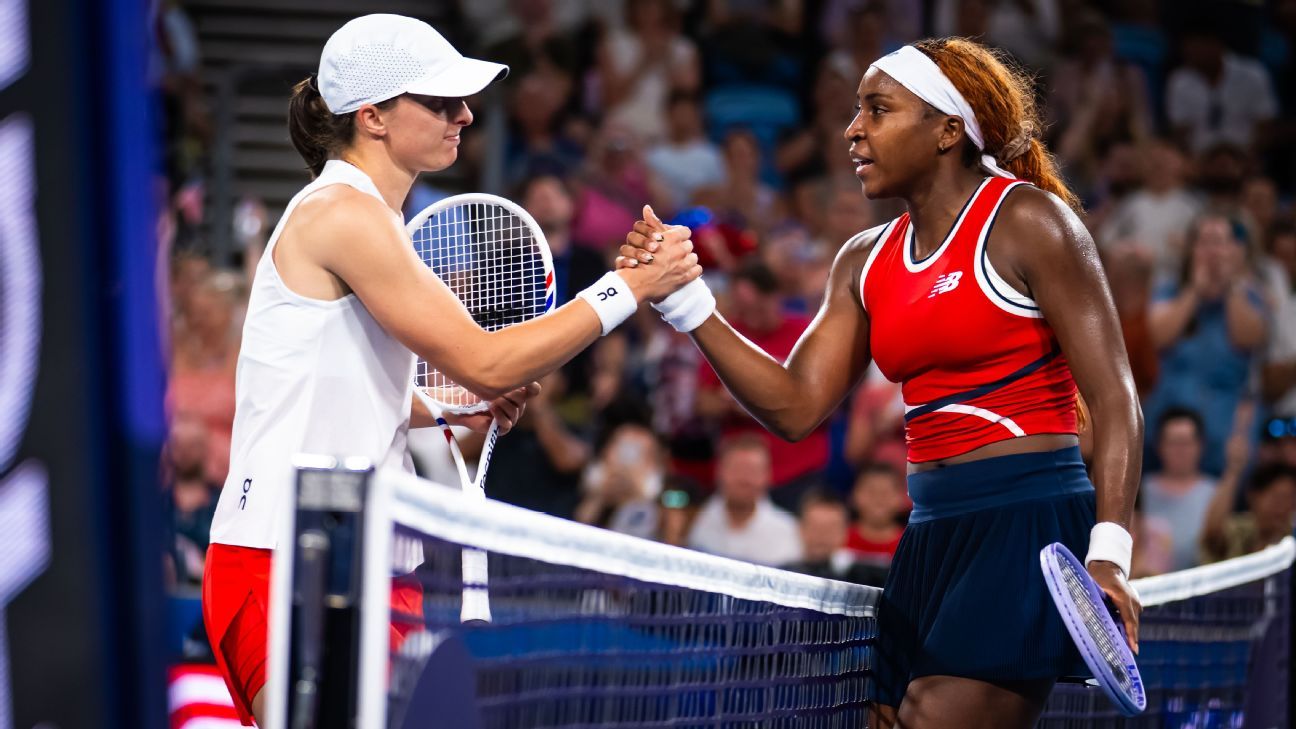
Aryna Sabalenka and Iga Swiatek have been the leading figures on the WTA Tour in recent years, securing nine of the last 15 Grand Slam titles between them.
However, when the draw for the women’s singles at the Australian Open was revealed last week, both Sabalenka and Swiatek likely felt a sense of relief.
This is due to the fact that they were placed in opposite halves from two players who have previously posed challenges for them. For Sabalenka, that player is Amanda Anisimova; for Swiatek, it is Coco Gauff.
Swiatek holds an 11-5 advantage over Gauff, yet the American has triumphed in their last four encounters, all in straight sets. Anisimova leads Sabalenka 6-5, although the Belarusian has claimed victory in three of their last four matches.
Head-to-head statistics play a significant role in tennis; the individual nature of the sport often results in one player continuing to prevail over another, regardless of rankings or current form.
“In the past I used to think about it so much because you want to get the one win,” Gauff stated on Monday at the Australian Open. “I think once I got that … I erased the other matches.”
“Obviously, [Swiatek] is a great player, and she deserved those wins, but I felt like a lot of those — some of those losses, I won’t say a lot, because she just outplayed me, but some of them, at least at the beginning, it just was already on the mental deficit. I think once I erased that mental deficit, I was able to play free.”
Gauff mentioned that Swiatek was the only player who made her feel that way. Securing one victory was liberating. “There was no other head-to-head in tennis where I had that, so it was very difficult to navigate,” she explained. “Now I feel like I’m able to play free. Obviously, it’s still a big gap in the head-to-head. I just erase it from my mind. Can’t change the past, but I learned from it.”
When a winning streak comes to an end, tennis players often tell themselves whatever is necessary to sustain their confidence. Swiatek, who captured her sixth major title at Wimbledon last summer, appears to be no exception.
“Honestly, it doesn’t [play on my mind],” Swiatek remarked. “Also, when I was winning against her, it didn’t. That’s why I guess it was possible for me to continue because I wasn’t taking it for granted or … coming to a match unfocused.”
“I guess it kind of tells you something more about maybe the game or things you should work on or improve because, you know, also she improved. So yeah, but the head-to-head I guess doesn’t really matter. Maybe for her, if you ask her the same question, it’s different.”
Swiatek even disregarded the fact that she had faced Gauff as recently as this month when she lost to the American at the United Cup. “I guess I just really want to treat every match as a separate story,” she said. “Every match also is in different conditions. So there’s no point to, like, always come back [to it]. Last time we played was Madrid, also it was over six months [ago]. It’s kind of long in tennis life. It’s not like a whole story for me. It’s more about how I feel that month or that week and how she feels, how we’re going to play against each other. That’s it.”
It is also possible for head-to-head records to shift.
Roger Federer lost his first three and then seven of his first nine matches against Lleyton Hewitt, and lost the first four and six of the first seven against Britain’s Tim Henman, yet ended up with a winning record against both. Chris Evert led Martina Navratilova 22-4 at one point but ultimately trailed 43-37. Even Vitas Gerulaitis managed to win one match against Jimmy Connors, leading to the famous remark: “No one beats Vitas Gerulaitis 17 times in a row.”
Anisimova won her initial four encounters with Sabalenka in straight sets, matching the Belarusian’s power from the baseline. “We’ve had a lot of difficult matches,” Anisimova stated last summer. “We’ve gone three sets in a lot of them. I think we’re both big hitters, and big hitters like to go at it against each other. I feel like we always bring the best in each other’s game, and we always raise the level when we play against each other. I mean, I always enjoy the challenge that she brings. I’m sure it’s the same vice versa.”
Sabalenka has managed to reverse the trend, however, winning five of the last seven encounters, including in the final of the US Open last September.
There are other challengers, of course, but with Gauff in Sabalenka’s half and Anisimova in Swiatek’s, any potential matchup at the Australian Open with their respective rivals can only occur in the final.
Regardless of what they may express, if that scenario unfolds, the records will likely linger in the back of their minds.
Source: espn.com
