
Strategies for wagering on the second half of the Australian Open: Optimal options in ATP and WTA
We have reached the quarterfinals of the Australian Open, where the stakes begin to rise significantly. This analysis focuses on who is effectively managing rallies, the balance of serve and return, and exchanges on second serves.
On the ATP side, the key question is whether current form still takes precedence over matchup risks. For the WTA, the draw has narrowed down to one pivotal match that will determine where the true advantage lies.
Odds by DraftKings Sportsbook
Still a buy: Jannik Sinner (-125)
Sinner was my pre-tournament pick, and I remain confident in that choice. At this price point, the argument is based on where points are being secured. Throughout the tournament, Sinner has shown dominance with his serve, holding serve comfortably and avoiding extended pressure situations, while still putting significant stress on his opponents’ returns. His adversaries are not finding it easy to hold serve against him. Sinner is dictating play from both sides of the court rather than depending on tiebreaks or sporadic moments of brilliance.
The primary advantage lies in his dominance on second serves. Sinner consistently wins neutral and defensive points when rallies extend beyond the initial strike. This is evident in how frequently he creates break opportunities without relying on his opponents to falter. Sinner exhibits depth, tolerance for pace, and patience during baseline exchanges.
Now, regarding the concern about cramping. It was a legitimate issue. Long rallies, defensive positioning, heat, and extended points can lead to cramping. Since then, his average rally length has decreased, he is winning more easy points on serve, and his service games are shorter. If Sinner faces Carlos Alcaraz, he will likely be more challenged than he has been thus far. Alcaraz forces defensive sprints, alters height and spin, and disrupts established patterns.
The distinction lies in how frequently Sinner has to contend with these challenges. He still maintains control over the serve-return balance. His serve placement, timely backhand execution, and readiness to step inside the baseline minimize the total number of defensive exchanges.
The price may not be low, but it remains reasonable.
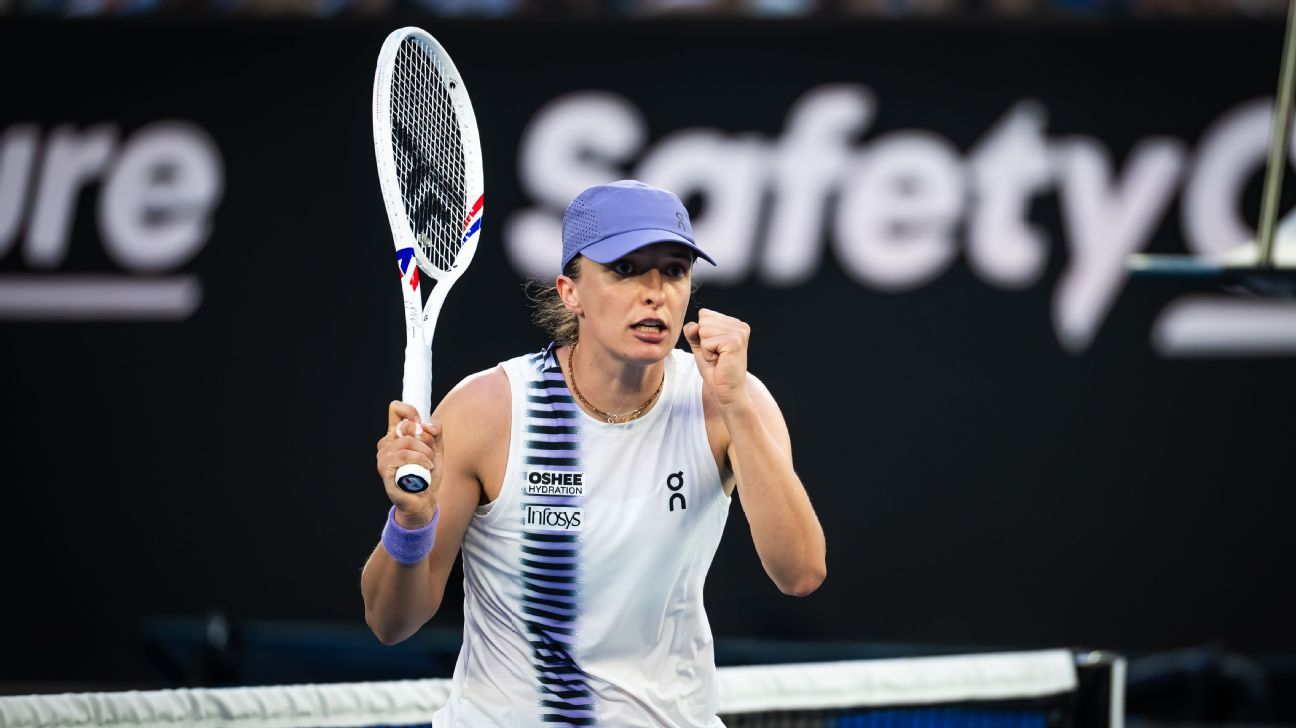
WTA futures outlook: Iga Swiatek
The matchup between Swiatek and Elena Rybakina serves as the critical pivot point in this section of the draw.
Rybakina’s serve and first-strike power always give her a chance, but Swiatek consistently prevails in this matchup for the same reason she wins most high-level hard-court contests: she governs the second phase of the point.
When rallies extend beyond the initial two shots, Swiatek’s depth on returns, foot speed, and ability to redirect pace compel Rybakina to hit additional shots that she would prefer to avoid. This pressure manifests on second serves and in late-set return games, where Swiatek frequently generates break opportunities even when Rybakina is serving effectively.
If Swiatek advances past Rybakina, she appears to be the stronger competitor against either of the remaining players. Jessica Pegula lacks the raw speed to consistently penetrate Swiatek’s defenses, while Amanda Anisimova offers volatility instead of sustained pressure. Swiatek’s return game and ability to endure rallies expose both styles over the course of a full match.
Swiatek at -110 to defeat Rybakina is a more favorable bet than +175 to reach the final. The semifinal presents the genuine risk and the true advantage. The futures price requires you to accept additional variance for a marginal increase in payout. The match price focuses on the most challenging obstacle and compensates you directly for Swiatek’s matchup superiority.
ATP quarterfinal betting consideration: Learner Tien +3.5 games vs. Alexander Zverev
Tien can remain competitive within sets because he avoids giving away free points. He keeps his first serves in play, safeguards his second serve effectively, and is willing to engage in neutral rallies rather than taking unnecessary risks.
Zverev’s victories in this tournament have relied more on holding serve than on frequent breaks. Zverev can manage sets without needing to dominate them. If Tien holds serve at a standard rate and compels Zverev to earn breaks, this could lead to a lengthy set, a tiebreak, or even Tien winning a set, placing this spread in a favorable position.
WTA quarterfinal betting consideration: Aryna Sabalenka -5.5 games vs. Iva Jovic
Sabalenka has not faced significant challenges. Each match reveals a similar narrative: she is winning decisively without needing her top performance. While errors or saved break points may raise questions, her ability to hold serve at 80-90% and break at will renders the rest inconsequential.
Jovic’s victories have come from opponents failing to hold serve, extended rallies where errors bail her out, and a lack of sustained pressure on second serves. Sabalenka does the opposite: she breaks early and compresses sets. Once Sabalenka secures a single break per set, the momentum shifts rapidly.
Source: espn.com
