
NASCAR looks forward to leaving behind a challenging offseason and returning to competition.
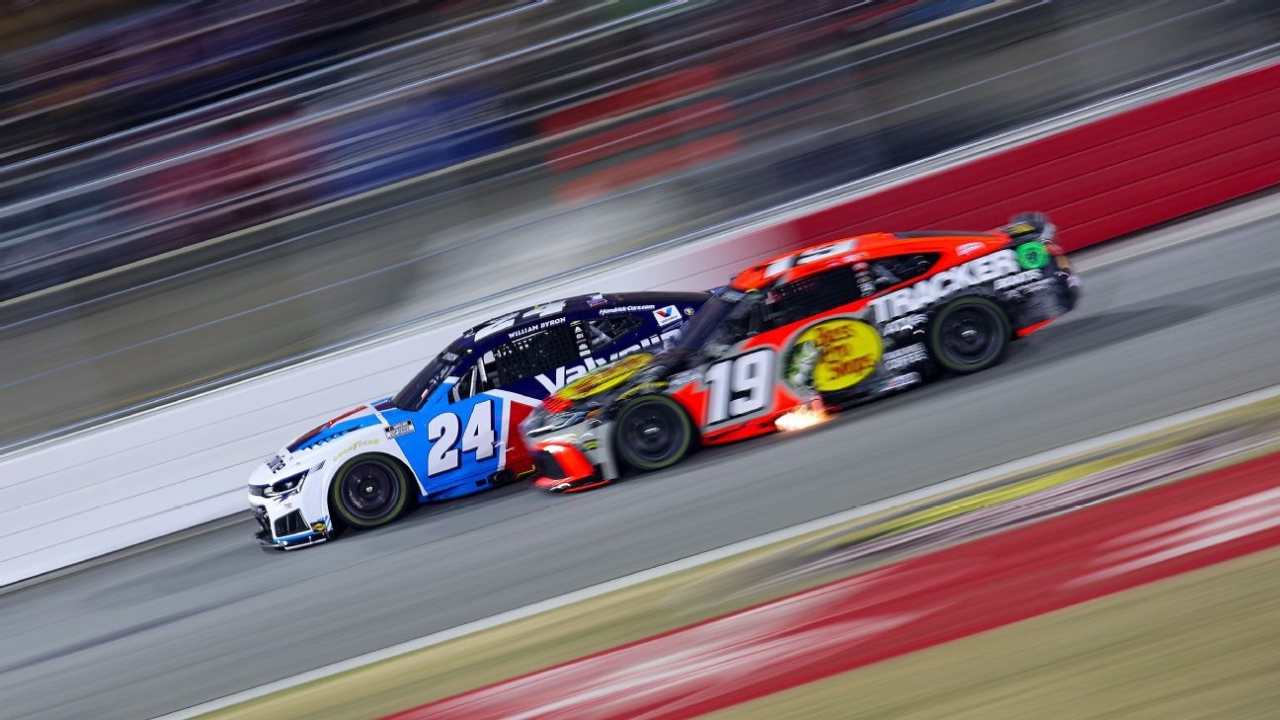
The commencement of the NASCAR season is always a moment filled with optimism. No disrespect to the snow-covered Clash from a week ago, I refer to the genuine kickoff of the Cup Series season, when the green flag waves this Sunday for the 68th edition of the Great American Race.
Let us hope it serves as the Great American Reset Button.
The most enjoyable aspect of the beginning of each season is observing the bright Daytona starting grid, where every uniform, every pit box, and every car shines. As Rusty Wallace famously remarked, “Daytona 500 prerace is the happiest place on the planet, and the cleanest. And that lasts about one lap.” Because shortly after, the rubs, pit stops, rain delays, ignited tempers, and altercations commence, leaving behind traces of sweat and oil, with a hint of blood and champagne mixed in for good measure.
Nevertheless, it is challenging for this seasoned press-box mind to recall a more widely shared wish among all members of the NASCAR garage than this year’s first official green flag being utilized as a washcloth, erasing an offseason filled with anxiety that everyone is eager to move on from.
This season, more than any in recent history — or, to be fair, any history at all — feels like a pivotal year for NASCAR. It presents an opportunity to revive positive sentiments and potentially rebuild a significant amount of lost trust between the grandstand and the competitors that fans pay to watch race at 200 mph, starting with repaired relationships between the racers and the governing body.
For context, consider what this sport was like when the last checkered flag fell at the 2025 season finale in Phoenix, just under 100 days ago, compared to what it will be when racing resumes this weekend.
Last fall, team charters were not permanent. Last fall, speculation surrounded the outcome of the antitrust lawsuit that had been pending for nearly two years and was still a month away, with Denny Hamlin and Michael Jordan’s 23XI challenging the sanctioning body regarding those charters, most hoping for a resolution before it escalated to court. Last fall, we had not yet seen the texts from NASCAR officials referring to its team ownership as royalty, among other derogatory comments, including a “stupid redneck.” Last fall, NASCAR still had a commissioner in Steve Phelps. Last fall, the decade-old postseason elimination playoff format was still in place. Last fall, Hamlin’s father Dennis was primarily known among fans for his role as a source of inspiration, battling health issues to publicly support his son’s near-miss in the quest for a Cup championship.
Last fall, Greg Biffle was still with us.
Now, our friend Biff, his family, and a cherished member of the garage community are gone. Team charters are now indeed permanent. That settlement did occur, but only after a courtroom battle so intense that Phelps is no longer part of the sport. Many feelings were hurt in and around that courtroom and continue to be. Days later, Hamlin lost his father in a house fire while he himself sustained a shoulder injury. Yet, Denny Hamlin shows no signs of losing the determination that compelled NASCAR’s action in court as he prepares to pursue that elusive championship once more. His upcoming season already feels like a quest for redemption. The Playoffs have been eliminated, and the Chase format has returned, largely due to Hamlin’s efforts and heartbreak.
And we haven’t even touched on Charlotte abandoning the Roval, North Wilkesboro Speedway hosting a regular season Cup race for the first time since 1996, or Homestead-Miami Speedway returning to its traditional spot at the end of the season, albeit temporarily. Additionally, the Xfinity Series is now the O’Reilly Auto Parts Series. Connor Zilisch is moving up to Cup and swapping numbers with new Trackhouse Racing teammate Shane van Gisbergen, who is taking over for Daniel Suarez, who transitions to Spire Motorsports. There will also be an increase in horsepower at 20 of the 38 Cup races, primarily on short tracks and road courses. Speaking of road courses, June will feature a 16-turn, 3.4-mile event at San Diego’s Naval Base Coronado, with racecars navigating between aircraft carrier docks and fighter jet tarmacs.
All of this occurs as another generational shift in the garage seems imminent. Hamlin, Brad Keselowski, Kyle Busch, and even Joey Logano — all future NASCAR Hall of Famers — are much closer to the end of their careers than the beginning. Meanwhile, two-time defending Daytona 500 champion William Byron has yet to turn 30. Zilisch is just 19!
There is much to monitor, but fortunately, it primarily pertains to the track itself. Not misguided texts. Not billable hours. Not heated disputes over gimmicky points systems or committee meetings to deliberate whether to overhaul those systems.
Jim France, NASCAR chairman and the uneasy face of the sanctioning body’s side of the antitrust dispute, articulated it best in December, as he stood beside Jordan, who had just outmaneuvered France in court behind them as if France were an unprepared center caught off guard on a different court.
France, the man who dislikes public speaking, but now representing the entire NASCAR community, stated: “We can get back to focusing on what we really love. And that’s racing.”
No one knows how competitive that racing will be in 2026. Honestly, as we all gather at the World Center of Racing in the coming days, it seems that no one is concerned. They are simply eager to engage in any racing at all, anxious to experience that “happiest place on the planet” feeling with the hope of feeling renewed, even if just for that initial lap.
Is NASCAR back? That is a significant question, and one we won’t be able to start answering until at least nine months from now. However, NASCAR racing is indeed returning, under somewhat new management and with a notably revised title format.
A green flag washcloth reset button that couldn’t arrive soon enough.
Source: espn.com
