
We Play Hockey Too Offers Assistance to Young Players of Color, Aiming to Retain Their Participation in the Sport Long-Term
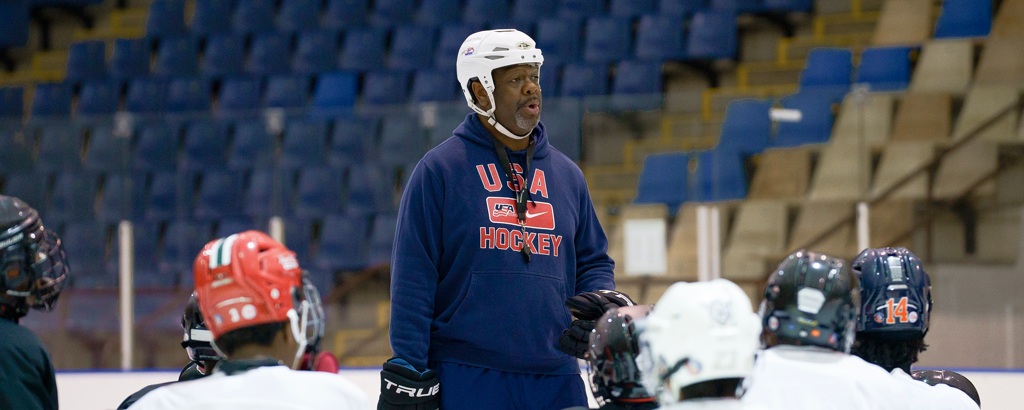
As the parents of first-generation hockey players, Kamili Williams and Chris Bland quickly became aware of some of the challenges associated with the sport.
“As we were discovering the game and connecting with other hockey families, we began to notice a few things,” Bland stated. “After a few years, we observed that some of the children were gradually drifting away because they were becoming disenchanted with the sport due to various experiences both on and off the ice.”
With this understanding, the couple, who have four children together, decided to address the issue by establishing We Play Hockey Too, which aims to: “Develop resilient and confident hockey players of color by reaffirming their identity through providing support and a network of peers.”
We Play Hockey Too serves as a supplementary program to what players already encounter, whether through high school or other teams in the Parsippany, New Jersey, region.
Rather than having a limited number of teams that travel to tournaments weekly, We Play Hockey Too offers a space for players to enhance their skills or learn about other facets of hockey, such as nutrition and available opportunities.
“We recognized that there was a lot we didn’t understand when we entered the sport,” said Bland, the organization’s president. “I’ll be honest and say I thought my child would receive everything he needed during practice. I was unaware of skills clinics, development, and how to navigate teams. This became a common theme as we connected with more families.”
Consequently, the program evolved into a hub of information shared by parents who enrolled their children in We Play Hockey Too. There is no single expert within the group, but everyone contributed their knowledge of the game to assist their children in developing as players.
The initiative commenced in 2020 with just a few children at the inaugural clinic. By 2023, the organization had transitioned to a nonprofit status and now boasts a roster of 120 families — including boys and girls from the squirt to midget levels — utilizing the program’s various offerings. Primarily, these are clinics that typically occur during holiday breaks, such as Thanksgiving, Christmas, Martin Luther King Jr. Day, or Presidents Day, for instance.
Not every child has the opportunity to participate in a tournament with their team for various reasons, so We Play Hockey organizes its clinics during these times to not only fill the gap but also to enhance the hockey experience.
“When we began discussing with our children, we realized they were feeling isolated and lacking a sense of identity in the sport,” said Williams, a board member who spearheads fundraising efforts. “This realization prompted us to bring together parents we had met along the way and really try to unite the kids so they wouldn’t feel so alone in the sport. Even though they were on different teams, they could at least see that, ‘OK, I’m not the only Latino kid playing this sport that isn’t traditional. I’m not the only Asian kid participating in this sport.’”
Demonstrating to the children that there are others like them involved in hockey is one of the advantages of participating in We Play Hockey Too, but another is the program’s approach to skill development.
While some hockey clubs merely demonstrate a skill and expect a young player to replicate it without understanding its purpose, We Play Hockey Too ensures that players are educated on the purpose of each drill and how it will enhance their performance.
“Take the time, break it down, explain it to them so that they learn it because, more than anything, that’s what you want your child to do,” Bland remarked. “You want them to succeed by learning something, not just, ‘See what I did, good luck.’ Determining how best to assist the kids was our initial challenge — what could we do as parents? Being a collective rather than individuals provided us with the power and leverage to secure ice time, bring in coaches, and dictate what we wanted for our children to ensure their success.”
We Play Hockey Too does participate in tournaments, assembling teams for approximately three tournaments each year, with up to three teams competing in an event.
As part of its overall development, We Play Hockey Too offers webinars on nutrition, NCAA eligibility, and injury management, with plans to introduce one on how players can communicate with officials during games. There have also been seminars featuring college players who share their experiences and achievements, as well as insights from USA Hockey and its American Development Model, so parents understand what to expect from coaches.
In addition to an existing buddy program where current players can invite a friend to a clinic for free, We Play Hockey Too aims to develop an academy program. Similar to the skills clinics, the academy would serve as a supplementary component to what players already receive at school and with their other teams.
“When families attend our clinics, the experience transcends mere skill development,” Bland noted. “It fosters connections and community growth. It provides an opportunity to relate to others who have shared experiences. However, we believe that to achieve the level of development necessary to excel or to stand out at tryouts for advancement, we need to be more hands-on and consistent with interaction and skill development, so ideally, the academy will provide that opportunity.”
Story from Red Line Editorial, Inc.
