
MILAN – The 2026 U.S. Olympic Men’s Ice Hockey Team disembarked from the team charter bus at approximately 8:15 p.m. on Sunday evening, just hours after securing the United States’ first gold medal in men’s hockey in 46 years.
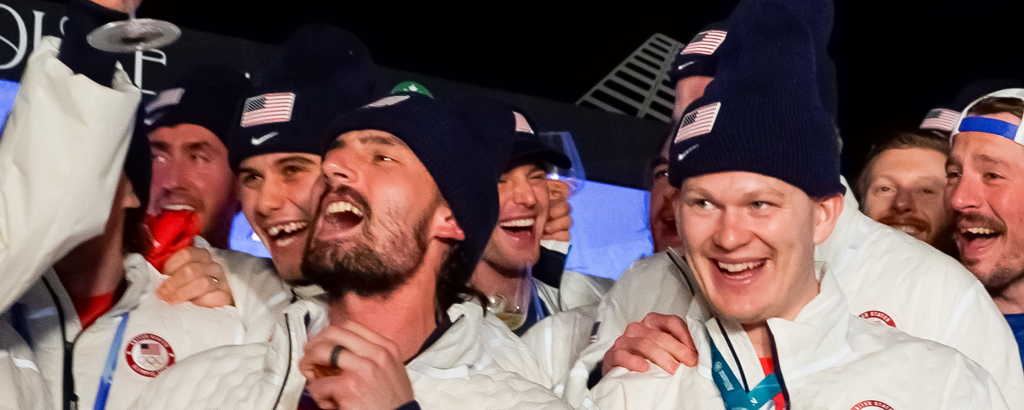
One by one, the players, dressed in matching white Nike puffer jackets and cargo pants, began to gather in a circle just inside the driveway of the Aethos Milan – the location of the Starbucks Winter House.
Charlie McAvoy emerged from the bus carrying a large boombox on his shoulders, while team captain Auston Matthews called for the rest of his red, white, and blue teammates to join in.
All 25 players, some still donning their goggles from a champagne celebration in the Team USA locker room, then started singing the lyrics to Dream On by Aerosmith.
Every time that I look in the mirror
All these lines on my face getting clearer
The past is gone
Oh, it went by like dusk to dawn
Isn't that the way?
Everybody's got their dues in life to pay, oh, oh, oh
I know nobody knows
Where it comes and where it goes
…
Dream on
Dream on
I dream on
Dream a little, I'll dream on
Dream on
I dream on
I dream on
This song features during the credits of the 2004 film Miracle, which each member of the Olympic team, along with millions of other youth hockey players, watched during their childhood.
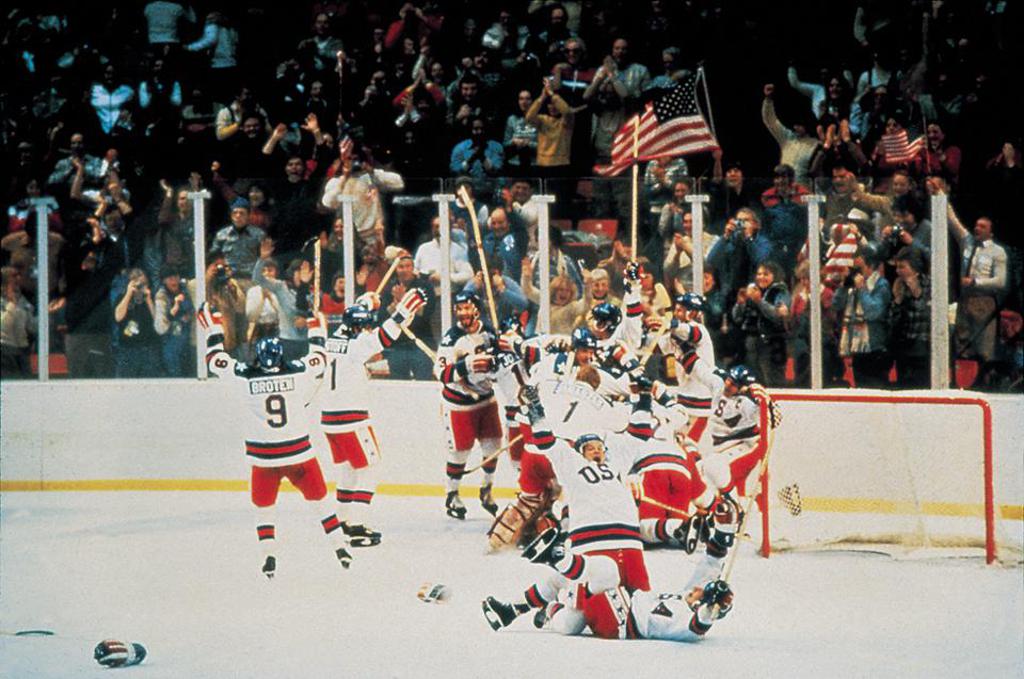
On February 22, 2026, exactly 46 years after the Miracle On Ice victory over the Soviet Union – it served as the anthem for the 2026 U.S. Olympic Men’s Ice Hockey Team as they commenced their celebratory walk inside the Starbucks Winter House.
Let the celebrations commence! #WinterOlympics pic.twitter.com/Sfb3fnv0Gx
— USA Hockey (@usahockey) February 22, 2026
Meanwhile, friends, family, and other volunteers who have devoted countless hours to the advancement of American hockey waited nearby – prepared to cheer for their sons, husbands, fathers, and friends who had just made history for American hockey.
At the forefront of the team was Jack Hughes – lifted high on the shoulders of Jack Eichel and Noah Hanifin as the team turned a corner to the cheers of the crowd.
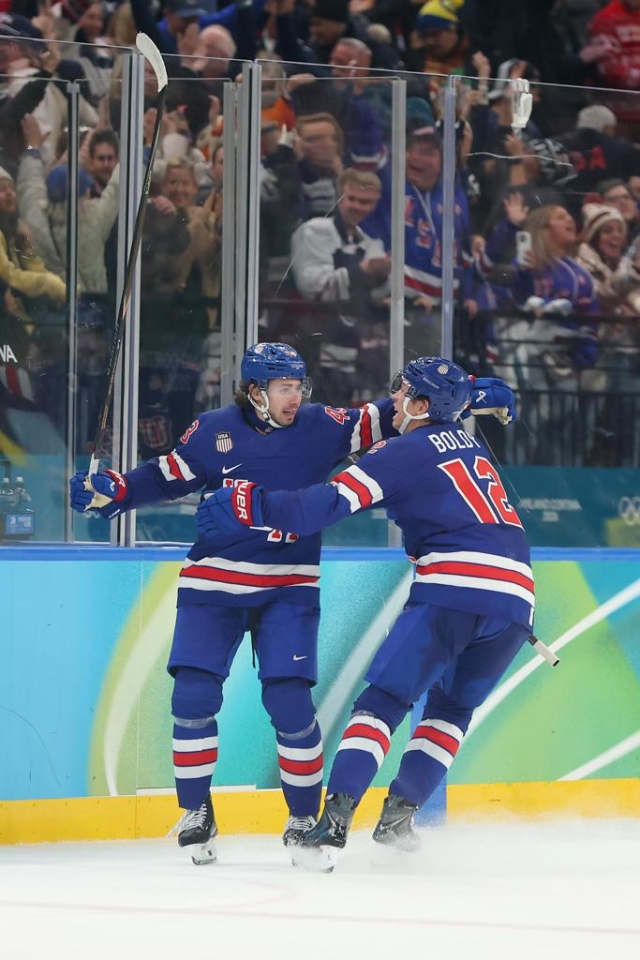
Hughes’ goal just 1:41 into overtime propelled the U.S. Olympic Men’s Ice Hockey Team to a 2-1 victory over Canada, sending the entire United States into a state of jubilation, along with the enthusiastic USA fans inside Milano Santagiulia Ice Hockey Arena.
When the puck found the back of the net, Jack’s mother, Ellen, who had assisted the U.S. Olympic Women’s Ice Hockey Team in winning gold three nights prior as a coaching consultant, was immediately embraced in a bear hug by four-time Olympian Keith Tkachuk.
THE GOAL HEARD AROUND THE WORLD#WINTEROLYMPICS pic.twitter.com/Y61845Duua
— USA Hockey (@usahockey) February 22, 2026
Jack’s brother, Quinn, was making a beeline to his brother in celebration – a moment that Jack had predicted to Quinn the night before when the two brothers and roommates struggled to fall asleep in the Olympic Village.
Quinn asked his brother, “Are you awake?” around 12:30 a.m.
Jack replied, “Dreaming about scoring the game-winner.”
That dream has now become a reality.
Jack netted one of the most significant goals in USA Hockey history after executing a give-and-go with Zach Werenski in overtime. Werenski redirected the puck off Nathan MacKinnon, retrieved it, and passed it to Hughes on the left side, who then fired it five-hole past Jordan Binnington for a golden goal that will be remembered forever.
Matt Boldy initiated the scoring for the U.S. just six minutes into the game with a goal on the Americans’ first shot.
However, before Hughes could address the crowd at the Winter House, there was someone else the entire team wanted to acknowledge.
“Helle! Helle! Helle! Helle!” the group chanted.
Connor Hellebuyck, with his gold medal glimmering under the NBC television lights, was smiling broadly.
The reigning Vezina winner made 41 saves – some of which will be remembered, including his remarkable stick save on Devon Toews in the second period and his numerous stops against Macklin Celebrini and Connor McDavid on breakaways.
“I want to thank all of you,” Hellebuyck expressed to the family and friends at the Winter House. “You all contributed to each individual here reaching this point.”
Following the U.S. victory, coach Mike Sullivan referred to Hellebuyck as Team USA’s hero.
Several players remarked that Hellebuyck delivered the greatest performance by an American goalie in history.
Many USA Hockey fans around the globe would concur.
Hellebuyck then turned to his teammates, who were linked arm in arm behind him. They had faith in him to secure the crucial win.
There was never any doubt.
“Boys, I’m incredibly proud of the chemistry,” Hellebuyck stated. “Every detail, every effort you all made to get here mattered, especially on the biggest stage.”
Hellebuyck then initiated a USA chant as he handed the microphone to Hughes.
Hughes left part of his teeth on the ice – literally late in the third period when he was high-sticked in the face – to aid the U.S. in achieving its third gold medal ever.
As he celebrated with his teammates, family, and friends throughout the evening in Milan, Hughes was unable to enjoy a victory meal due to the pain in his mouth.
Nevertheless, the honor of a gold medal serves as the best remedy one could wish for, even if he will be missing a tooth in all these historic photographs.
“This is an exceptionally special group of men up here,” Hughes remarked. “Clearly, so many individuals, everyone in this room has supported us immensely to reach this moment. We’re champions for life. We’re immensely proud to be here. We’re proud to be American, and what a night for USA Hockey.”
The journey to gold for the 2026 U.S. Olympic Men’s Ice Hockey Team has been filled with numerous twists and turns, making it difficult to identify a specific turning point that ended a 46-year gold-medal drought.
Indeed, Hughes and Hellebuyck were the heroes on Sunday. They will become the hockey icons that many youth players will look up to for years to come. They are the modern equivalents of Mike Eruzione and Jim Craig.
However, this is only part of the narrative for the undefeated Americans in Milan.
This path to gold required much more effort.
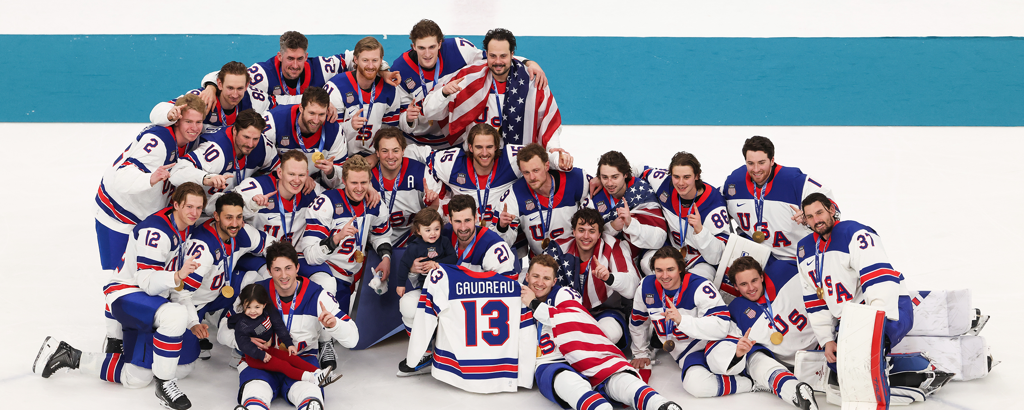
Many will justifiably highlight the establishment of USA Hockey’s National Team Development Program two decades ago, which has produced hundreds of NHL players, including 17 members of this year’s gold-medal-winning team.
Others may also rightly point to the introduction of the American Development Model in 2009, which, aside from a few veterans on the team, contributed to the development of many Olympians competing at Milano Santagiulia Ice Hockey Arena.
Some might argue that it was Jack’s brother, Quinn, scoring in overtime against Sweden during the quarterfinals and his intense desire to rectify the United States’ loss at the 2010 Vancouver Olympic Winter Games that he and Jack watched at a youth hockey rink in Canada that made the difference.
In fact, Quinn Hughes led all American players with seven assists and eight points during the Olympics.
Quinn, however, credited his brother for the golden goal.
“He's an animal,” Quinn stated. “He starts on the fourth line. He just kept pushing, showing mental toughness. He has faced a lot with his shoulders. No one loves the game more than him. He has so much passion. He’s a gamer. He made it happen.
“For Jack, it's incredibly special, and it’s extra special for me to witness him achieve that. I just can’t believe it.”
However, the truest and most genuine gold-medal moment for this team began at chilly youth hockey rinks at 5 in the morning or perhaps a frozen pond or backyard rink created by parents.
These gold-medal aspirations originated when these players were young children falling down for the first time they strapped on their skates, and it happened repeatedly.
Yet on Sunday night, many of the same parents and supporters inside the Winter House were present not to offer assistance, but rather to partake in the joy of holding a gold medal.
Ellen Hughes was among those mothers.
And, like the rest of America, she too could not stop smiling.
"The friendships that these players share, and the older ones looking after the younger ones, and the connections with past players, and just witnessing a gold medal come to fruition is incredibly special for our country, and it’s a testament to USA Hockey.
“It’s a testament to the current state of the game. It’s thriving across all disciplines throughout our great country.”
 Team USA Roster
  2026 U.S. Olympic Men's Hockey Home
  Men's Olympic History
