
Q&A: How Greg “Boom” May Utilized a Varied Background to Enhance His Coaching Skills
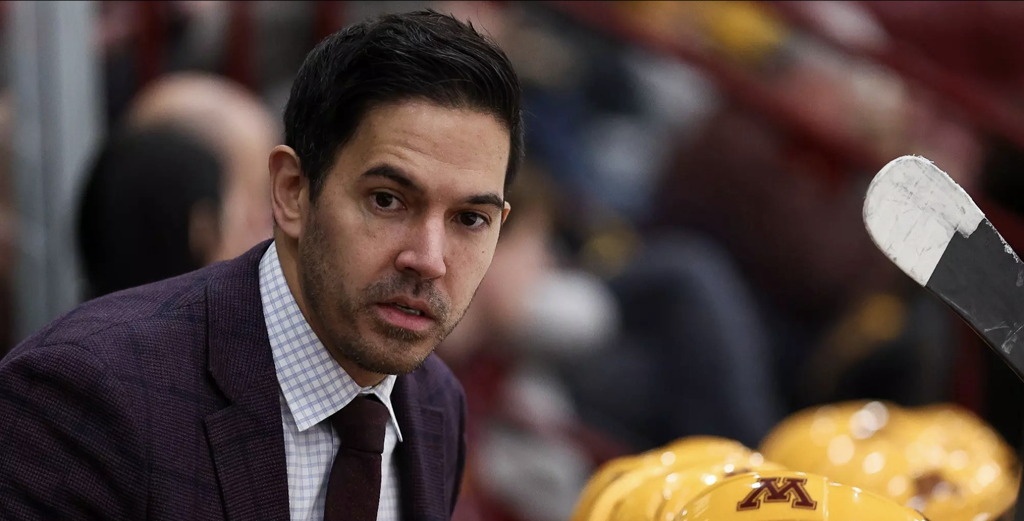
Greg “Boom” May was appointed as the Head Women’s Hockey Coach at the University of Minnesota in March, following his tenure as the Associate Head Coach of the team since 2023. After concluding his playing career at Augsburg University, he began his professional journey as a physical education instructor and high school hockey coach, eventually transitioning to collegiate coaching. His diverse experiences have equipped him for the position of head coach for the Gophers Women’s Team. Coach Boom discusses his path and offers perspectives on mentoring young athletes in the current landscape of the sport.
USA Hockey: What inspired you to pursue coaching?
May: It may sound cliché, but I have always aspired to be a coach. My initial goal was to be a high school teacher and coach. I started on that path quite early. I played Division III hockey at Augsburg and graduated at 22. I went directly to Augsburg from high school, so I was fortunate to step into high school coaching right away. I served as the head JV coach at Mounds View High School and assisted with the varsity team when possible. I secured a teaching position that same spring, which allowed me to achieve what I thought would be my lifelong goal almost immediately.
As I continued coaching at the high school level for over a decade, I began to realize that I could potentially pursue coaching as a career if I could find an opportunity.
USAH: Did you have mentors? How significant were they to your achievements?
May: Certainly. From a coaching perspective, Janne Kivihalme, who has coached high school hockey in Minnesota and currently leads the Rosemount girls team, was a significant influence. I served as his assistant coach at Burnsville from 2010-14. Interestingly, when I became the head men’s coach at Augsburg, he joined my staff as an assistant from 2021–23, creating a full-circle moment. I gained a wealth of knowledge from him, and I apply many of the lessons he imparted to our players at the University of Minnesota.
He is a meticulous coach, structured, and adept with strategies. He expected a high level of commitment from his players. He managed the Burnsville High School program as if it were a Division I college program. During that time, we were fortunate to have numerous talented players, including Brock Boeser, Tyler Sheehy, Eddie Wittchow, his son Teemu Kivihalme, and Jack Ahcan, among others. I was quite young, around 24 when I started, and I thought I was a decent coach until I realized how much I had yet to learn. He has been the most influential figure for me.
I also maintain contact with my college coaches, Mike Schwartz and Chris Brown. I learned a great deal from them while playing under their guidance at the collegiate level. My initial experience at Minnesota on the men’s side with Bob Motzko and Garrett Raboin, along with Ben Gordon, who is still at Minnesota, provided me with insights into what a Division I hockey operation entails, from pre and postgame meals to managing game day routines and video sessions. The details are extensive.
Lastly, I want to mention Brad Frost, who offered me an opportunity here at Minnesota on the women’s side. Frost has a different coaching style compared to the others I mentioned; he focuses more on building relationships. He taught me that relationships are as crucial, if not more so, than the hockey aspect. I believe in that philosophy. The stronger the relationships you cultivate with your players, the more you can expect from them.
USAH: How vital is it to establish relationships with your players and understand them to maximize their potential?
May: My background is quite varied. I taught elementary school for nine years, coached at various levels including bantam, JV, and Division I for both men and women, and served as an athletic director, associate director, and director of hockey operations. This extensive experience in education and sports has been beneficial.
In elementary physical education, the gym doors open, and you have 30 eager kids ready to engage for the next 45 minutes. I often say that when the gym doors open, they are entitled to be energetic. The students come from diverse backgrounds, varying in size and interests, with some enthusiastic about sports and others indifferent. The challenge is to teach them skills and keep them engaged throughout the day.
As an educator, you don’t resort to yelling or demanding compliance. My teaching experience has greatly influenced my coaching approach.
I align more with Frosty’s philosophy—I believe that the stronger the relationships you build with your players and coaching staff, the more you will get from them. When players enjoy being in your presence and the environment, they will exert more effort for you, and your coaches will be more dedicated to them. When players recognize that you care about them, you can be more direct and demanding because they understand you have their best interests at heart, regardless of the outcome.
Not every individual is the same, and coaching should not be a one-size-fits-all approach.
USAH: What do you enjoy most about coaching?
May: The relationships I build and staying connected with players after they leave the program are what I cherish most. I genuinely enjoy witnessing their progress. The PWHL draft is approaching on June 17th, where many players will be selected, and I anticipate seeing where they end up, with a few likely going in the first round. I am thrilled to stay in touch with them. Recently, two former players participated in the Walter Cup Final, and it was incredible to watch them on television. I find great joy in that.
I believe there is no other profession that allows you to maintain such a youthful spirit. You are in the locker room daily, on the bench, and I still experience the same excitement when I walk down the hallway and step onto the bench to see the crowd. The emotions I feel during the National Anthem are just as strong. I consider myself fortunate because, as a coach, I have the opportunity to experience this every year. College players have four or five chances, but I get to stay involved with the game, build relationships with players as they progress, attend their weddings, and celebrate their birthdays—experiences that many in other fields do not have.
USAH: How do you incorporate aspects of USA Hockey’s American Development Model, such as small area games, into your practice and development?
May: Absolutely. We ensure that at least one small area game is included in every practice, often more. The decision-making skills developed through small area games are invaluable. We impose restrictions on players during certain small area games to teach them how to compete, win, respond to losses, and demonstrate resilience when behind.
We conduct skill sessions from Monday to Thursday leading up to our games on Friday and Saturday. These sessions involve small groups of 6-8 players with one or two coaches, creating a more focused environment that allows us to emphasize game details that would be challenging to address in a traditional team practice. We definitely incorporate elements from the ADM.
USAH: Having graduated in the mid-2000s, what changes have you observed in ADM’s impact on Minnesota and USA Hockey over the past 20 years?
I’ve certainly noticed an enhancement in individual skills. The talent level of players arriving at our program is remarkable. Players like Abby Murphy are consistently scoring impressive goals. Their confidence, skating ability, puck handling, and capacity to operate in tight spaces have all improved. However, one aspect we haven’t emphasized enough is the enjoyment of hockey. I was discussing this with my assistant, Marty Sertich, recently. He mentioned that one of his greatest contributions to a team is demonstrating to these young women that hockey is enjoyable.
This enjoyment is fostered in ADM environments where players are not subjected to constant whistles and repetitive drills. The atmosphere is more fluid, encouraging creativity and fun. At the University of Minnesota, we strive to bring that spirit to the rink every day.
USAH: You grew up in the Minnesota community hockey model, coached within it, and now it produces a significant number of athletes at the Division I level. Can you discuss the success you’ve witnessed and how it stands out from others?
May: Accessibility is a crucial factor. In other regions of North America, players may lack access to nearby rinks, often practicing with their teams only twice a week, which limits their development. Additionally, players frequently switch teams in search of better coaching or opportunities.
Another aspect we often take for granted in Minnesota is that many of our coaches have played the game. Parents of youth players often lead practices or stations, and many have played at the collegiate or professional level. Young players may not realize they are learning from individuals with high-level experience. This is a subtle advantage we have in Minnesota, contributing to our success in producing players who advance to the highest levels.
USAH: Are there significant differences in your coaching approach at the collegiate level compared to the youth level?
May: Yes, there are naturally differences, though they may not be as pronounced as some might think. Many of the same principles and concepts are taught, but the execution may not be as refined or at the same pace as at the Division I level. At the collegiate level, you might demonstrate something on video and implement it in practice the following day, ideally seeing it translate to games on Friday and Saturday.
At the youth level, the process may require more time, focusing on foundational teaching and isolating specific skills. It might take an entire season to see those skills develop. However, regardless of the level, coaches must be approachable and enjoyable for players to be around. This remains consistent from the highest levels down to youth hockey.
Another important aspect is communication with players. Just because you are at the collegiate level does not mean you should adopt a harsh demeanor. You can demand excellence while treating players with respect, as you would with children learning the game for the first time. This philosophy stems from my educational background, emphasizing respectful communication with students and athletes alike, regardless of their level.
USAH: Do you have any advice for youth coaches?
May: Strive to be a kid magnet. If you’re not naturally inclined to be one, ensure that your staff includes individuals who are. Create an environment where young players are eager to come to the rink because they look forward to seeing you.
Additionally, to help players progress and succeed at higher levels, instill in them the importance of competition and perseverance. Encourage them to give multiple efforts in their shifts or plays. Teach them that not every attempt will yield success, and they must learn to respond to setbacks. Most importantly, remind them that it should be fun.
USAH: Finally, how did you acquire the nickname Boom?
May: I’ve had it since before I was born. It’s essentially my name, as very few people call me Greg. I have an older brother and sister who are seven and five years my senior. When my mother was pregnant with me, my siblings would feel me kick and refer to me as Boom Boom. The nickname has persisted throughout my life, often shortened to Boom or Boomer. I thought it might fade at one point, but it has remained.
