
Psychological Aspects of the Sport Highlighted at the National Goaltending Development Camp
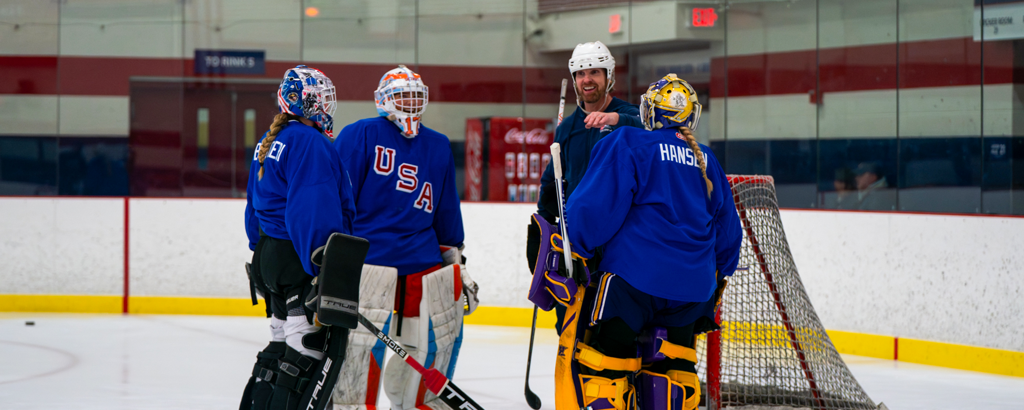
Ryder Fetterolf aspires to one day represent the United States on the global stage.
He recently advanced toward that ambition by participating in this year’s National Goaltending Development Camp, which took place from May 18-21 at the NSC Super Rink in Blaine, Minnesota.
“Having the chance to demonstrate my abilities while also learning so much at the same time is really exciting,” Fetterolf stated.
An 18-year-old from Sewickley, Pennsylvania, Fetterolf was among 25 goaltenders (both male and female) who attended the camp, which also featured a dozen female defenders.
While some participants had been to the camp previously, this was Fetterolf’s inaugural experience.
He mentioned that he had heard a great deal about this specific camp, and now he has had the opportunity to experience it firsthand, relishing every moment.
“It’s been an incredible experience,” said Fetterolf, who played for the Ottawa 67s in the Ontario Hockey League last season. “Competing against peers and observing older goalies while learning various aspects of their games has been very enlightening.”
Fetterolf was part of a goalie group at the camp that included four athletes from the U.S. National Team Development Program: Luke Carrithers, Nate Chizik, Brady Knowling, and Eli Winters.
On the women’s side, Olympic gold medalist and NCAA champion Ava McNaughton (Wisconsin) was present, along with other collegiate stars Layla Hemp (Minnesota), Hailey Hansen (Minnesota State), and Annelies Bergmann (Cornell).
With some of the top U.S. goaltenders in attendance, the camp offered Fetterolf an excellent chance to compete against those his age or older. He expressed a desire to absorb as much knowledge as possible, receive extensive feedback, and savor the experience.
“This is a remarkable opportunity, and it’s not something that is simply given,” Fetterolf remarked. “It certainly has to be earned.”
During the camp’s initial meeting, coaches and staff outlined the reasons for the athletes’ presence.
“The first thing we communicate to them is that they earned the chance to be here based on their performance and credentials,” stated David Lassonde, U.S. national goaltending coach.
The camp included on-ice training, skill enhancement, team building, and video analysis, with a significant emphasis on the mental aspects of the game, particularly for goaltenders. Participants had the opportunity to collaborate with Julia Allain, a mental skills coach associated with the New York Rangers.
“She effectively prepares them for the experience of playing hockey on a global scale and the pressures that accompany it,” said Steve Thompson, manager of player development – goaltending for USA Hockey. “Some of our goalies have already faced that.”
He highlighted McNaughton’s recent championship experiences as a goalie “well accustomed to performing under the spotlight,” Thompson noted. He added that there are also younger goalies at the camp who aspire to achieve such opportunities.
Regardless, Allain is available to assist all athletes with the mental health aspect.
“The players here have ample access to her both as a group and individually if they choose,” Lassonde explained. “We encourage them to meet with her to discuss their processes and explore mental performance strategies that can aid them in high-pressure situations.”
Fetterolf remarked that the mental component of the game is frequently underestimated, especially regarding the preparation required before practice.
“That’s truly what distinguishes professionals from those who may not be willing to invest the necessary effort,” Fetterolf stated. “It’s crucial. We’ve had numerous meetings here, and it’s been fascinating to witness all these presentations and extract valuable insights from each one to incorporate into our game.”
The additional factors that enable goaltenders to excel or realize their potential are often related to the mental aspects of the game or other off-ice elements, such as nutrition and sleep habits, according to Alli Altmann, goaltending coach for the U.S. Women’s National Team.
Acquiring this knowledge now for camp participants, whether before or during college, serves as excellent preparation for competing at higher levels.
“These are all aspects that you might not initially consider,” Altmann noted. “All these additional elements contribute and provide a competitive edge.”
For anyone fortunate enough to receive an invitation to a camp like this, Fetterolf advises seizing the opportunity to don the USA colors and collaborate with “exceptional coaches” while competing against other elite athletes of similar age.
“It’s a significant honor to wear the USA jersey, even just at a camp,” he stated. “I’ve been anticipating this camp for quite some time, so I’m extremely honored to be here, and it’s been a fantastic experience thus far.”
Story from Red Line Editorial, Inc.
