
Leadership summit focuses on empowerment and connection for leaders in girls’ and women’s hockey
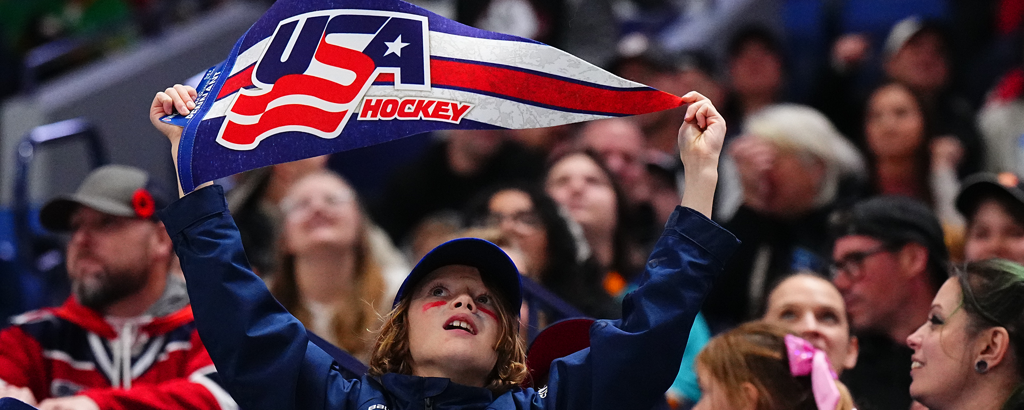
Hilary Knight scored a hat trick on Nov. 8, helping the U.S. Women’s National Team defeat Canada 6-1 in Game 2 of the 2025 Rivalry Series in Buffalo, New York.
Earlier that day in Buffalo, a leadership summit focused on girls’ hockey gave those involved a chance to see how players can be recruited and retained to help grow the sport and possibly produce more Hilary Knights in the future.
“We’ve had tremendous growth across the United States at all age levels of the girls’ game,” said Kristen Sagaert, director of girls’ hockey for USA Hockey. “Looking to hopefully break 100,000 women and girls registered with USA Hockey this season.
“This event definitely helps invigorate them. … Because at the end of the day, I think it’s more about the community that’s built during the event and the conversations that are had. The group becomes very close-knit over the weekend.”
This was the fifth year of the Girls’ and Women’s Hockey Leadership Summit, which included speakers, real-world examples of leadership, interactive breakout sessions and networking opportunities. The event intentionally coincided with the Rivalry Series weekend.
This year’s theme for the summit was empowerment and connection, and it focused on networking and empowering the group with tools and information. Speaker Alicia Pelton, who has more than 30 years of experience in youth sports, discussed data from girls and women in sports and what it looks like to support their growth and what it takes to keep the growth going into adult hockey.
“We wanted them to be empowered with data from that point of view,” Sagaert said.
About 60 people attended this year’s summit, geared toward hockey volunteers and administrators. About a third of attendees came from district-level administrative roles, another third at an affiliate level and the other third from a club-level role.
When this event got started five years ago, the intent was to provide leadership training for anyone involved in girls’ or women’s hockey so they could then take that info back to their area and mentor others, Sagaert said.
Each year, organizers request affiliates bring two people to the summit: a returning attendee and a new attendee. That way, they can continue to build a pool of qualified people who feel empowered and have a network of support from across the country, Sagaert said. Once the summit concludes, the networking continues with virtual calls throughout the hockey season.
One of the goals of this leadership summit is to make sure that attendees return to their home hockey communities with at least one new tool they can share at either the affiliate or district level, Sagaert said.
“Solely spreading that information and that mentorship so we continue to create volunteers that feel that they’re being provided with the tools that they need to succeed to support girls’ and women’s hockey across the country,” Sagaert said.
The leadership summit has also helped shift people from volunteer roles into working in hockey. Sometimes volunteers attend the summit unsure of how long they’d continue in a volunteer role. People have also continued to move up the ladders in their affiliations or districts after attending the summit.
“By coming to this event, they felt reinvigorated, and they’ve explained that to us about how they now feel they have extra energy and extra support to continue volunteering and supporting back where they’re from,” Sagaert said. “We’ve had some people that have come to this event (who’ve) switched from having a full-time job and volunteering in hockey to switching to wanting to work in hockey full time.”
Growing the game is ultimately at the heart of girls’ and women’s hockey. Sagaert and summit organizers see many volunteers implementing new programming in their home areas. The sharing of best practices is one of the best things that comes out of the leadership summit, Sagaert added.
Some of those ideas being passed around are making sure players who’ve graduated from their programs are welcomed back into that community as coaches after college. Other places hold free Learn to Skate lessons for all hockey parents as part of an effort to have more coaches involved with both boys’ and girls’ hockey.
Sharing of best practices brings ideas to communities trying to grow the game.
“Now, it’s seven, eight, nine new ideas of how they cannot only grow the game but engage new female coaches in the game and things like that,” Sagaert said.
The leadership summit’s purpose isn’t about sitting in a room listening to presentations, Sagaert said. It’s also about brainstorming together and growing girls’ and women’s hockey leadership positions across the country.
“It’s really meant to be about building relationships and learning from other people but also being in a space where you can express your concerns,” Sagaert said. “You can express your vulnerabilities and be able to feel supported. Sometimes that alone is enough to get people to talk about what’s going on and be able to help them in a different way than maybe just talking at them versus brainstorming with them.”
Story from Red Line Editorial, Inc.

