
Each Year, the Special Hockey Classic Turns into a ‘Hug Fest’
Hockey is for everyone.
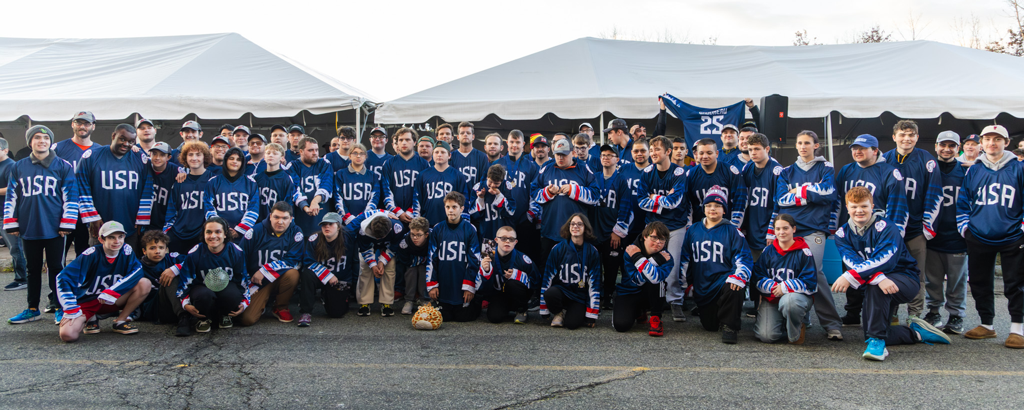
The latest evidence of that mantra was displayed Nov. 7-9 at the Ice Vault in Wayne, New Jersey, site of the 2025 USA Hockey Special Hockey Classic. The annual event featured 11 teams from six organizations and 150 special needs players competing in three classes based on their playing ability.
Special hockey provides people with a variety of cognitive and developmental disabilities the opportunity to play the sport adapted to their ability levels. Fun, teamwork and social interaction are key components of this hockey discipline.
Since USA Hockey established its special hockey program in 2000, the movement has grown to include teams and tournaments across the U.S. The first Special Hockey Classic took place in 2018.
“I joke it’s the ‘Hug Fest,’” said Maureen Thompson-Siegel, USA Hockey’s disabled hockey disciplines section chair. “All these cognitive disability people are very, very open emotionally. You get lots of hugs, nothing but smiles.
“It’s really a heart-warming experience. It’s such a breath of fresh air. It’s just joyful. There’s just no other way to describe it.”
Alex DePalma, USA Hockey’s national special hockey representative, noted that this year’s Classic was a great success.
“They actually just had the most amazing time,” said DePalma of the players and families. “It just really, really went well. We’re going to have some great hockey and give them a good party, too.”
Despite the challenges that they face, special hockey players are competitive. All the teams went home with championship banners, and the players all had gold medals around their necks.
“It’s not about rivalry to win the championship,” DePalma said. “We want them to feel comfortable. We want them to enjoy off the ice as much as the play on the ice. Otherwise, it just becomes a hockey tournament.”
Since the special hockey program is about growth and outreach as much as providing playing opportunities, the Classic moves to a different part of the country each year. The event has drawn as many as 250 players.
“My goal as the chair is to provide information … to the general public so that people understand that there are opportunities out there for people of all different walks of life,” Thompson-Siegel said. “The purpose of our events isn’t just to bring our athletes together, but to expose it to the general public.”
Getting the word out is also a priority for DePalma.
“Unfortunately, we’re the best-kept secret in hockey,” DePalma said. “The special community has more kids on the spectrum that should be doing something like that than any other discipline.”
DePalma, who has been coaching hockey for 40 years, started the Brick Stars Challengers program for special hockey players in 2009.
“We got it off the ground with six kids and became the fastest-growing special needs [hockey] program in the country,” DePalma said. “It just took off from there.”
When he started the program, DePalma worked with a few kids with special needs and taught them how to skate. Now, he works with high school kids and guides them on how to teach the basics of the sport to special needs players.
According to DePalma, he has received plenty of feedback from parents and medical professionals about the impact special hockey has had on his players’ lives away from the rink.
“That’s the part I didn’t know getting into it, what this did for these kids,” DePalma said. “I have letters upon letters from doctors. It’s done more for them than just put them on the ice. It just prepares them for everything else because of the intensity of it.”
DePalma described parents waking up on Sunday mornings to children standing there holding their hockey bags, ready to leave for the rink.
“It’s not the parents dragging the kid out,” DePalma said. “It’s the other way around.”
DePalma is grateful that he gets to work with these players, and they’re also quick to return that gratitude his way as well.
“They’re all unconditional love. They’re very heartfelt,” said DePalma, adding that the players have made him a “better coach, better parent, better person just looking at these families and what they endure and how much patience and unconditional love [they show], and at times it’s emotional. It’s very gratifying.”
Story from Red Line Editorial, Inc.

