
As Italy, Czechia, and Denmark compete for the final World Cup spots on Tuesday evening, several other nations are also in action—though these matches are deemed International Challenge Matches, which are considered uncompetitive.
Northern Ireland, Wales, and the Republic of Ireland all faced defeats on Thursday night in the UEFA World Cup qualification pathway. Although they are no longer in the running for this summer’s tournament, they are still required to participate in a non-competitive fixture.
This situation has drawn criticism. Former Northern Ireland player Chris Brunt expressed to the BBC, “For the supporters, it’s a complete dead rubber. It is one of the most ridiculous things I’ve ever heard — it’s pointless.”
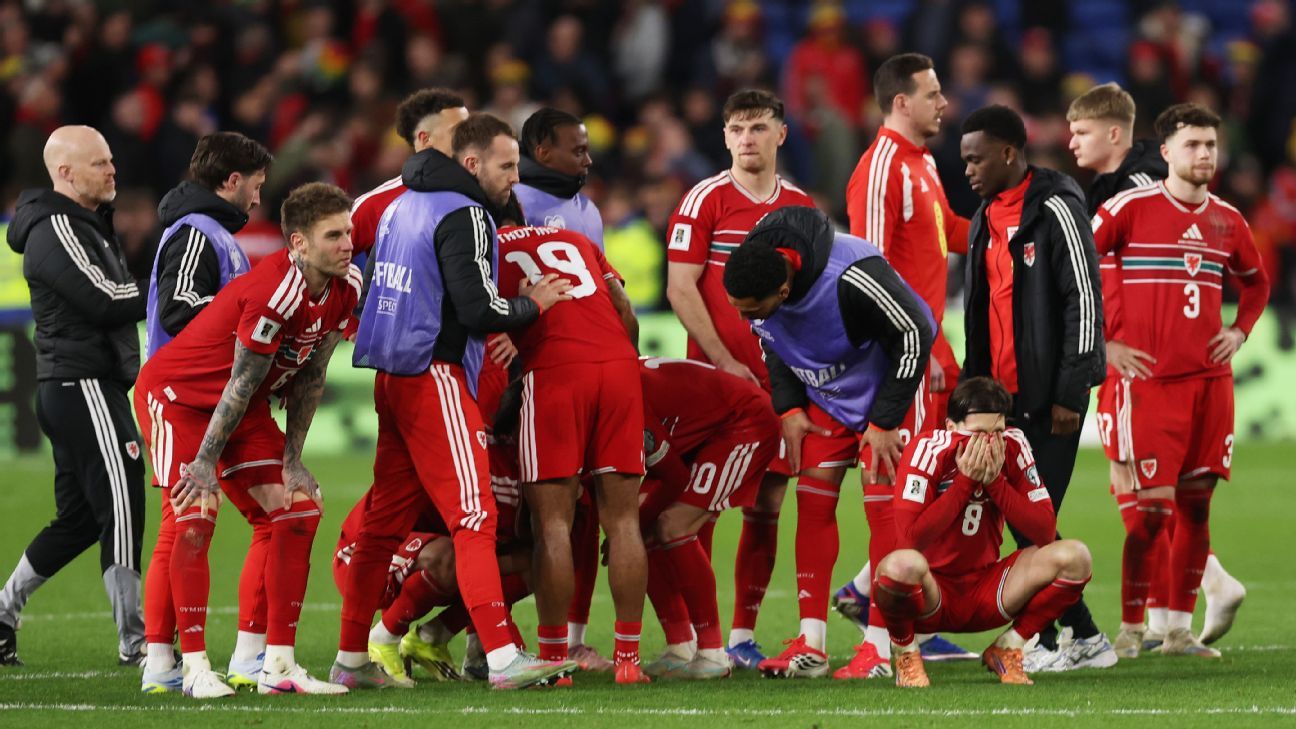
Northern Ireland, who lost to Italy on Thursday, will head to Cardiff to face a Welsh team that was eliminated by Bosnia and Herzegovina in a penalty shootout.
The Republic of Ireland, which also lost on penalties as Czechia advanced, will host North Macedonia, who were defeated by Denmark.
Slovakia and Romania are set to play against each other, despite their World Cup aspirations ending last week, as are Ukraine and Albania.
Why are International Challenge Matches being played?
After the disappointment of missing out on a trip to North America this summer, why are disheartened players compelled to participate in another international friendly that may not attract significant public interest?
The Football Association of Wales confirmed prior to Christmas that fans would not receive a refund for tickets to the second game, even if Wales were eliminated from World Cup contention. The Irish FA provided supporters traveling to Cardiff with an opportunity for a one-time refund “in recognition of continued support.”
Beyond ticketing issues, the primary concern appears to stem from FIFA’s regulations.
In 2023, the governing body’s council announced a new international match calendar for the period from 2025-2030. Among the sanctioned dates, FIFA stipulated that every March will feature a nine-day window for two matches.
This is in addition to a similar arrangement for June, during which many nations have scheduled friendlies to prepare for the World Cup.
This year marks the first time that the late September/early October window will be extended to 16 days and four matches. The November international break will remain at two matches.
– Craig Bellamy’s ‘heart hurts’ as Wales World Cup hopes dashed
– 2026 World Cup European playoffs explained: How it works, teams, schedule, how to watch in the UK
This year, the World Cup has expanded from 32 teams to 48, leading to a change in the qualifying format.
Previously, teams that did not qualify directly from their group but reached the playoffs would compete in two-legged matches.
<pThis time, the format has transitioned to single-game knockouts, resembling a semifinal-final structure.
The teams that won their ‘semifinal’ on Thursday advanced to a ‘final’ on Tuesday, resulting in four teams progressing from Europe.
<pThose who lost on Thursday, in order to meet FIFA's requirement of playing twice in this window, will now compete against each other on Tuesday.
World Cup qualifier finals
Bosnia and Herzegovina vs. Italy
Sweden vs. Poland
Czechia vs. Denmark
Kosovo vs. Turkey
International Challenge Matches
Wales vs. Northern Ireland
Ukraine vs. Albania
Republic of Ireland vs. North Macedonia
Slovakia vs. Romania
Republic of Ireland vs North Macedonia
