
Violence in Mexico: Events, FIFA’s Reaction, and Implications for the World Cup
On February 22, unrest linked to the assassination of Cartel Jalisco Nueva Generación leader Nemesio “El Mencho” Oseguera Cervantes erupted throughout Mexico, resulting in retaliatory actions that included burning vehicles, road blockades, and vandalism.
In the wake of the turmoil that followed gunfights between the Mexican military and the cartel, professional soccer was affected, leading to the postponement of matches. In Liga MX, the men’s match between Querétaro and FC Juarez was halted, as was the women’s top-tier rivalry clash between Chivas and América.
Could FIFA World Cup matches be at risk?
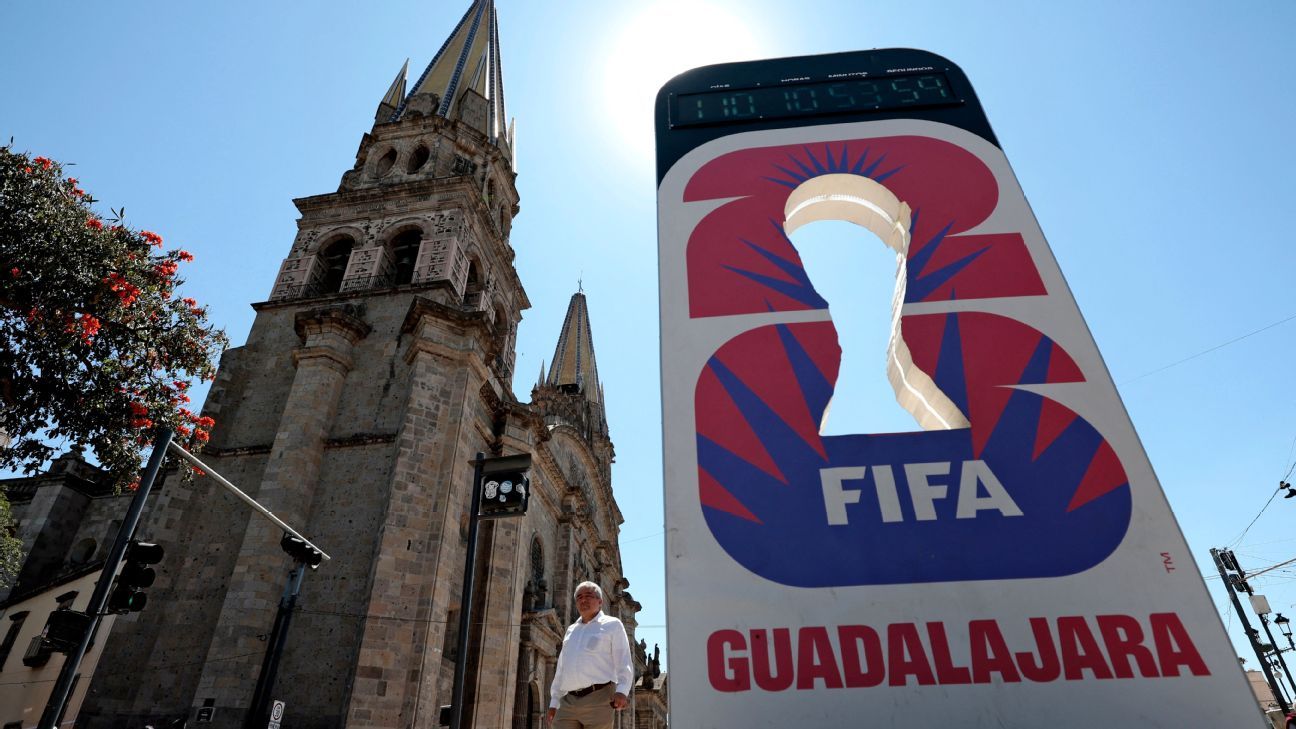
With the significant tournament set to be co-hosted by Mexico this summer, along with a series of qualifiers scheduled for late March, concerns have emerged regarding the safety of fans expected to visit the tournament venues in Monterrey, Mexico City, and Guadalajara.
Since Sunday, indications suggest that stability is being restored and soccer is resuming. Mexico hosted Iceland in a sold-out friendly at Estadio Corregidora on Wednesday. In front of over 30,000 spectators, and with no immediate reports of disturbances, the home team secured a convincing 4-0 victory as they continued their World Cup preparations.
However, following the recent violent incidents, concerns and inquiries persist.
What transpired in Mexico?
About two hours southwest of World Cup host city Guadalajara, Mexican forces, aided by U.S. intelligence, conducted a special operation on Sunday in Jalisco that resulted in the death of Oseguera Cervantes, one of the U.S. Department of State’s most wanted individuals. Over 70 individuals, mainly members of the Mexican National Guard and suspected criminals, lost their lives during the confrontations between the two factions.
Mexico’s foreign ministry reported that no foreign nationals were harmed.
In retaliation for the loss of their leader and as a demonstration of power, cartel members set vehicles ablaze, obstructed roads, and vandalized businesses nationwide, particularly in Jalisco, while residents remained indoors for their safety.
Some airlines issued travel warnings for airports in Guadalajara and Puerto Vallarta, a city that experienced a prison riot following reports of a vehicle breaching the facility’s gates. In a cautionary statement for citizens traveling to or residing in the country, the U.S. embassy advised Americans in several Mexican states to seek shelter.
By Wednesday, as the chaos subsided, the U.S. government advised citizens to “resume standard levels of precaution,” while also recommending that they monitor local media for updates.
What did local officials and FIFA communicate?
On the same day that Oseguera Cervantes was killed, Mexican soccer authorities postponed four matches in Liga MX and Liga MX Femenil.
Later that Monday, sources from ESPN indicated that FIFA was seeking information regarding the security situation in the country. The governing body was reportedly closely monitoring developments, especially in Guadalajara, which is set to host four World Cup matches and two qualifiers in March.
Jalisco governor Pablo Lemus dismissed concerns on Tuesday.
“There is absolutely no possibility. Not for the two playoff matches, nor the four World Cup matches,” the governor stated regarding FIFA’s intentions to relocate games from Guadalajara after discussions with an organization representative. Lemus further asserted, “There is absolutely no intention on FIFA’s part to remove any of Mexico’s host sites.”
Days following the cartel-related violence, FIFA president Gianni Infantino expressed support for the country.
“Of course, we are monitoring the situation in Mexico these days, but I want to emphasize from the outset that we have complete confidence in Mexico, in its president, Claudia Sheinbaum, and in the authorities,” Infantino remarked. “We are convinced that everything will proceed as smoothly as possible.”
Sheinbaum is confident that there will be no safety concerns for the summer.
“All the guarantees, all the guarantees. There is no [security] risk,” the president stated.
As of Tuesday, an ESPN source indicated that there were no updates or additional information regarding a potential change of World Cup venues.
What lies ahead for Mexico? Are visiting nations concerned?
As of this writing, Wednesday’s international friendly in Querétaro proceeded without any reported safety issues. Prior to the 4-0 victory over Iceland, Mexico coach Javier Aguirre mentioned that, despite the preceding unrest, the federation assured that everyone would be safe during the sold-out match.
“We are aware of the current situation,” Aguirre remarked before the match. “The people at the [Mexico Football Federation] have assured me that everyone will be safe.”
“We are here. We are very calm, relaxed, training, and discussing sports … that’s the message I can convey to the fans as a football coach.”
This was a positive early indication as Mexico seeks to move forward, but others, including a few visiting nations next month, are closely monitoring developments following the cartel violence.
Weeks before a high-profile match at Mexico City’s historic Estadio Azteca (recently renamed Estadio Banorte), Portugal’s federation announced that it was “closely monitoring the delicate situation currently unfolding” in the country.
“The Portuguese Football Federation emphasizes that the safety of players, coaching staff, and fans is an absolute priority, and this is the main criterion for all assessments and decisions regarding the holding of the match,” it stated.
Jamaica federation president Michael Ricketts expressed his genuine concerns as he prepares to travel to Guadalajara next month for inter-confederation playoffs that will determine World Cup qualification.
“The games are at the end of March, so we still have another month to see what happens; but it is making me very nervous, to be honest,” he admitted. “We will be awaiting guidance from Concacaf and FIFA regarding whether the games will proceed or if they will be seeking alternative options.”
Currently, no matches have been relocated from the country, and all indications suggest that Mexico and its three host cities will remain in contention for the World Cup. However, the situation will undoubtedly be monitored closely in the future.
