
VAR assessment: Did Liverpool correctly identify the overlooked red card? Was the penalty awarded to Man City justified?
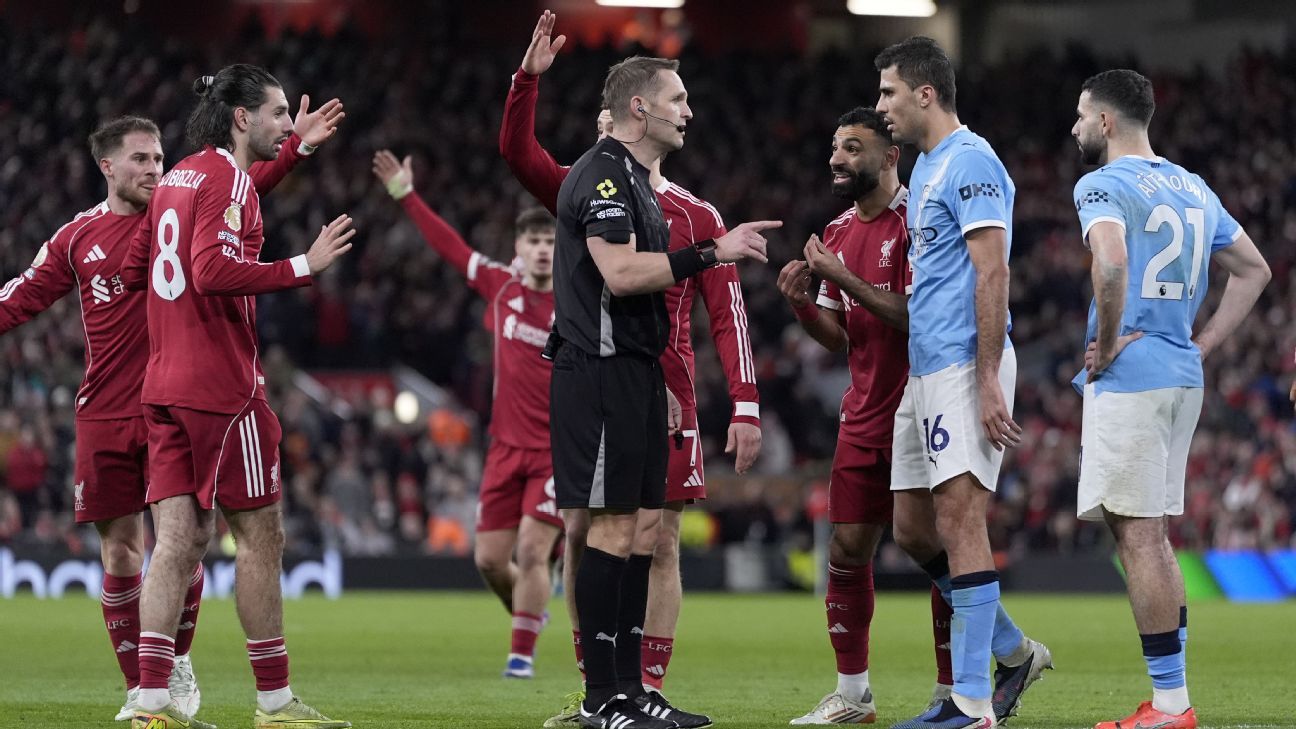
The video assistant referee generates debate each week in the Premier League, but what is the decision-making process and are the outcomes accurate?
This season, we will examine significant incidents to clarify the procedures regarding VAR protocol and the Laws of the Game.
Screenshot credit: NBC
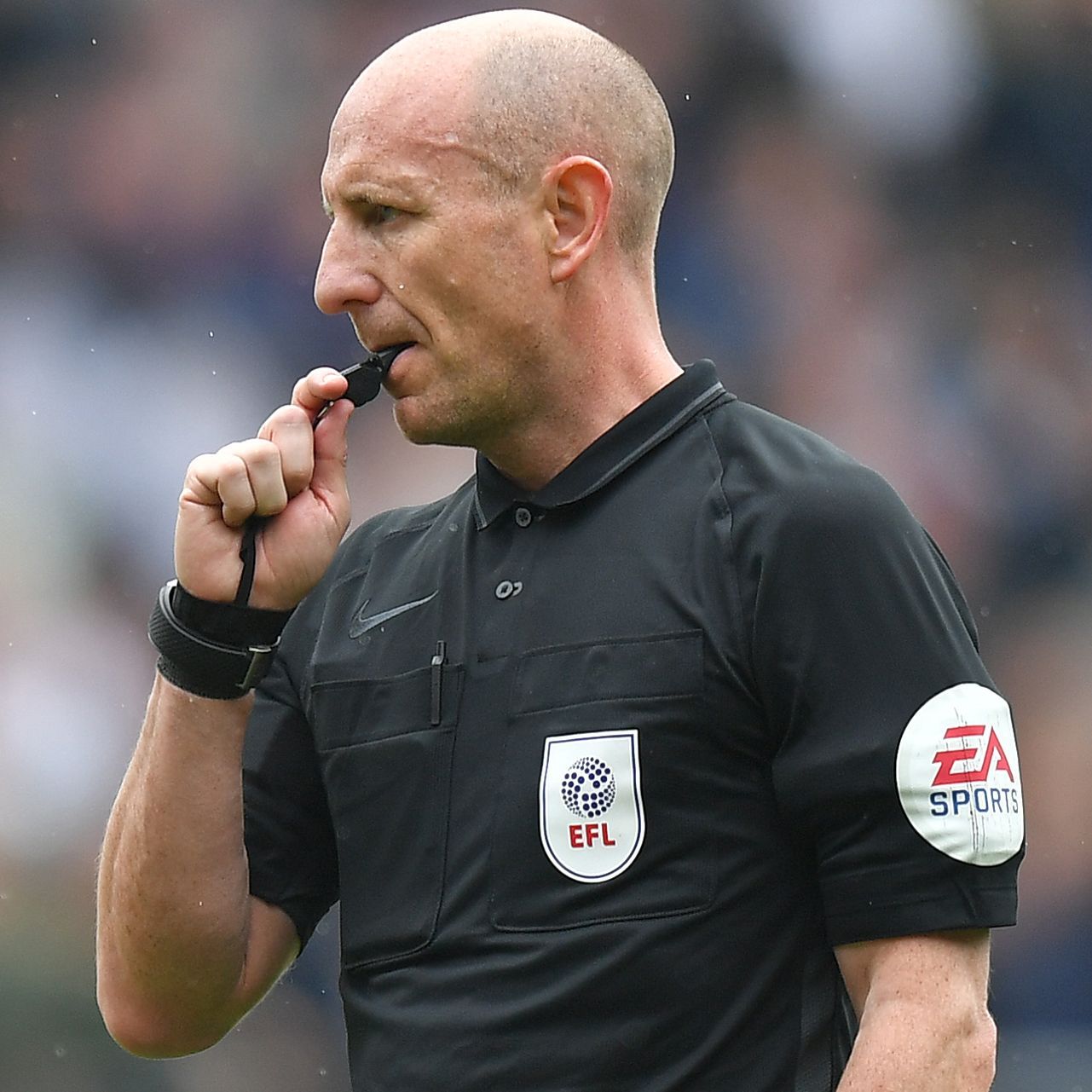 Andy Davies (@andydaviesref), a former Select Group referee, boasts over 12 seasons on the elite list, officiating in both the Premier League and Championship. With substantial experience at the highest level, he has worked within the VAR framework in the Premier League and provides valuable insight into the processes, reasoning, and protocols implemented on a Premier League matchday.
Liverpool 1-2 Manchester City
Referee: Craig Pawson
VAR: John Brooks
This match was an exciting encounter where Liverpool initially took the lead, but Manchester City responded with two unanswered goals to secure a 2-1 victory. The result for Manchester City altered the dynamics of the Premier League title race, while Liverpool’s defeat represented a setback in their quest for Champions League qualification.
It is clear that this was a crucial match with significant implications, and several penalty decisions and non-decisions greatly influenced the game’s outcome. There were three pivotal incidents that required major calls from the referee and VAR, so let’s analyze them all…
Time: 68th minute
Incident: A potential red card for Man City’s Marc Guéhi for DOGSO (denial of a goalscoring opportunity)
What happened: Mohamed Salah received a pass from teammate Dominik Szoboszlai, breaking through the Manchester City defense, and Guéhi brought Salah down as he approached the goal. Referee Pawson awarded a free kick and issued a yellow card to Guéhi. Liverpool appealed for a red card, but VAR concurred with the on-field decision.
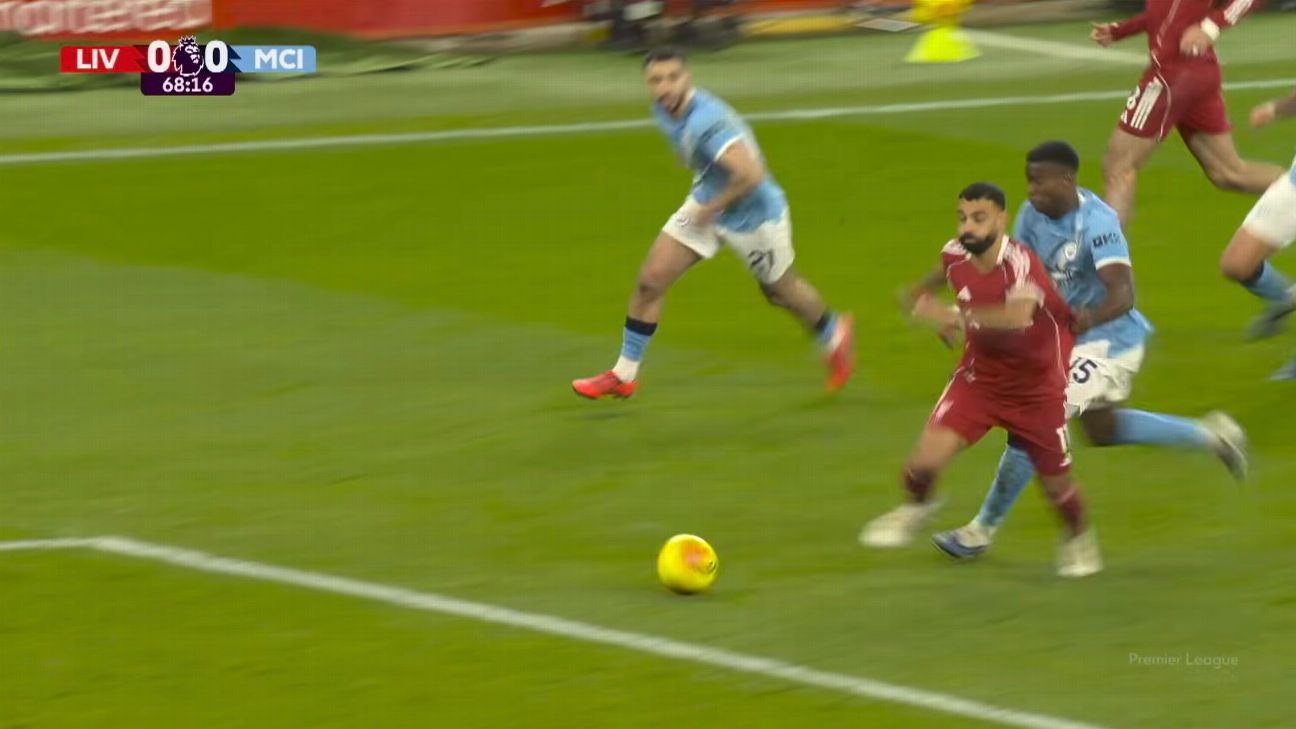
VAR decision: The referee’s decision to award a free kick and issue a yellow card to Guéhi for the challenge on Salah was reviewed and upheld by VAR. Since the challenge occurred outside the penalty area, it was determined not to be DOGSO due to the presence of a covering defender.
VAR review: The rationale provided by the on-field officials would have formed the basis of this review. For any potential overturn in this case, VAR would need clear evidence that the holding offense denied an obvious goalscoring opportunity rather than a probable one. The trajectory of Salah and the position of the City defender introduced a degree of uncertainty for VAR, leading to the confirmation of the on-field decision.
Verdict: Analyzing the specifics of this situation reveals it to be marginal, and it is reasonable to consider this a “ref’s call” as it was adjudicated on the day.
Two critical factors for the officiating team that may have contributed to the uncertainty include Salah’s potential to shoot immediately had the hold not occurred, and the location of the covering defender.
In a DOGSO scenario where the outcome is not definitive, the refereeing team will have an instinct about the appropriate decision — this instance was no exception.
The decision could have gone either way, but VAR was justified in not intervening in this case.
Time: 90th+1 minute
Incident: A penalty kick awarded to Manchester City
What happened: Matheus Nunes of Manchester City was fouled by Liverpool goalkeeper Alisson Becker after Nunes managed to lift the ball over the advancing keeper.
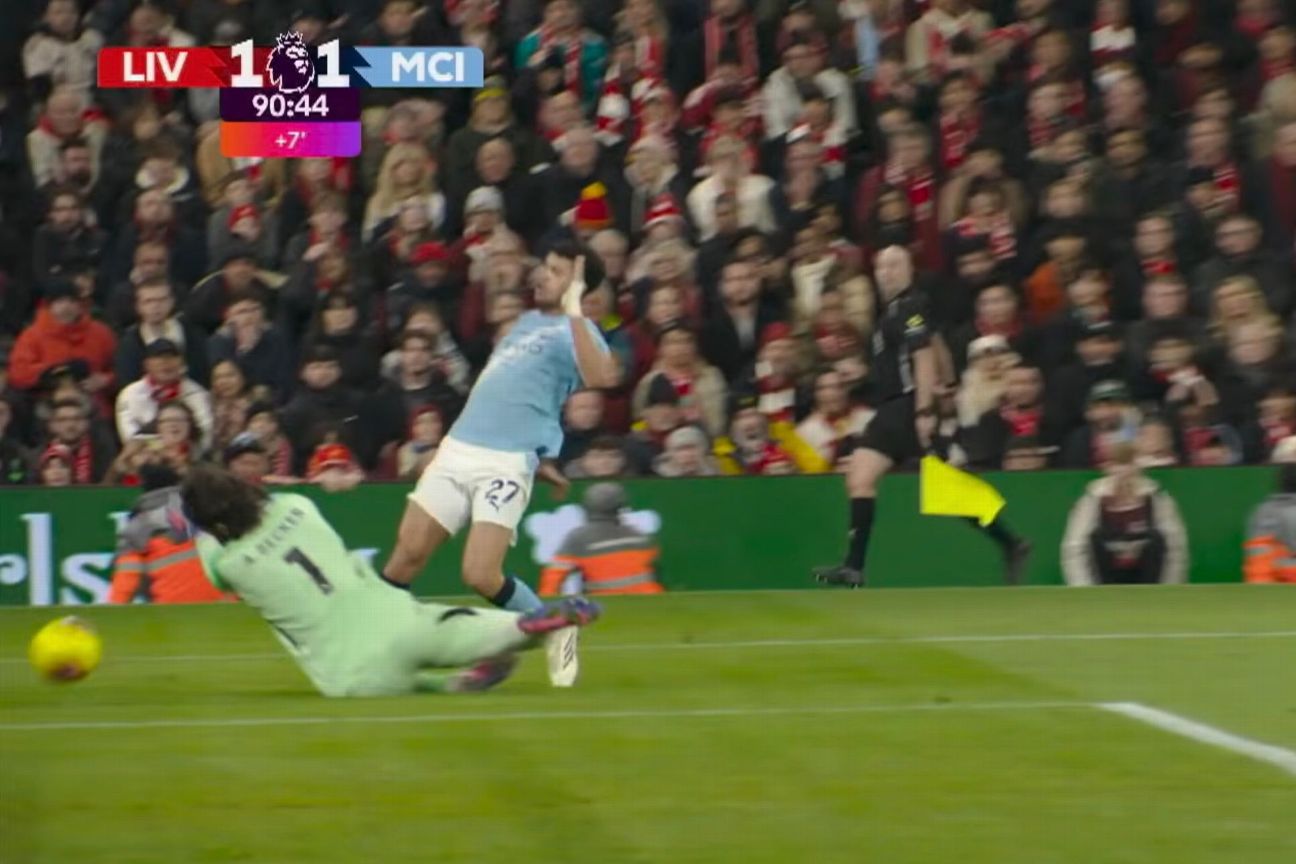
VAR decision: The referee’s penalty call was reviewed and confirmed by VAR, with Alisson found to have made significant contact with Nunes without playing the ball.
VAR review: This was a straightforward assessment for John Brooks, the video assistant referee. The communication between referee Pawson and his assistant would have clarified what the replays indicated, resulting in a simple confirmation process. The only aspect requiring verification by Brooks was to ensure that the ball remained in play when Alisson made contact with Nunes.
Verdict: The referee’s decision to award a penalty to Manchester City after Alisson’s collision with Nunes was correct. Alisson was late, did not make contact with the ball, and a penalty was the appropriate and anticipated outcome.
Time: 90th+10 minute
Incident: VAR intervened to overturn a Manchester City goal and send off Liverpool defender Dominik Szoboszlai for DOGSO.
What happened: With Liverpool’s goalkeeper advanced and pursuing a late equalizer, Manchester City forward Rayan Cherki shot towards an unguarded net. Erling Haaland of Manchester City and Liverpool’s Szoboszlai raced for the ball, with Haaland appearing to have the advantage.
The City striker had outpaced Szoboszlai as he entered the final third when he was pulled back by the Liverpool defender, an evident foul to prevent Haaland from reaching the loose ball.
The foul was clear and acknowledged by referee Pawson; however, he allowed play to continue as the ball was about to cross the goal line regardless of any infringement.
As the ball rolled towards the empty net, the now-advanced Liverpool defender attempted to slide in and clear it, but before Szoboszlai could intervene, Haaland pulled him back, preventing Szoboszlai from playing the ball, and the ball rolled into the net.
Referee Pawson awarded the goal to Manchester City.
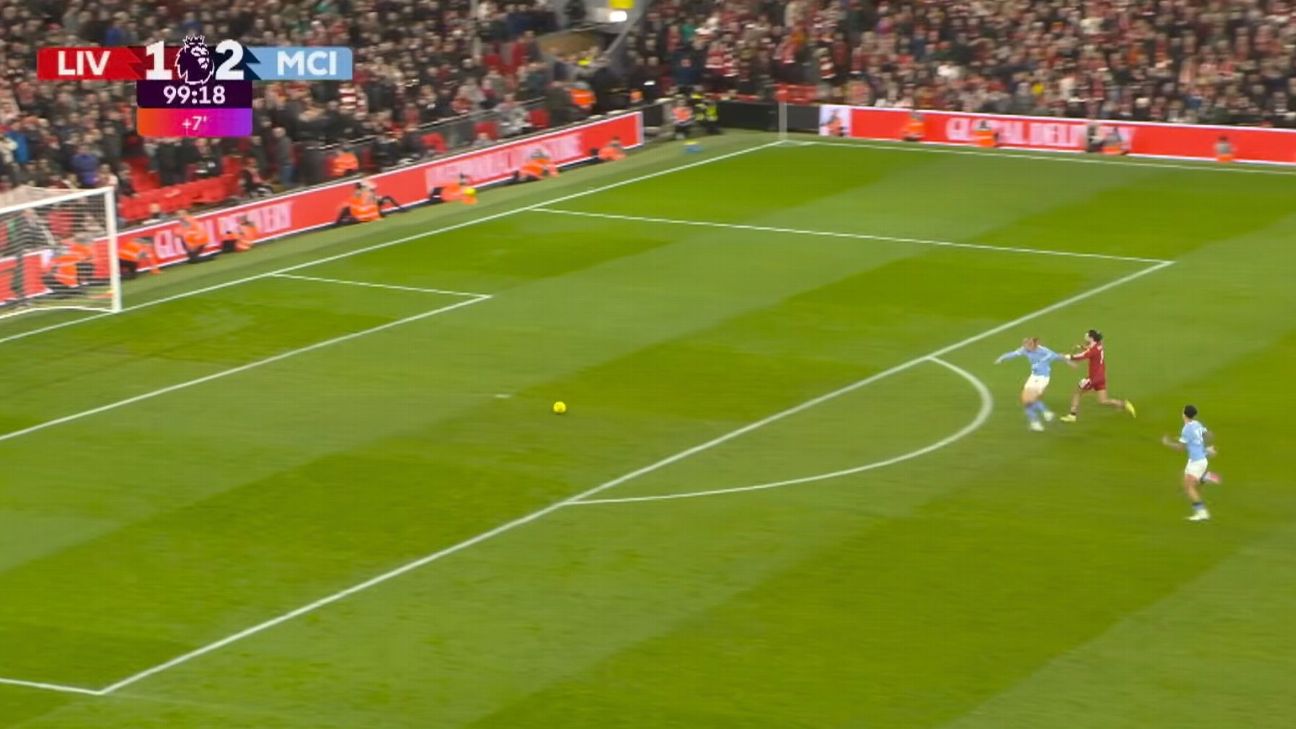
VAR decision: Following a VAR review, the referee reversed the initial decision of a goal for Manchester City.
<pThe referee's exact announcement was: "After review, there is a careless foul by Erling Haaland that pulls the shirt of Dominik Szoboszlai. Prior to that, Szoboszlai commits a holding offense that denies an obvious goalscoring opportunity. The final decision is a direct free kick to Manchester City and a red card."
VAR review: VAR John Brooks would have quickly recognized that this would be a complicated review due to the circumstances involved.
Each of the two holding offenses would have been analyzed separately by Brooks, comparing the on-field rationale that led to the goal being awarded against the factual replay evidence.
The holding offense by Haaland was the initial focus, as a goal cannot be permitted to stand after such a clear foul by an attacker — thus, an on-field review was recommended to disallow the City goal due to the evident foul.
Subsequently, once the goal was disallowed by the referee at the monitor, VAR would present Pawson with replays of Szoboszlai’s clear holding offense, which denied Haaland an obvious goalscoring opportunity, suggesting a red card for the Liverpool defender.
The sequence of events was compiled for Pawson to review at the monitor, and after considering the information and replays provided by VAR, Pawson concurred with Brooks, correctly disallowing the goal and issuing a red card to the Liverpool player.
Verdict: This is a distinctive situation that may not be easily understood or accepted by football fans. However, the laws of the game left VAR and ultimately the referee with no alternative options.
The pull by Haaland, which prevented Szoboszlai from clearing the ball, must be penalized, leading to the consideration of the original offense and the appropriate red card issued to the Liverpool defender.
This undoubtedly presented a challenging scenario for both the VAR and referee, as the post-match repercussions would have been apparent to them at the time. However, disregarding the law in favor of the most palatable outcome in such a complex situation, especially with Manchester City already ahead, was not a viable option, and that goal could prove crucial by the season’s end.
