
How Premier League Teams Evolved into Corporations and Substituted ‘Managers’ with ‘Head Coaches’
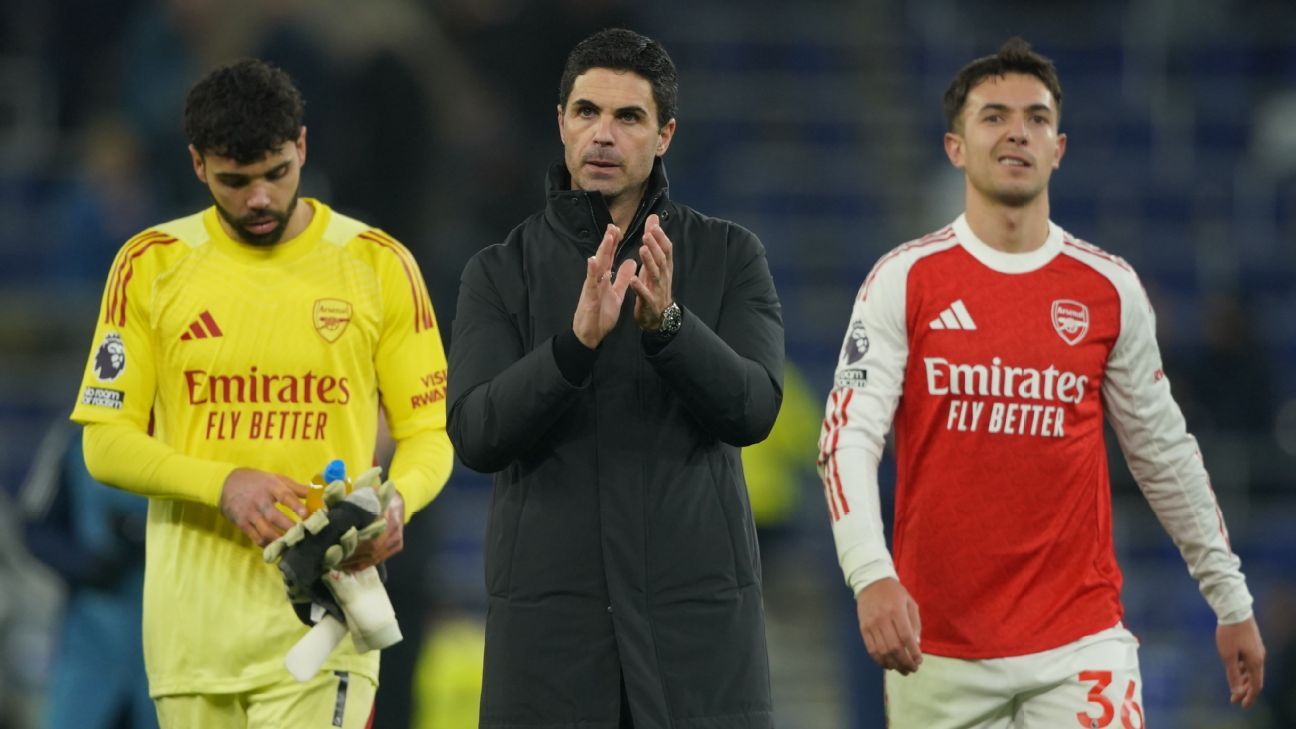
In 2004, Arsenal secured their second Premier League title in three years. However, what stood out even more was their remarkable achievement: they did not lose a single match. Over two decades later, the Invincibles remain the only Premier League team to complete an entire season without suffering a defeat.
They are also the last Arsenal squad to clinch the Premier League title, largely due to events that unfolded after that memorable season. Construction commenced on the Emirates Stadium, London’s first-ever venue designed for a larger capacity. While the cherished 35,000-seat Highbury held a special place in fans’ hearts, the new 60,000-seat stadium was intended to generate increased revenue, enabling the Gunners to compete with commercial powerhouses like Manchester United and the Russian oligarch who had recently acquired Chelsea.
In contrast to the United States, the notion of a publicly funded stadium would have sparked significant backlash, compelling the club to devise a strategy to finance their new home. As every club aiming for trophies must reinvest a substantial portion of its revenue into player salaries, Arsenal was compelled to secure a $350 million loan from the bank. Consequently, with the obligation to repay interest on a loan amounting to four times the then-world-record fee Real Madrid paid for Zinedine Zidane, the Gunners had to curtail their spending on player acquisitions.
Predictably, the outcome was a decline in Arsenal’s performance. They finished second in the subsequent season but did not reach that level again until 2015-16, which felt less significant as they were surpassed by the relatively small Leicester City. The club’s expectations had diminished to such an extent that manager Arsene Wenger famously remarked, “The first trophy is to finish in the top four,” following a 2-0 defeat to Sunderland in the FA Cup in 2012.
This decline can be attributed to Wenger himself. Due to his success since joining in 1996, Wenger wielded significant control over all aspects of Arsenal. This was evident when he stated in 2017: “Some coaches are only interested in managing the team and they are happy with it. I am not like that, so I cannot change myself now.” He determined player signings, field selections, and tactical approaches. However, this is not the sole reason for the club’s downturn following the undefeated season.
Wenger’s influence was so profound that banks were unwilling to extend a loan to Arsenal for the Emirates unless the club could assure them of his continued management for an additional five years. Essentially, the Gunners used their influential manager as collateral to secure a future that now seems increasingly distant: one where powerful managers are no longer prevalent.
– Premier League Power Rankings: Rating all 20 teams
– Is hiring a caretaker manager ever a good idea?
– Ranking the top 15 USMNT U-21 prospects of 2026
The decline of the manager
Managers, head coaches — whatever the title — have often been seen as ineffective figures.
In basketball, coaches frequently make substitutions and devise new strategies during timeouts, actively influencing the game. In American football, coaches design plays, with offensive and defensive coaches selecting strategies, while players execute their assigned roles.
In soccer, coaches now have five substitutions available, yet they often fail to utilize them effectively. Instead, they tend to remain on the sidelines in their “dress sneakers,” slightly snug black pants, and tech-performance jackets, attempting to orchestrate a team that either cannot hear them or chooses not to listen. Once the match begins, players take control. The gestures, whistles, and anxious movements of a coach during a match have minimal impact on the actual play.
Historically, managers exerted their greatest influence by implementing significant changes outside of on-field actions. At Arsenal, much of Wenger’s success stemmed from his willingness to trust foreign players more than any other manager in the league, allowing the club to attract stars like Thierry Henry and Patrick Vieira with little competition from other English clubs.
Wenger was the first coach in league history to field an entirely non-English starting eleven. He also pioneered the idea of players taking better care of their physical health.
“When Arsene arrived, he changed things,” Vieira recounted in 2018. “You weren’t allowed to eat chips with brunch. You weren’t allowed the butter. You were doing all the stretching. He’d bring a nutritionist to make us understand how important it is to eat properly.”
Combining these two elements with Wenger’s preference for an attacking, fluid style of play and Arsenal’s financial advantages over most of the Premier League explains much of the team’s success.
A similar narrative unfolded with Sir Alex Ferguson at Manchester United. He is often regarded as the greatest manager in history, and his success was not solely due to his innovative tactics or understanding of game dynamics. Instead, his United teams thrived because he was one of the few coaches in any sport who considered factors beyond merely winning the next match.
“Although I was always trying to disprove it, I believe that the cycle of a successful team lasts maybe four years, and then some change is needed,” he shared with the Harvard Business Review in 2012. “So we tried to visualize the team three or four years ahead and make decisions accordingly.” He added: “The goal was to evolve gradually, moving older players out and younger players in.”
Ferguson possessed an intrinsic understanding of a player’s prime duration — four years — and when it typically commences. Analysis from the Harvard Business Review indicated that Ferguson’s United signed a higher percentage of players under 25 than any of their closest rivals.
United had greater financial resources than any other club in England, coupled with a coach who comprehended player performance patterns and the elements that contribute to long-term success better than anyone else. Additionally, he recognized the competitive incentives, understanding that a win is worth three times as many points as a draw. His team specifically practiced for scenarios requiring them to chase games, and he consistently made bold substitutions when matches were tied or they were trailing.
“I am a gambler, a risk-taker, and you can see that in how we played in the late stages of matches,” he stated. Over his final decade, United accumulated more points than any other club in matches that were tied with 15 minutes remaining.
United secured 13 Premier League titles in 26 seasons under Ferguson due to their financial superiority and a coach who grasped age dynamics, understood the need for different strategies for long-term success, and focused on critical moments where his coaching could genuinely impact the game’s outcome.
Regrettably, these strategies are no longer effective today, as everyone is aware of dietary needs, that not all elite soccer players originate from a small island in the North Atlantic, and that players peak in their early to mid-20s. Moreover, the clubs that Wenger and Ferguson managed were soccer teams that happened to generate revenue. Today, they resemble massive corporations with soccer teams attached.
The emergence of the head coach
In the 1997-98 season, the earliest for which Deloitte has published financial data, Manchester United generated €132.4 million in revenue, making them the wealthiest club globally. Fast forward to the present, and Real Madrid’s leading revenues stand at €1.61 billion.
These clubs operate as corporations, not traditional clubs, and most owners treat them as such. Aside from a few sovereign wealth funds that prioritize winning for cultural reasons, an increasing number of Premier League clubs are owned by American or similarly-minded financial groups who view these clubs as investment opportunities to diversify and enhance their profits.
If you were managing a corporation that needed to deliver value to shareholders, would you grant excessive power — in both short- and long-term decision-making — to an individual whose average tenure is just over a year? Certainly not, and as James Olley recently noted, the average manager in England lasts only 1.42 years in their role.
Stepping away from the corporate perspective and focusing solely on winning, the diminishing power of the manager also becomes clear.
If you had two clubs with equal revenue, support, and influence, which would you choose to invest in: the club where the manager coaches the team, oversees the medical staff, and manages all contract negotiations, scouting, player arrivals, and departures? Or the club where the manager coaches the team and fosters chemistry; the medical staff independently assesses player workloads; a world-class analytics team identifies undervalued players and assesses transfer target success probabilities; a director of football continuously evaluates the roster’s future state, tracks transfer market trends, and negotiates contracts well before players reach their final years; and all these groups collaborate and make decisions together?
Clearly, the latter option is preferable. This type of structure is what propelled Liverpool from mid-table mediocrity to being one of the best teams in the world for extended periods. However, even this balance of power proved challenging to maintain. Toward the end of Jurgen Klopp’s tenure, nearly every key decision-maker in the front office departed the club. It is no coincidence that many returned shortly after Klopp’s departure.
Most clubs now aspire to establish their own version of this hierarchy, where the coach fits into the decision-making framework rather than having the framework built around them. Consider how few coaches currently hold the title of “manager”: only five of the 20 in the Premier League today.
However, most coaches did not enter the profession to integrate advice from medical teams, heed data analysts, or adjust their tactical strategies based on directives from executives.
 play1:31Ruben Amorim’s last Manchester United press conference
During his final press conference as Manchester United manager, Ruben Amorim stated: “I came here to be the manager, not the coach.” Ironically, he was never even granted the title of “manager.” At Chelsea, Enzo Maresca expressed feeling “unsupported” by the club, with numerous reports emerging about his conflicts with the front office and his reluctance to heed medical staff recommendations.
Both coaches were dismissed because they envisioned themselves as powerful managers, while their clubs no longer recognize that role’s existence. It remains to be seen who United will appoint next, but by selecting an inexperienced coach from what is essentially their development team in France, Chelsea appears to indicate that “following directives” is a primary requirement for their sideline leader.
The evolving landscape of Premier League management
It genuinely seems we have reached a pivotal moment where the expectations of coaches and clubs are no longer aligned. What might unfold next?
Several prominent coaches will conclude their current commitments this summer. Thomas Tuchel, Mauricio Pochettino, and Julian Nagelsmann are all leading national teams that will participate in the World Cup, and they should theoretically be in demand for top club positions if they choose to leave after the tournament.
However, if Amorim and Maresca — two inexperienced managers without a record of success at the highest level — struggled with their lack of authority, why would more established coaches with impressive credentials face different challenges?
At Manchester City, Pep Guardiola embodies the traditional concept of a manager more than anyone else coaching one of the wealthiest clubs globally. Yet, he is unlikely to remain at the club for more than another full season. If he departs, the most probable scenario is not that Manchester City grants the next coach as much influence as Pep has. Rather, they will likely hire someone who requires less power.
Nevertheless, as evidenced by many of these new structures, there was an advantage to the consolidated authority of the old manager model. There was clarity regarding decision-making, and it was easier to cultivate an identity when that identity stemmed from the choices made by a single individual.
Now, club structures are beginning to resemble the corporate bureaucracies familiar to these new owners. Chelsea, as Gab Marcotti recently highlighted, has eight sporting directors — eight! Tottenham has finally recognized the need to limit this to one. Meanwhile, at Manchester United, the distribution of responsibilities within the hierarchy seems to shift every few days.
In attempting to eliminate the inefficiencies of allowing one person to handle multiple roles, these clubs have inadvertently introduced a new form of inefficiency. Few have achieved success with this new model, resulting in an awkward weekly scenario: a coach who has outperformed any of his superiors must face the media and address questions about decisions he did not make.
Perhaps it is fitting that this Premier League season may conclude with Arsenal claiming their first title since the Invincibles.
Upon Wenger’s departure from Arsenal, he was not succeeded by a manager. The club appointed Unai Emery as “head coach,” and when that did not yield results, they replaced him with another head coach. Following Wenger’s exit, the club’s operations staff expanded significantly, leading to a series of poor decisions.
Today, the decision-making process appears somewhat more streamlined, albeit still more modern than during the Highbury era. There are representatives from ownership, a sporting director, and Mikel Arteta. He was initially hired as a head coach and later elevated to the role of manager.
