
Carrick has renewed optimism at Manchester United. What further actions can he take?
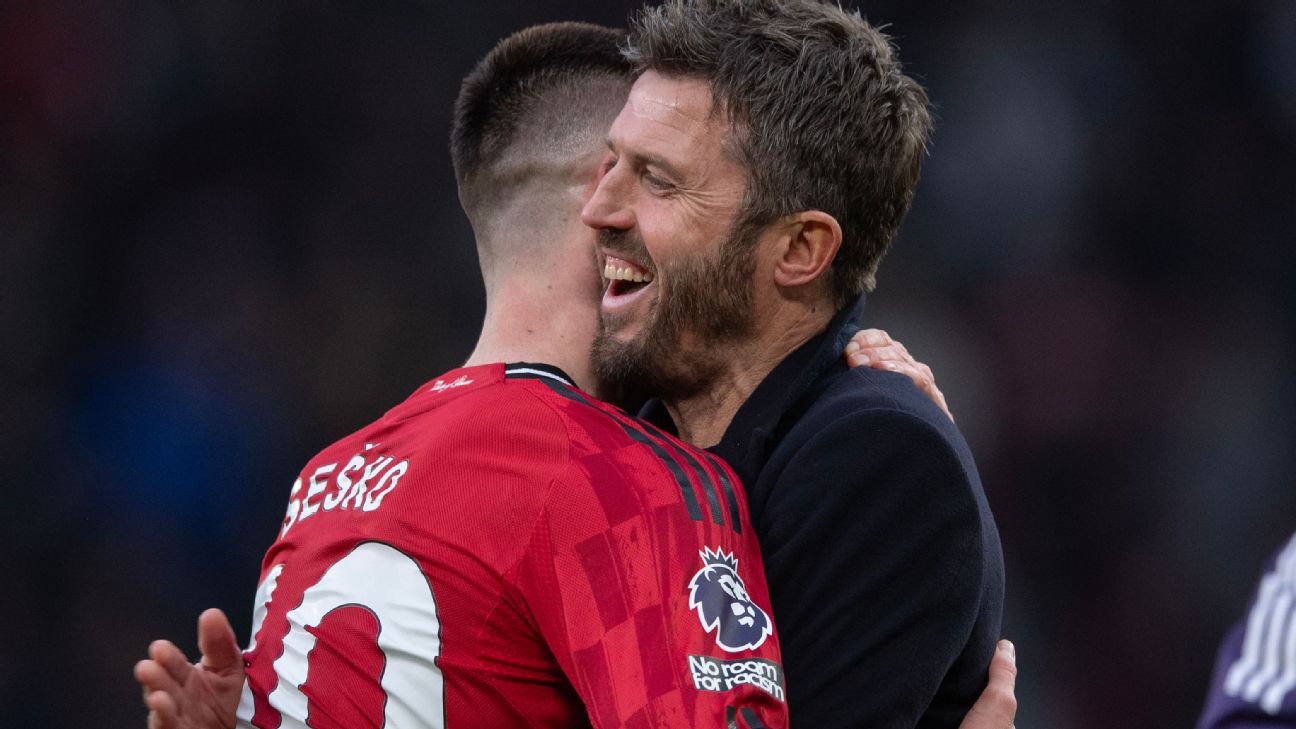
While it may be premature to declare a “red revival” or suggest that Manchester United’s struggles are over, there are intriguing developments occurring under interim coach Michael Carrick. With three victories in three matches, including a Manchester Derby and a thrilling 3-2 win at Arsenal, the atmosphere at a previously gloomy Old Trafford has shifted. Although Sunday’s victory against Fulham was less convincing, United secured a dramatic finish reminiscent of the trophy-laden era under Sir Alex Ferguson.
Fans of United are beginning to dream again—a win against Tottenham on Saturday would bring them closer to a long-desired five-game winning streak—but it seems that few are ready to celebrate just yet. The key question is whether this improvement in performance is merely a result of a new-manager bounce or the beginning of something more substantial and enduring. One thing is clear: Carrick, 44, whose elegant midfield passing contributed to five Premier League titles under Ferguson, appears to have effectively engaged a squad that often seemed adrift during the Ruben Amorim period.
– Dawson: Grab your popcorn: it’s City and Arsenal in the Carabao Cup final
– Marcotti: Why Liverpool’s January transfer window makes no sense
– Ogden: Stick with Carrick? Hire another coach? Man Utd must decide now
Amorim, a proponent of the 3-4-2-1 formation even when it appeared ill-suited to the players, departed with the club recording the worst goals-per-game and the lowest clean sheet percentage of any manager in United’s Premier League history.
Carrick’s approach could not be more contrasting. His arrival seems to have been positively received by players who respect his legacy as a United player and recognize the weight of expectations that come with the shirt at Old Trafford. While Amorim publicly criticized the players, labeling his squad as “possibly the worst team in United’s history,” Carrick maintains a composed demeanor. His expression rarely changes as he stands in his tailored overcoat on the sidelines, and his press conferences are typically calm and straightforward, avoiding sensational headlines that could embroil United in controversy.
Players observing those press conferences would likely appreciate that their leader presents an ego-free, professional image. More importantly, Carrick has implemented significant tactical adjustments.
Foremost among these changes is his decision to abandon Amorim’s unsuccessful system in favor of a back four, complemented by two defensive midfielders and a dynamic front four. This adjustment has allowed captain and United’s most potent player, Bruno Fernandes, to operate much closer to the opponent’s goal, where he can be more impactful. This was evident when he deceived Fulham’s Calvin Bassey before assisting Benjamin Sesko’s stoppage-time winner last weekend.
Eliminating the wing-back strategy has also benefited the formidable Amad Diallo, who was previously tasked with excessive defensive responsibilities under Amorim. Now, Amad can function as a traditional winger, causing problems at the opposite end of the pitch.
Carrick has also revitalized Kobbie Mainoo, who had been sidelined under Amorim. It appeared that the young England international might be transferred, but he has returned to the squad, adding extra quality to the midfield.
The interim manager has also reinstated Harry Maguire to lead the back four and repositioned Luke Shaw to his preferred left-back role. The return of Lisandro Martínez to partner Maguire has also been beneficial.
Bryan Mbeumo, proud to represent United, seems content to play as a versatile “false No. 9” in Carrick’s revamped team, while Matheus Cunha adds an element of unpredictability, as evidenced by his two impressive goals.
United’s offense is functioning effectively. Under Carrick, they have netted eight goals in three matches and currently rank just behind the top two in the scoring charts.
In essence, Carrick has simply placed players in their appropriate roles and allowed them to perform. Common sense has prevailed.
However, this does not imply that Manchester United are suddenly title contenders or that they can ascend from fourth place into the championship race. This team is not prepared for that. Even securing a top-four finish and qualifying for next season’s UEFA Champions League will be challenging, with Liverpool, Chelsea, and Aston Villa all competing.
United must seek a defensive midfielder with aggression, stamina, and solid creative abilities. Candidates could include Adam Wharton from Crystal Palace or Elliot Anderson of Nottingham Forest.
In conclusion, United and Carrick have yet to prove themselves. However, they have laid the groundwork to aim for a return to the Champions League, which should be the objective this season.
If Carrick can achieve that goal, his case for securing the position permanently will be compelling. He has undergone extensive preparation and performed well at Middlesbrough, and now he is working with superior players. He is not inexperienced.
Will he be able to steer his former club away from the difficulties of recent seasons? United fans will hope so, but do they truly believe?
