
100 Days Until the World Cup: How is the USMNT Performing?
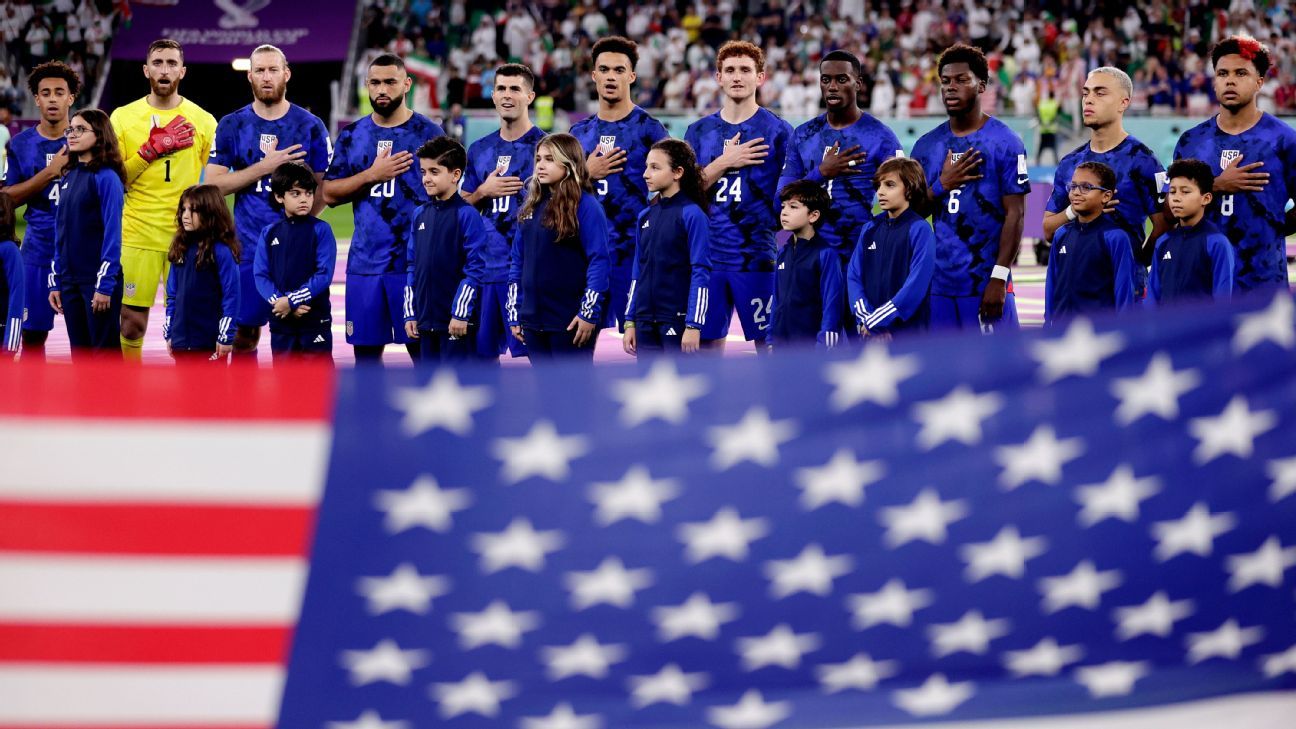
The countdown has reached 100 days until the commencement of the 2026 World Cup. In certain ways, it appears that the conclusion of a lengthy journey for the U.S. men’s national team is finally within reach. Conversely, it feels as though time has passed swiftly.
Can it really be that the 2024 Copa América setback and the subsequent appointment of Mauricio Pochettino occurred 20 months ago? Was it only last year that the USMNT hit rock bottom with lackluster displays at the Concacaf Nations League? Did the team’s recovery truly take place?
All these inquiries can be answered positively, but now the real pressure begins. The final international window before the World Cup is approaching at the end of the month. Additionally, there is significant competition among players to secure a spot on the World Cup roster.
How the USMNT navigates these circumstances will ultimately influence the team’s performance. However, there remain numerous questions that need addressing. ESPN assembled a roundtable featuring former U.S. international defender Steven Cherundolo, former USMNT star Landon Donovan, former U.S. manager Bruce Arena, former World Cup goal scorer Eric Wynalda, former USMNT forward Herculez Gomez, and three-time World Cup goalkeeper Kasey Keller to evaluate the current situation and speculate on the World Cup prospects for the USMNT.
Editor’s note: These responses have been lightly edited for brevity and clarity.
What level of success is required for the U.S. in 2026? With the previous 32-team format as a reference, one might have said reaching the quarterfinals, but with the new 48-team structure, two knockout victories will be necessary to achieve that. Is this attainable for this group, and is it a realistic expectation?
Cherundolo: I am optimistic about the team’s current form. The trend is favorable. Therefore, I would assert that yes, I believe the team can reach the quarterfinals. However, if we advance to the round of 16 and face a strong opponent, losing after a commendable performance should still make us proud.
Donovan: My definition of success is whether the team captures the nation’s attention, which is subjective. Do they make a notable run in the knockout stages? For instance, if they face France in the round of 32 and exit after a hard-fought match, that would be acceptable and respectable. Or do they create one or two iconic moments that truly resonate? I am viewing it through that lens rather than a strict distance to cover.
Wynalda: Semifinals. Yes, that is realistic. In the worst-case scenario, a third-place finish. I understand the impact of the home crowd, and these players are talented. Folarin Balogun just netted two goals against Paris Saint-Germain. I believe we are in a favorable position.
Arena: I do not expect us to win the World Cup, but I believe we should at least reach the round of 16. Given that we are playing at home and are seeded, advancing from the group stage should be expected. Then, in the round of 32, we should secure a victory and progress to the round of 16; from that point, anything can happen.
Gomez: The margins are extremely narrow. There are two likely scenarios, and if the U.S. aims for the best outcome, it must win its group. Winning the group increases the likelihood of facing a third-place team that should be manageable; then in the round of 16, it could be Belgium. If we can overcome this version of Belgium, a quarterfinal matchup against Spain could follow, which may be the end of the line. However, if we finish second in the group, we would face Argentina in the next round. Quarterfinals would be a fortunate outcome, and that should be the standard.
This may be the most talented U.S. team ever, but how does it stack up against the successful squads of 2002 or 2010?
Donovan: There is no doubt that this is the most impressive collection of players based on the clubs they represent. That is indisputable. How do they compare to previous teams? They lack a signature victory against a top-tier opponent. We defeated a Spanish team (in 2009) that had not lost in 35 matches. Therefore, I find it difficult to assert that they are superior to those teams until they achieve that, and hopefully, they will this summer.
Wynalda: It is remarkable how we have completely disregarded ’94. I believe it should be compared primarily to ’94, as that serves as a benchmark for our performance, especially since we will have the advantage of playing at home. However, when discussing the other teams, it is challenging to convince me that Robbie Findley is superior to Roy Wegerle or that Herculez Gomez is better than anyone else. In 2002, we were fortunate.
Arena: In my personal view, yes, 2002 was superior, primarily because we had elite players at that time, not only in Europe but also in MLS, and they were likely more experienced. They had faced significant challenges in qualifying, not just for 2002 but in previous campaigns. They endured a lot, and when they arrived in South Korea, they were prepared for tough matches. The 2026 group benefits from playing at home, which may lessen the importance of prior challenges, but the 2002 squad was tested before they even reached South Korea, and they were ready for the fight.
What level of pressure will the team face to perform in a World Cup on home soil, and how challenging will it be for the players to manage that?
Cherundolo: I believe this is where Pochettino will need to focus most of his coaching and management efforts. It is not merely about tactics, formations, or fitness; the players will be prepared and motivated. The key will be managing emotions, expectations, and feelings. How effectively can you control all these aspects within the group will determine our focus on game day, as these matches and tournaments are often decided by moments, which are influenced by concentration.
Donovan: Personally, I was built to feel 99% excitement and a bit of nerves just before kickoff. However, many players are different, so Pochettino’s role will be to tilt those percentages more towards [excitement] because it is essentially the same energy. It all comes down to how you channel it.
Wynalda: They will be fine. They will be inspired. The ’94 group faced challenges because we played in smaller clubs. However, our current players are competing at clubs like Juventus and AC Milan and in the Premier League, and I do not believe that aspect will intimidate them. If anything, it will motivate them to perform better.
Gomez: The pressure in the United States is not comparable to that in other countries. The reality is that the U.S. could exit this home World Cup, and it might only dominate the news cycle for a few days. After that, [those in soccer circles] will continue discussing it, but that will be the extent. These players will walk the streets, they may receive recognition, but they will not face hostility or threats; they will not find themselves in uncomfortable situations. In contrast, if a team like England fails in this World Cup, those players will avoid going outside. They will read about it, hear about it, and see it for months, and in the next international tournament, it will be revisited. It will be regarded as one of the greatest failures of their lives, not just in sports but in life.
Keller: If you examine where the players are competing, you must expect good things from this current group. However, they have not faced two years of competitive matches. If you have never played against Honduras, El Salvador, or Trinidad and Tobago, facing them in a friendly is vastly different from playing them in a World Cup qualifier on their home turf, where a victory could lead to a national holiday declared by their president. The level of pressure and commitment is entirely different, and that is a concern I have.
How has Pochettino transformed this team since September?
Donovan: He has reinstated the honor of representing the national team. It is remarkable to say that this was never an issue with the U.S. national team, but now there is genuine pride in playing for your country, and I believe none of the players take that for granted. That has been his most significant contribution.
Wynalda: By streamlining the roster. He had to go through a process of eliminating players who did not belong, and he is gradually instilling a mentality in the group that understands it will be much more challenging than they initially thought to secure a place on this team.
Arena: They have won a few friendlies, correct? I do not think that amounts to much, but we will see how they perform in real matches during the World Cup. He has done well with the team, instilling some confidence, and it appears they have developed as a unit, which is a testament to the coach and his staff.
Pochettino has frequently discussed the need to change the culture within the national team. What aspects of that culture required change, and how significant will Pochettino’s efforts be this summer?
Cherundolo: When the matches are only friendlies, the national team may seem less significant at times. I believe that has been evident on the field, but I have been impressed with the mentality and performances of the group recently. What I always look for in a team is: Does it possess spirit? Does it have an identity? It appears they have established an identity just in time.
Donovan: Up until 2022, everything seemed fine, and even a bit beyond that, but then some poor results exposed underlying issues. There was a sense of entitlement regarding playing for the national team, a somewhat indifferent attitude towards national team games because friendlies felt unimportant. There was hesitance to participate in certain matches, and we did not fully recognize it until the negative results surfaced. The issues became apparent, and after speaking with Pochettino over the past year, he identified these problems early on and recognized the importance of implementing necessary changes.
Wynalda: He is teaching us something we should have embraced all along: the importance of a genuine soccer culture. Pochettino does not concentrate on the traditional concerns we have. He focuses on whether the players can work together towards common goals and whether we can achieve that without worrying excessively about individual comfort or happiness. We no longer have time for that; it is essential to concentrate on a singular goal of competing and winning.
Gomez: This team, prior to Pochettino’s arrival, lacked toughness. It was a squad that would back down when challenged. When the stakes were high, they faltered. However, in the last five or six friendlies, that has changed; the message has shifted, and the culture has evolved. Last summer, when Christian Pulisic and Yunus Musah were absent, and the group was divided between the Gold Cup, Club World Cup, and those who were present, a clear line was drawn: you are either with this program or you are not. It does not matter who you are; if you consider yourself a household name or not, you must show up, put in the effort, and be there for the team.
Keller: This was the most significant change needed because players had become complacent, which is unacceptable. We faced a situation where competition needed to be fostered because those who should have been competing were not, and that concerns me. The absence of competitive matches led to a loss of this competitive edge, which was alarming. While I am relieved to see some edge returning in recent friendlies, it must be sustained.
How do the sacrifices made by this generation of players (leaving home at a young age to pursue the dream of playing at the highest level) compare to the struggles faced by previous generations (fighting for any opportunity to play internationally)?
Donovan: Players no longer face the same financial pressures they once did. [Previously], financial concerns were very real. Forget about playing in front of home crowds; they were focused on putting food on the table, which was a genuine struggle. It was not a matter of, ‘Oh, you are making half a million dollars, stop complaining.’ It was more like, ‘We are trying to scrape together 60, 80, or a hundred grand a year to survive and support our families.’
The current challenge, in my opinion, is the rise of social media. Everything is amplified, especially for players of color, due to the negativity that often arises.
Wynalda: I am not sure how much these players have sacrificed. I believe they have been afforded an easier path. We were navigating through challenges with little support, while they have had a smoother journey with ample resources, allowing them to progress more quickly. The growth of the game has made their path easier, so I do not think they have truly persevered; rather, they have taken advantage of the resources available to them, which we helped to expedite.
 play2:54Herc Gomez picks his USMNT XI for the World Cup opener vs. Paraguay
With 100 days remaining until the 2026 World Cup begins, Herculez Gomez selects his USMNT XI for their opening match against Paraguay.
Arena: The success of Pulisic and Weston McKennie abroad can be attributed to the improvements in our country’s development system. We now have very talented young players. Individuals like Pulisic and McKennie are actively recruited to play overseas. They are not going abroad merely to attract attention; they are sought after because they come from a strong developmental environment.
The U.S. has a long history of producing elite goalkeepers who have excelled internationally. How confident are you in the domestic options (specifically Matt Freese and Matt Turner) who are likely to start this summer?
Cherundolo: To be frank, we have had better goalkeepers in the past, but I believe Freese is certainly capable, and Turner, along with whoever is in goal during the World Cup, should be good enough to help us reach our potential as a team, though they likely will not be the standout players. Hopefully.
Donovan: Freese has impressed me significantly. The issue is that we simply do not know enough about Matt Freese. In previous tournaments, we had a top-tier goalkeeper, a world-class talent. It was never a concern for me; I thought, ‘Goalkeeper is sorted.’ Currently, we do not have that certainty with Matt. He could elevate himself into that conversation with an outstanding tournament, but the challenge is that we do not know.
So am I confident? No; I am hopeful, but confidence is not warranted at this point. We just do not have enough information yet.
Arena: Freese and Turner are reliable goalkeepers. No one will replicate Brad Friedel’s performance in the 2002 World Cup or Tim Howard’s in 2014. Those were exceptional goalkeepers, not just for the U.S. team but recognized globally as outstanding. That is a tough act to follow, and it will be challenging when Lionel Messi retires and Argentina seeks their next playmaker. Such situations arise.
Keller: Pochettino has kept many options open and provided numerous players with opportunities, but one area where he did not make changes was the goalkeeper position. I would have been fine with that if Freese had been performing exceptionally, but that was not the case. Freese performed adequately, but I did not observe anything that made me think, “Wow, that was an outstanding performance.” This is why I was surprised that Pochettino did not offer more chances to Turner, Zack Steffen, or another goalkeeper.
Inconsistency at striker has been a recurring issue for the U.S. in past World Cups, but leading up to this tournament, there are at least four No. 9s (Balogun, Ricardo Pepi, Haji Wright, Patrick Agyemang) performing at a high level. Which one do you believe gives the U.S. the best chance for success this summer?
Donovan: [Balogun] definitely stands out. I witnessed him play live against Ecuador, and he is simply different. While the English Championship may not be the highest level, the performances of Wright and Agyemang, along with Balogun’s and Pepi’s when healthy, indicate that we have the deepest striker pool we have ever had. No doubt about it. I believe [Balogun] is distinct from the other three.
Wynalda: It is evident, and I find it encouraging. I believe it is Balogun. His movement is balanced, he excels in link-up play, and he is a smart runner. He is not solely reliant on aerial duels like Brian McBride, nor does he drift wide like me or Pulisic. He is capable of delivering in the three key areas we need: shooting, passing, and hold-up play. He possesses speed, sharpness, and motivation. As long as he remains healthy, I think we are in a very good position.
Gomez: Given that you will likely be defending a lot, you need a No. 9 who is agile, effective in transition, able to create his own space, and opportunistic. At times, when possession is on your side, he must also know how to link up. He is the one player who possesses that complete skill set.
At Qatar 2022, it appeared that a midfield trio of McKennie, Musah, and Tyler Adams was the future. Now, with Johnny Cardoso playing for Atlético Madrid, Tanner Tessmann excelling for Lyon, and Aidan Morris delivering standout performances for a Championship promotion contender in Middlesbrough, what does your ideal U.S. midfield look
