
The Warriors’ summer of ambiguity begins with Steve Kerr.
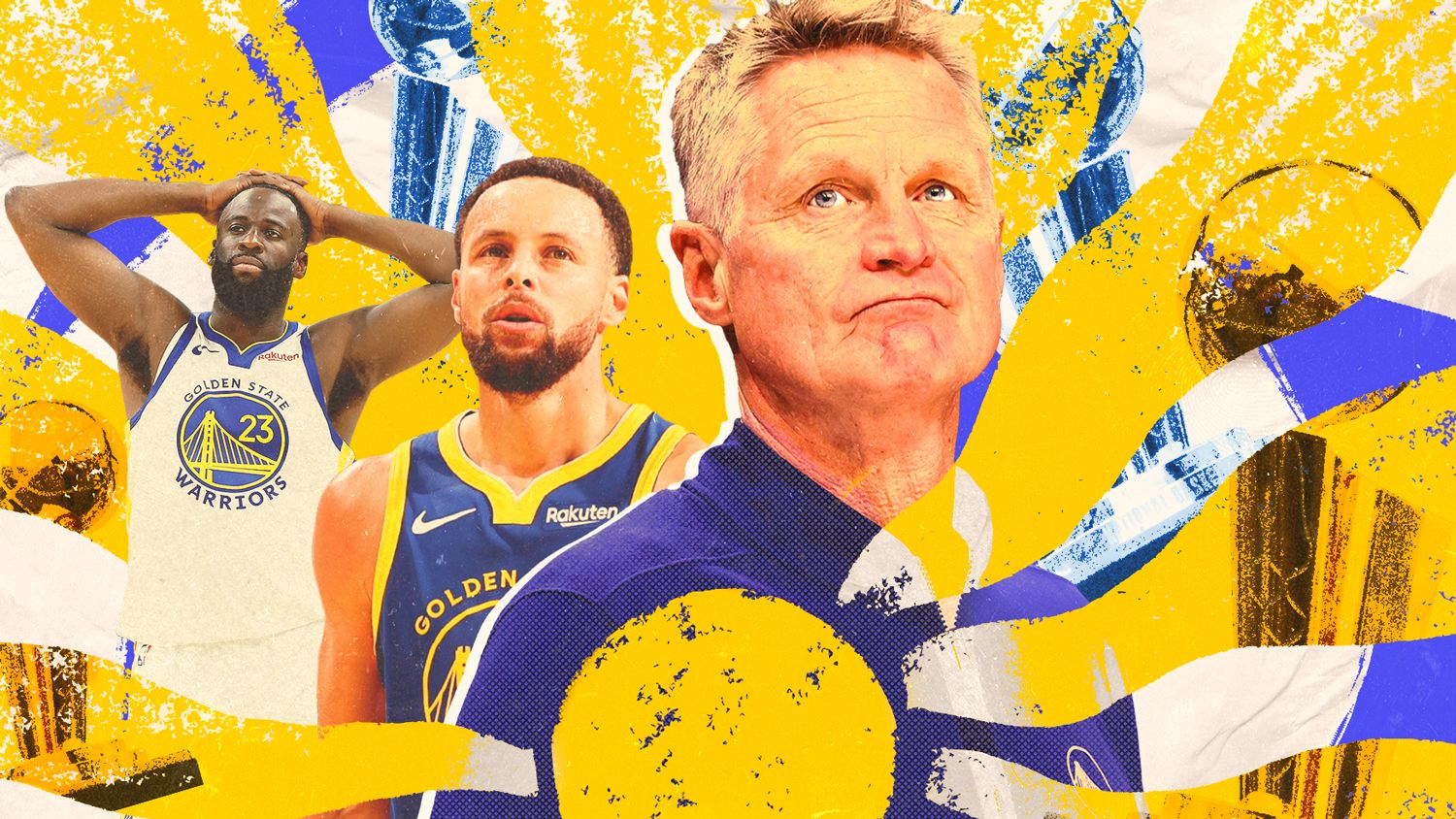
STEPHEN CURRY’S WARMUP routine has consistently been a spectacle worth witnessing. It features an absurd yet intentional blend of dribbling and shooting tricks that might appear frivolous if anyone other than Curry were executing them.
With earbuds in and longtime assistant coach Bruce Fraser guiding him, Curry amuses himself and the audience that gathers to watch him each night. Most of the shots, regardless of their distance or complexity, still find the net.
On April 12, in the afternoon hours before the game, Curry engaged in his warmup at Intuit Dome in Los Angeles ahead of the final regular-season matchup against the Los Angeles Clippers. The game held little significance, as the Golden State Warriors were already secured in 10th place in the Western Conference.
Curry was just a week into his comeback after missing 27 games due to knee discomfort that had persisted longer than anyone, including himself, had expected.
On the court, the long-range shots and 30-foot attempts, which had previously invigorated him and the team, seemed to have the opposite effect this time. At one moment, Curry was breathing heavily, pausing to wipe sweat from his forehead and regain his breath.
Then, unexpectedly, Curry began to dance just outside the right elbow. It was more than a shimmy but less than a twerk. He smiled.
Next, Curry noticed injured forward Jimmy Butler approaching the court and swiftly passed the ball to him. Butler, whose right knee was still tightly wrapped in a brace following surgery to repair a torn ACL in early February, caught the pass near the 3-point line.
The shot was well-aimed. The trajectory was promising. For a brief moment, it appeared it might go in. However, like much of the misfortune that plagued this Warriors season, which concluded with a loss to the Phoenix Suns in the play-in tournament, the shot fell significantly short.
It was an air ball.
Curry and Butler doubled over in laughter. It was all they could manage.
The season-ending injuries to Butler and Moses Moody, along with the large heating pack Curry required just to endure games. The disappointing 37-win season that somehow still provided them a slim chance at a playoff spot. The very real possibility that this decade-long dynasty might finally be at its end.
“Everything that could go wrong has gone wrong this year,” said forward Draymond Green. “And yet we still have a chance. … Because when you have a leader like Steve Kerr, who always knows the right thing to say, and a leader like Steph Curry, that you can always rally around … anything is possible.”
Three nights later, Curry demonstrated once more what is still achievable after all this time, scoring 35 points in 36 minutes during their play-in elimination victory over the Clippers, while Green effectively contained Kawhi Leonard in the fourth quarter, securing a win that Kerr described as one of his favorite victories of the entire era.
“For one night, we’re us,” Kerr stated. “We’re champions again.”
Two nights later, their season concluded at the hands of a rising, younger Phoenix Suns team. The Warriors lost 111-96. It was not a competitive match. Curry managed only 17 points, shooting 25% from the field.
This marked the Warriors’ third consecutive appearance in the play-in tournament and their second time in three years missing the playoffs entirely. Within the organization, there has long been an understanding that, despite moments of play that evoke memories of their transformative past, like that fourth quarter against the Clippers, this team, with two aging stars past their prime, is not nearly capable enough to secure a title.
As their season drew to a close, the trio of veteran players still striving for success gathered on the sideline, possibly for the last time.
“I don’t know what’s going to happen next,” Kerr remarked Friday night. His right arm rested on Green’s shoulder, his left on Curry’s. “But I love you guys to death.”
KERR PURPOSEFULLY DIDN’T pursue an extension last summer and stated he was comfortable completing the final year of his contract. Following Friday’s elimination, Kerr mentioned he would take some time before reconvening to discuss his future with controlling owner Joe Lacob and general manager Mike Dunleavy.
Kerr indicated a timeline of about one to two weeks, which aligns with management’s desired urgency. Team sources noted they would like to provide Kerr the necessary time but need to resolve the coaching situation swiftly before addressing other pressing roster and strategic issues.
If Kerr returns, discussions will focus on staffing and what management believes is a need for philosophical adjustments, team sources said, emphasizing the importance of diversifying the offensive strategy and winning the analytically favorable possession battle more frequently. There has been a sentiment internally that they were overly dependent this season on 3-point shooting variance.
Aside from that, there is also a prevailing organizational disappointment regarding the 13-15 start when the Warriors were healthy, the late-game inconsistencies, the persistent turnover issues, and the fact that they only won 37 games in a season where one-third of the league was tanking.
“We didn’t find it earlier in the season,” Kerr stated Friday night. “We were losing games we should’ve closed out. I could’ve done a better job. But when Jimmy got hurt, it felt like we were finding it.”
After their rocky start, they had won 12 of their next 16 games. Still, the surge barely moved them in the Western Conference standings, shifting from No. 9 to No. 8.
If Kerr departs, the front office is expected to conduct a broader search that would include several external candidates — possibly even considering college coaches, although there has been recognition of the challenges of introducing an inexperienced head coach to Curry, Green, and Butler in their final years, team sources said.
However, a Kerr departure could also indicate the beginning of a more extensive, sweeping transformation. This path has been described by several team sources as an “organizational reset” and could lead to further significant changes to the roster and coaching staff.
The contracts of many of Kerr’s current assistant coaches are expiring, and one of his trusted front-of-the-bench aides, Chris DeMarco, has already left to take the head coaching position with the New York Liberty. Willie Green, the former Pelicans head coach and once a Kerr assistant, is a potential candidate to return to the staff, league sources indicated.
Curry and Green have expressed both publicly and privately a preference for Kerr to stay.
“I want Coach to be happy,” Curry stated. “I want him to be excited about the job. I want him to feel he’s the right person for the role. I want him to have the opportunity to enjoy what he does, whatever that entails for him. Everyone’s plan is their own. He knows how I feel about him.”
Kerr is 60. He has experienced a fortunate and, in many respects, complete NBA career. He has conveyed to those around him that he enjoys the job, but there are times when those close to him speculate that he may be burnt out. At other times, they say he is scouting, teaching, and discussing basketball with as much enthusiasm as ever.
The Warriors secured four championships, set an NBA record with 73 regular-season victories, and reached six Finals during his tenure, but the days of dominance are long gone. They have missed the playoffs four out of the last seven seasons, failing to progress past the second round since 2022.
Kerr told ESPN in the final week of the season that he genuinely felt it was about 50-50 whether he would ultimately stay or leave, believing that the time away from the postseason grind and discussions with Lacob, Dunleavy, and Curry would be influential.
His Friday night press conference revealed many of the conflicting thoughts he has been sharing privately.
“I still love coaching, but I understand,” Kerr said. “These jobs all have an expiration date. There is a cycle that occurs, and when that cycle ends, sometimes it’s time for new energy and new ideas.”
Above all, team sources indicated, Lacob will want to hear Kerr express a desire to continue engaging with the intricate details of the daily job, not a reluctant acceptance that he should keep coaching solely out of loyalty to Green and Curry and the sentimentality of finishing out this era.
That is why, if Kerr decides he wants to return, management desires him to sign a multiyear contract, team sources said, rather than setting up a farewell tour that would feel more about emotion and nostalgia than victories.
On the management side, the Warriors are committed to Dunleavy, and he remains dedicated to them, despite external speculation regarding front office vacancies in Chicago. Dunleavy quietly signed an extension in recent months, team sources reported, and has multiple years remaining on his contract.
There is an internal belief that Dunleavy has drafted effectively, and despite a straightforward and at times more stringent approach than his predecessor, Bob Myers, he has earned the trust and attention of key figures — Lacob, Kerr, Curry, Green, and Butler, all of whom have spoken positively of him.
IN EARLY MARCH, Curry was seeking answers regarding why his right knee was still not healing. He had been sidelined for weeks. MRIs continued to confirm no structural issues, yet it remained painful and swollen whenever he increased his court activity. He traveled to Los Angeles to consult a specialist.
While there, he visited Butler, who was also a month post-surgery. Butler was spending his weekends at home in San Diego and his weekdays rehabilitating at a facility in Los Angeles.
So, on a March afternoon during an NBA playoff race — with a combined salary of $113.7 million, 46.6 combined points per game, and 18 combined All-Star selections — the two engaged in tedious recovery work. Butler was progressing in his rehabilitation with toe raises, while Curry was attempting to figure out how to run and cut without his knee “blowing up,” as he described it.
This, those in the facility noted, was a dark yet poetic representation of a season and perhaps an era fading from view. While the two increasingly close friends — Butler, 36, and Curry, 38 — shared their struggles regarding the physical challenges ahead, the remaining rotation, filled with second-round picks, undrafted rookies, and two-way players, was accumulating losses during a particularly disheartening 3-11 stretch, falling to 10th in the conference standings.
“Jimmy’s injury changed everything,” Kerr remarked. “[It] derailed us. When you look at the rest of the West, the league, teams are loaded.”
Optimists within the Warriors organization like to highlight that the team had the fourth-most wins in the league from the time Butler joined the team in a trade from the Miami Heat in February 2025 until his ACL injury in mid-January of this year.
In other words, the belief is that if Butler can return in the middle of next season and rejoin Curry and Green, the Warriors still possess the core of a contender.
Pessimists might argue that Curry, Butler, and Green account for nearly 80% of the team’s payroll next season, leaving little flexibility, beyond the margins, for substantial changes to a roster that requires significant regular-season assistance, given the age and uncertain availability of their core players.
Curry has one season and $62.6 million remaining on his current contract but is eligible for an extension of up to two seasons this summer.
Curry stated after Friday’s elimination that he plans to play “multiple” more seasons and “for sure” would be interested in discussing an extension. Team sources indicated a plan to address an extension with Curry later in the summer.
Butler, meanwhile — who will be entering the final season of an expiring $56.8 million contract — is not eligible for an extension until next February, which coincides with the time he could be returning from his ACL injury. It is expected that he will concentrate on rehabilitation, regaining his form, and then determining his NBA future the following summer.
Green’s contract is more immediate. The 36-year-old has a one-year, $27.6 million player option for 2026-27. It is anticipated that he will either exercise it or, if the Warriors agree, opt for a decline-and-extend, reducing next season’s salary figure in exchange for more years of security.
Some within the organization have pointed to Green’s concerning offensive metrics this season (109.4 rating when he’s on the floor, 114.7 when he is off), but management maintains confidence in his high-stakes defensive contributions, and several within the organization have commended his attitude, approach, and leadership throughout a challenging season.
Green was involved in trade discussions at the deadline for Giannis Antetokounmpo and could be again this summer for salary-matching purposes. Nevertheless, team sources assert there is no desire or mandate to trade Green, and if a decline-and-extend arrangement assists the front office in enhancing the roster effectively, it is something they would consider.
“I’m not retiring from basketball,” Green stated. “I still love to play. I still believe I’m quite capable. But this league is unpredictable. You don’t really control everything. For me, I hope I’ve done enough to remain here. If I haven’t, I don’t want to be here. I don’t want to be kept around just because of past achievements. What can I still contribute?”
TO THE OUTSIDE world, the night of Feb. 4 was one of humility and acceptance for the Warriors.
Acceptance that their vigorous pursuit of Milwaukee Bucks superstar Giannis Antetokounmpo was over — at least until the offseason. Humility in recognizing that the painful, awkward standoff with disgruntled former lottery pick Jonathan Kuminga concluded with trading him for Kristaps Porzingis, who had struggled to remain on the court for most of the past year due to a mysterious viral illness.
There had been more beneath the surface. Besides Butler, they had again fallen short in what they had publicly stated for years was their mission: acquiring star players to better optimize their title chances with Curry. Just in the past two years, they had attempted to secure LeBron James, Paul George, Lauri Markkanen, Jaren Jackson Jr., and Antetokounmpo.
And then there was Kawhi Leonard.
Ambition flickered within Warriors headquarters as the trade deadline approached. They were waiting, league sources reported, for word from the Los Angeles Clippers regarding a trade concept involving Leonard.
The Warriors had inquired about his availability several times over the years and had been quickly rebuffed. However, the Clippers had indicated a potential shift when they traded James Harden and engaged with multiple teams, including the Warriors, on what became a trade with the Indiana Pacers for Ivica Zubac.
The Clippers had not provided much clarity regarding the Warriors’ pursuit. However, they had not outright rejected it either, which gave the Warriors hope they might be able to make one more significant move in an era defined by them. The Clippers’ management brought the idea to governor Steve Ballmer for discussion.
By morning, the Warriors received their answer. It was a no.
Each side has its version of how serious the discussions were. Golden State believes the Clippers were at least contemplating it, which team sources said included valuable draft capital and multiple players the Warriors valued. But this narrative has been told before. The Warriors also believed the Clippers were considering a free agency sign-and-trade proposal for Paul George in the summer of 2024, despite the Clippers having a vastly different perspective on how the discussions unfolded and the value of the package offered.
Some within the Warriors organization feel a Leonard trade was close. Others were doubtful. On the Clippers’ side, it was a firm no from Ballmer, who holds the ultimate authority.
Regardless, sources indicated there is an expectation the Warriors could reengage the Clippers regarding Leonard’s availability this offseason, compile another offer for Antetokounmpo, and test the waters again on soon-to-be free agent LeBron James. They could also consider bringing back Porzingis at a lower price than his $30.7 million expiring contract or negotiate a way to utilize him as a building block in a sign-and-trade for another prominent player.
What may be more pertinent to their transformation is lottery night. This tumultuous season granted them the 11th-best odds, providing a 9.4% chance of moving up into the top four of a loaded draft and a 77.6% chance of remaining 11th, where there should still be ample talent available.
Lottery luck is not typically the planned route for a team in its contention window. It is reserved for those in the growth stages of a rebuild. But that is the Warriors’ current situation. In the later stages of Curry’s career, they are in a construction phase, rebuilding while still employing a franchise legend. One league source compared it to Kobe Bryant’s final seasons with the Lakers.
“I’ve only been in one locker room for the last 17 years,” Curry remarked. “Before you win the title, you’re laying the groundwork for what a championship team looks like — even though you have no idea what that truly means. Then you achieve it. Then everything else is based on that. It’s been that way since 2015.
“I believe we can reshape the narrative, keeping in mind that [a championship] is the ultimate goal. But we must return to the fundamentals of what constitutes a good basketball team, a competitive basketball team every single night, and recognize how challenging it is to win in this league. Can we rethink our approach while maintaining the foundation we’ve established?
“We don’t have to keep saying ‘championship, championship, championship’ every day, even though we’ve experienced that. Can we rebuild the foundation again?”
