
James Harden-Darius Garland trade evaluations: What lies ahead for the Cavaliers and Clippers?
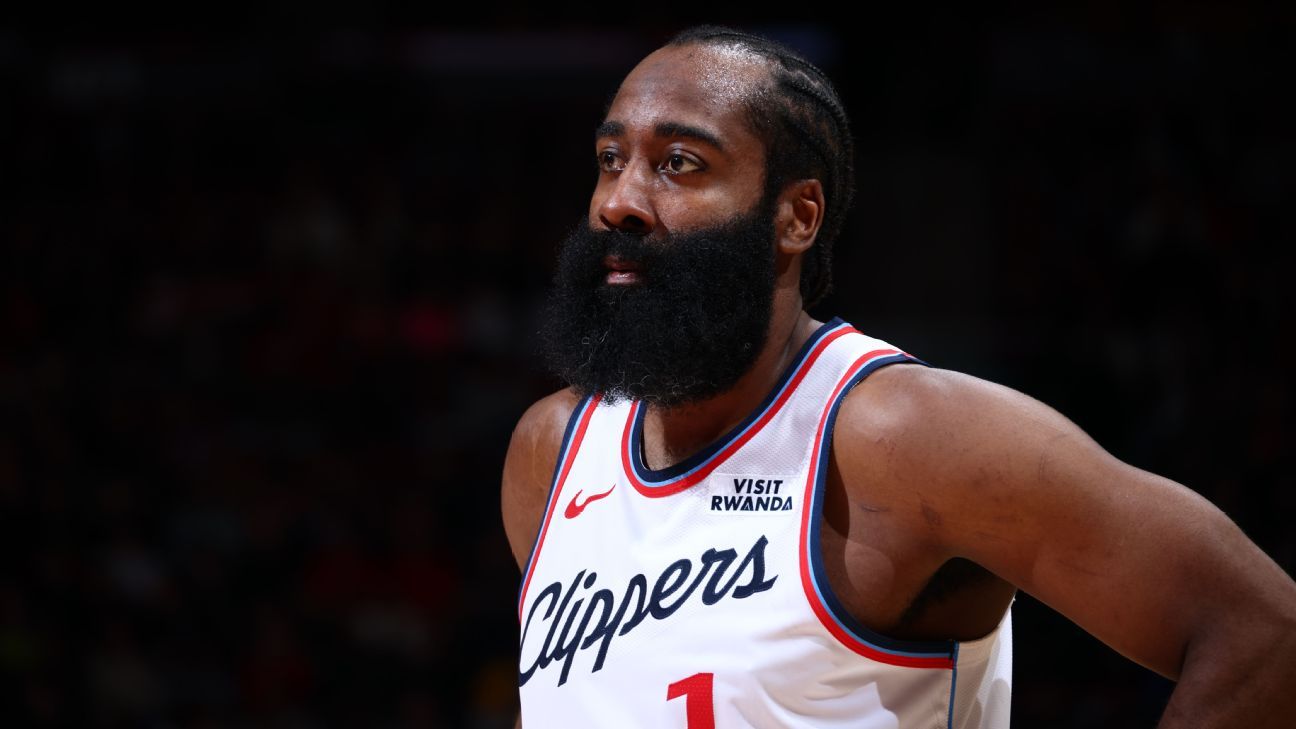
In what could be the most significant transaction ahead of Thursday’s NBA trade deadline, the Cleveland Cavaliers and LA Clippers reached an agreement on Tuesday to exchange point guards Darius Garland and James Harden in a straight swap that also includes a 2026 second-round pick heading to the Clippers, according to ESPN’s Shams Charania.
Both franchises are optimistic that this trade involving 2025 All-Stars with nearly matching salaries will yield improved outcomes during their underwhelming seasons. The Cavaliers are vying for a favorable position in the middle of the Eastern Conference playoff standings after finishing first in the East last year, while the Clippers’ recent surge has only propelled them into the play-in tournament following a poor start.
Let’s analyze the ramifications of Cleveland and Los Angeles trading point guards and what it signifies for the remainder of the 2025-26 season and beyond.

The deal: Harden joins Cavs, Clips get Garland, second rounder
Cleveland Cavaliers receive:
G James Harden
LA Clippers receive:
G Darius Garland
2026 Second-round pick
Grades

Cleveland Cavaliers: B
Implications of the deal for the Cavaliers: The more I consider it, the more I appreciate Cleveland acquiring Harden to invigorate an offense that currently ranks eighth in offensive efficiency this season after leading the league in 2024-25 with 64 victories.
Garland’s toe injuries have significantly contributed to this decline. He has been struggling with toe problems since last April, and offseason surgery has not resolved the issues. Garland experienced a contusion to his problematic left toe shortly after returning in November and is now out due to a sprain in his right big toe.
When available, Garland is shooting only 36% from beyond the arc, a drop from 40% the previous year. His usage rate has also decreased, and his steal rate would be the lowest since his rookie year. These challenges are mirrored in the team’s performance. The Cavaliers have been outscored by 3.0 points per 100 possessions with Garland on the floor, according to NBA Advanced Stats, the worst among any player on the team who has played over 500 minutes.
To remain competitive, Cleveland has heavily depended on Donovan Mitchell, who is averaging 33.9 minutes per game and has his highest usage rate since his time with the Utah Jazz. An extended absence for Mitchell could be detrimental for the Cavaliers, who are just two games away from second place in the East but only three games from slipping into the play-in tournament.
Moreover, Cleveland would ideally like to reduce Mitchell’s workload moving forward. He dealt with a calf strain and an ankle sprain during last year’s playoffs, shooting only 24.5% from three-point range in the Cavaliers’ conference semifinals upset against the Indiana Pacers.
Enter Harden, who continues to perform at an All-Star level at age 36. He ranks 11th in my wins above replacement player (WARP) metric this season, the highest among players not selected for the game after former Clippers teammate Kawhi Leonard was named as an injury replacement on Tuesday. Harden has participated in 44 of a possible 47 games before missing the last two due to personal matters and is averaging 35.4 minutes per game.
While both Harden and Mitchell prefer to control the ball, I believe Cleveland coach Kenny Atkinson can utilize Harden’s previous experiences to keep both players healthy and effective.
During Harden’s time with Chris Paul on the Houston Rockets, where they came within a game of the 2018 NBA Finals, coach Mike D’Antoni strategically staggered their minutes to ensure one was on the court whenever the game was competitive. Harden and Paul shared the floor for about 20 minutes per game, allowing Harden around 15 minutes as the sole playmaker and Paul approximately 12.
The current playing time for Harden and Mitchell suggests a similar stagger, indicating they will likely spend less than half the game together. In this scenario, I believe the Brooklyn Nets-era Harden should serve as a model.
While playing alongside Kevin Durant and Kyrie Irving, Harden accounted for 28% of the Nets’ plays with a shot, free throw attempt, or turnover—similar to Garland’s 27% usage rate last season—but averaged over 10 assists per 36 minutes. Given Mitchell’s history of playing off the ball with true point guards and the finishing capabilities of bigs Jarrett Allen and Evan Mobley in pick-and-roll situations, Harden should be able to replicate this with the Cavaliers.
Defensively, Harden’s size offers more options for concealing weaknesses compared to the undersized backcourt of the 6-foot-1 Garland and the 6-foot-2 Mitchell. With Mobley’s defensive versatility, it is conceivable that Harden could occasionally guard power forwards, leveraging his unique skills as a post defender.
While I acknowledge concerns about adding Harden to a team with aspirations for the NBA Finals due to his history of playoff struggles, this does not disrupt a Cleveland team that was thriving like last year. The most probable outcome for the Cavaliers, barring a trade, was an early exit in the playoffs, similar to the last three postseason appearances.
Cleveland is most familiar with Garland’s health, and if they believed he was unlikely to return to last season’s All-Star form consistently, moving on now was a logical decision.
Harden represents the best player that Cleveland could feasibly acquire in a one-for-one exchange. The Cavaliers will need to navigate Harden’s player option for 2026-27, but they will likely be willing to invest if they reach the conference finals for the first time since LeBron James’ exit in 2018.

LA Clippers: B-
Implications of the deal for the Clippers: A significant shift from their current strategy, which was centered on contending immediately while maintaining cap space for the star-studded group of potential 2027 free agents, including Mitchell.
From this perspective, trading Harden would have been more logical in December when the Clippers were as much as 15 games under .500. They subsequently achieved 16 wins in a 19-game stretch to re-enter the play-in spots in the West, suggesting they might be capable of a playoff upset.
Nevertheless, I can understand the Clippers’ decision to abandon their win-now approach. Projections using ESPN’s Basketball Power Index indicated they had only a 65% chance of finishing in the top six and avoiding not only the play-in tournament but also a potential first-round matchup against the defending champion Oklahoma City Thunder. The Clippers would need to rise to at least eighth in the standings to have a chance at evading the Thunder in the first round, and BPI estimates that occurring at less than 40% likelihood.
More surprisingly, the Clippers are willing to take on Garland’s contract, which extends through 2027-28 at $44.9 million. Prior to this trade, starting center Ivica Zubac was the only Clippers player with a guaranteed contract beyond 2027 at a more manageable $21 million.
With Garland and Zubac on the payroll, the Clippers still have a route to max-level cap space in the summer of 2027 but will not be able to offer two max players the opportunity to join forces in L.A. without further moves.
It is certainly possible that Garland could return to star-level performance by then. He has previously bounced back from a subpar season. His current performance is strikingly similar to that of the 2023-24 season when he had his jaw wired shut for a month following a fracture. At that time, Cleveland resisted calls to dismantle the Garland-Mitchell backcourt, and he responded with the best season of his career in 2024-25. As the lower-spending team in this trade—an unusual position for them—the Clippers do not face the same urgency to win immediately as the Cavaliers.
If Garland returns to the level he exhibited last season, this trade could be a significant victory for the Clippers. They are exchanging a 36-year-old seeking a new contract—likely the reason behind the willingness of both the Clippers and Harden to collaborate on finding a trade—for a player who is over a decade younger. In the Dunc’d On Daily Duncs newsletter, Dan Feldman noted that he could not find a historical precedent where two former All-Stars of such differing ages were traded primarily for one another.
Becoming younger could be particularly crucial if the NBA penalizes the Clippers by stripping multiple draft picks due to potential salary-cap violations related to the league’s investigation into Leonard’s sponsorship deal with Aspiration. This season has demonstrated how vital the contributions from late second-round picks Jordan Miller and Kobe Sanders have been to the Clippers’ resurgence.
The Clippers’ pursuit of 2027 cap space also contrasts with recent NBA trades. Stars have increasingly changed teams through trade-and-sign extensions rather than entering free agency since the Clippers signed Leonard in the summer of 2019, which feels like a long time ago in front office terms. If Giannis Antetokounmpo and other stars find new teams this summer, the Clippers may want to reconsider their strategy of hoarding cap space.
My primary concern is that Garland’s toe issues may prove more challenging to overcome than a fluke jaw injury. Given his smaller stature, any decline in Garland’s speed would be difficult to recover from. The upcoming medical examination for the Clippers should be regarded as one of the most critical physicals in recent NBA history.
