
2026 NBA Playoffs: Evaluating the 50 players with the greatest influence
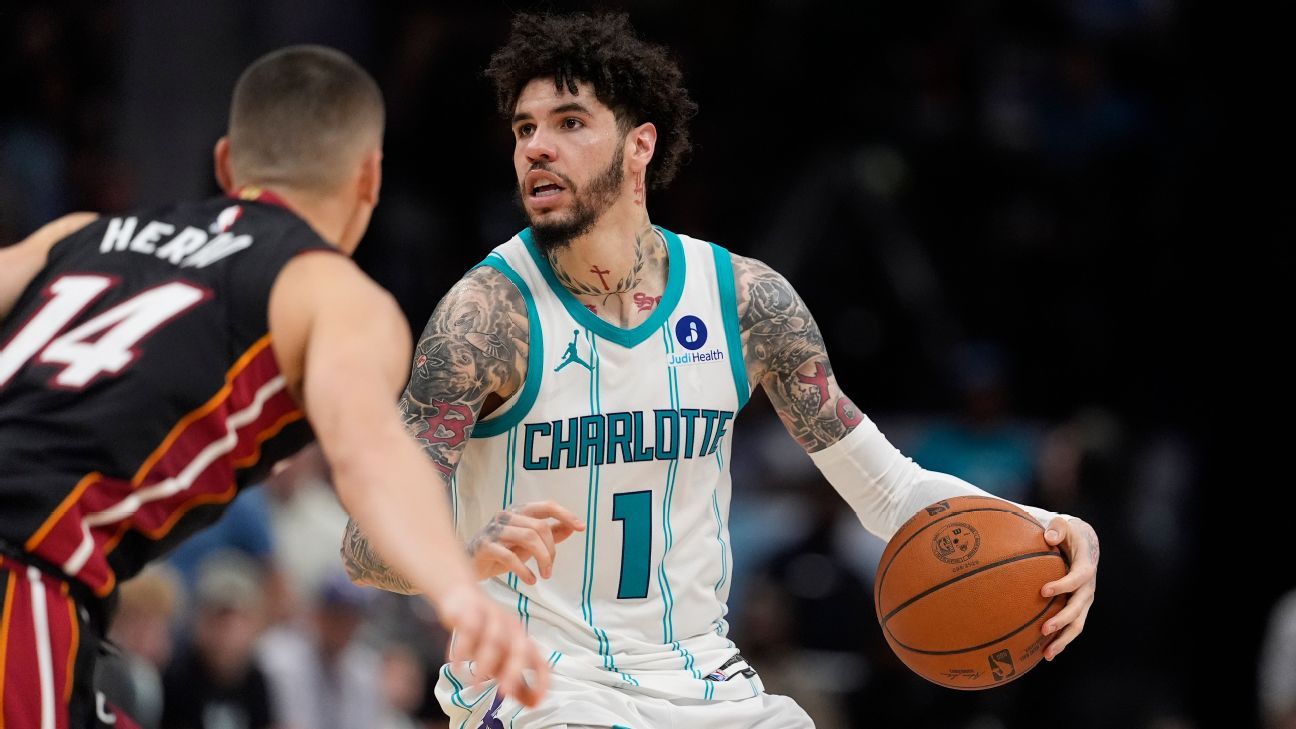
Who will shape the next couple of months of NBA basketball?
Welcome to NBA Rank: 2026 Playoffs Edition, where we are ranking the 50 most influential players in anticipation of the league’s playoff challenges.
Can the current Finals MVP secure another championship? Will Victor Wembanyama make an impact in his inaugural playoff appearance? Do veterans LeBron James, Kevin Durant, and Stephen Curry have the potential to create some playoff excitement?
All these players will play significant roles in their teams’ playoff journeys, along with a number of emerging talents, role players, and defensive experts designed for the postseason. This is why our countdown encompasses a wide range, with a particular emphasis on players expected to progress through several rounds; we are assessing “impact” as a combination of both performance quality and quantity from now until June.
That last statement bears repeating: We are evaluating based on anticipated quality and quantity of performance. This is not a straightforward talent ranking.
Consequently, players participating in the play-in tournament, like Curry, are ranked lower on this list than they might otherwise be. They could face elimination as soon as this week, and even if they advance, they will encounter significant challenges against a top seed to reach the second round. Players who are injured generally did not make the list, as it remains uncertain how much the likes of Austin Reaves, Joel Embiid, and Peyton Watson will contribute this spring.
However, the top of the list is populated with favorites for the Finals MVP award — the most prominent stars from the league’s leading teams. So let’s commence the countdown from 50, divided into 10 tiers, and progress to the pinnacle.
Jump to a tier:
Play-in Stars | The Big Injury Question Mark
Positional Specialists | Role Players
Hoping to Pull an Upset or Two
Too Good to Be Role Players
Elite Young Bigs | Star Sidekicks
Top-Tier Guards | Finals MVP Favorites

Tier 10: Play-in stars

50. Stephen Curry, Golden State Warriors
Playoff experience: 26.8 PTS | 5.3 REB | 6.1 AST (155 games)
In 43 games, Curry averaged 26.6 points and led the league with 4.4 three-pointers per game. More crucially, the Warriors had a record of 24-19 with Curry on the court this season, compared to 13-26 without him. In essence: The 37-45 Warriors face the most challenging path to the playoffs of any play-in team — but while they would likely be eliminated in their first play-in game without Curry, they now have a fighting chance to progress following his return from a knee injury that sidelined him for over two months.
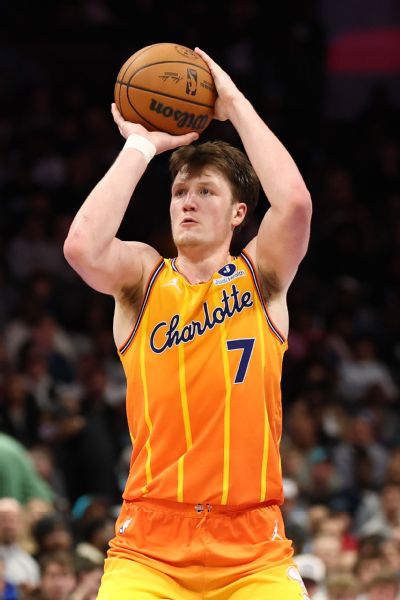
49. Kon Knueppel, Charlotte Hornets
Playoff experience: None
Knueppel’s 63% true shooting percentage ranks as the second highest ever for a rookie with an above-average usage rate. He not only shattered the rookie record for three-pointers but also led the entire league in three-point shooting, making them at a 43% rate. Despite experiencing a late-season slump and being benched during critical moments of Charlotte’s play-in victory on Tuesday, Knueppel should be a primary focus for every opponent, as he can capitalize on even the slightest space around the arc.
48. Paolo Banchero, Orlando Magic
Playoff experience: 28.0 PTS | 8.5 REB | 4.1 AST (12 games)
Banchero has been exceptional in his playoff career, and after a midseason dip, he significantly improved towards the season’s conclusion, showcasing greater production and efficiency post-All-Star break. However, for the fourth consecutive year, the Magic had a superior net rating with Banchero off the court, raising further questions about his ultimate role on a successful team.
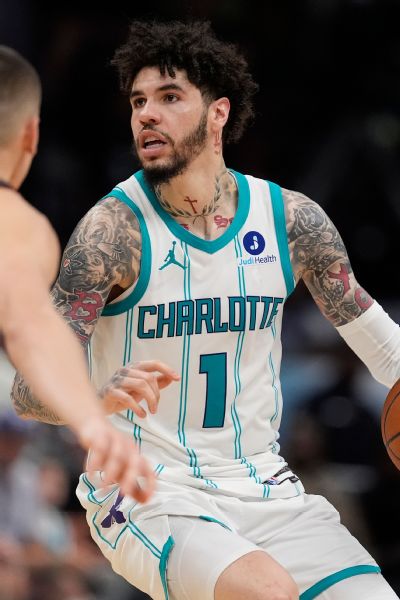
47. LaMelo Ball, Charlotte Hornets
Playoff experience: None
Ball’s overall statistics have remained fairly consistent, but he has toned down some of the more reckless and careless plays that characterized his earlier seasons. He scored the game-winning layup in overtime against Miami on Tuesday. While many of the Hornets’ younger players are exciting, Ball continues to be the driving force of their offense: Charlotte averaged 123.2 points per 100 possessions with Ball on the floor, a figure that would have led the league, compared to just 110.6 without him.
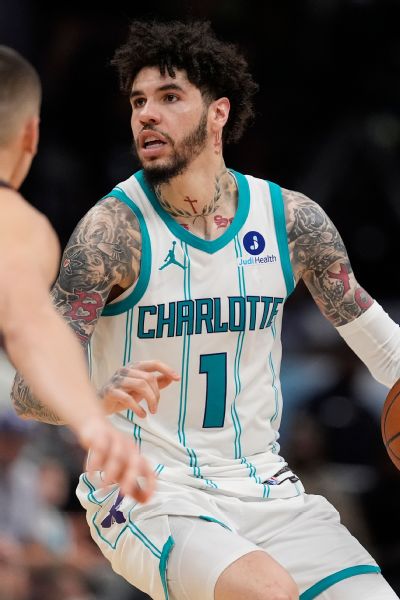
46. Devin Booker, Phoenix Suns
Playoff experience: 28.0 PTS | 5.1 REB | 5.3 AST (47 games)
After a challenging 2024-25 season and a breakup of the Suns’ Not-So-Big Three, Booker guided Phoenix back to prominence with a typically stellar performance this season. He averaged 26.1 points per game while navigating injuries and sharing point guard responsibilities, and Phoenix’s offense struggled without him on the floor.
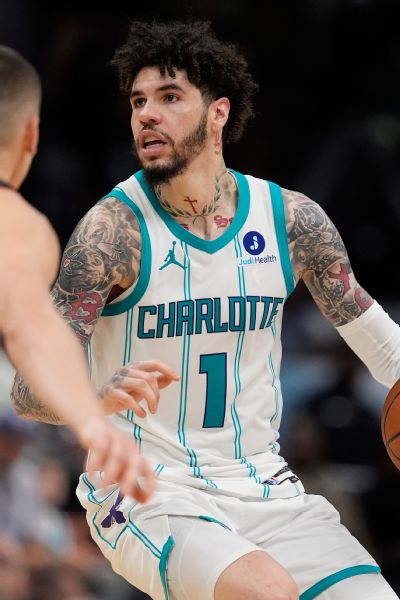
45. Tyrese Maxey, Philadelphia 76ers
Playoff experience: 17.8 PTS | 3.6 REB | 3.1 AST (41 games)
Maxey continues to develop — he achieved career highs in points and assists per 36 minutes this season — while serving as 76ers coach Nick Nurse’s ultimate safety net. Maxey’s average of 38.0 minutes per game was the highest single-season average since James Harden’s 38.1 in 2015-16. With Embiid’s availability uncertain this postseason, the 76ers will require every minute they can get from their remaining star.
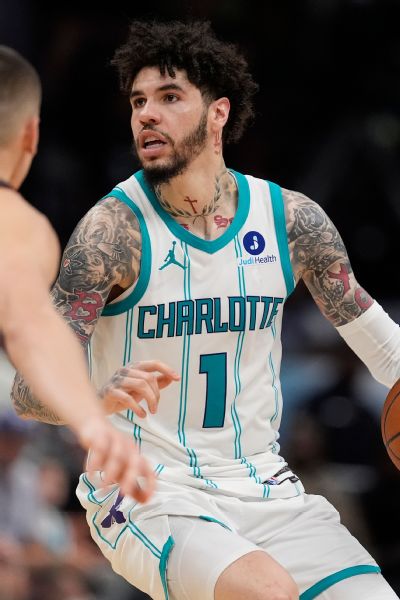
44. Kawhi Leonard, LA Clippers
Playoff experience: 21.5 PTS | 7.8 REB | 3.0 AST (146 games)
Leonard, a two-time Finals MVP and a member of the NBA’s 75th Anniversary Team, waited until his age-34 season to have the best campaign of his career. He averaged a career-high 27.9 points per game on shooting splits of 50-39-89, and he showcased his unique talent during the All-Star Game, proving that Leonard stands out even among the league’s elite players. On a Clippers team lacking depth, Leonard is their only realistic hope for a lengthy playoff run.
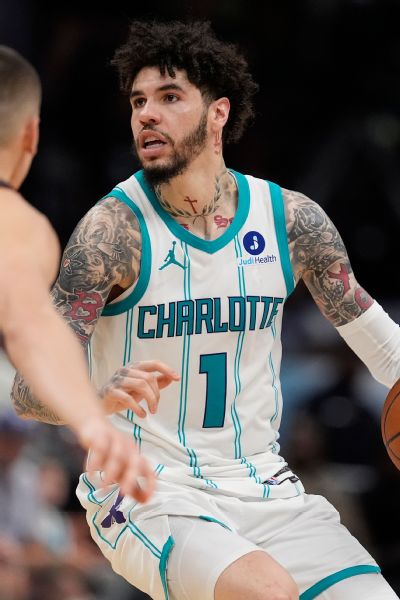
43. Deni Avdija, Portland Trail Blazers
Playoff experience: None
The Trail Blazers’ offense suffered significantly without Avdija, ranking lower than every tanking team if not for the breakout All-Star’s 24.2 points, 6.9 rebounds, and 6.7 assists per game. Avdija excels at driving to the basket — he narrowly outpaced Jaylen Brown and Shai Gilgeous-Alexander for the most drives per 100 possessions — and drawing fouls, ranking third among rotation players in free throw attempt rate. Avdija led all scorers with 41 points, including the game-winner, as Portland advanced in the play-in round on Tuesday.

Tier 9: The big injury question
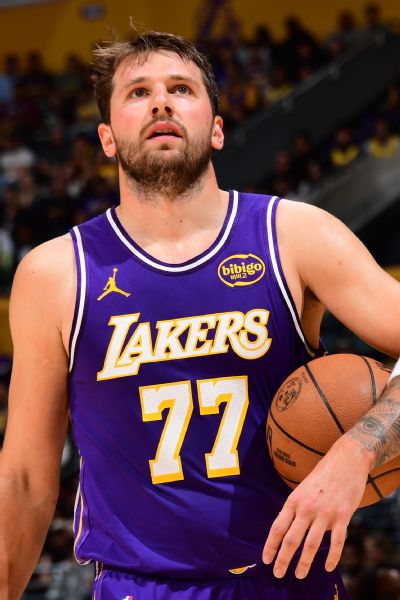
42. Luka Doncic, Los Angeles Lakers
Playoff experience: 30.9 PTS | 9.2 REB | 7.8 AST (55 games)
Few players in NBA history possess the talent of Doncic, who averaged 33.5 points per game to secure his second scoring title this season and appeared to be peaking at the right moment — only to be sidelined for the final weeks due to a Grade 2 hamstring strain. Thus, it is challenging to accurately position Doncic in this ranking: He may not participate at all in the playoffs due to his injury, or he could make an unexpectedly swift return and emerge as one of the top scorers and playmakers in the playoff field.

Tier 8: Positional specialists
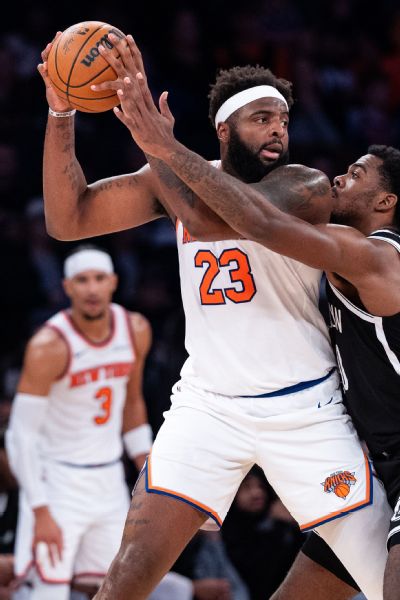
41. Mitchell Robinson, Cleveland Cavaliers
Playoff experience: 4.9 PTS | 7.7 REB | 0.5 AST (35 games)
Robinson is a backup averaging 5.7 points per game, making him an unexpected choice for this list. However, on a team that can struggle with Karl-Anthony Towns at center, Robinson offers a vital change of pace. He is a far superior rim protector than Towns, and if he had enough minutes to qualify, Robinson would have set the NBA record for offensive rebound percentage this season. He could swing multiple playoff games in favor of the Knicks this spring, just as he did last year.
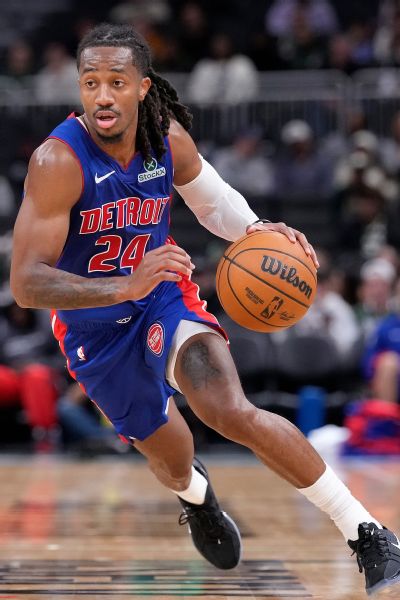
40. Daniss Jenkins, Detroit Pistons
Playoff experience: None
What a rise for an undrafted player who started this season on a two-way contract. Jenkins averaged only 9.3 points per game this season, but he excelled in key moments and made significant strides during Cade Cunningham’s absence, averaging 18.9 points and 7.6 assists while hitting 43% of his three-point attempts in 11 games as Detroit’s primary ball handler. Finally, the Pistons may have discovered the second playmaking option they need alongside Cunningham.
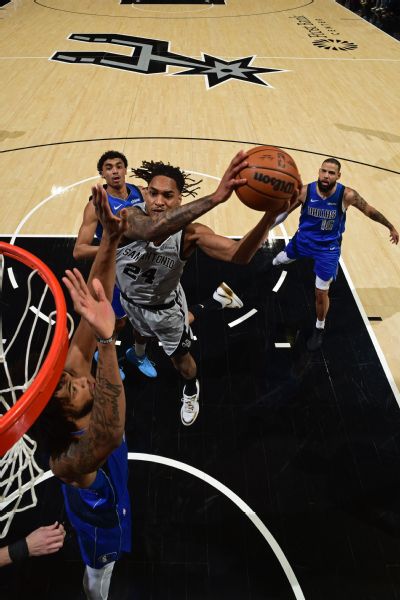
39. Devin Vassell, San Antonio Spurs
Playoff experience: None
As the Spurs’ roster has improved around him, Vassell has shifted from a primary role to a more peripheral one. This season, he recorded his lowest usage rate since his rookie year. However, if the Spurs’ biggest weakness is inconsistent three-point shooting from their stars, Vassell’s spacing will be particularly valuable this spring. He led San Antonio with 2.5 three-pointers made per game at a 38% success rate.
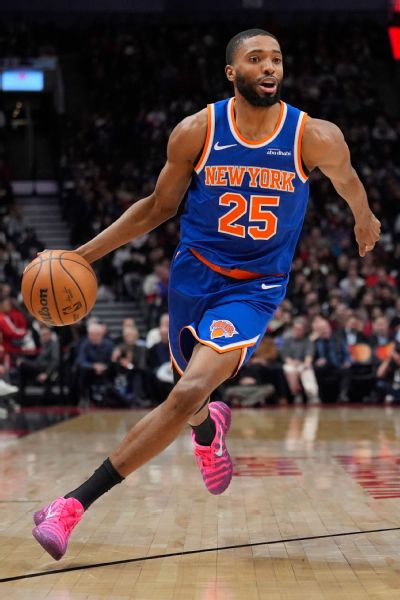
38. Mikal Bridges, New York Knicks
Playoff experience: 13.9 PTS | 4.5 REB | 2.5 AST (57 games)
Bridges has been a source of frustration in New York, but if you overlook the steep price the Knicks paid to acquire him, he remains a solid 3-and-D role player who consistently appears in games. Bridges is still finding his role on the Knicks’ roster, having recorded his lowest usage rate since leaving Phoenix this season. However, the Knicks will need Bridges at his best, providing elite perimeter defense and efficient supplementary scoring, if they aim to return to the conference finals and beyond in the upcoming months.
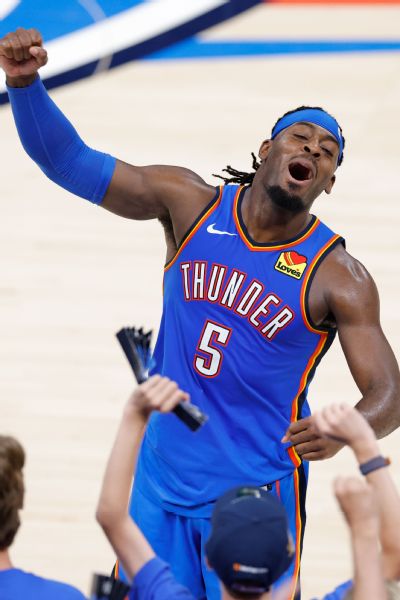
37. Luguentz Dort, Oklahoma City Thunder
Playoff experience: 9.3 PTS | 4.0 REB | 1.2 AST (39 games)
Dort may commit a flagrant foul or instigate a confrontation — but he is also guaranteed to pressure the opponent’s top player throughout the game as a key player for the NBA’s best defensive team. The pivotal aspect of Dort’s game lies on the offensive end, where defenses often leave him open for his long-range shots. When he shoots at a 41% rate, as he did last season, the Thunder are nearly unbeatable; when his percentage drops to 34%, as seen in the 2025 postseason and the 2025-26 regular season, Oklahoma City’s offense becomes more susceptible to strategies aimed at countering its stars.
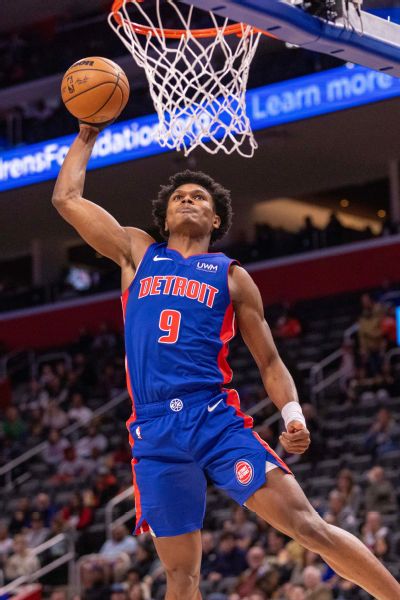
36. Ausar Thompson, Detroit Pistons
Playoff experience: 11.5 PTS | 5.2 REB | 1.0 AST (6 games)
Thompson led the league in steals this year, averaging 2.0 per game, and that statistic only hints at his exceptional lockdown defense. The Pistons ranked second in team defensive rating largely due to Thompson’s capacity to disrupt opposing lead guards. Whether Thompson can remain on the court throughout the playoffs, or whether his offensive limitations — he shot just 6-for-24 (25%) from three-point range this year — hinder his playing time, could significantly influence Detroit’s playoff journey this spring.
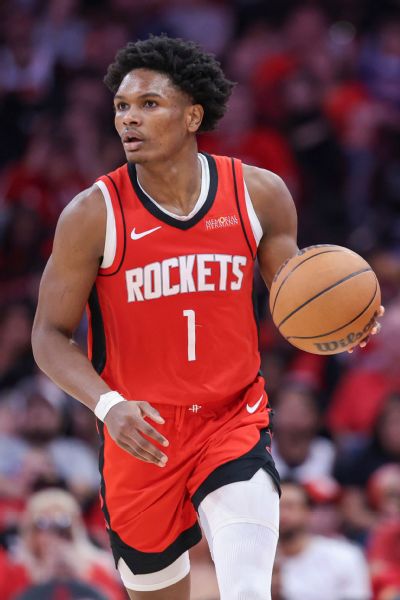
35. Amen Thompson, Houston Rockets
Playoff experience: 15.7 PTS | 6.9 REB | 3.3 AST (7 games)
The league leader in total minutes improved his statistics across the board this year, averaging 18.3 points, 7.8 rebounds, and 5.3 assists per game. Like his brother, he is among the NBA’s top defenders, and similar to his brother, his inconsistent jump shot (22% on three-pointers) could limit his team’s ultimate potential this spring.
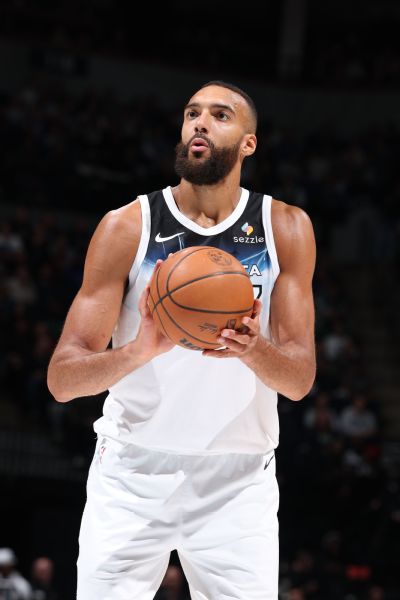
34. Rudy Gobert, Minnesota Timberwolves
Playoff experience: 12.3 PTS | 10.6 REB | 1.1 AST (84 games)
At 33 years old, Gobert is no longer the league’s top defensive player. (He is no longer the top defensive player among French centers.) However, even a B-plus version of Gobert remains one of the premier rim protectors in the league, and Minnesota’s defensive rating improved by 9.5 points with Gobert on the court this year, according to databallr. The Timberwolves’ defense was comparable to the Pistons’ with Gobert, but below average without him.
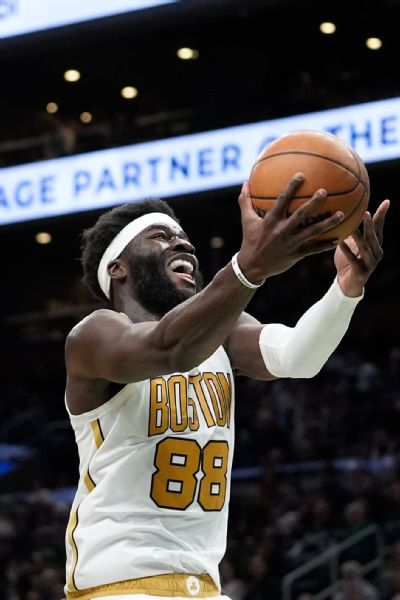
33. Neemias Queta, Boston Celtics
Playoff experience: 2.0 PTS | 0.7 REB | 0.3 AST (7 games)
Before this season, Queta was a seldom-used backup who had never averaged more than 5.5 points per game in a season. However, he has emerged as a vital contributor to a Finals contender, nearly doubling his previous career high to 10.2 points
