
Pegula defeats Keys: Could this be the turning point for Pegula?
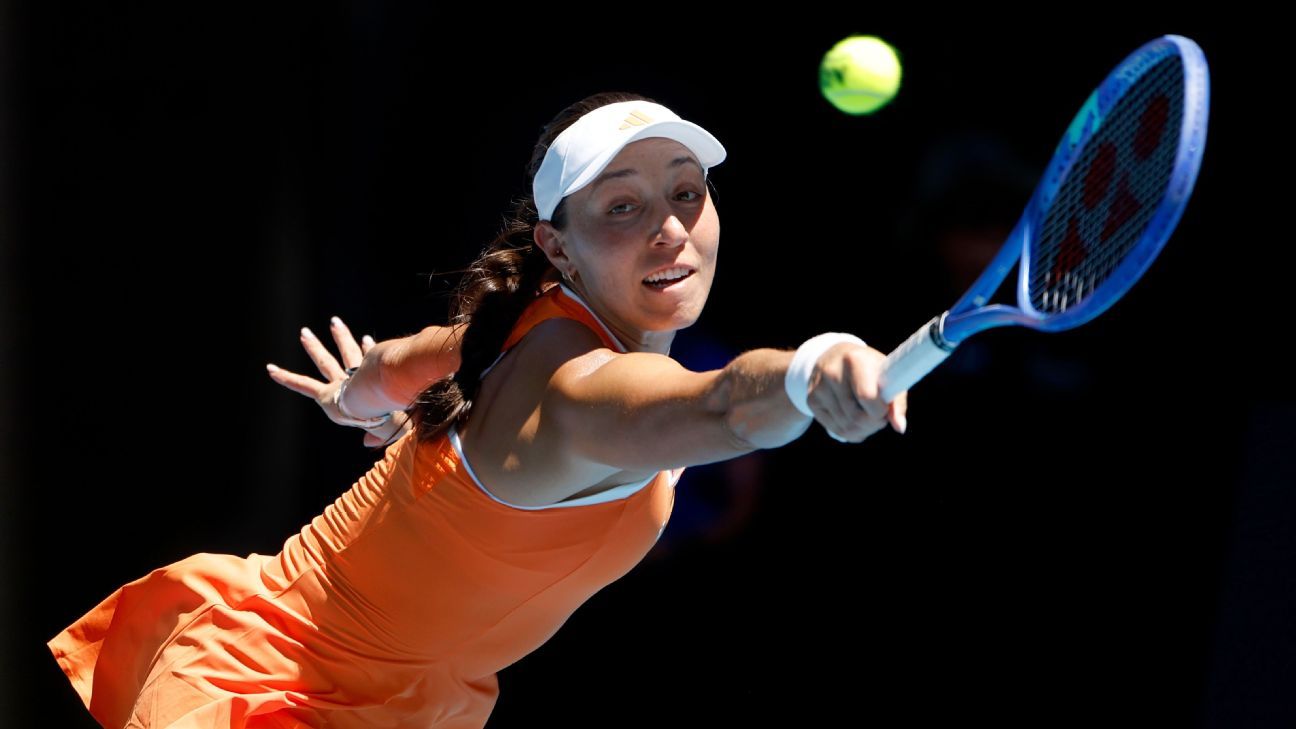
MELBOURNE, Australia — Jessica Pegula’s journey in the Australian Open through the initial three rounds has been characterized by exceptional composure and strategic play. On Monday, she added another element: a definitive statement.
The world No. 6 not only triumphed over defending champion and close friend Madison Keys on Rod Laver Arena, but she also thoroughly dismantled her game with intelligence and discipline, demonstrating a level of tactical acumen that suggests she is poised to contend for a Grand Slam title.
The 31-year-old progressed to the quarterfinals in Melbourne with a 6-3, 6-4 win against 9th-seed Keys, maintaining her perfect record in the tournament without dropping a set.
This matchup was already the most compelling of the day. It was anticipated as a showdown between Keys’ explosive, powerful shot-making and Pegula’s efficiency. What transpired was indeed that, but also revealed deeper insights. It served as a lesson in countering an opponent’s strengths through shape, variety, and pressure.
“[I’m] pleased with how I was able to serve on some crucial, key points, executing my strategy,” Pegula remarked after the match.
“I have been seeing, hitting, and moving very well throughout this tournament, and maintaining that against such a formidable player like Madi, the defending champion, was going to be a significantly tougher challenge today, but I believe I managed to do that quite effectively.”
From the outset of the first set, Pegula’s intentions were unmistakable. She consistently took the initiative, stepping in on Keys’ serve to break early, and delivered service games with precise placement that continually forced her opponent to move, preventing Keys from establishing herself and gaining the upper hand with aggressive returns.
Wide serves, angled groundstrokes, looping forehands, slices, and flat cross-court strikes—anything that disrupted the 2025 winner’s rhythm was employed by Pegula.
Keys still showcased her spectacular abilities, of course. There were powerful serves and moments of brilliance, including several impressive backhand winners down the line that reminded everyone of her high potential on tour—and Pegula that she needed to maintain her consistency to avoid the threat of a Keys comeback.
However, the challenge for Keys lay in her own consistency. Too frequently, she concluded points with a winner, or Pegula’s variety and depth induced errors.
The statistics illustrated the narrative in a stark manner.
After 10 games, with Pegula leading 6-3, 1-0, Keys had recorded 14 winners but also 20 unforced errors. Pegula? Five winners and five errors. By the conclusion of the match, Keys had amassed an impressive 26 winners but also 28 unforced errors. Pegula? 12 winners and 13 errors.
It was a clash of high-risk, powerful ball-striking tennis against a high-IQ, steady game, with the latter emerging victorious.
The second set followed a similar pattern, with Pegula maintaining a slight lead throughout. It was a physical advantage, but also a psychological one. She continued to absorb Keys’ serve, remained unflinching, forced extra balls, hit angles, and executed exceptionally under the pressure of the fourth round.
Even on serve, where one might argue Pegula could be slightly vulnerable, there was a clear distinction. She committed just one double fault compared to Keys’ six.
“It was crucial to concentrate on my serve,” Pegula stated. “It was quite challenging serving into the sun from that side. I lost that game, and I thought, you know what … she hit a couple of good shots, whatever. Just don’t dwell on it too much.
“I needed to stay focused. I think just keep my feet moving, keep my body weight going forward. Sometimes when you get a bit nervous or are playing exceptionally well, you tend to relax, and it’s difficult to do that against someone like Madi who can quickly turn matches with a few big forehands and winners, and suddenly she hits a couple of good serves, and it’s back to even.”
This contest held added intrigue. The two co-host “The Player’s Box” podcast and share a close friendship. It marked the first women’s Australian Open match between top 10-seeded Americans since Serena Williams and Lindsay Davenport faced off in the 2005 final.
Pegula now advances to the quarterfinals, showcasing remarkably efficient tennis that can unravel most opponents. No sets dropped. Only 17 games lost.
For years, her consistency has been recognized and rightly so, but critics have often labeled her as the great quarterfinal regular. Perhaps that is justifiable—she had not advanced beyond that stage of a Slam until 2024.
She arrived in Melbourne still pursuing that major title, and the same questions lingered. When will she finally break through? When will she claim the ultimate prize? Is she “too consistent”? Are there sufficient weapons? Is she exceptional without being a champion?
For Pegula, it’s merely external noise that she chooses not to consider.
“I felt that making the quarters of a Slam is quite an achievement,” she said. “So I never really grasped the negativity surrounding it, or the notion of, you know, how does she get past the quarters?
“I mean, the fact that I’m placing myself in that many positions feels like an accomplishment in itself. … [At the] US Open, I [made] finals, made semis, and that felt normal. So to me, it doesn’t feel that different. I think maybe now I’m even more at ease knowing that I’ve progressed further; it doesn’t seem, I don’t know, as significant to be in the quarters.”
Performances like this, particularly against the defending champion, provide the strongest counter-argument. Such performances also suggest that perhaps that breakthrough is not just forthcoming; it may already be underway. And it might be time to alter the narratives.
Pegula’s challenge does not become any less daunting: She will face No. 4 seed Amanda Anisimova in the quarterfinals. While Pegula holds a 3-0 record against her, this will be their first encounter at the Grand Slam level.
Source: espn.com
