
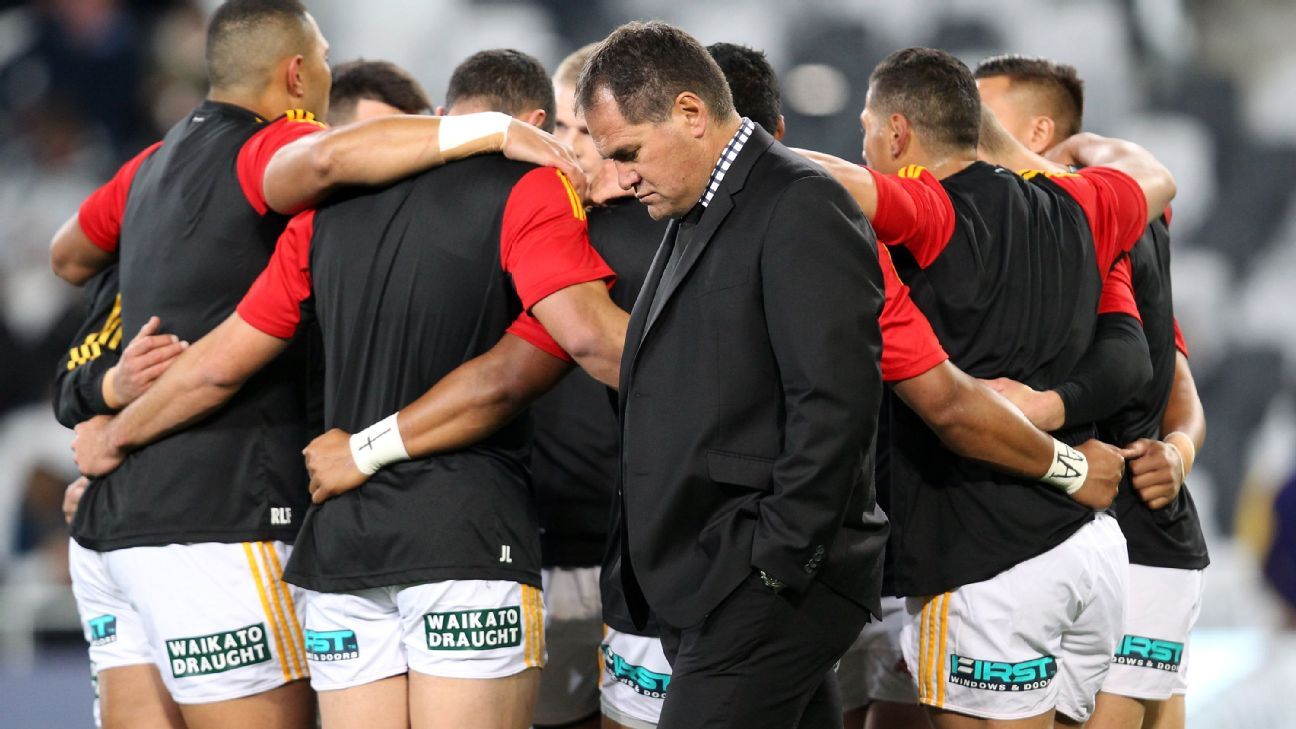
Dave Rennie’s selection as head coach for the All Blacks has generated considerable discussion regarding the extent of changes his leadership will introduce.
Liam Napier explores how Rennie’s All Blacks are expected to function and whether we might witness a new influx of talent entering the international arena.
Let’s begin with the style of play that Rennie will implement.
During Scott Robertson’s two-year period, the All Blacks struggled to consistently establish a recognizable playing style. They aimed to play at a fast pace but often lacked the necessary foundation and precision to execute effectively. Frequently, Robertson’s All Blacks depended on individual brilliance to ignite their attacks. When under pressure, they sometimes appeared to lack creative solutions.
Although Rennie’s teams cannot be easily categorized, certain distinctive traits are apparent.
The first is the breakdown. A key principle is the intensity that Rennie’s teams apply during carries, cleanouts, and collisions. Rugby is a complex sport with numerous subtleties, but any team that excels in this area is already halfway to success.
Rennie’s Chiefs consistently pushed the limits with their aggression and intent at the breakdown, often leading to complaints from opponents about off-the-ball tactics.
When this strategy faltered, it resulted in a series of penalties. However, more often than not, it proved effective, allowing players like Aaron Cruden and Sonny Bill Williams to have the necessary time and space.
A strong emphasis on securing clean ball while disrupting the opposition is also a tactic that proved effective against Rassie Erasmus’ Springboks, with Rennie’s then No. 7-ranked Wallabies achieving three wins out of four encounters.
While the All Blacks feature versatile forwards such as Wallace Sititi, Tamaiti Williams, and Ardie Savea, Rennie will prioritize his props effectively clearing rucks over executing elaborate offloads.
It is impossible to discuss changes in playing style without mentioning Rennie’s anticipated coaching staff for the All Blacks.
Although not yet finalized, Rennie is expected to implement significant changes to Robertson’s support team.
Forwards coach Jason Ryan is likely to remain, while assistants Scott Hansen (attack), Tamati Ellison (defense), and Bryn Evans (lineout) are expected to be replaced.
Ryan’s responsibilities may also be redefined, with an increased focus on the scrum.
Control of the lineout and breakdown is anticipated to be assigned to the highly experienced Neil Barnes, a straightforward forwards coach who gained recognition through the Netflix Six Nations documentary during his tenure with Italy.
Former Scotland halfback Mike Blair, a structured, statistics-driven attack coach who collaborates with Rennie in Kobe, Japan, is in talks to join the All Blacks as well. Additionally, All Blacks legend and current Moana Pasifika head Tana Umaga is under consideration for a defensive coaching role.
As an attack coach by profession, Rennie will have a clear vision of how he wants the All Blacks to function with the ball. This is one reason he was preferred over Jamie Joseph, the former All Blacks lock/loose forward.
Under Robertson, the All Blacks, like many of their international counterparts, leaned towards a territory-focused, kick-heavy strategy.
Rennie typically encourages his players to play instinctively. Teams he coaches are therefore more likely to exploit space from any position on the field, which carries risk but should enhance the All Blacks’ recent struggles with counter-attacking.
In addition to a relentless physicality at the breakdown and freedom in counter-attacking, another notable trait of Rennie’s coaching is his insistence on high-quality fundamental skills.
The All Blacks’ catch and pass execution has noticeably declined, and their high ball handling requires improvement. This will not escape Rennie’s attention, as he plans to appoint a dedicated skills coach—potentially recent England assistant Andrew Strawbridge—to focus on these specific areas.
Highly regarded strength and conditioning coach Phil Healey, expected to succeed the long-serving Nic Gill as he moves to the Baltimore Ravens, should also ensure the All Blacks are physically prepared for the demands of the Test environment.
Regarding the player roster, a comprehensive overhaul is unlikely, but Rennie has made it clear that no one is guaranteed their position after stating in his initial press conference as All Blacks head coach that he has no loyalties.
After spending nine years abroad in Scotland, Australia, and Japan, Damian McKenzie is among the few remaining players Rennie coached at the Chiefs.
This does not imply he will completely revamp Robertson’s All Blacks squad, but Rennie certainly has his own approach and vision for play.
As demonstrated when he quickly transformed the Chiefs and led them to consecutive Super Rugby titles, Rennie values hard workers over high-profile players, prioritizing performance over reputation.
Those on the periphery of the All Blacks, including Highlanders wing Caleb Tangitau, Hurricanes blindside Devan Flanders, hooker Asafo Aumua, Blues flanker Torian Barnes, and Moana Pasifika No 8 Semisi Tupou Ta’eiloa, whose eligibility is still uncertain, are making their cases during the early Super Rugby rounds, but individual performances will be most critical as the season progresses.
The loose forwards and midfield remain the most urgent issues for Rennie to address, particularly the ongoing challenges at blindside flanker and center, and he is likely to make changes to the captaincy and leadership group as well.
Change is imminent, which may cause anxiety among many established All Blacks players.
