
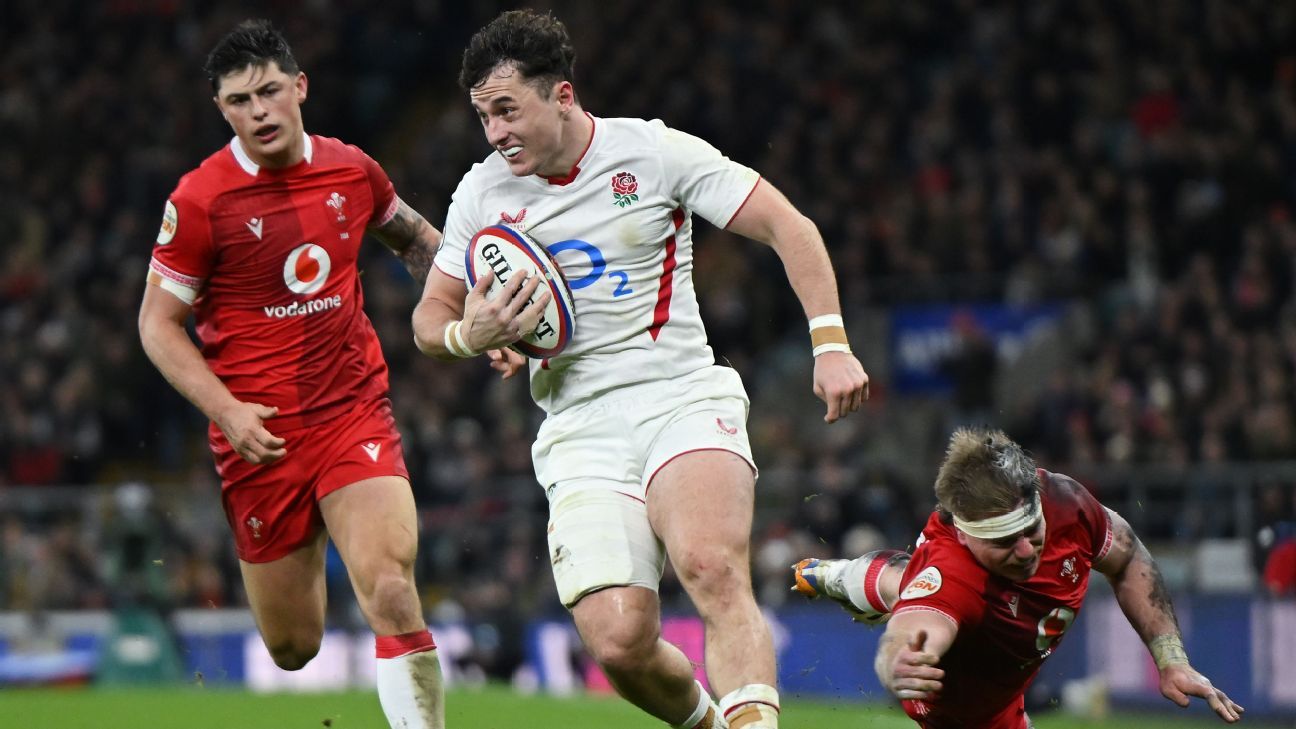
LONDON — The match concluded after just 21 minutes. England experienced what they refer to as a productive day at work. Wales faced a heavy defeat as any signs of renewed hope for their resurgence were crushed at Allianz Stadium by an England side that played with confidence and composure, winning decisively 48-7.
As the first quarter came to a close, Wales had two players sin-binned after conceding 10 penalties within the initial 20 minutes. “It was brutal,” remarked Wales head coach Steve Tandy. Once again, their lack of discipline hindered their performance, leaving their foundations in disarray and providing England with the opportunity to establish a lead.
By the time Dewi Lake and Nicky Smith returned 10 minutes later, England had already secured a three-try advantage, adding another to lead 29-0 at halftime, with Henry Arundell scoring three of those tries. The match was effectively decided, and a bonus point was secured.
At this point, record Welsh defeats were being noted. However, there was no total collapse to follow. Wales displayed more determination and physicality in the second half, but any hopes of a comeback were swiftly extinguished by further indiscipline and an England team that appeared comfortable in their style of play.
The final tally included Arundell’s hat trick, a penalty try awarded for a foul on Henry Pollock as he crossed the line, along with additional tries from Ben Earl, Tom Roebuck, and Tommy Freeman, which was a modest return for their attacking efforts.
England likely could have scored at least four more tries. Wales’ only score came in the 51st minute from Josh Adams, which was met with relieved cheers rather than hopeful ones, as they avoided leaving Twickenham without any points.
At times, England were unstoppable, but the referee’s whistle interrupted the flow of the match. A total of six yellow cards were issued; four to Wales and two to England. This disrupted the game, but England remained unfazed. There was a brief period in the second half where Wales managed to string together a couple of rare multi-phase attacks and eventually secured one consolation score, but then another double yellow card saw Ben Thomas and Taine Plumtree sin-binned, ending their momentum.
If England had displayed a bit more accuracy, records could have been shattered as Freeman crossed the line in the final moments of the match.
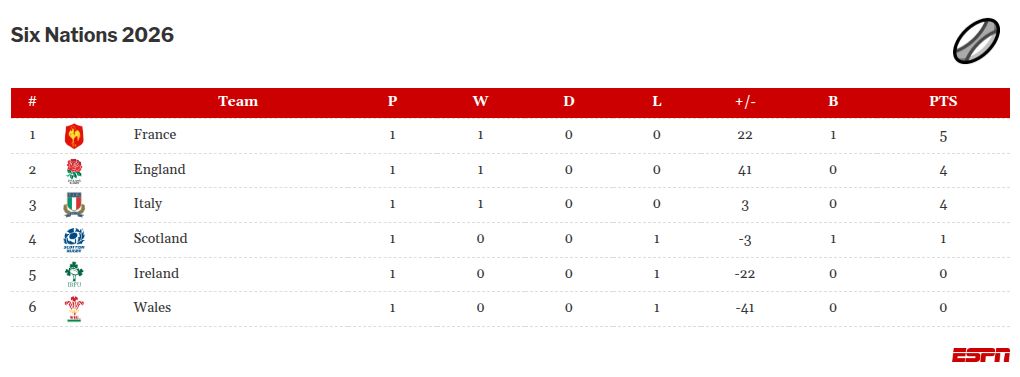
Before the championship commenced, Steve Borthwick had already set his sights on a clash with France in Paris on March 14. Following France’s impressive victory over Ireland on Thursday, it is anticipated that this match will be crucial for their Grand Slam aspirations.
England hopes to be in a similar position by that time. This marked their 12th consecutive victory… England is progressing. However, they require a Six Nations title to signify this advancement.
This was an England team missing several front-row players, yet their dominance in set pieces was evident. They also had to cope with the late withdrawal of Immanuel Feyi-Waboso. George Ford once again excelled at fly-half, supported well by Alex Mitchell. England’s back-row controlled the breakdown, and they won nearly every collision.
Arundell demonstrated his clinical finishing skills with three well-executed tries, sprinting down the left wing, while Roebuck proved to be a constant threat on the opposite flank. The partnership between Fraser Dingwall and Freeman is still evolving in the centres, while Ollie Chessum made a strong impression in the second-row. Jamie George stepped in for captain Itoje, who was on the bench, and led the team effectively.
– Six Nations: Player ratings as England thrash Wales
– England’s time to win Six Nations is now… and they know it
– Schedule, results, table, squads, TV info, more for this year’s tournament
The only blemish on the performance was the two yellow cards. One was issued to Itoje for cumulative team offences, and another to Tom Curry late in the game. Borthwick will also review the opportunities they missed, but scoring seven tries on a wet Twickenham pitch in the championship’s opening match is a commendable outcome. It was relentless, and it was clear the players were eager for more.
Ford lowered his head as his conversion attempt for Freeman’s 80th-minute try hit the post — the players were keen to reach the half-century mark.
The “pom squad” — England’s bench — was again utilized, though perhaps without the immediate impact seen in the autumn. However, when Henry Pollock entered the match, it allowed England to rearrange their lineup, moving Freeman to the wing, shifting Earl from the pack to outside centre, and placing Pollock in the back-row. This is the kind of adjustment they would practice in training and showcased their superiority. The headline notes this as a record home win for England over Wales in the Six Nations. A solid achievement.
While England has achieved 12 consecutive wins, Wales has endured 12 straight defeats, and it is challenging to see their path forward. They face numerous off-field challenges, with some players uncertain about the future of their clubs, particularly with the Ospreys facing threats. It must be incredibly difficult to concentrate with such concerns in mind. Nevertheless, there is little satisfaction in witnessing Wales suffer such defeats. The memories of the great Welsh teams from the first era of Warren Gatland seem distant.
This was a Wales side that struggled with discipline, lacking physicality and committing several errors. There were occasional glimpses of promise in Aaron Wainwright’s performance, but for the third consecutive match, they received at least two yellow cards. It is unrealistic to expect to cause an upset with such a record.
“We let ourselves down and are massively disappointed with the performance we put out on the field today,” a dejected Lake stated afterward.
One can empathize with Steve Tandy and the players, but the reality is that they are once again in contention for the wooden spoon. Their next challenge? France at home. Gulp.
England will face Scotland next and will be cautious of Gregor Townsend’s wounded team. They have found it difficult to win at Murrayfield recently, with just one victory in four attempts there, and will need to perform at their best to retain the Calcutta Cup.
Following that, they will host Ireland, travel to Italy, and potentially face a Grand Slam showdown with Les Bleus in Paris. This was a competent win for England, and based on the evidence thus far, they appear poised to challenge France for the Six Nations title.
