
Penske’s Dominance in American Racing: A Look at IndyCar and NASCAR Success
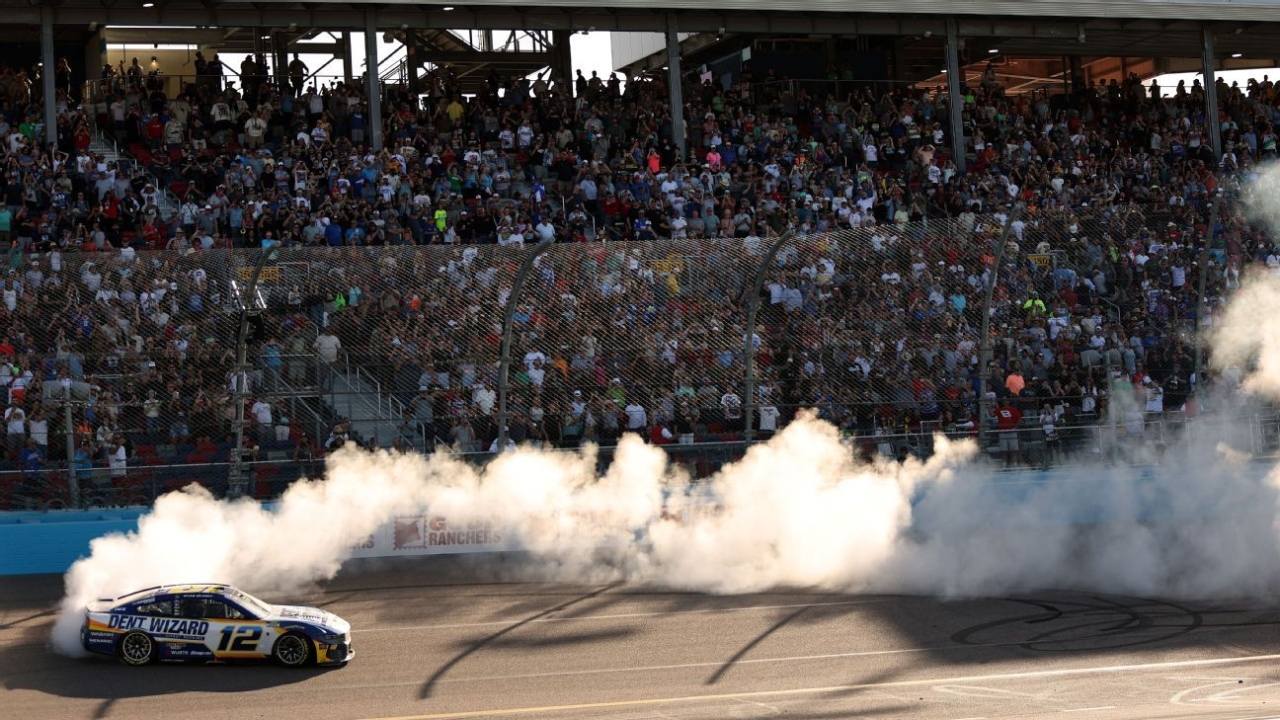
For those seeking a recent illustration of the excellence within the motorsports empire established by Roger Penske, the NASCAR and IndyCar joint weekend at Phoenix Raceway serves as a prime example.
NASCAR, the stock car series in American motorsports, and the IndyCar Series, the open-wheel counterpart, are not typically seen as partners. Historically, the two have shared the same venue fewer than a dozen times, as was the case earlier this month. If their relationship were to be described on social media, it might be labeled as “complicated.”
However, Penske does not engage in complications. He operates at the highest standards, making it fitting that during that weekend in Phoenix, one of the most iconic team owners in American racing ensured that no one else could partake in the triumphs.
Team Penske dominated the weekend. Josef Newgarden secured victory in the IndyCar Series race following teammate David Malukas’s pole position. Joey Logano claimed the NASCAR Cup pole, and subsequently, teammate Ryan Blaney won the Cup race.
As the organization marks its 60th anniversary, this weekend may stand out as the first and most significant highlight.
“I was fortunate enough to be part of the 50th anniversary, and it’s just incredible to witness what he’s accomplished in motorsports over six decades,” Blaney shared with ESPN. “Not only on the NASCAR side, but also in IndyCar and sports car racing. It’s been exciting to contribute to its history. It’s enjoyable to be involved.”
Blaney, who has triumphed in 17 of his 18 races in a Penske Ford and secured the 2023 championship for the team, shares a common desire with every driver in a Team Penske firesuit—they are eager to win for their leader. While individual achievements are rewarding, nothing compares to the satisfaction of knowing it enhances the Penske legacy.
Logano struggles to provide a brief response regarding what it signifies to drive for Penske. This is understandable, considering the man who offered Logano a second chance in the Cup Series and helped him become a three-time champion. At just 22 years old in 2012, Logano faced uncertainty as he was losing his position with Joe Gibbs Racing when Penske signed him.
Since then, Logano has secured 35 victories for Penske. To date, Penske has achieved 157 wins in NASCAR Cup competition, with Logano ranking second on the team’s list for those victories, trailing only Rusty Wallace, who has 37.
“It’s enjoyable to see [Penske] still get thrilled about winning,” Logano told ESPN. “It’s been 60 years in motorsports, which is remarkable. With the number of championships and race wins, one could eventually become indifferent. But that’s not the case for Roger. He remains genuinely excited, still very much like a kid in a candy store when we achieve victory.”
Penske’s success during a shared IndyCar and NASCAR weekend aligns with his narrative. Many associate him primarily with IndyCar, reflecting the dynasty he has cultivated. After all, his journey and achievements in motorsports began with open-wheel and sports cars, with NASCAR stock cars following later.
Penske first participated in NASCAR events from 1972 to 1977, during which Mark Donohue and Bobby Allison collectively won five races for him. After a brief hiatus, the team returned in 1980 with Wallace for two races.
This was followed by a 10-year absence from the sport.
“We exited that and Formula 1 around the same time,” Walt Czarnecki, a long-time Penske executive, told ESPN. “Mark [Donohue] was fatally injured in the [1975] Austrian Grand Prix, and we continued in Formula 1 for one more year before deciding to concentrate solely on IndyCar. We were managing all these programs from a small facility in Reading, Penn.; we had a small shop in the UK for Formula 1, and it made more sense to focus on one endeavor, which was IndyCar.”
Penske did not return to NASCAR until 1991, facilitated by Don Miller, another long-standing Penske employee, and Wallace. Their partnership with Miller Brewing Company established what is now one of the most recognizable collaborations in the sport.
“I think we started with 15 original people in a small shop in Mooresville, [N.C.], a 10,000-square-foot facility,” Czarnecki recalled. “And that was the inception of it all. We had an association with Pontiac. Rusty and Don were able to secure that, and we got off to a strong start.”
Wallace put Penske on the NASCAR map, winning 35 races between 1991 and 2000 before the organization began to expand with additional cars and drivers. Ryan Newman, Jeremy Mayfield, and Kurt Busch all drove and won for Penske.
By the time Brad Keselowski joined in the late 2010s, Penske had already secured over 50 victories. This positioned them among the elite organizations in the sport—though one crucial element was still absent.
Keselowski delivered Penske its first Cup Series championship in 2012. It wasn’t until Logano claimed the 2018 title that Penske returned to the pinnacle. Over the past five years, however, Penske has reinforced its status as a NASCAR dynasty by exchanging titles with Hendrick Motorsports (three to Hendrick’s two).
“To be recognized in the same category as Rick Hendrick and Hendrick Motorsports is significant,” Czarnecki stated. “The real transformation in our program occurred around 2010 or 2011. Like many businesses at that time, we had a manufacturing side and an engineering side, and the two sometimes didn’t communicate as effectively as we would have liked. So, we made a change by appointing one of our engineers, Travis Geisler, to serve as the liaison between engineering and manufacturing, ensuring both sides understood each other. Naturally, the race team on weekends had to execute the final product, but that adjustment was crucial.”
This narrative illustrates how Penske is a leader who not only believes in hiring the right individuals but also in placing them in positions where they can thrive. There has been minimal turnover over the years, with over 40 members of Team Penske having been with the organization for more than 20 years.
The team’s headquarters has also expanded, contributing to its success. Penske acquired the current Mooresville, N.C. facility in the summer of 2004 and was fully operational there by 2005. It did not remain a NASCAR base for long, as the sports car program relocated there from Pennsylvania by the end of 2005, followed by the IndyCar Series operation in late 2006.
All of Team Penske’s expertise is now centralized under one roof. Such a concentration of knowledge and talent has fostered a competitive spirit, driving each other forward—or, as seen in Phoenix, ensuring they do not fall prey to endless teasing and bragging rights.
“No, I don’t think it’s surprising, just because that’s the type of person he is,” Blaney remarked regarding Penske’s success in NASCAR mirroring his achievements elsewhere. “He’s a highly competitive individual. He often emphasizes that people are what make your endeavors successful, and he has always prioritized surrounding himself with the right individuals and appreciating everyone involved. Not just his race teams, but also his business.
“It’s remarkable; he can enter any dealership or truck rental facility and know everyone’s names and how long they’ve been there. I don’t possess that ability. I lack that particular trait. So, it’s inspiring to be around someone like that, to learn from him and aspire to emulate him, and I’ve been fortunate to have been with him for a long time. It’s a unique experience to be around such a person.”
“The Captain,” as he is affectionately referred to by those closest to him, represents the gold standard in American motorsports—regardless of whether the discussion revolves around stock cars, open-wheel racing, or sports cars.
Source: espn.com
