
Max Verstappen and F1’s revised regulations: A review of all grievances this season – along with our assessment
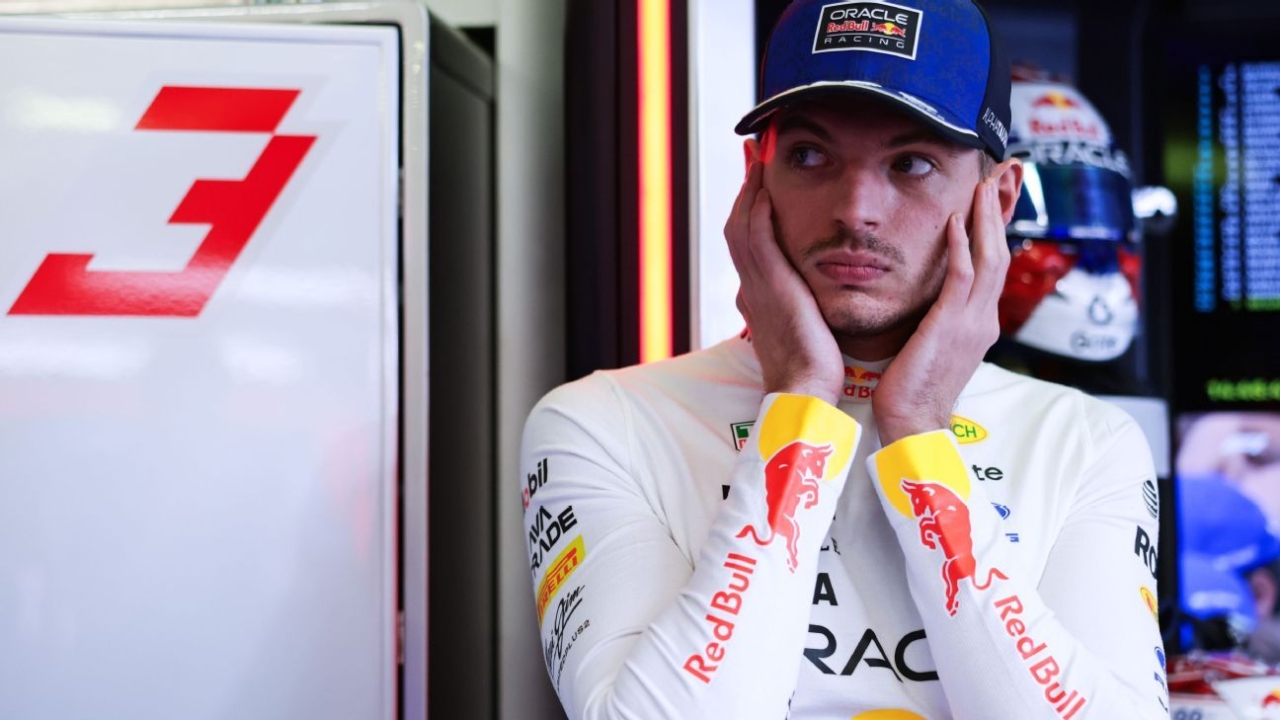
Max Verstappen has emerged as the prominent figure opposing the shift towards electrification in Formula 1, being the sport’s most outspoken critic regarding the new cars.
The latest hybrid engines in F1 showcase a 50-50 division between combustion and electric power, directing significant attention during the initial two races of 2026 towards energy recovery and battery usage—an unprecedented focus for the series. F1 vehicles are now equipped with power boost systems that drivers can activate around the track with a button press.
The new vehicles have sparked divided opinions. Verstappen, a four-time world champion and widely considered the top driver in the sport currently, has been the most vocal in his disapproval from the outset, with his remarks on the cars consistently making headlines this year. While some drivers share his reservations about the new format, particularly regarding single-lap performance, others have softened their critiques since racing resumed at the Australian Grand Prix. However, Verstappen has remained steadfast in his opposition.
His disdain for the new cars has created an intriguing contradiction. Following the Chinese Grand Prix, Lewis Hamilton, the only driver on the grid with more accolades than Verstappen, praised the cars, stating they produced some of the best racing he has experienced in his career.
What should we conclude about Verstappen, one of the greatest drivers in F1 history, being so candid? Are his criticisms justified? Is he merely frustrated because Red Bull does not appear to be a title contender? And should F1 be concerned that the best driver of his generation might decide to walk away?
Here’s a summary of Verstappen’s comments regarding the new cars thus far and our analysis of them.
– Japanese Grand Prix 2026: Race start time, how to watch, full F1 schedule
– Max Verstappen criticizes F1 regulations again; ‘Terrible, political, really a joke’
Verstappen’s initial thoughts on the cars
The quotes
“Not a lot of fun, to be honest. I would say the right word is management. As a driver, the feeling is not very Formula 1-like. It feels a bit more like Formula E on steroids.”
“A lot of what you do as a driver, in terms of inputs, has a massive effect on the energy side of things. For me, that’s just not Formula 1. Maybe it’s better to drive Formula E, right? Because that’s all about energy efficiency and management. That’s what they stand for. Driving-wise, it’s not so fun.”
The context
Verstappen, who had expressed concerns about F1’s new regulations well before their implementation this year, did not hesitate to launch a strong critique of the new cars during his first media session at Bahrain’s preseason test in February.
At that point, the drivers had already experienced them for three days at F1’s private ‘Shakedown’ event in Barcelona and again at the desert circuit. It was during the latter that the Red Bull driver made his first sharp criticism and provided the first notable soundbite regarding the new generation of cars.
Our verdict
It is difficult to dispute the ‘Formula E on steroids’ characterization, which may be the most accurate overarching description of F1’s new generation of hybrid engines.
Since its inception in 2014, the all-electric series has been characterized by the battery power available to its drivers, with the narrative of each race revolving around that aspect. This has similarly become the case in Formula 1 since the year’s start, with TV commentators now needing to provide extensive explanations about terms like “super clipping,” megajoules, and battery harvesting to contextualize qualifying sessions and races.
F1’s cars remain significantly faster and louder than those in Formula E, and the series continues to enjoy greater popularity by a considerable margin, making the notion of F1 being a steroid-enhanced version feel fitting.
Genuine or artificial racing?
The quotes
In preseason, Verstappen remarked: “The car looks great — honestly, the proportion of the car looks good, I think. That’s not the problem. It’s just everything else that is a bit, for me, anti-racing.”
After the Chinese Grand Prix, he stated: “It’s still terrible. I don’t know, if someone likes this, then you really don’t know what racing is about. It’s not fun at all. It’s like playing Mario Kart. This is not racing. Look at the racing. You are boosting past, then you run out of battery the next straight. They boost past you again. For me, it’s just a joke.”
The context
Verstappen’s most pointed criticism—which seemed to resonate strongly with the staunch detractors of the new cars—was that the racing produced is simply not authentic and that anyone who enjoys it lacks understanding of what racing entails. This was a bold statement that appeared to create a divide between the sport’s hardcore and more casual fanbase.
The back-and-forth battles at the front during the first two races have featured topsy-turvy contests for victory (something F1 has been missing in previous eras) largely due to what Charles Leclerc termed the “yo-yo effect.” This new phenomenon has provided F1 with an easy highlight reel for each event thus far, as cars continuously swap positions in their duels. Verstappen, however, has not been impressed.
The Dutch driver believes that the significance of out-braking a rival has now been supplanted by who can deploy more battery at a given moment. Coming from the sport’s most elite racer, a competitor who participates at the Nurburgring in his spare time and had to be advised by Red Bull management to limit his late-night online racing before grand prix Sundays, his remarks on the authenticity of racing carry considerable weight.
Our verdict
Verstappen is entitled to his perspective, but this statement felt somewhat dismissive and hinted at gatekeeping. After all, who truly has the authority to define what constitutes “real” racing? This is an incredibly subjective matter, especially at a time when Formula 1 has attracted an entirely new fanbase in this decade.
Many of these fans may not have witnessed Ayrton Senna, Michael Schumacher, or even Sebastian Vettel during their prime, yet they still appreciate the sport as it exists today. To imply that individuals do not grasp racing simply because one dislikes a certain aspect seems somewhat misguided, even for someone of Verstappen’s caliber.
What Verstappen might have intended to convey is that the new cars have altered the fundamental dynamics of how drivers will compete against each other moving forward. This is undeniable. Overtaking under the previous formula largely revolved around out-braking a rival, even with the artificial overtaking aid DRS installed for speed differentials on the straights. Numerous critics have pointed out that the battery boosts mean out-braking is now considerably less critical, with both Russell and Leclerc discussing the new strategic considerations required for when to utilize the boost throughout the lap. Change does not inherently equate to improvement or decline, but it is indeed a change.
Is the new F1 genuinely competitive?
The quotes
“It’s just Kimi [Antonelli] or George [Russell] that is winning, right? It’s not really back and forth. They’re miles ahead of the field. It’s just that Ferrari sometimes has these good starts that they push themselves in front, and then it takes a few laps to sort it all out. Like I said, this has nothing to do with racing.”
The context
Much of the acclaim for the new cars has stemmed from the on-track battles involving the Mercedes and Ferrari drivers at the forefront. George Russell and Charles Leclerc engaged in a thrilling contest for victory in Australia, while Leclerc and Lewis Hamilton went wheel-to-wheel in both the sprint and grand prix in China. The competition has been back and forth and, notably, has remained clean, aside from a minor incident between the Ferrari drivers in the sprint.
Our verdict
Verstappen is correct that the three races—two grands prix and a sprint—have followed a similar pattern, with Ferrari initially challenging due to their excellent starts, only to fade as Mercedes’ superior power management and deployment come into play.
There is merit to the unpredictable nature of the opening phases of races thus far regarding how the new cars are perceived. The exciting spectacles at the front have helped to quell two prevailing narratives that accompanied the season’s start: a) that the cars were dreadful and overtaking would be impossible; and b) that Mercedes would dominate every race effortlessly. The presence of Ferrari in the mix—and a revitalized Lewis Hamilton—has been a positive storyline few anticipated on January 1.
A more accurate assessment of the new cars may emerge after a more typical race. There will come a time when Ferrari does not achieve a stellar launch into the lead at Turn 1, allowing Mercedes to dictate the pace at the front. Position changes may feel less thrilling and more formulaic if they are not occurring for the lead. Numerous other scenarios could unfold as well—the Ferrari drivers might indeed collide in their next race, for instance, shifting the focus to internal drama rather than an impressive wheel-to-wheel battle.
Here, Verstappen is correct—despite the enjoyable wheel-to-wheel moments thus far, it has felt like mere embellishment in what has otherwise been a somewhat uneven competitive landscape.
 play0:42Verstappen: I’d drive a shopping trolley to the limits
Max Verstappen is unconcerned about the performance of his Red Bull, while Lewis Hamilton states he is “happier” at Ferrari.
The ‘Mario Kart’ training
The quotes
“I found a cheaper solution … I swapped the simulator for my Nintendo Switch. I’m practicing with Mario Kart, actually. Finding the mushrooms is going quite well, the blue shells is a bit more difficult. I’m working on it. The rocket is still not there; it’s coming!”
The context
This is one of Verstappen’s many humorous remarks regarding the new cars.
Our verdict
10/10 quip. Headline writers appreciated it. Nothing more to add, other than—how skilled do you think Max must be at Mario Kart?
Is Verstappen simply bitter about his competitiveness?
The quotes
“I love racing, but we can only take so much, right? I think they are willing to listen, FIA and F1, I just hope of course that there is some action. I mean it’s not that I’m the only one saying it, I think a lot are saying it, if it’s drivers, fans, we just want the best for the sport. It’s not like we are critical just to be critical, we are critical for a reason, we want it to be F1, proper F1 on steroids, today that of course was again not the case.
“I would say the same if I would be winning races, because I care about the racing product. It’s not about being upset of where I am, because I’m actually fighting even more now, of course.”
The context
A clear divide has emerged between positive and negative remarks during the season’s early weeks. The most enthusiastic supporters have been the drivers in the most competitive cars, Mercedes and Ferrari, while the world champion trio of Verstappen, Lando Norris, and Fernando Alonso—all experiencing challenging starts to the new regulation cycle—have been the most vocal critics.
Norris has stated that F1 transitioned from the best cars to the worst in a single regulation change and that the new machines are nothing like what he and his peers envisioned racing as children, while Alonso referred to Formula 1 as the “battery world championship” following a difficult weekend in China. These memorable quotes are notable, but it is easy to consider the context surrounding the seasons of these three drivers and suggest they are simply expressing frustration.
Mercedes team principal Toto Wolff, who spent a significant portion of last year courting the Red Bull driver for a contract, implied that Verstappen’s comments stem from his current competitiveness. Verstappen expressed to Red Bull that his car was the worst it has ever been after sprint qualifying in China, and Wolff referenced this when discussing the Dutchman’s criticisms. “Max is really, I think, in a horror show,” Wolff stated. “When you look at the onboard that he has in qualifying yesterday, this is just horrendous to drive. You can see that.”
Wolff added: “I’m sure for someone like Max, who is a full-attack guy, it’s difficult to cope and digest. But it’s more, I would say, a car-specific issue that magnifies the problem that it is. Because if you sit in front of a TV or in front of a screen, even Max would say that was interesting racing in the front.”
Our verdict
We believe Verstappen’s criticisms stem from a genuine place. Two things can be true simultaneously: his comments can be sincere while also being amplified by his dissatisfaction with Red Bull’s current standing in the competitive hierarchy.
It is important to note that Verstappen has been vocal about his concerns regarding this set of regulations since he first learned of them in 2023. Verstappen is a person who is deeply passionate about racing, as evidenced by his late-night sim racing and ventures into sportscar racing. He anticipated that he would not enjoy the new cars and that it might significantly affect his desire to continue, even when he had the option to switch to Mercedes—the team many believed would be the dominant force entering the new regulation cycle.
Thus, he expressed these views while being aware that he could, in theory, transition to the top team in time for the new regulation cycle or one year into it. He has not wavered in his opinions, unlike Norris, who inexplicably defended the new cars in response to Verstappen’s initial criticism in February, only to quickly retract his statement later that week, claiming he only made those negative comments “to see what the reaction of everyone was.”
Would these cars truly drive Max away?
The quotes
“I mean, I don’t want to leave really. I wish I had a bit more fun for sure, but I’m also doing other stuff that is a lot of fun. I get to race the Nordschleife. Hope in the coming years I can do Spa, hopefully Le Mans. So, I’m combining stuff to find other stuff that I find really fun as well. So I have a lot of distractions at the same time. Positive distractions I would call it.
“But at the same time, it’s a bit conflicting because I don’t really enjoy driving the car, but I do enjoy working with all the people in the team and from the engine department as well. Yeah, it’s almost like a bit of a mind … I can’t swear!”
The context
Referencing his well-known fine for swearing during an FIA press conference at the 2024 Singapore Grand Prix, Verstappen hinted in China that he is not actively seeking a reason to exit the sport, despite earlier indications that he might do so if he stops enjoying himself.
Our verdict
F1 must remain vigilant regarding the possibility of him leaving. It is well-known that Verstappen, 27, does not envision an F1 career extending into his late thirties or forties.
The question of when he might depart has been open for some time. His contract with Red Bull extends until 2028, which would mean enduring these new cars for another two seasons after this one, assuming a move to another team does not occur until then.
Red Bull may find a way to improve, as they have in the past, so for now, we must take him at his word that this is weighing heavily on his mind. Given Verstappen’s exceptional talent and global popularity, F1 should be concerned about the narrative surrounding these new cars being that they are so unenjoyable to drive that they could lead the best driver of his generation to retire from the sport.
Source: espn.com
