
Have the new regulations for F1 in 2026 rendered the sport overly complex?
BAHRAIN — The latest generation of Formula 1 cars has yet to complete a competitive lap but has already faced scrutiny from the sport’s leading drivers.
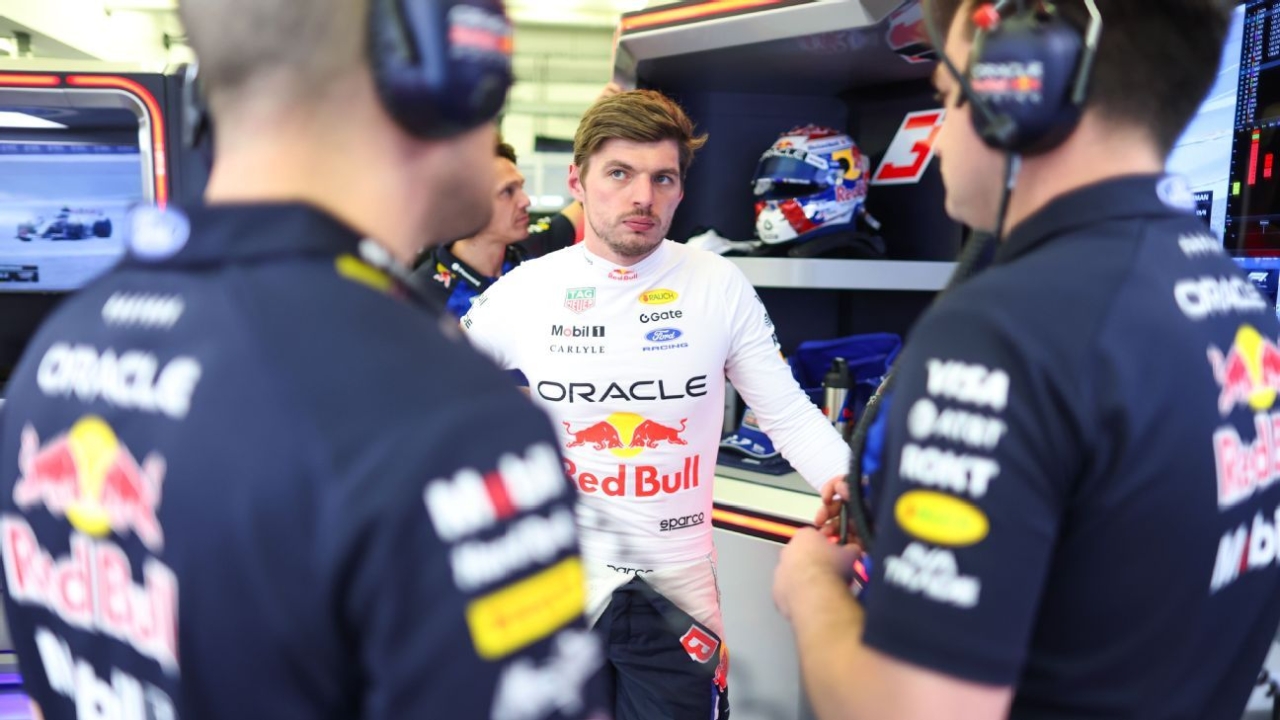
The carefully curated messaging surrounding F1’s new vehicles was disrupted just a week into the first official preseason test this month. Seven-time world champion Lewis Hamilton remarked that the cars are so intricate “you need a degree to fully understand it all.” Four-time world champion Max Verstappen compared them to Formula E “on steroids.” Verstappen reiterated those remarks this week.
The criticism has not been limited to the two title contenders from 2021. Two-time world champion Fernando Alonso indicated that the energy management needed in the new cars — which have nearly equal parts internal combustion and electric power — makes it so simple to navigate certain corners that even media members or Aston Martin’s chef could manage it without difficulty. Ferrari’s Charles Leclerc expressed worries about the challenges of overtaking. New world champion Lando Norris initially supported the new cars during the first week of testing but later confusingly retracted that stance on Thursday, stating he had defended them only to gauge others’ reactions to his contrary opinion, claiming they do not provide a pure racing experience.
This has created an awkward introduction to what Formula 1 hoped would be a remarkable new era. The 2026 models feature significant alterations to the aerodynamic designs and engine specifications. Visually, the outcome has been striking, with cars resembling those from the mid-2000s, as much of the complex aerodynamics from recent years has been removed to foster more opportunities for close racing.
However, the technology beneath the impressive new exterior is at the center of the criticisms directed at the new cars this month. The complexity of F1’s new regulations has dominated discussions during the preseason, with Hamilton’s comments drawing attention in the opening week in Bahrain.
“None of the fans are going to understand it, I don’t think,” the Ferrari driver stated. “It’s ridiculously complex. I sat in a meeting the other day and they’re taking us through it. It’s like you need a degree to fully understand it all.”
The new power units — the term used in the F1 paddock for engines with hybrid components — represent an unprecedented advancement for the premier series of motor racing. The near 50-50 division between internal combustion and electric power has placed significant emphasis on energy management and battery regeneration throughout a lap. Two new battery-based power modes have been introduced: Overtake mode, which replaces the drag reduction system (DRS) as a pure overtaking aid available to drivers within a second of the car ahead, and a separate boost mode, which can be utilized at a driver’s discretion during the lap.
This shift toward an equal distribution of power outputs has not only increased the demands placed on drivers inside the car but has also introduced new and unusual terminology to F1’s vocabulary.
Alonso’s comment about the Aston chef being able to navigate Bahrain’s Turn 12 referred to how cars now harvest energy through braking, resulting in many drivers approaching corners at reduced speeds to ensure their batteries are fully charged for acceleration down the straight. These electric components have also led to new phenomena such as “super clipping,” which is expected to become a topic of discussion in the early races. This term describes a peculiar effect of hybrid engines — in certain situations, when a driver is at full throttle, the component of the engine responsible for recovering kinetic energy essentially intervenes to manage the power unit. This can counteract the existing power, causing the car’s speed to decrease even when the accelerator is fully pressed.
Super clipping is among several intricate and technical topics that have dominated the lead-up to the season-opening Australian Grand Prix, scheduled for March 8 at Melbourne’s Albert Park. Hamilton is not the only one perplexed by meetings. ESPN has been informed by several notable figures in broadcasting that they have attended lengthy presentations about the new cars that have left even the most seasoned media members confused.
Verstappen, who has consistently stated that his continued participation in Formula 1 will depend on his enjoyment of racing this generation of cars, reaffirmed his initial Formula E comparison this week, expressing a desire to eliminate the electrical components entirely.
“I want us to actually stay away from that and be Formula 1,” he stated. “So don’t increase the battery, actually get rid of that and focus on a nice engine and have Formula E as Formula E, because that’s what they are about. I’m sure that with the new car, from what I’ve seen and talked to some of my friends in there, that’s going to be also a really cool car. But let them be Formula E. We should stay Formula 1, and let’s try not to mix that.”
F1 and the FIA are also testing a modification to the start procedure to address safety concerns arising from the longer time it takes for turbocharged gasoline engines to reach sufficient speed from a stationary position. A new five-second pause is likely to be added to the usual start moment on the grid before the standard five lights illuminate one at a time.
Potential rule adjustments may not be confined to the start procedure. Teams, F1, and the FIA are in discussions about whether to alter the amount of electrical deployment available to each driver to address ongoing concerns regarding the new vehicles.
As criticism of F1’s new cars intensifies, series CEO Stefano Domenicali addressed the media on Thursday during a Teams call that lasted nearly an hour. “Stay calm” was the primary message from the former Ferrari leader.
“I don’t feel this anxiety; we need to stay calm,” Domenicali stated. “As always when there is something happening with a new regulation, there’s always the doubt that everything is wrong. I remember [the same] in 2014, I remember in 2020, I remember in 2021. As always, F1 as a system has always proven that the technical solutions have always helped the teams to be fast and the drivers to be the best, so I’m totally positive about that.”
Domenicali spent much of this week engaging with drivers about their concerns. F1’s CEO assured the media that he was confident Verstappen would not be discouraged from continuing in the sport due to the new cars, even though the Dutchman has labeled them “anti-racing.”
“I guarantee to you that Max wants [to stay] and cares about Formula 1 more than anyone else,” Domenicali remarked. “He has a way of expressing his points in a certain manner. But we had a very constructive meeting, and he will have a very constructive meeting also with the federation and the teams to emphasize his viewpoints on what he believes needs to be done to keep the driving style at the center, without altering, let’s say, the approach.”
Changes remain a possibility. F1, the governing FIA, the teams, and the manufacturers are in open discussions regarding potential adjustments that could be made before and after the Australian Grand Prix to mitigate some of the more concerning aspects of the new regulations. How effective this will be in addressing the concerns of Verstappen and his competitors is yet to be determined.
Domenicali concluded his call with a final rallying cry: “Don’t be worried about the energy management. We’re going to solve that … if we need to solve it, by the way.”
How did F1 get to this point?
It appears that F1 was prepared for a negative reception from the outset.
The first testing opportunity for the teams was January’s unofficial shakedown event in Barcelona, where media and fans were prohibited from attending. F1 stated that the teams had specifically requested both the additional test and for it to be private, but F1 also strictly limited the content teams could share with the public during those events. Controlling the narrative seemed to be the primary objective at the beginning of the year, but the remarks from influential drivers like Hamilton and Verstappen undermined that effort the moment either faced the media after driving the cars.
There is rationale behind the shift toward the 50-50 split.
The new regulations, a clear move toward road-relevant technology, were crucial in attracting manufacturers like Audi into the sport as full engine builders. The electrification of the regulations also persuaded Honda to reverse its decision made in 2021 to exit the sport. Ford has also increased its involvement in Red Bull’s new engine project, while General Motors has committed to developing its own engines for the new Cadillac team by 2028 or 2029. Thus, on paper, a clear and immediate success.
The overall vitality of Formula 1 has often been assessed based on the number of different manufacturers participating, but it is also true that the road car industry is increasingly moving away from the loud combustion engines of the past. For many who long for a return to the roaring V12 or V10 engines of earlier decades, the growing criticisms of F1’s latest formula only reinforce their argument — the same one proposed by Verstappen — that the sport should move away from, rather than toward, automotive industry trends.
Formula E CEO Jeff Dodds last week took advantage of Verstappen’s mention of his series to invite the Dutch driver to test one of their cars. Dodds also suggested that F1’s primary issue in reaching this point has been that the rules are effectively caught between two extremes.
“I think Max and Lewis and these guys have been quite open in their concern for what happens when you’re effectively compromising the technology, keeping combustion technology, adding powertrain technology and not choosing a pathway,” Dodds told ESPN.
This perspective is reasonable: F1’s new regulations seem somewhat like a mix between two extremes. The FIA’s head of single-seater racing, Nikolas Tombazis, hinted at the challenges of pushing toward electrification while keeping all stakeholders satisfied with each new rule change in F1.
“We need to, I think, always remember that the sport has a lot of stakeholders and drivers, of course, who are extremely important,” Tombazis told ESPN and selected media on Thursday when asked about Verstappen’s suggestion that the sport should abandon electrification altogether. “Drivers are the stars, but we must also remember that the sport attracts major motor manufacturers like Mercedes, Audi, Ferrari, Cadillac, General Motors, and so on, and they all have reasons for wanting to be in the sport.
“And when these regulations were discussed, they were absolutely very adamant on these parameters. And now … life would be easier for everyone if we just had one engine and didn’t have to worry about all of that. I’m not denying that in any way.”
The FIA is exploring whether it is feasible to adjust the levels of energy deployment required, aiming to alleviate issues such as super clipping. However, this will not be a quick process. F1 has embarked on a five-year regulation cycle, and there is a clear desire from the governing body not to make any hasty decisions until there is a substantial sample of actual racing to inform their choices.
How bad will the racing actually be?
Several sources within F1 and the FIA have made a similar (and reasonable) point to ESPN when urging caution regarding the new formula: All of this is occurring during preseason. The clue is in the name: testing. The increased visibility of preseason testing in recent years has only amplified the negativity surrounding the cars beyond what would have been the case a decade ago.
Not long ago, testing occurred in front of a small number of media representatives, but it has now become a fully broadcast event with drivers addressing TV and print media multiple times in a short span. An obvious consequence of the Drive to Survive era we currently inhabit is that drivers and team principals have achieved unprecedented levels of fame by speaking openly and, at times, controversially.
It would be unusual in other sports for media and fans to spend hours and days criticizing a missed penalty seen in training or an interception thrown during practice. If such issues persist into competitive action, the criticism becomes more justified.
Formula 1 has also consistently been one of the most intricate sports, and it has often found that innovation and progress have emerged rapidly when challenges have arisen in the past. Similar negativity surrounded the introduction of the “halo” cockpit device in 2017, for instance, but fans now regard it without a second thought.
F1’s new regulations are undoubtedly complex, and the early criticisms from drivers appear to be valid, but until the grid assembles for the Australian Grand Prix, it is impossible to determine whether they are merely difficult to comprehend initially or if the criticisms expressed this month hold true.
Source: espn.com
