
Has Aston Martin’s Formula 1 powerhouse become a struggling team?
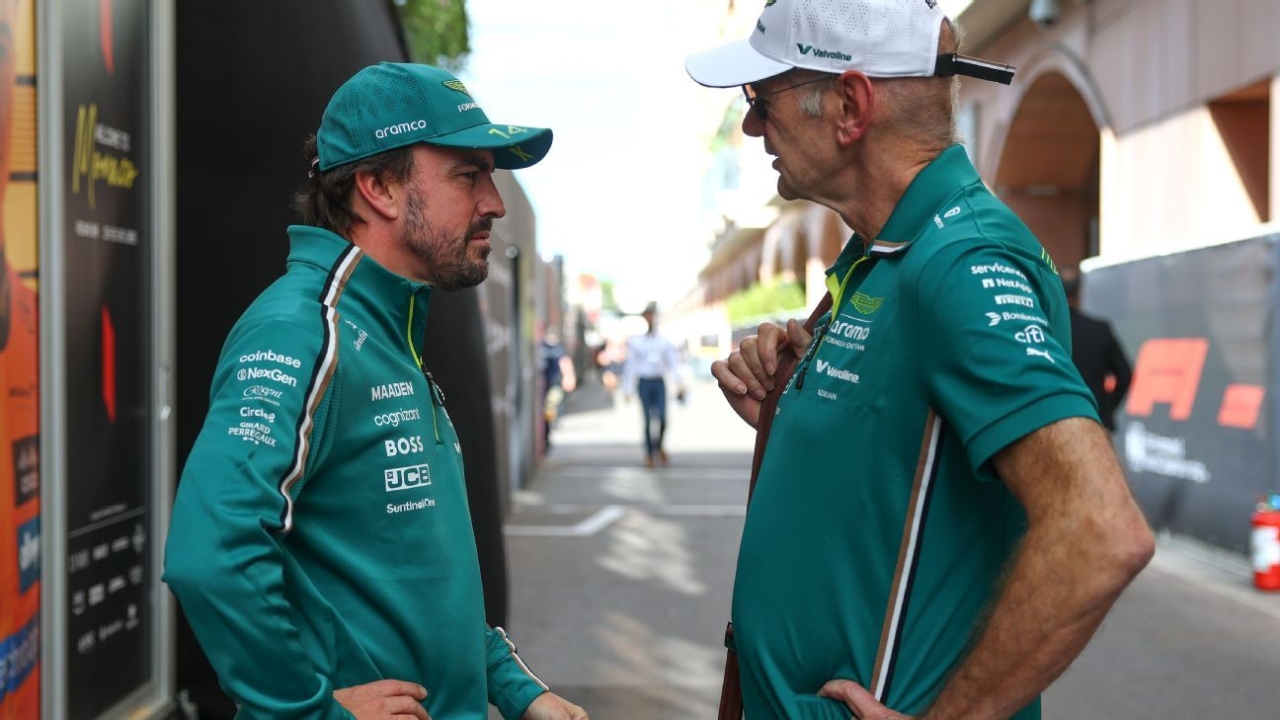
Aston Martin was anticipated to embark on a remarkable new chapter in 2026, yet it approaches the Australian Grand Prix facing a challenge from newcomer Cadillac to avoid finishing last. This predicament has left even the team’s star driver, Fernando Alonso, questioning the label of “the team of the future.”
The vehicle adorned in the iconic shade of British racing green was perhaps the most awaited of the off-season, fueled by the excitement and expectations leading up to this moment. Billionaire owner Lawrence Stroll has long viewed the recent changes in F1 regulations as the opportunity to transform the team, known for its prestigious British racing heritage, into a title-contending powerhouse. He has invested heavily at every level of the organization, including a cutting-edge new factory across from the Silverstone circuit, a new wind tunnel, high-profile signings like design icon Adrian Newey, and a unique engine partnership with Honda.
However, concerns began to surface as soon as preseason testing commenced. The team arrived late to F1’s private ‘Shakedown’ event in Barcelona and spent the subsequent two weeks in Bahrain accumulating minimal mileage while posting disappointingly slow lap times. Stroll was seen pacing angrily in the paddock during the Bahrain tests as the extent of the issues with Honda’s engine became evident. Heading into the first race, optimistic analysts placed Aston Martin 10th out of 11, while ESPN ranked them last, behind Cadillac.
The situation has been stark. Aston Martin has privately acknowledged its significant troubles, and a swift resolution seems unlikely, even with F1’s new regulations designed to assist struggling manufacturers in catching up. Newey has assured that improvements will be made in the coming months, but there is a growing sentiment in the Formula 1 paddock that the team may remain in a difficult position for an extended period.
– Bold predictions for F1 in 2026: Ferrari will end its title drought
– Australian Grand Prix 2026: Race start time, how to watch, full schedule
– Does winning first race of F1’s new era guarantee title?
– The craziest F1 start ever? Why Melbourne might see chaos from the off
How has this happened?
Those with a good memory may find the current situation reminiscent of past events. Honda has entered a new regulation cycle significantly behind its competitors, with an engine that is underpowered, unreliable, and overweight. A similar scenario unfolded in 2015 when it partnered with McLaren, a situation that saw little improvement over three challenging seasons. Ironically, star driver Alonso was one of the two drivers who had to endure the brunt of those difficulties.
This time, the issues are manifold. Honda’s engine was heavy from the outset, and Aston Martin has struggled to integrate it into Newey’s new chassis. Evaluating its true performance has been complicated by this and other factors—some Spanish media reports indicated that it vibrated excessively during Bahrain testing, preventing the car from being run anywhere near full power, even though full power appears to be significantly lower than that of competitors like Mercedes, Ferrari, and Red Bull. Most concerning is the engine’s apparent lack of reliability, which raises further alarms since the upper limits of an engine’s performance capacity often reveal the most significant reliability issues. Overall, Honda’s engine appears fundamentally flawed across multiple dimensions.
The recurrence of these issues for Honda is perplexing. Some have attributed it to the decision made by the Japanese manufacturer at the end of 2021 to exit the sport, which resulted in a freeze on any developments beyond the existing engine that aided Red Bull and Max Verstappen in securing titles at the start of this decade. The company reversed its decision in early 2023, largely due to the current regulations in which they had a hand in shaping. Some argue that the 18 months Honda spent contemplating its exit from F1 contributed to the current predicament, as its engine program was effectively put on hold during that time.
A counterpoint can be made by looking at Honda’s former partner, Red Bull, which has developed its own engine from scratch—beginning in late 2022 after a proposed collaboration with Porsche fell through—and appears to be entering the new season in a competitive position that few anticipated at this stage. New manufacturer Audi has also commenced the new season in good form with its first-ever F1 engine. The rationale behind Honda’s time spent believing they would not be racing beyond 2026 is difficult to substantiate. Former team boss Andy Cowell, who returned to a Honda-facing role after Newey’s arrival, has spent much of the winter at the company’s Sakura facility, and it is evident that Lawrence Stroll is already making significant demands. Notably, on the final day of testing, it was Honda that issued a press release stating that the team’s running would be limited—typically, such announcements would come from Aston Martin.
F1’s regulations include a mechanism that could allow Honda to catch up—referred to as ADOU, or Additional Development and Upgrade Opportunities—granted to any engine producing over three percent less power than the highest-performing manufacturer by midseason. Honda appears likely to meet that threshold, but this alone does not guarantee that it will be able to close the gap, even if given additional resources and flexibility to address the issues. The existing problems must be resolved first, and those seem considerable, all while its competitors continue to gain insights into the complex new power units with each passing week.
Is everything on Honda?
While Honda is undoubtedly a significant part of the problem, the blame cannot rest solely on them. The challenges the team faces have exposed deeper issues that could have been anticipated by anyone observing Stroll’s ambitious vision of assembling a high-caliber team of talent and resources. One such issue was the assumption that bringing in Newey would serve as a panacea for performance.
The design of his first Aston Martin F1 car garnered attention in Barcelona, although it is challenging to distinguish between actual technical merit and the aura surrounding the Englishman as the sport’s most successful car designer. A notable viral video shortly after Aston Martin’s car first emerged from the garage in Barcelona compared the car’s beauty to the Mona Lisa and the Sistine Chapel, thanks to a unique approach to the assembly of the rear wing compared to its competitors. Such comparisons now seem to have been overly optimistic, as the car appears to be behind schedule due to the delayed arrival of Aston Martin’s wind tunnel and Newey himself, who only joined in April of last year following a period of gardening leave after leaving Red Bull.
Moreover, Newey’s presence at the team signifies something broader. His signing was perceived by many as the crucial missing piece of the puzzle. Initially, there was widespread enthusiasm, as Newey, known for building winners wherever he has worked, was set to design a car for Alonso, with whom he had never previously collaborated. This combination was undoubtedly enticing. However, Newey’s hiring also had another consequence.
Each time Stroll has made a significant engineering hire, it has had the unintended effect of undermining the previous one. Stroll appointed former McLaren CEO Martin Whitmarsh to a prominent leadership role in 2021, but the arrival of former Mercedes engine expert Andy Cowell marked the end of Whitmarsh’s tenure with the team. Former Red Bull technical expert Dan Fallows was an early high-profile signing, but Newey’s arrival significantly overshadowed him. Cowell’s position was also notably weakened by Newey’s hiring, and ESPN understands that Cowell is expected to depart the team permanently later this year.
This is merely the beginning. The frequent changes in key leadership roles indicate a substantial overhaul at every level—ESPN understands Aston Martin hired 250 new employees in 2025 alone, and the team has expanded from around 400 during its time as Force India to over 1100 in its current form. This rapid growth might have been more manageable with stability and clarity at the top, but Stroll’s impatient and impulsive hiring practices have created a leadership vacuum within the organization. This is detrimental for any company, and in a crisis like the one Aston Martin is currently experiencing, it becomes even more apparent.
Newey’s capability as a leader may also be in question. Observing one interview with him reveals that his strengths do not lie in charisma. While the role of the F1 team principal has evolved in recent years to favor individuals with engineering backgrounds, such as McLaren’s Andrea Stella or Red Bull’s Laurent Mekies, a strong character is still typically needed at the helm to serve as a spokesperson. Newey’s former Red Bull boss, Christian Horner, exemplified this—whether in good times or bad, he would address the media on behalf of the team.
In contrast, during the two weeks in Bahrain, Newey declined to engage with the media, while Stroll also remained largely silent. The uninspiring Mike Krack—another individual whose position has been undermined by the arrival of other talent—along with team representative and former race driver Pedro de la Rosa, were left to face the media and explain the team’s challenges. Teams lacking clear leadership often struggle in moments like this, and the fact that both Newey and Stroll chose not to take accountability speaks volumes about the internal dynamics of the team.
What happens to Alonso now?
The pressing question is what lies ahead for one of Stroll’s original high-profile signings, Alonso, who will turn 45 later this year. Stroll’s son, Lance, appears to have a contract that allows him to drive for as long as he desires, but Alonso’s future, whose contract expires at the end of this season, has always been a significant topic of discussion closely tied to the car’s performance this year. Alonso has not secured a title since 2006 or a race win since 2013, and he returned to F1 in 2021 with the memorable tagline ‘El Plan’—his pursuit of that elusive third world championship. This did not materialize with Alpine, but he transitioned to Aston Martin, attracted by Stroll’s ambitious vision to fundamentally alter the competitive landscape under the new regulations.
After all the anticipation and waiting, Alonso seems poised for another frustrating year. He is widely regarded as the most complete talent of the modern era, yet he may also be remembered as one of the most unfulfilled talents in the sport’s history—the fact that this is the case despite having two world titles underscores how highly regarded he is within F1. Alonso famously criticized Honda for its “GP2 engine” at its home race in Japan during the challenging times at McLaren, and it is nearly impossible to envision him being any more diplomatic this time around.
One potential advantage for Alonso in terms of remaining in Formula 1 could be that the pool of drivers interested in approaching Stroll has likely diminished significantly in recent weeks. Even if Aston had entered this new era of F1 slightly off the pace but with a solid foundation and a clear trajectory for improvement, they would have been an attractive option for any driver considering a move after this season.
Reports from last year in Italy indicated that Charles Leclerc had discussed Aston Martin as a potential destination should Ferrari falter in this regulatory cycle. It is difficult to see that option appearing appealing now. Joining Aston Martin at this juncture would be akin to boarding a lifeboat on the Titanic after it struck the iceberg. Additionally, it is reasonable to assume that Stroll’s long-standing ambition to recruit Verstappen from Red Bull is now unfeasible. Verstappen already seems to be dissatisfied with the new regulations—it is hard to imagine convincing the Dutch driver to pilot a car he does not enjoy that is also significantly off the pace.
Whether Alonso even wishes to remain beyond 2026 is uncertain, and his sentiments will likely become clearer in the opening weeks of the season. Typically, this would be a primary concern for everyone at Aston Martin. However, the magnitude of the issues is so profound that even Alonso’s feelings seem secondary as the team heads to the Australian Grand Prix.
Source: espn.com
