
FIA implements last-minute adjustment to qualifying ahead of Japanese GP due to driver apprehensions.
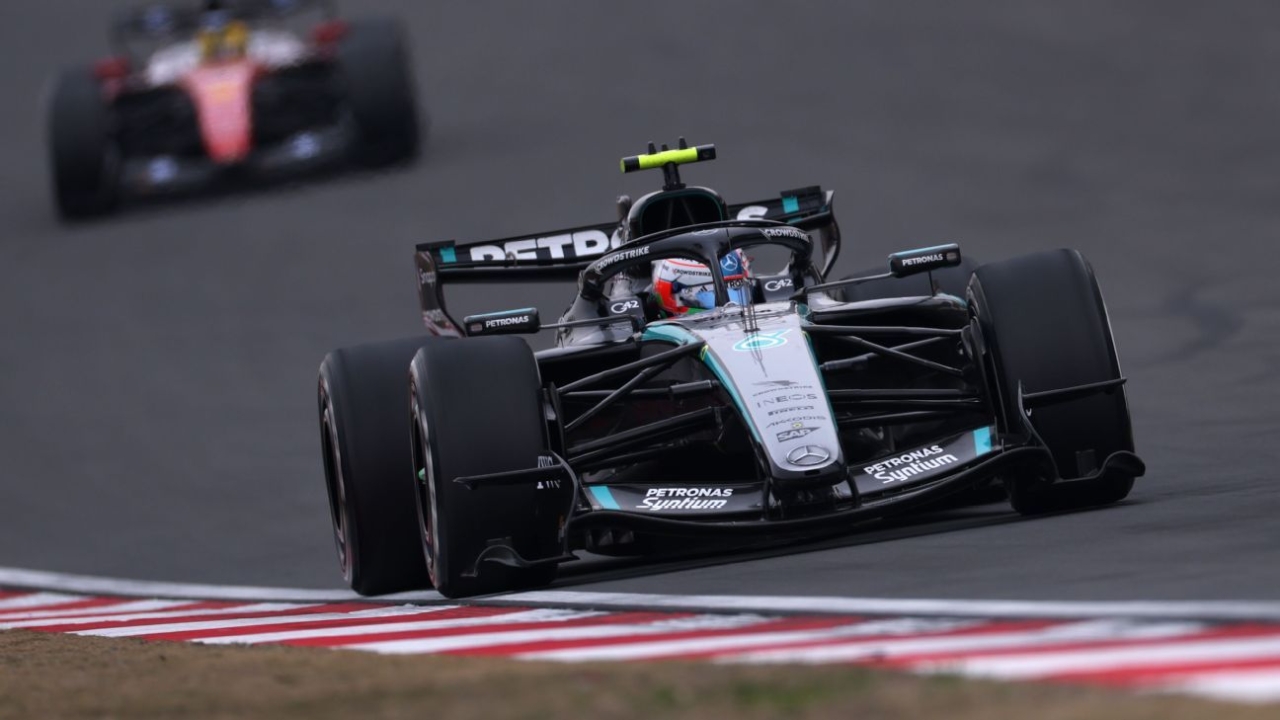
The FIA, the governing body of Formula 1, has adjusted the regulations for this weekend’s qualifying session at the Japanese Grand Prix due to concerns that drivers might need to concentrate on energy harvesting during high-speed track sections.
The new power unit regulations for 2026 have heightened the focus on electrical power this season, influencing how drivers approach both qualifying and races.
A significant alteration has been the requirement to harvest electrical energy during qualifying laps, leading to a reduction in car speed towards the end of straights, even when drivers maintain full throttle.
New methods for energy harvesting have not been well-received by drivers, with four-time champion Max Verstappen describing the latest generation of F1 cars as “Formula E on steroids.”
This season, the FIA has established a maximum energy recovery limit for each qualifying lap, which was initially set at nine megajoules of electrical energy for Suzuka.
However, during simulations prior to this weekend’s race, teams observed that such a high limit promoted excessive lifting and coasting—where a driver eases off the throttle before braking for a corner—and super clipping—where the V6 engine is partially utilized as a generator to recharge the battery.
To reduce these practices, which can appear unnatural to viewers watching onboard footage, the FIA notified teams on Wednesday that the limit would be decreased to eight megajoules.
This modification translates to four seconds less of super clipping per lap, and the FIA anticipates that cars will be approximately 0.5 seconds per lap slower due to the reduced energy available for deployment.
“Following discussions between the FIA, F1 teams, and Power Unit Manufacturers, a minor adjustment to the energy management parameters for Qualifying at the Japanese GP has been agreed upon with the unanimous support of all Power Unit Manufacturers,” stated the FIA.
“To ensure that the intended balance between energy deployment and driver performance is preserved, the maximum allowed energy recharge for Qualifying this weekend has been lowered from 9.0 MJ to 8.0 MJ.
“This adjustment reflects input from drivers and teams, who have highlighted the significance of keeping Qualifying as a performance challenge.
“The FIA acknowledges that the initial events under the 2026 Regulations have been operationally successful, and this targeted refinement is part of the standard optimization process as the new regulatory framework is further validated in real-world conditions.
“The FIA, along with F1 teams and Power Unit Manufacturers, continues to support advancements in energy management, with additional discussions planned in the upcoming weeks.”
– Verstappen vs F1’s new rules Every complaint this season — and our verdict
– Verstappen ejects F1 journalist from media session
– Japanese Grand Prix 2026: Race start time, how to watch, full F1 schedule
While most drivers either welcomed the adjustment or stated it would have little effect, Haas’ Oliver Bearman expressed his opposition.
“I mean it’s just making us even slower,” he contended.
“On one hand, we don’t have to do any lift and coast anymore, which is probably a bit better for us, but it just means we have to do a lot of… I mean we still have to recharge the energy and we spend a lot of time just with no energy because we’re losing one megajoule compared to what we had on the sim and prior to coming here.
“I think there are better ways to achieve the same outcome. If we could harvest at negative 350 kilowatts while on full throttle, I think it would make everyone’s lives a bit easier. But this is also a solution, I guess.”
Source: espn.com
