
F1 projected finishing order for 2026: Which teams lead with the new vehicles?
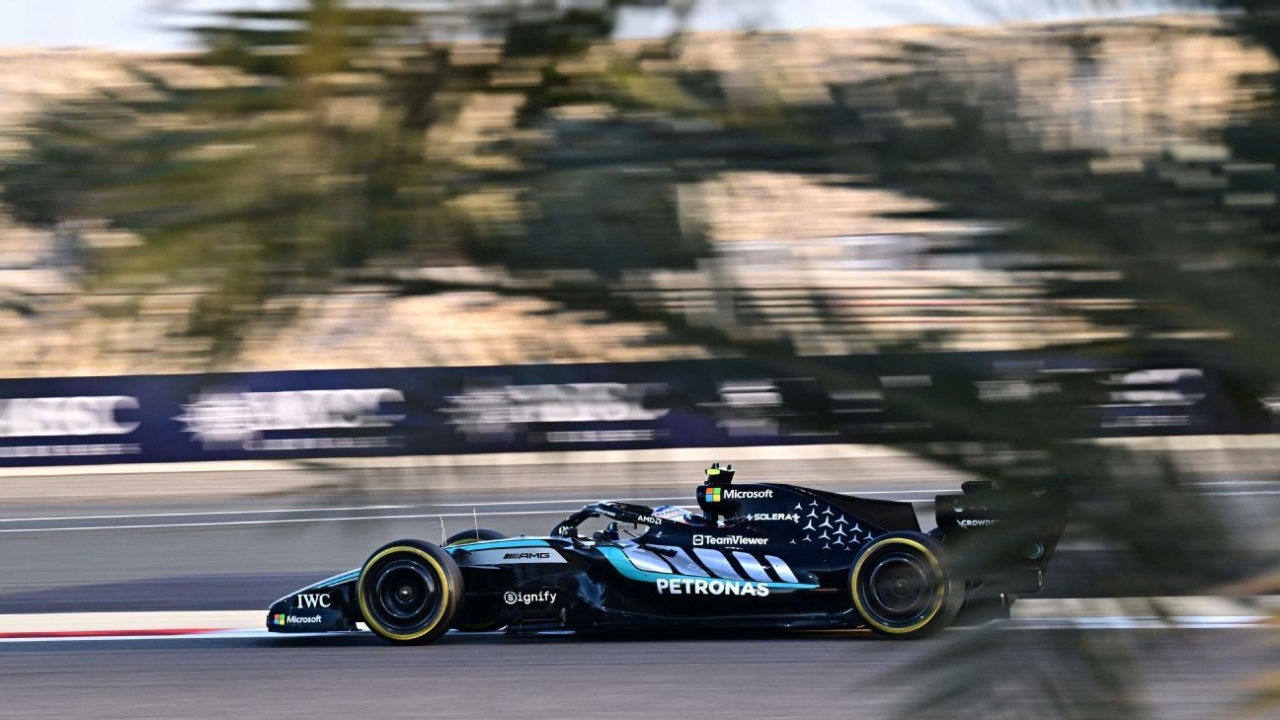
All that remains is to await Australia. Following the shakedown in Barcelona and two three-day tests in Bahrain, Formula 1’s preseason activities have concluded, with the next track session scheduled for March 5 in Melbourne.
Before reaching Albert Park, however, ESPN has analyzed the lap charts and consulted sources throughout the pit lane. Based on the data and the impressions from each garage, Laurence Edmondson and Nate Saunders share their insights and present a projected running order for the 2026 season.
1. Mercedes
Bahrain testing laps completed: 714 (6th most)
Bahrain testing best time: 1:32.803; +0.811 (2nd quickest)
The data: Kimi Antonelli recorded Mercedes’ fastest time of the week with a 1:32.803 on the second day, approximately 0.8 seconds behind the best time set by Charles Leclerc on the final day. While this gap may appear significant at first glance, a considerable portion can be attributed to Leclerc benefiting from superior track conditions on the evening of day three and utilizing tires that were a step softer than those of Antonelli.
A notable aspect of Mercedes’ single-lap performance was consistently lower top speeds on the pit straight at the start of the lap. For instance, during his fastest lap on Friday, George Russell was 8 kph slower than Leclerc, which meant he had already lost 0.2 seconds of lap time to the Ferrari by the time he braked for Turn 1. Russell also lifted and coasted approaching Turns 4, 11, and 14 when comparing his fastest lap to those of his primary competitors.
This could be a characteristic of how the Mercedes power unit manages and utilizes its battery power throughout the lap, but a comparison with Lando Norris’ Mercedes-powered McLaren indicates that higher top speeds on the pit straight and less lifting and coasting into corners are quite feasible. More likely, a significant portion of Russell’s 1.2-second deficit to Leclerc on Friday can be attributed to Mercedes employing a less aggressive energy-deployment strategy for its quickest lap.
More indicative of the overall situation was the pace of Antonelli and Russell during long runs. Although they did not conduct a race simulation at the second Bahrain test for a direct comparison with Ferrari, McLaren, and Red Bull, glimpses of longer stints showed them consistently lapping in the low 1:36s and even the 1:35s. In contrast, Ferrari’s best long-run stints were in the mid 1:36s and low 1:37s, suggesting that Mercedes’ true pace may be hidden deeper in the data.
Of course, the potential for varying fuel loads and the unsatisfactory comparison between eight-lap runs by Mercedes and race simulations by Ferrari create a somewhat unclear picture, but it is evident why rival teams believe Mercedes has been concealing its genuine performance. — Edmondson
The vibes: It has been challenging to assess Mercedes throughout the preseason. For months, the prevailing sentiment in the paddock was that it would be the heavy favorite, based on whispers regarding its power unit, but several individuals within the team have conveyed to ESPN that they felt this notion was exaggerated by competitors. Since the beginning of the Bahrain test, downplaying expectations has been the strategy from Toto Wolff and his team. Some in the paddock suspect this is all part of gamesmanship, and we at ESPN believe there may be some truth to that as well.
Clearly, Mercedes does not appear as concerned as it has been at this stage in previous years of the ground-effect era (2022-2025). The atmosphere can best be described as quiet confidence, perhaps with a hint of historical apprehension stemming from memories of those ground-effect cars. Everyone ESPN consulted in the paddock placed Mercedes at the top, even after Leclerc’s impressive laps late on Friday. In terms of vibes, Mercedes seems content and eager to commence the season, though not yet fully ready to declare itself the outright favorite. — Saunders
2. Ferrari
Bahrain testing laps completed: 744 (4th)
Bahrain testing best time: 1:31.992 (1st)
The data: While there are no rewards for achieving the fastest time in testing, it is always advantageous to lead the timesheets. Leclerc’s 1:31.992 was 0.879 seconds ahead of the next best effort by Norris in the McLaren on day three, although the Ferrari was on the quicker C4 tires while the McLaren utilized the C3.
However, a comparison of Leclerc’s best time on the C3s — a 1:32.297 — still indicates that Ferrari holds an advantage over McLaren at specific points around the lap. Leclerc gained significant time on the McLaren in Turn 4, again through the high-speed corners of Turn 6 and 7, once more under braking for Turn 11, and finally on the straight leading to the last corner. Different harvesting and deployment strategies seem to be at play around the lap, but the overall picture appears favorable for Ferrari compared to McLaren.
Long runs tend to support this view, with Leclerc’s race simulation from Friday morning showing him with a 5.5-second lead at the virtual finish compared to Oscar Piastri’s race simulation from Thursday afternoon. The comparison is not entirely equivalent, as Leclerc’s attempt took place in the heat of the day and included an extra pit stop (a total of three), while Piastri’s was a two-stopper on a cooler track. Another Ferrari advantage not reflected in the lap-time data was the team’s race starts. Lewis Hamilton and Leclerc both executed quick getaways during practice starts, which, if replicated in races, could see them leading by Turn 1 even if they start from the front two rows.
The rapid starts have been attributed to a widely held belief that Ferrari is utilizing a smaller turbo than its competitors, which would facilitate achieving optimal boost pressure before the lights go out. It is likely that rival teams will refine their own starts as the season progresses — McLaren already appeared consistent by the end of the week — but this could still provide an edge for Ferrari. However, employing a smaller turbo may also entail some drawbacks, particularly at power-sensitive circuits where more of the lap is spent at full throttle. — Edmondson
The vibes: The Frédéric Vasseur effect is clearly visible at Ferrari. Almost everything surrounding the team’s preseason has been positive: rapid starts off the line, intriguing car innovations, and genuinely impressive times over both long and short runs, especially on the final day with Leclerc. Last year was a challenging season in terms of results, but it is evident that the Italian team recognizes that a long-term benefit of that lost season might be how early it focused on its 2026 engine and car.
Yet, despite all the reasons to jump on the Ferrari hype train at the earliest opportunity, there is a prevailing sense of calm, a hallmark of Vasseur’s leadership. There have been no overly enthusiastic interviews or exaggerations regarding the new season. Everyone in red has simply been focused on their work, avoiding speculation about the actual situation. Leclerc and Hamilton have certainly both appeared to be holding back smiles while discussing the SF-26.
A word of caution: the memories of 2022 still linger. That year, Ferrari entered a new set of regulations as the team to beat, winning two of the first three races. Everything fell apart from that point onward, and it has been difficult for anyone to confidently embrace the hype train since, so perhaps it is understandable that no one at the Scuderia is getting too carried away just yet. — Saunders
3. McLaren
Bahrain testing laps completed: 817 (1st)
Bahrain testing best time: 1:32.861; +0.869 (3rd)
The data: While McLaren achieved higher top speeds than the works Mercedes team during its push laps, overall lap time did not seem to come as easily to the reigning world champion. Data from his best lap indicates that Norris was quicker than his rivals up until the braking point for Turn 4, but time was lost in Turn 4 itself, through Turn 11, and in Turn 13.
Piastri provided a useful race simulation comparison with Max Verstappen’s Red Bull on Thursday afternoon, and when slow pit stops and an error at Turn 10 were excluded from the data, the McLaren was on average 0.1 seconds per lap quicker than Verstappen. This margin is small enough that it could easily shift from circuit to circuit, but McLaren can leave the test satisfied that it has not fallen back into the midfield due to the regulatory changes. — Edmondson
The vibes: F1’s reigning world champion team recognizes it is not the benchmark heading into this season, but it does not seem to have ever expected to be, particularly after Verstappen and Red Bull took last year’s title fight to the final round of the season. Earlier in this decade, Bahrain was the site of several disastrous preseasons for McLaren, but those days appear to have been firmly left in the past.
Zak Brown’s team now operates with the composure and confidence of one that knows it is capable of constructing a title-winning car, even if it is slightly off that mark as it approaches race one. Sources at McLaren informed ESPN that they expect the significant tire advantage enjoyed in recent years has diminished under the new regulations, but there is clearly confidence that McLaren can compete at the front if early upgrades meet their intended targets. — Saunders
4. Red Bull
Bahrain testing laps completed: 672 (7th)
Bahrain testing best time: 1:33.109; +1.117 (4th)
The data: While some rivals labeled Red Bull as the benchmark during the first week of testing, the data from week two indicates it is neither the fastest car over a single lap nor the quickest over a race distance. The focus was primarily on the Red Bull’s energy deployment at the start of the test, and while it does seem to have an advantage out of Turn 3 and Turn 4, this is not sustained until the final sector of the lap, where the Mercedes and Ferrari power units reclaim lap time on the straights.
A comparison of Verstappen’s Thursday race simulation with Piastri’s shows he was quicker on the C3 tire in the first stint, but struggled to keep pace with Piastri on stints two and three on the C1 tires — notably due to apparent degradation at the end of the final stint. The lap times were close enough that a rerun could yield a different result, but based solely on what was observed on track, the Red Bull seems to be just behind McLaren and fourth overall. — Edmondson
The vibes: Red Bull had a notably quiet Bahrain test, focusing on its work while allowing the media to concentrate on engine politics, battery management, and F1’s intriguing new start procedures. Sources have informed ESPN that Verstappen is satisfied with the current state of the RB22, which is a positive outcome given the ongoing speculation regarding his long-term future in F1.
The team from Milton Keynes had concerns about its brand-new engine project, but the sentiment is that it is in a decent position relative to the worst-case scenario. Reliability has been solid, especially when compared to the issues faced by former engine partner Honda at Aston Martin, and early fears of numerous winter stoppages proved unfounded.
Red Bull clearly does not anticipate having a world-beater at the start of 2026, but 2025 demonstrated that one is not necessary when Verstappen is behind the wheel. The Austrian team appears confident it is in contention, albeit with evident improvements needed as it adapts to its role as an engine manufacturer. If any team on the grid possesses the culture and talent to improve swiftly, it is Red Bull. As always, dismiss the energy drink conglomerate at your own risk. — Saunders
5. Haas
Bahrain testing laps completed: 794 (2nd)
Bahrain testing best time: 1:33.487; +1.495 (6th)
The data: There is an ongoing discussion regarding which team leads the midfield pack following testing, with a frustratingly limited amount of comparable data to clarify it. Haas is arguably the frontrunner behind the top four, but cases could also be made for Alpine and possibly Audi.
For what it’s worth, Haas driver Oliver Bearman utilized the C4 compound to finish seventh in the final standings at the conclusion of the second test, placing him just 0.066 seconds behind Pierre Gasly, who secured sixth place for Alpine using the softer C5 tire. Bearman also conducted a race simulation on Friday that ran concurrently with Arvid Lindblad and outpaced the Racing Bulls driver, before being surpassed by Gabriel Bortoleto in the Audi running in cooler conditions later in the afternoon.
There is a clear gap to Mercedes, Ferrari, McLaren, and Red Bull, but with unpredictability in the early races and the potential for quick starts due to its Ferrari drivetrain, Haas can realistically aim for points in the initial rounds. — Edmondson
The vibes: Gene Haas‘ F1 team has had a quietly strong test, accumulating significant mileage and avoiding major issues. Team members ESPN spoke to expressed great admiration for Ferrari’s reliable engine and its power delivery at the starts, and there are no visible signs of panic from a team that has experienced a tumultuous existence in Formula 1. Haas has always been one of the most hesitant teams to publicly or privately discuss its position in the pecking order, having had opening races that greatly exceeded expectations and others that fell significantly short.
Haas, still the smallest team in F1 in terms of personnel despite the arrival of Cadillac, will not get carried away just yet, but this appears to be a group capable of contending for points from the outset. — Saunders
6. Alpine
Bahrain testing laps completed: 667 (8th)
Bahrain testing best time: 1:33.421; +1.429 (5th)
The data: Gasly recorded the fastest time outside the top four teams, albeit using the softest compound tire in Pirelli’s range, which likely provided him an advantage over his rivals on the C4. A comparison with Bearman’s fastest lap indicated that Gasly started the lap stronger but lost time in the final sector — a trend consistent with a softer-compound tire providing an initial edge before fading. Gasly appeared to initiate a race simulation in the afternoon of the final day and was slightly ahead of Bearman’s times across the first seven laps before an apparent issue forced him to return to the pits. This was insufficient data to draw any firm conclusions, but along with the headline times, it suggests that Haas and Alpine are closely matched at the top of the midfield.
One final point worth noting regarding Alpine is that the team looked strong in testing in Bahrain last year only to disappoint throughout the entire season. While this year’s car is a complete departure from last year’s (including a Mercedes power unit instead of a Renault), the Bahrain International Circuit was one of the team’s strongest tracks in 2025, and it could be that the performance this week does not translate to other circuits on the calendar. — Edmondson
The vibes: Given its performance last year, the atmosphere at Alpine is very optimistic. The 2025 season was challenging, but the transition to Mercedes engines has coincided with a noticeable improvement across the board. Sources informed ESPN that Alpine feels revitalized by a car that appears to be at the forefront of the midfield and seemingly on the verge of regular contention for points.
Interestingly, and perhaps a strong indication of how the team expects to be in a favorable position, is that the only significant point of concern has arisen regarding its driver lineup. Gasly was one of the standout performers of 2025 and should lead the Enstone team’s competitive efforts this season, but uncertainties still surround Franco Colapinto, who struggled significantly after taking over for Jack Doohan last year. Alpine seemed pleased with Colapinto’s performance throughout testing, but it is already evident from discussions with senior team members that opinions — and consequently support for the Argentine driver — can shift rapidly. — Saunders
7. Audi
Bahrain testing laps completed: 639 (9th)
Bahrain testing best time: 1:33.755; +1.763 (7th)
The data: F1’s newest works team managed to unlock a significant amount of performance in the second test and appears ready to firmly establish itself in the midfield. Bortoleto set the team’s fastest time in the final 15 minutes of the test using a fresh set of C4 tires, and was just 0.268 seconds off Bearman’s time on the same compound. The car’s speed traces matched those of its Mercedes- and Ferrari-powered competitors, indicating that Audi has made a solid start as an engine manufacturer in F1.
Most notably, Bortoleto’s race simulation against a setting sun on Friday evening was approximately 15 seconds quicker than the one completed by Bearman earlier in the day. It should be noted that the Audi enjoyed cooler track conditions than the Haas and opted for a three-stop strategy compared to Bearman’s more conventional two-stop, but the foundation is certainly in place for a strong start to its F1 journey. — Edmondson
The vibes: The atmosphere at Audi was one of the most challenging to assess across the grid. There was a distinct “new kid at school” vibe to the team for much of the test — new Adidas gear, new sponsors, and new expectations that accompany being F1’s latest engine manufacturer. Team members ESPN spoke to seemed content with how the two weeks of testing unfolded. Audi entered F1 with the intention of being competitive over the long term, not just for the season opener in Australia, and it is clear that the mindset of the German manufacturing giant is focused on progress throughout the season.
Understanding its new power unit and subsequently making advancements with it are the key benchmarks for Audi at this stage, rather than outright performance. The team anticipated challenges with its inaugural F1 power unit and encountered them, but seemed pleased
Source: espn.com
