
Charles Leclerc: ‘Cannot tolerate’ revised qualifying regulations following error affecting his performance on the straight
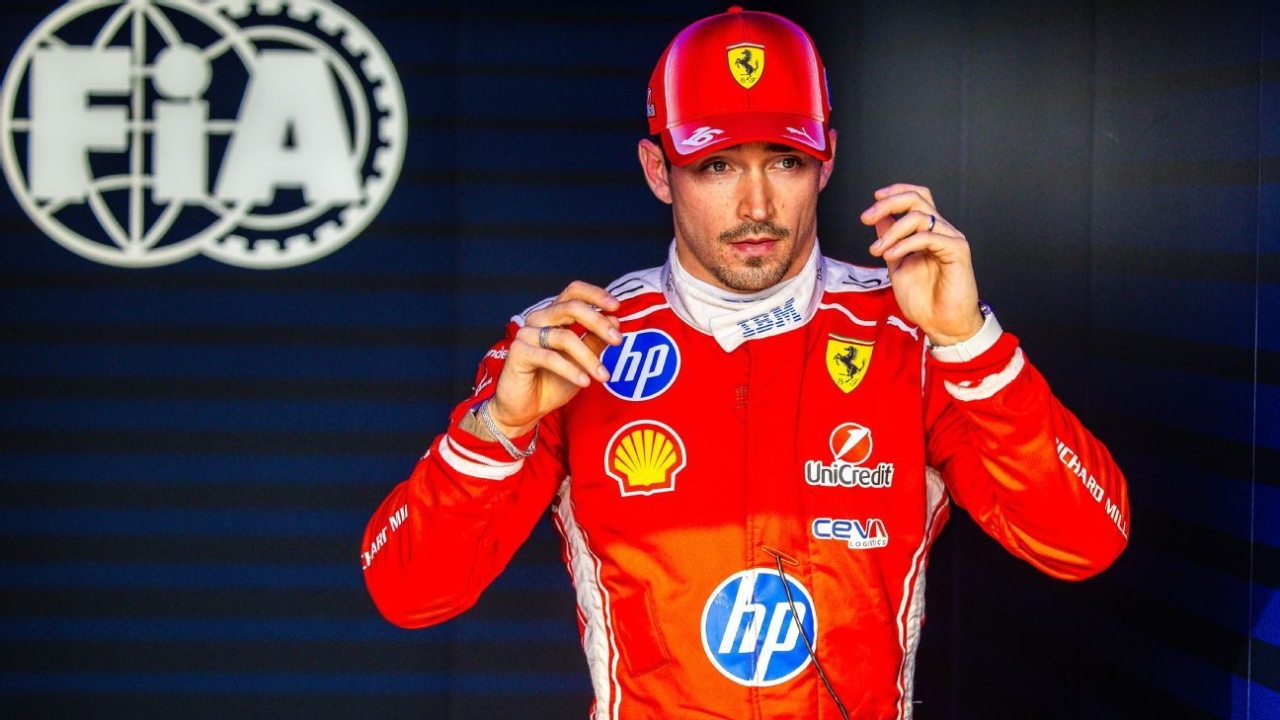
Charles Leclerc expressed his dissatisfaction with the new regulations in Formula 1 after a qualifying error at the Japanese Grand Prix disrupted his power unit’s energy deployment, resulting in significant consequences.
The Ferrari racer secured fourth place at Suzuka, trailing Kimi Antonelli’s Mercedes by over 0.6 seconds for pole position, yet he was the quickest driver in the first sector during Q3.
A slip at the exit of Spoon corner seemed to hinder his performance, but he indicated that the most detrimental factor was the energy deployment loss that occurred on the subsequent straight.
“I honestly cannot stand these rules in qualifying,” Leclerc remarked over team radio as he returned to the pits following his lap. “It’s a f—— joke.”
“I navigate corners faster, I accelerate earlier, for f—- sake, I lose everything on the straight.”
When comparing Leclerc’s fastest lap in Q2 to his best in Q3, a noticeable decline in energy deployment on the straight after the slide resulted in a loss of 0.148 seconds.
This season’s new regulations require that nearly half of the maximum power output from the power unit is derived from its battery, meaning that cars may experience a power deficit when electrical energy is exhausted or if the deployment strategy is disrupted by an unexpected throttle lift.
Several drivers, including Leclerc at the Chinese Grand Prix, have noted that minor mistakes requiring a slight throttle lift can significantly affect power deployment later in the lap.
Leclerc mentioned that the slide at Spoon corner did not initially concern him, but he acknowledged his frustration with the subsequent loss of deployment during the high-speed run to the final chicane.
“It stayed pretty calm [during the slide], I would say that when on the straights and you start losing time being flat out is where my heart rate goes particularly high,” he stated.
“But in the corner itself, I mean, these are the kinds of things that happen in Q3 and especially with my driving style I know it occurs quite often.
“In the past, it has been more beneficial than detrimental, but with these cars, it seems to penalize you more than it rewards you, as I lost a considerable amount of speed on the straight—not a massive amount, nothing close to what I experienced in Shanghai, but still, I lost some time compared to my Q2 lap, which is quite frustrating, but this is something we will analyze and seek to understand.”
– Japanese Grand Prix: Max Verstappen ‘beyond frustrated’ after Q2 exit
– Kimi Antonelli beats teammate Russell to pole in Suzuka
Leclerc stated that the new regulations no longer incentivize taking risks, instead prioritizing consistency from lap to lap.
“Honestly, I think the issue is that in Q3, that’s when you want to get out on the track and experiment with things you’ve never attempted before, taking risks that you’ve never taken before, and that has been rewarding for most of us throughout our careers, and now this is no longer feasible,” he explained.
“Every time you exceed the limit slightly, any time you experience a bit of a snap, it costs energy on the power unit side, and then you pay the price more.
“I feel like currently, consistency is more rewarding than being daring and trying something you’ve never done before, which is unfortunate and makes qualifying somewhat less challenging.
“This is an area we need to address, but it’s a recognized issue; it’s not that the FIA or the teams are simply accepting the situation as it is. There’s a lot of effort happening behind the scenes, and I hope we can find a solution as soon as possible.”
Source: espn.com
