
Cadillac’s Entry: The Impact on Formula 1 Dynamics
Cadillac is making its entry into Formula 1 with a confident approach and a long-term strategy to compete with American-built engines by the decade’s end. In the immediate future, the expectations are grounded in reality, yet this is a team determined to make an impact from the outset.
This determination will be showcased when Cadillac reveals the design of its inaugural F1 car during a Super Bowl advertisement on Sunday. This initiative serves as a declaration of presence aimed not only at mainstream America but also at a paddock that has long debated the brand’s place on the grid.
Race winners Sergio Pérez and Valtteri Bottas, recognizable figures to any Formula 1 enthusiast, will serve as the team’s drivers at its inaugural event, the Australian Grand Prix on March 8. But how did they arrive at this point? What are the team’s aspirations? And what is the background of its high-profile car reveal on Sunday?
Here’s all the essential information regarding F1’s latest American team.
Why is now the right time for F1’s 11th team?
Cadillac is the first team to join Formula 1 in ten years: Haas, owned by American toolmaker Gene Haas, was the last to enter in 2016. The landscape of the sport has transformed significantly during this period.
It is now under American ownership with Liberty Media, which has revamped the sport comprehensively. A surge in popularity and global significance, often attributed to Netflix’s “Drive to Survive” and later solidified by the 2025 blockbuster film “F1,” has set the stage for the expansion from 10 to 11 teams. This shift has turned the concept of “an American team” from a novelty into a lucrative opportunity, though the path from idea to realization was fraught with challenges.
Initially led by former IndyCar champion Michael Andretti, son of racing icon Mario, the initiative faced rejection from existing Formula 1 teams, who were hesitant to dilute a rapidly growing prize pool by allowing a new entrant. Essentially, the other teams felt they had persevered when the rewards were less substantial, so they questioned why a newcomer should benefit equally now that the situation had improved.
Even General Motors’ decision to enhance its involvement, replacing Michael Andretti in the project and officially incorporating the Cadillac name into the bid, did not initially alleviate the resistance, prompting inquiries from the U.S. Congress regarding whether F1’s position violated anti-competition laws. “We encountered numerous obstacles, with many voices telling us not just ‘no,’ but ‘never,'” stated Dan Towriss, head of TWG Motorsports, the company collaborating with General Motors on the project, in November.
Cadillac’s eventual participation came with a considerable financial concession. According to Formula 1’s regulations, new teams must pay an anti-dilution fee to compensate existing competitors for the impact on prize money, with Cadillac agreeing to pay $200 million for a position in the competition.
Why is there no American driver?
One of the initial goals of the Andretti bid was to debut with an American driver, yet Cadillac will field Mexico’s Pérez and Finland’s Bottas. This lineup was deemed the best option for Cadillac: both drivers possess race-winning experience and have been part of championship-winning teams—Pérez as Max Verstappen’s teammate at Red Bull and Bottas as Lewis Hamilton’s partner at Mercedes. Given the anticipated steep learning curve, securing experienced drivers was viewed as crucial for the team’s development.
On the sidelines is potentially the future of the team: American driver Colton Herta has been signed to an academy deal and will also compete in the Formula 2 feeder series to prepare for a future promotion to the F1 grid. This is an unprecedented move for a driver of his age and experience: Herta, 25, won nine races over eight seasons in IndyCar before transitioning. This will not only help him acclimate to the circuits and tires used in F1 but will also assist him in acquiring the FIA Super Licence points necessary for a spot on the grid.
China’s Zhou Guanyu is also signed as a reserve driver, ready to step in should Bottas or Pérez be unable to race on any given weekend, following a similar role with Ferrari last year.
When will the GM engine be ready?
General Motors’ commitment to developing engines for the F1 team by 2028 or 2029 also helped mitigate the resistance to the team’s proposal. Cadillac will utilize Ferrari power for at least its first two seasons while its engine program is established.
GM’s power unit facility is located near its technical center in Charlotte, North Carolina, among several facilities being utilized to advance the team. The primary headquarters in the U.K.—where most F1 teams are based—is situated near the Silverstone race circuit, with additional F1 operations conducted out of Fishers, Indiana.
Super Bowl, super introduction
The irony of Cadillac’s planned arrival is hard to overlook. For years, some existing teams privately (and sometimes openly) resisted the notion of a new entry due to concerns about prize money dilution and lingering doubts about whether a newcomer could genuinely enhance the championship. This concern was not merely paddock chatter—it was central to Formula One Management’s initial rejection of the Andretti Cadillac proposal in early 2024.
Now, fast forward to the launch of the Cadillac Formula 1 Team: Before the car has even competed, Cadillac has already secured a livery reveal through a Super Bowl advertisement—one of the most costly and sought-after slots in global sports and advertising—using it to promote not just a team, but the concept of F1 itself to mainstream America. This is a significant statement and underscores the seriousness of the Cadillac team.
“We didn’t enter Formula 1 to resemble every other team, to mimic what McLaren or Mercedes are doing,” Towriss recently remarked regarding the Super Bowl ad. “We aim to present our own authentic and unique approach, which will distinctly reflect an American brand by embracing that entertainment aspect.”
Is this F1’s true American team?
F1 has had an American team since Haas’ entry in 2016, but it has never fully embraced that identity in the way many fans in the U.S. had hoped. Gene Haas has expressed frustration at the suggestion that his team should emphasize its roots more and has not pursued an American pipeline in the manner Cadillac has with Herta.
Beyond Herta, there are clear indications that this team will unabashedly embody patriotism. The team’s advertisement announcing the livery reveal also featured the voice of President John F. Kennedy, while Finland’s Bottas announced his move to the team on a jet ski while holding the Star-Spangled Banner.
Towriss and Cadillac have largely overlooked Haas’ origins in their preview of the season.
“Formula 1 represents innovation on the largest stage possible, and the U.S. hasn’t had a seat at that table. To now enter with General Motors and the Cadillac brand is something we take immense pride in,” Towriss stated. “There is certainly a sense of national pride associated with Cadillac. It feels like the right moment—considering where Formula 1 stands globally, where Cadillac is as a brand, and where the U.S. is on the world sporting stage.”
What can we anticipate?
Beyond the spectacle and high-profile announcements, Cadillac has made a point of tempering expectations. New teams have experienced varied success in F1. While Haas scored points in its debut, the three new teams that entered in 2010—Caterham, Virgin Racing, and HRT—were all perennial backmarkers and folded within a few years of their entry.
However, those were different times, and F1 now has a budget cap that limits the expenditure of each team, which has significantly leveled the playing field since its implementation in 2021. In theory, this should facilitate Cadillac’s ability to catch up, but starting from scratch means expectations remain quite modest for the upcoming year.
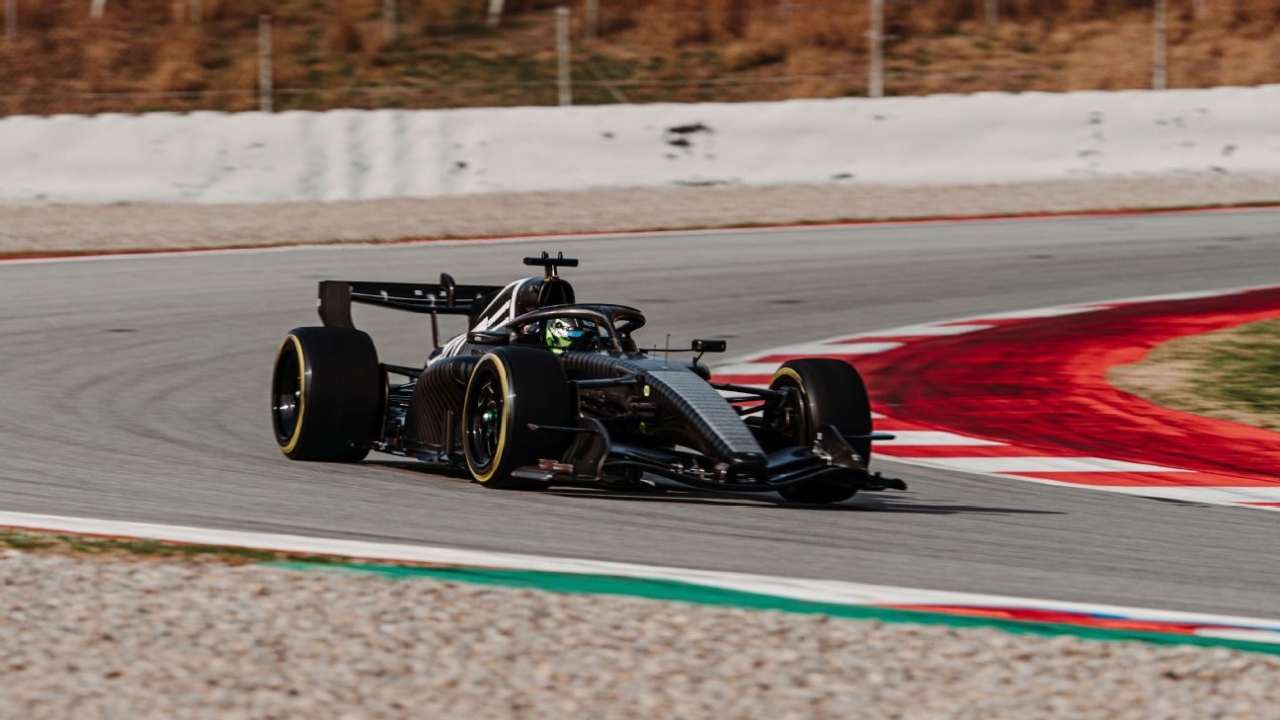
Cadillac essentially has to establish a modern F1 operation in line with teams that have been competing for at least a decade. This is no small task. Its initial objective was to be prepared enough to present a car for F1’s private “shakedown” test, which it accomplished, completing 164 laps in the process. While this placed Cadillac on the lower end of the mileage scale among the teams that participated, simply being able to show up and operate the car indicated it is on track. The sentiment from the team was very much one of embarking on a long journey, one anticipated to be challenging in the early stages.
“The biggest takeaway is that I’m proud of everyone working so hard and being here with the car,” Bottas remarked at the conclusion of the shakedown. “But we also have a long way to go. We still face numerous challenges and a significant climb ahead, but we are progressing, step by step. With each run, we are improving and becoming more cohesive as a team, addressing issues and moving forward.”
No one expects miracles from Cadillac in the early stages, but it is clear that America’s team is fully committed to Formula 1 and aims to use 2026 as a launching pad for future success.
Source: espn.com
