
USA Hockey Mandates Advancement to Improve Official Education
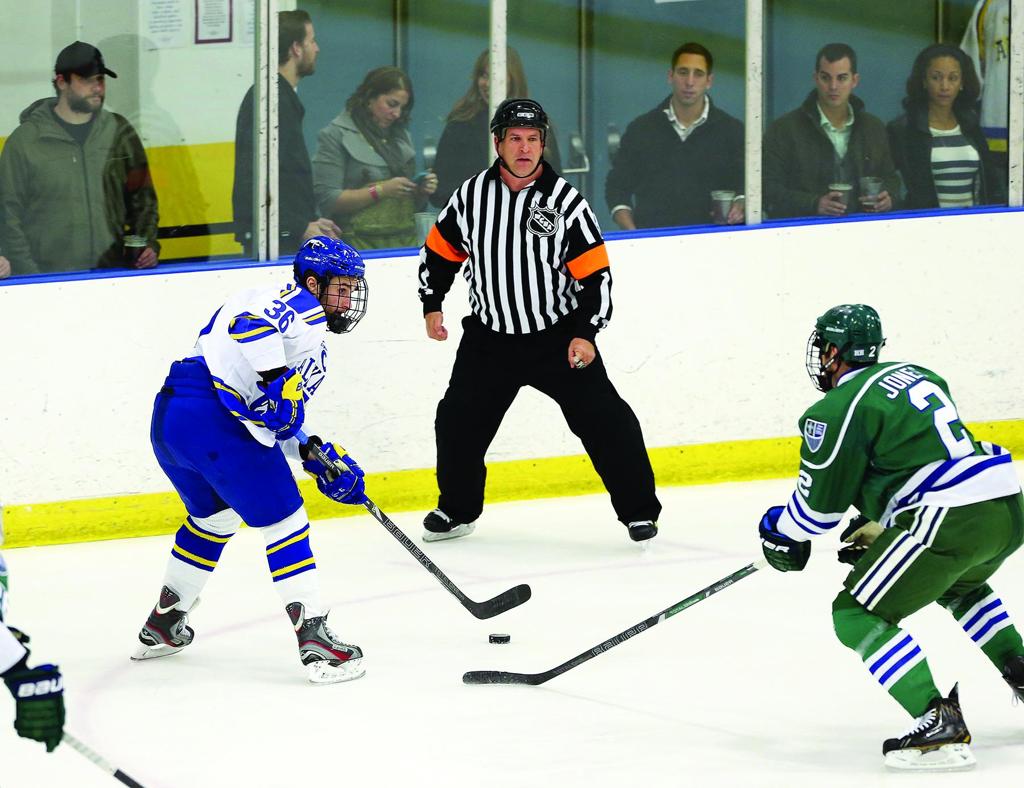
Returning game officials who visit the USA Hockey website will find a bolded “NEW FOR 2026-27” entry that states that “an official who is 16-years-old (or older) and has completed Level 1 officiating membership, must advance to Level 2 this season.” While on the surface this may not seem like a monumental change, in reality, it is the introduction of an important new approach that could make a big difference in how officials are educated and progress through the ranks of the profession moving forward.
“We want our officials to achieve the highest level of education available,” said Ken Reinhard, referee-in-chief of the Rocky Mountain District, and Chair of USA Hockey’s Officials Section. “While we may not see the total impact of this for a few years, the end result should be better educated, more prepared officials, which is what all of our teams and players deserve.”
The challenge
According to Reinhard, for too long some officials have chosen to register at the same level as the previous year, for a variety of reasons: sometimes financial (lower level means lower registration fees) and sometimes to simply avoid moving up to higher, more challenging levels requiring additional, more advanced education and training.
“What happened was people who had been in our program for a while were registering at levels much lower than what they should be,” he said. “In some cases, we had officials with 10 years of experience still registering at Level 1. We decided we had to find a way to stop this.”
The solution
Reinhard said USA Hockey first tried normalizing registration fees, so that Level 1 was lower and Levels 2, 3 and 4 had the same financial impact. That didn’t work. So, organization leadership agreed that making advancement mandatory was the right next step. Updating educational curriculum was an important part of the process.
“We had to return to being an education organization, and ultimately, we want officials to be able to access and progress in their education,” said Reinhard. “We had to say that no one could park themselves at a level and expect to stay there any longer. We wanted officials to progress. Our responsibility was to update what we were teaching at seminars and including in our online video modules, so that Level 1 officials were getting the very basics of officiating, and then progressing from there. The idea is that by the time you get to Level 4, four years into the program, you now have accomplished education in the four-person system on how to handle altercations, and things like multiple penalty scenarios, nuances to the rules and advanced positioning. The whole idea was to go back and break down the education system into manageable bits that people could absorb.”
Part of an Education Evolution
The mandatory advancement component is another in a string of updates in recent years to USA Hockey’s officiating education program. Like the update to its tenured program and a re-vamp of the online learning management system, the new approach is a modernization of previous processes and designed to make things better – for officials, and the game itself.
Reinhard says that currently the only mandatory advancement is for a Level 1 official. He expects the approach to be in place for higher levels in future years once new curriculum is introduced.
“The whole idea is to drop barriers to entry, make it easier to become an official and get on the ice,” said Reinhard. “And with that, improve the education system for our officials and improve accountability for training at the local level so that they progress appropriately. We’ve started with some basic things. It’s still evolving.”
