
How debuting competitors are getting ready for the Masters
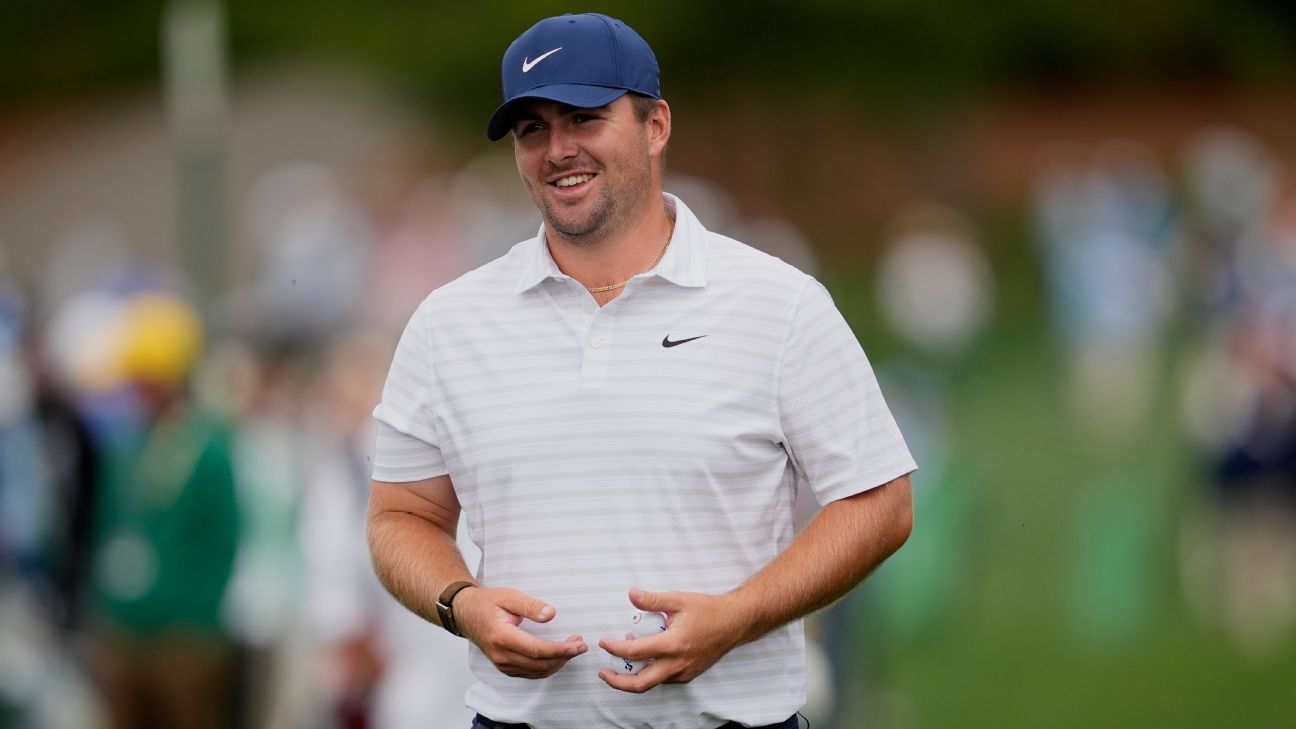
AUGUSTA, Ga. — Andrew Novak dreams of Masters highlights. The YouTube compilations, vintage final-round broadcasts, and shot montages have all flashed before his eyes numerous times.
Intense dedication. Aspirational learning. Novak compares it to reviewing football footage, a pastime he has transformed into an emerging podcast, but asserts that this experience surpasses that. He challenges the general, Masters-enthusiastic audience: no one has viewed the tournament more than he has.
“I would match my viewing hours against just about anyone,” Novak stated. “The sheer volume of time I’ve spent watching.”
He can effortlessly recall the breaks of specific putts on particular greens. Memories of watching players — from Tiger Woods to Fred Couples to Jordan Spieth — execute both notable and routine shots are firmly etched in his mind.
Every April, Novak prepares his sanctuary for his favorite week of the year. Multiple feeds on various televisions, numerous alternate broadcasts, and the Masters website post-round to track every player’s shot, Novak wants it all.
“I’ll analyze players’ rounds and observe their strategies. I’ve noted specific pin placements to avoid and how to approach certain shots,” Novak explained, pausing briefly. “Of course, that’s not … That’s not the authentic experience. Yes, I haven’t been there and done it.”
During our conversation at the Players Championship in March, Novak had just missed the cut and described his game as “kind of lacking,” but this outcome does not deter him from looking forward. He still struggles to comprehend that this April he will not be on the couch but standing on the first tee of a course he knows intimately.
“I genuinely feel I understand the course better than the average first-timer,” Novak remarked. “That said, I’m sure when I step onto the first tee on Thursday, I’ll be completely numb.”
It has been 47 years since a player won the Masters in their debut, with Fuzzy Zoeller being the last. Many players assert that triumphing here necessitates years of experience and near misses (see: Rory McIlroy), a sentiment that does not bode well for this year’s group of first-time Masters competitors, arguably one of the strongest in recent memory.
“To be honest, if you’re fortunate enough to win at this venue, it’s likely going to happen later in your career. It won’t be during your first appearance,” two-time Masters champion Bubba Watson stated. “Just enjoy it. You want your first experience to be about enjoyment, absorbing everything, learning, and preparing for your next opportunity here.”
Among the 16 debutants who are not amateurs, there are 12 PGA Tour victories and 12 DP World Tour wins as well. This is not merely a group of talented rookies; they also possess a level of winning experience that is typically not found in such a collection of players. While the prospect of any of them wearing the green jacket by Sunday may seem unlikely, the intrigue lies in the same question that haunts every player aspiring to join the most prestigious field in the sport.
“How do you get ready for your first time at Augusta National?”
“You want to embrace it; you don’t want something significant to feel insignificant,” first-timer Ryan Gerard stated. “At the same time, I’ve played countless tournaments, and I want to treat this as just another golf event.”
THIS JOURNEY TO that coveted position on the first tee Thursday has taken first-time players from Melbourne to Memphis, from East Africa to East Lake, and across the globe. Yet even though some were aware of their qualification before the year concluded, the reality did not hit until they received the official invitation from the Masters.
“When I received the invitation in the mail and read it, I was at my childhood home with my younger brother and my parents,” Michael Brennan recalled. “We all embraced and started jumping up and down. It was a surreal moment.”
As April approaches, the surreal feeling gives way to reality, and the nerves they anticipate feeling on the first tee begin to surface. When Brennan visited Augusta prior to the tournament, he and his caddie meticulously reviewed numerous shots, chips, and putts, striving for some level of familiarity.
“If I could play 20 rounds there, perhaps it would be a bit different,” Brennan noted.
Everyone has a unique approach. Many seek guidance from fellow countrymen or friends on tour who have participated before. Others delay or focus solely on the tournament they are playing that week. Some accept that no amount of preparation can fully equip them for the actual week.
“I feel like even if I play one more extra round, it’s challenging to grasp all those little details,” Finland’s first-timer Sami Välimäki remarked.
There are two ways first-timers can make scouting trips to Augusta before the Masters. Every player is granted access to the grounds for two days prior to tournament week, which they can use at their discretion, arranging tee times through the club. As Chris Gotterup, a four-time winner and the most prominent first-timer this year, recently explained, players can also access Augusta National and bring up to two guests if they play with a member. However, he never intended to take advantage of that opportunity until he was certain he would be in the event.
“I said I can’t go over there until I play, or else if I’m retired, then I can go over,” Gotterup stated. “I don’t know; I think this is such a special event, and it’s something I wanted to experience while playing rather than watching. I can be a bit stubborn, and it wouldn’t be an enjoyable experience for me. Even though it would be a bucket list for many, I want to play, and I want to be part of it.”
Back in March, Välimäki mentioned that he was likely to choose a trip back to his home country instead of attempting to fit in a scouting trip to Augusta. Unlike Novak, he stated he doesn’t watch past Masters videos and is approaching the tournament somewhat unprepared.
“In Finland, it’s always too late to watch the Sunday finish anyway,” Välimäki said. “This way, you don’t have too many expectations. You haven’t hit a good shot yet, but you also haven’t hit a bad one.”
Still, it is uncommon for players, especially those making their debut, to forgo the opportunity to visit golf’s cathedral before the entire sport converges on it. How each of them approaches those practice rounds can also differ.
A few first-timers made trips in the fall, when the golf course’s conditions were vastly different from what they will encounter in April. Even as recently as March, players who visited Augusta were well aware that the course they played would not be the same as the one they will face this week.
“I’m trying not to base everything on those two days because the greens were much slower,” Kristoffer Reitan stated. The 28-year-old Norwegian, who qualified by finishing in the top 50 of the OWGR last year, felt he needed to experience the course in a more relaxed setting first. “It was beautiful.”
So what’s the strategy upon arriving on the property? Play the course as if enjoying a round with friends? Focus intently on every shot and take time on the greens as if it were a practice round during tournament week? Or simply concentrate on overcoming the mystique of Augusta National before the competition begins?
“It’s a place where you don’t mind spending five or six hours on a practice round,” three-time DP World Tour winner and first-timer Marco Penge said. “I’m definitely going to be hitting a lot of shots.”
It’s hard not to, especially when some of the lies, angles, and challenges Augusta presents are difficult to replicate elsewhere. Some first-timers, like Johnny Keefer, a 25-year-old full of confidence, did not impose any limits on their preparations. Even Augusta’s well-known sidehill, downhill, and uphill lies can be practiced with enough effort.
“Many of the places I practice are quite flat. But yes, I’ve tried to create makeshift scenarios to simulate it,” Keefer said. “It’s just very different. It’s very unique, and that’s what makes this golf course special.”
When Keefer visited in early March, he played two rounds with the mindset of enjoying the golf course rather than trying to analyze it (he even played the par 3 course). It was beneficial that during his first time playing the 15th hole, he hit his second shot to 10 feet and made an eagle.
As Keefer highlighted, spending any time around Augusta’s 18th for the first time makes it clear why it has been so long since a player won in their Masters debut. Whether a player has exhausted all their pre-tournament rounds or spent every day of this week grinding, the nuances of this place cannot be crammed into a few days, perhaps not even over several yearly visits.
“Clearly being here as a rookie, there are so many small intricacies to the course,” said Denmark’s Rasmus Neergaard-Petersen, who qualified by winning the Australian Open last fall. “I have three or four days to learn what other players have been [learning] by playing here 10 or 20 times.”
“It’s a lot of preparation, just like I would approach it for a regular tournament, but I feel that once you step on the grounds, the first tee here feels less like a typical practice round and more like a truly enjoyable experience, and you’re just trying to soak in the moment,” Ben Griffin said. “There’s no doubt I’m getting a good feel for all the areas around the greens and everything like that, but I’m trying to have as much fun as possible.”
Ignorance can be both a hindrance and a liberation, as can the desire to prepare for every single detail. Yet some players cannot resist the urge to cover all their bases, seeking every piece of knowledge or advantage they can before even reaching Amen Corner, even down to eliminating what Gerard refers to as the “awe factor.”
“You don’t want to be walking down 11 for the first time on Monday and be starstruck; you want to get all of that out of the way,” Gerard, who qualified by traveling 10,000 miles to play in the Mauritius Open to secure a spot in the top 50, said.
Gerard has been preparing since last year, exploring every possible avenue. He has analyzed specific shots he might need to execute and mapped them out well in advance. He has sought information only from players who share his mindset, visited the golf course for practice rounds, and mentioned he would attempt to play with a member to gain local insights. He’s even adding a new club to his bag.
“I have a mini driver that I’m building for some of the tee shots on 2, 10, and 13, and maybe the second shot into 8 that’s a little more draw-biased for me as a right-hander,” Gerard explained. “It’s challenging entering as a first-timer because you don’t know what to expect, so you want to try to get ahead of the curve in any way possible.”
It’s not just what the course demands from a golfing perspective that is perplexing; those who have battled with Allister McKenzie’s masterpiece and have succumbed to the mental challenge can attest to that difficulty. The first-timers are well aware of this as well. They just haven’t experienced it and won’t until they tee off on Thursday when every shot matters.
“There’s not going to be a shot that I know I’ll be more unwell on than the first one,” Novak stated. “I know I won’t be able to feel anything, so hopefully, I’ll hit anything on the planet, and maybe by the second hole, I’ll start to feel things again.”
In this regard, Jacob Bridgeman may have a slight edge. The Genesis Invitational winner, who has achieved three top-10 finishes this season, has had the opportunity to play Augusta National well before this week, not just once but twice during his time as a golfer at Clemson — once as a freshman and once as a senior.
“I got to have that first taste to see it in person and observe how different it was from TV,” Bridgeman noted.
Bridgeman also experienced vastly different course conditions and outcomes during his college years. His first round there was a windy, cold afternoon with gusts up to 35 miles per hour. He made no birdies, one bogey, and 17 pars. In his senior year, he enjoyed a perfect day and shot 5 under with eight birdies.
While he hopes that his college experience will provide him with some advantage, Bridgeman is not overly concerned about his preparation, though he is doubtful that his previous rounds will alleviate the nerves he and his first-time peers will feel on Thursday.
“Perhaps the practice rounds that week with patrons will help,” Bridgeman said. “But I think come Thursday, with all those people around the first tee, we’ll all feel it.”
This is why the question of preparation can be so unpredictable — too little and you feel unready, too much and you feel overwhelmed.
“I want to ensure that I enjoy it rather than be overly serious and put too much pressure on myself,” Penge stated. “It’s a week you never want to forget.”
Learn every shot as much as you wish, attempt to hit every putt and every chip, yet come Thursday, you still have to leap without a parachute.
