
VAR assessment: Was a Newcastle player offside due to a push from Man City? Did Bernardo escape a second yellow card?
The video assistant referee generates debate each week in the Premier League, but what is the decision-making process and are those decisions accurate?
This season, we will analyze significant incidents to clarify the procedures regarding VAR protocol and the Laws of the Game.
Screenshot credit: BBC, TNT
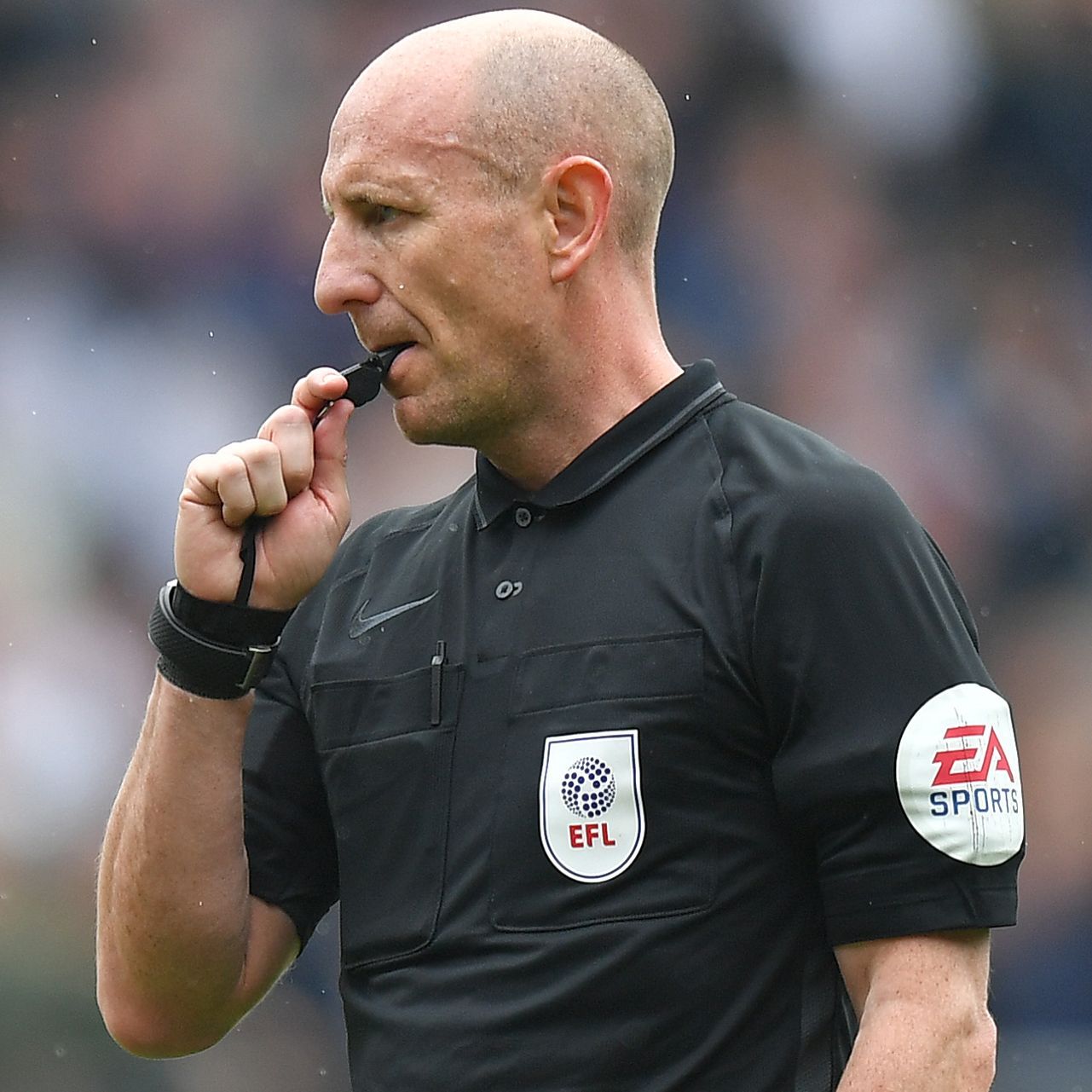 Andy Davies (@andydaviesref) is a former Select Group referee with over 12 seasons on the elite list, officiating in both the Premier League and Championship. With substantial experience at the top level, he has worked within the VAR framework in the Premier League and provides a distinct perspective on the processes, reasoning, and protocols implemented on a Premier League matchday.

Manchester City 2-1 Newcastle United
Referee: Tom Bramall
VAR: James Bell
Time: 42 minutes
Incident: Disallowed goal for offside.
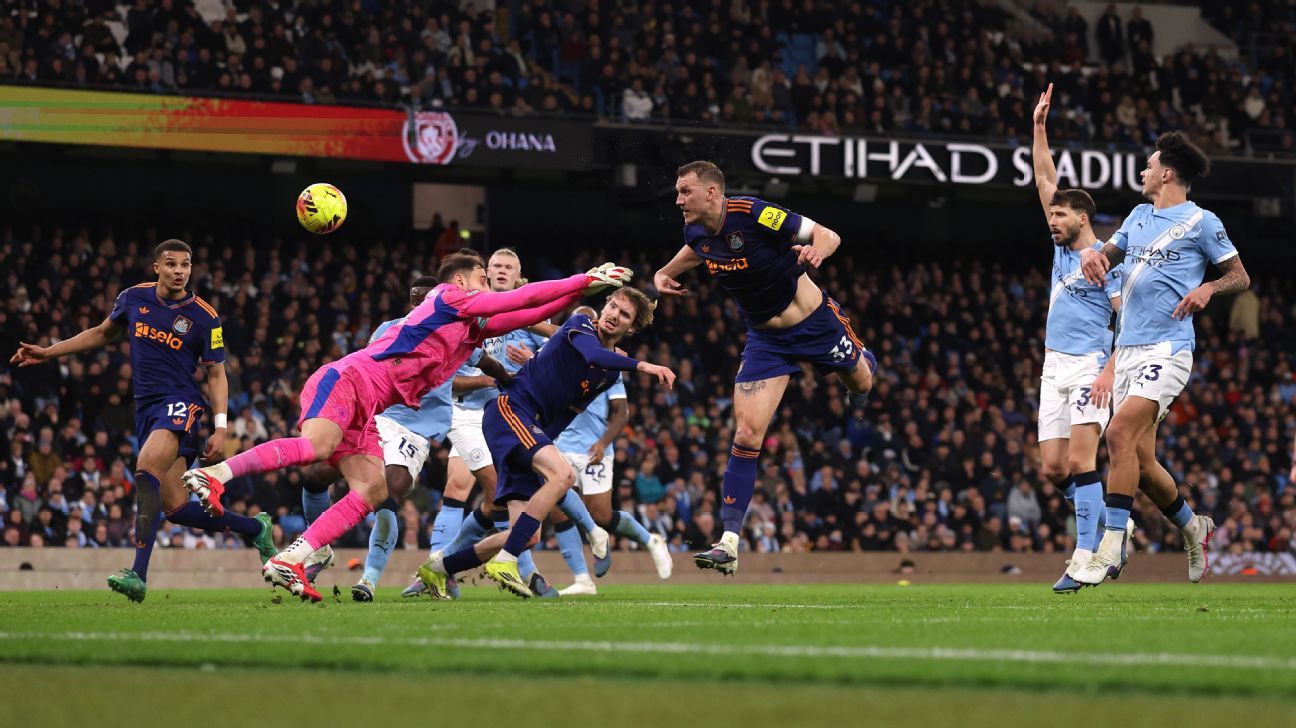
What occurred? Dan Burn of Newcastle headed in a free kick from Sandro Tonali, but the goal was ruled out for offside. However, replays indicated that Burn was in an offside position solely because he was pushed by City defender Rúben Dias.
VAR decision: The VAR reviewed and upheld the on-field decision of no goal, affirming that an offside infringement had taken place.
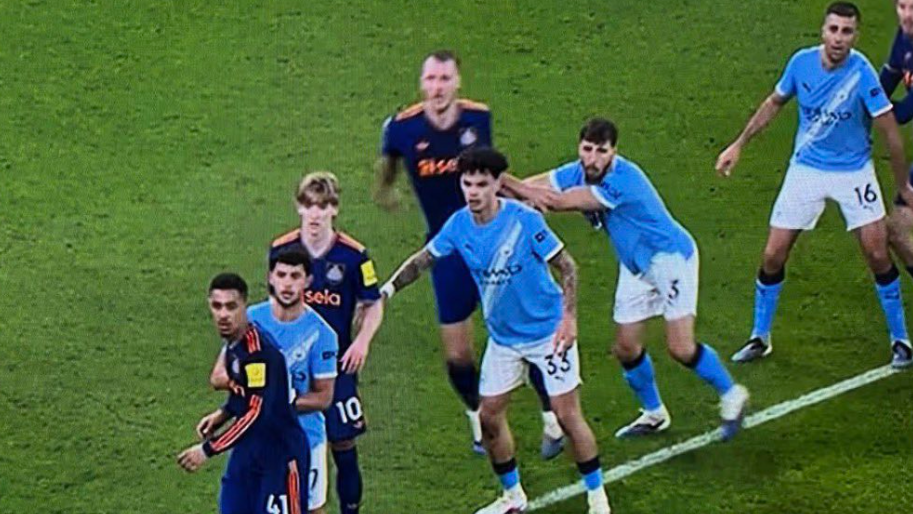
VAR review: VAR Bell would have been acutely aware of the intentional action by Dias against Burn before the goal was scored. With the Newcastle defender clearly offside when he scored, the VAR examination focused on the potential foul leading up to the goal and whether it met the criteria for a possible penalty kick.
The push was evident and deliberate; however, the ball had not been played by Tonali at the time of the push, thus preventing VAR from intervening as the ball was inactive.
Indeed, Law 12 states: Direct and indirect free kicks and penalty kicks can only be awarded for offences committed while the ball is in play.
Conclusion: Upon reviewing the footage, Newcastle players and their supporters may feel aggrieved in this instance, which is understandable. The fact remains that this was a calculated move by Dias and the City defense, who clearly understood the law and executed the push precisely.
According to the laws of the game, no offence was committed here, and only the referee can address physical contact prior to the ball being in play. VAR lacks the authority to intervene without the ball in play, unless an act of violent conduct occurs, which was not applicable in this situation.
Time: 51 minutes
Incident: Potential second yellow card for Man City’s Bernardo Silva
What transpired: Silva had already received a caution, but moments later, he seemed to jump into Burn without attempting to play the ball. Was he fortunate to avoid a second yellow card?
VAR decision: The VAR did not consider this a potential red card challenge, and under the current regulations, they cannot intervene in situations involving possible second yellow cards. Intervention is only permitted in cases of straight red card decisions.
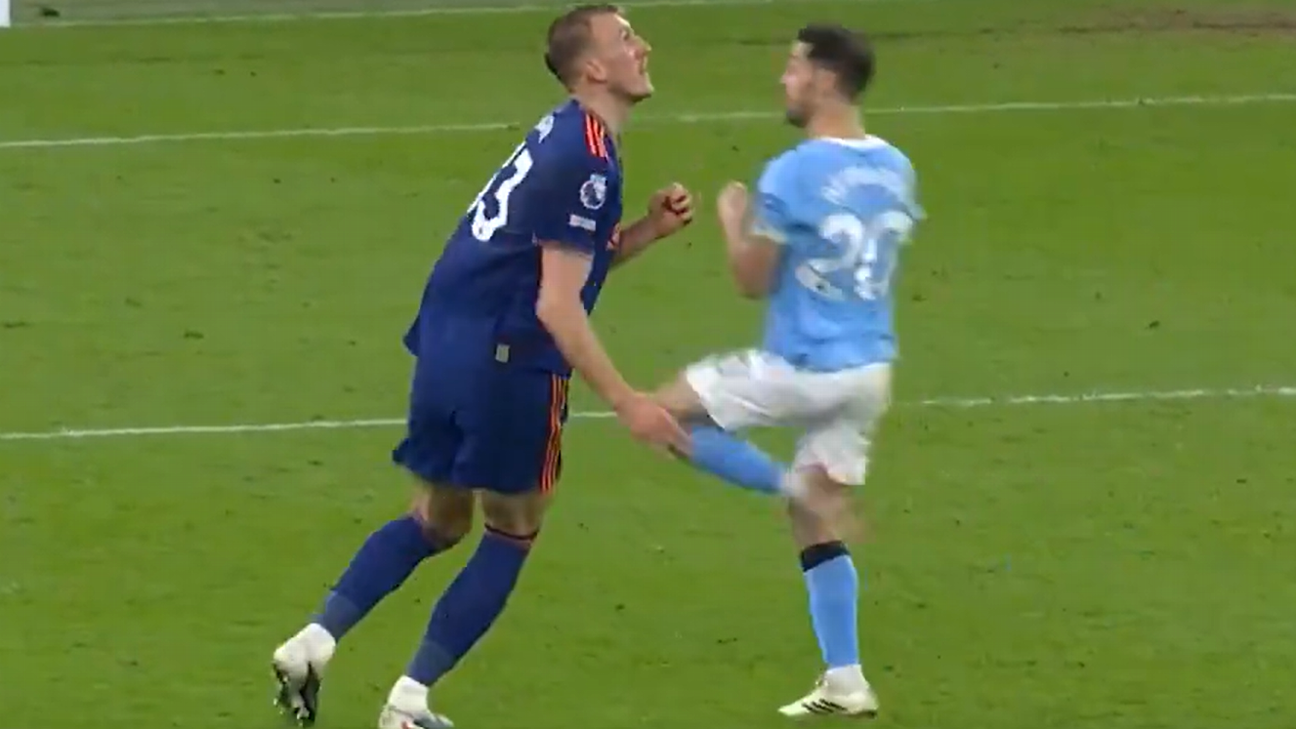
Conclusion: For a referee to issue a second yellow card in this scenario, they must perceive the challenge as exceeding their threshold. It should be immediately recognizable as a second yellow without hesitation, and the referee should know it in the moment.
Reviewing this clip in isolation, Silva is fortunate not to have received a second yellow for what was an unnecessary challenge, as he made no attempt to play the ball.
However, in the context of a physical match, it was not a standout incident and likely did not cause Bramall significant concern in real-time.
In critical moments of significant matches, referees rely on their instincts, and this appeared to be a reasonable approach to game management, as issuing a second yellow card was not the most apparent outcome.
