
The role at Tottenham proved to be too challenging for Frank, yet the issues facing Spurs extend far beyond that.
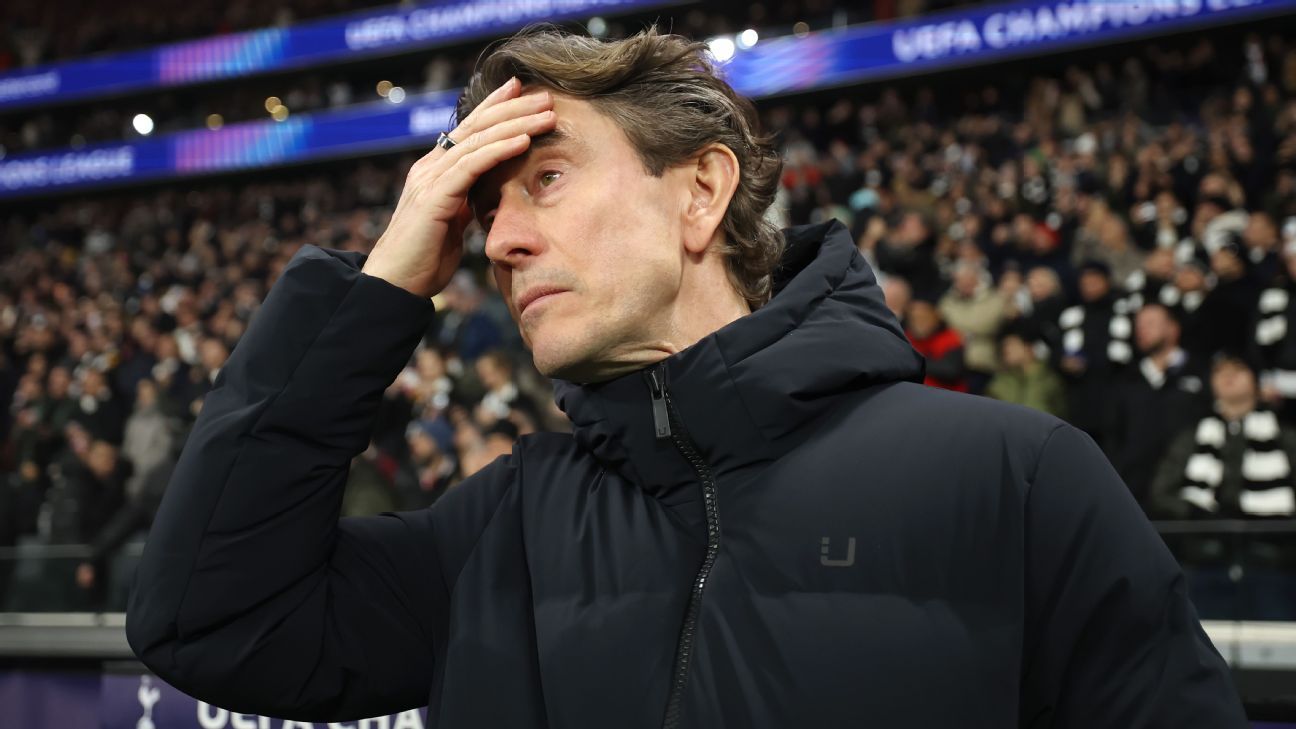
At the beginning of Tottenham Hotspur’s preseason tour in Hong Kong last summer, Thomas Frank engaged in his usual early-morning run, a habit from his tenure as Brentford manager. However, shortly after departing the Kerry Hotel to enjoy the sights of Victoria Harbour, Frank was swiftly recognized by local supporters, many of whom had gathered at the entrances and lobby areas of the Premier League club’s upscale accommodation throughout their stay.
Before being overwhelmed with requests for selfies and autographs, he returned to the hotel, where club officials highlighted this as an illustration of the heightened attention he faced at Spurs: the level of scrutiny and visibility was significantly greater than what he had previously experienced. It was a transition Frank struggled to navigate.
– Tottenham supporters’ trust: We are fighting relegation
– Why Daniel Levy left Tottenham after 25 years as chairman
– Ranked: The top 25 manager jobs in soccer, from best to worst
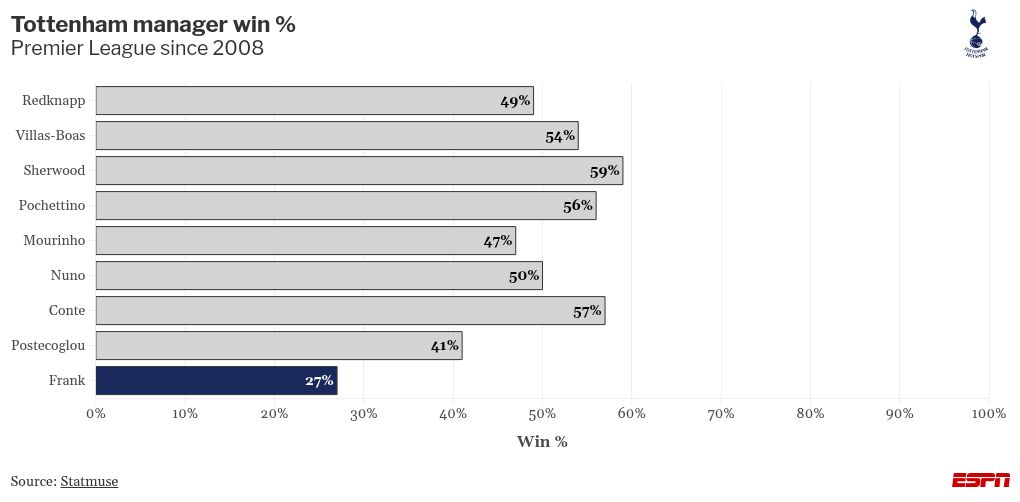
The 52-year-old was dismissed as Spurs head coach on Wednesday, having never quite seemed to fit the role from the beginning. He leaves after eight months, with a record of 13 wins from 38 matches and Spurs positioned 16th in the Premier League standings. (They have yet to secure a league victory in 2026.) Spurs have advanced to the UEFA Champions League round-of-16 following a solid league phase, but the club could not afford to rely on history repeating itself.
Last season, they overlooked their domestic campaign in pursuit of European success. This culminated in a UEFA Europa League victory — their first trophy in 17 years — and the exit of Ange Postecoglou as head coach. If they compartmentalized the current season in hopes of a (admittedly, highly improbable) Champions League victory, it could lead to relegation.
Spurs are only five points clear of the relegation zone, having won just two of their last 17 matches, necessitating a change. But what went wrong, and who is accountable?
Frank started off promisingly. Spurs had been defensively vulnerable under Postecoglou, but Frank managed to solidify Tottenham’s defense, achieving five clean sheets in his first eight games across all competitions, including a 2-0 victory at Manchester City.
There was tactical adaptability — a welcome change after Postecoglou’s rigid approach — right from the start. Spurs were leading 2-0 with five minutes remaining against a lackluster Paris Saint-Germain in August’s UEFA Super Cup, only for the European champions to equalize and win the penalty shootout 4-3.
This collapse echoed some of Spurs’ most troubling moments, marking a jarring introduction to the club for Frank. However, it was only when the Champions League campaign commenced in earnest that Spurs began to falter. That adaptability gradually devolved into a frantic search for solutions.
The relentless schedule of three matches in seven days over several weeks ultimately revealed weaknesses across the board: in Frank, the squad, and the club itself.
Sources have informed ESPN that friends residing near Frank in East Sheen, a southwest London suburb, noticed that the early-morning taxis taking him to Tottenham’s training ground daily were beginning to wear on a manager accustomed to having most midweeks free of matches at Brentford. Sources at Tottenham’s training facility also indicated that players were surprised by the emphasis on neutralizing opponents in training, rather than honing their own style of play.
Discipline had also become a concern. Sources close to the dressing room have indicated that there was unease regarding his management of a challenging incident in early November, where Djed Spence and Micky van de Ven disregarded Frank’s request to acknowledge the home supporters following a disappointing 1-0 loss to Chelsea.
His lack of authority in the dressing room was also believed to contribute to a repeated reluctance to publicly address Cristian Romero, despite the defender’s criticism of the club on social media regarding perceived insufficient investment and an injury crisis that left Spurs with approximately a dozen players unavailable for selection. Romero’s red card in Saturday’s 2-0 defeat to Manchester United — his second of the season — was another reckless moment that severely impacted his team. A four-game suspension means he will be sidelined until mid-March.
Sources have informed ESPN that both Frank and the club’s leadership recognized the squad’s deficiency in leadership. This was a motivating factor behind the signing of Conor Gallagher from Atlético Madrid in January and a failed attempt to acquire Andy Robertson from Liverpool.
Frank’s credibility was also undermined by some questionable public remarks. At his introduction, Frank stated: “One thing is 100% sure, we will lose football matches.” While this was factually accurate and not inherently controversial, some supporters unfavorably compared it to previous managers who spoke about winning trophies and appeared to have higher aspirations.
Frank clarified on Monday that when addressing supporters through the media, “there needs to be the nice combo between reality and selling hope.” It was a balance he never managed to achieve.
 play1:50Marcotti: Thomas Frank will be remembered over Arsenal cup nonsense
Gab Marcotti shares his thoughts on Thomas Frank’s ‘avoidable’ explanation over drinking from an Arsenal cup in Spurs’ game vs. Bournemouth.
His misstep in holding an Arsenal-branded coffee cup before the loss at AFC Bournemouth on Jan. 7 was again indicative of a head coach unfamiliar with the nuances of managing a high-profile club. Fans had never warmed to Frank, and incidents like this, trivial as they may seem, only deepened the divide between supporters and the team.
As early as Nov. 8, Frank’s substitutions were met with boos during the 2-2 draw with Manchester United. Yet, as those fans exited the stadium, Spurs were in third place in the standings.
However, the football was uninspiring. The team lacked confidence and conviction. As the decline continued unabated, dissent grew louder, culminating in Tuesday’s 2-1 home defeat to Newcastle United, which was disheartening for all involved.
Spurs fans chanted “you’re getting sacked in the morning” at Frank, who had to endure the name of former Tottenham manager Mauricio Pochettino echoing from the South Stand. The board was compelled to take action.
Major change at the top
It is evident that Frank’s exit is not a cure-all, as the club’s issues run much deeper than the head coach. Sources at the training ground have indicated to ESPN that the club currently feels directionless.
Daniel Levy, who departed the club in September after 24 years as chairman, had his shortcomings, but sources say he was always open to listening and engaging with staff. That level of engagement is missed by some employees who feel the restructured ownership has yet to present a clear vision for the club’s future.
Spurs’ ownership situation is complex. The current owners, Enic Sports & Developments Holdings Ltd, is a company owned by billionaire Joe Lewis, who holds an 86.58% stake in Tottenham. Lewis’s daughter Vivienne, his son Charles, and grandson-in-law Nick Beucher — co-CEO of Tavistock Group, the Lewis family office and private investment firm — have taken a more active role. However, the day-to-day operations have been delegated to chief executive Vinai Venkatesham and sporting director Johan Lange.
Sources familiar with the appointment process have informed ESPN that Lange played a key role in Frank succeeding Postecoglou. Fabio Paratici was reinstated as co-sporting director in October, only for the club to announce his departure in January as Lange continued to support Frank, whom he has known for around 20 years. Venkatesham is revamping the club’s infrastructure and aiming to elevate standards, but these changes will require time. Meanwhile, sources indicate that some within the club feel as though they are merely maintaining the status quo. One source suggested that Beucher has attended first-team training sessions and engaged with players.
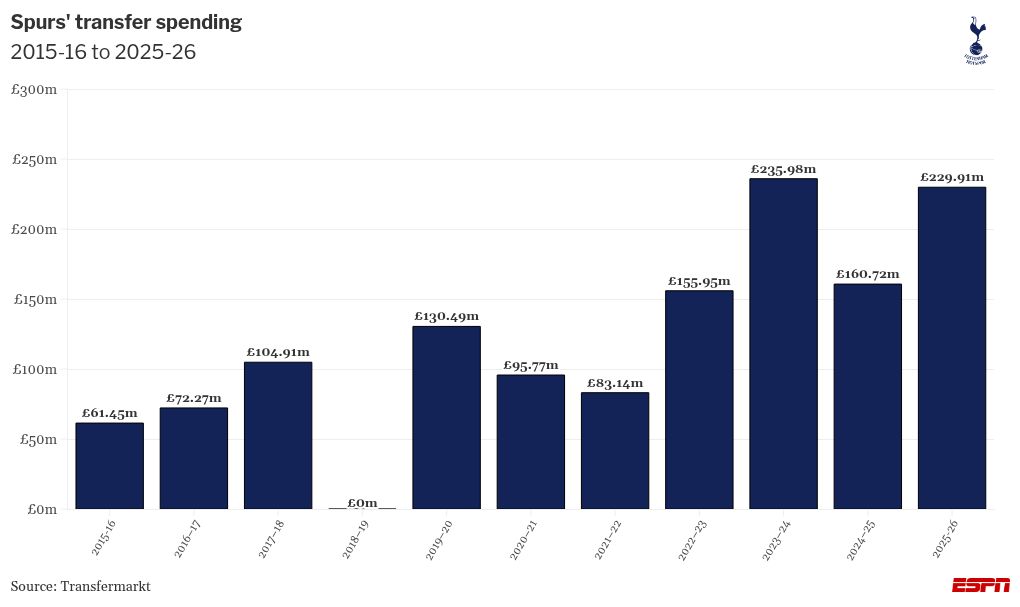
The discord surrounding the club’s direction also hindered their ability to support Frank in the transfer market. Unsuccessful attempts to sign Morgan Gibbs-White from Nottingham Forest and Eberechi Eze, who instead moved to Arsenal from Crystal Palace, complicated Frank’s efforts to create a more dynamic team. Recruitment has long been a challenge.
Injuries were also a significant issue, with striker Dominic Solanke sidelined for several months while midfielders James Maddison and Dejan Kulusevski face struggles to return this season. Sources close to Frank have indicated to ESPN that he believes the club’s medical department requires substantial improvement.
Sources within the hierarchy have conveyed to ESPN that they acknowledge there is no quick solution. This is a primary reason why they were hesitant for so long to part ways with Frank, who had privately recognized that this season would be exceptionally challenging as the club aimed to revamp the squad and alter a culture of underachievement that has hindered progress.
However, there is a limit to how long short-term results can be overlooked. If Spurs indeed lack a coherent plan for the future, one possibility looms larger than all others: relegation.
Faced with that alarming prospect, Frank’s departure became unavoidable.
