
The data analysts working to elevate the USMNT’s chances for the World Cup
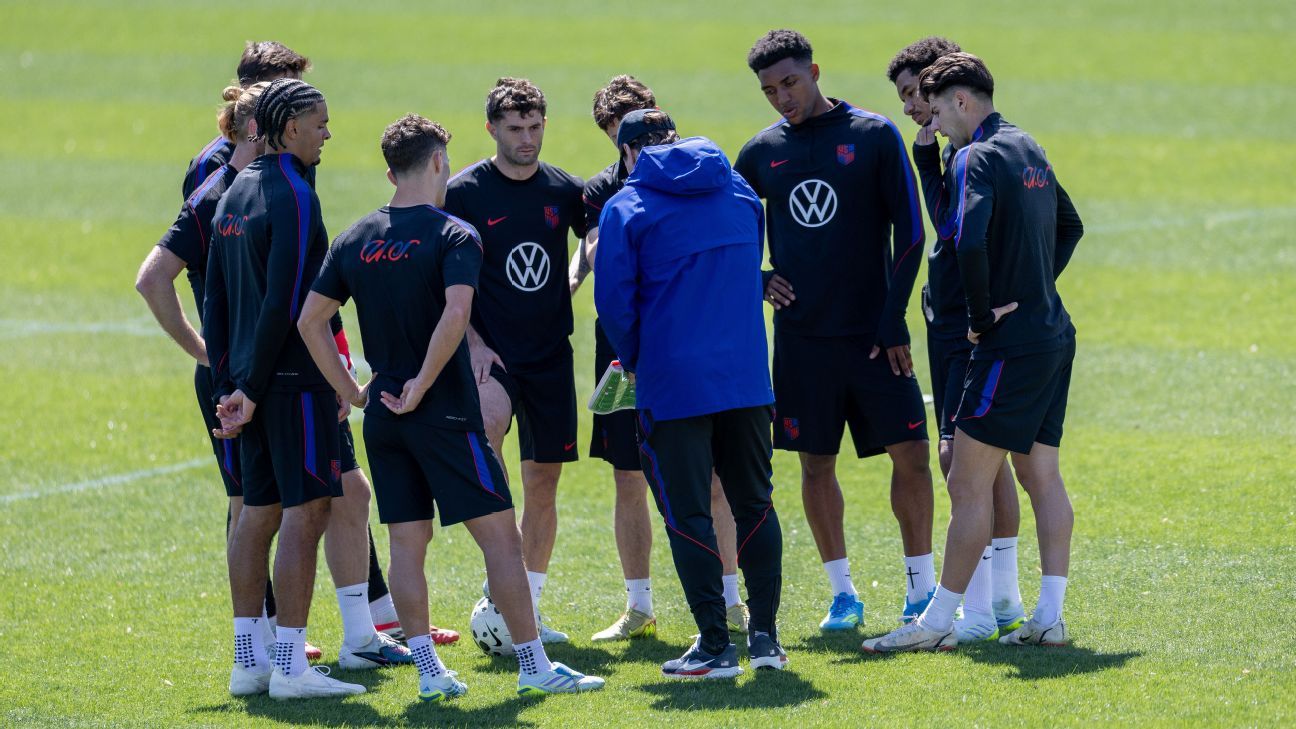
Observing from a distance, often from one of the highest vantage points in a stadium, is a group of vital assets for U.S. Soccer. “The best seats in the house that we can see everything,” remarked Natasha Patel, the federation’s director of sporting analytics. “[To] support the decision-making process.”
Providing in-game insights that can assist with tactical and technical modifications, analysts diligently operate away from the limelight as essential contributors, analyzing statistics and examining data that can be pivotal between a challenging draw and a thrilling late win for the U.S. men’s national team.
During this summer’s FIFA World Cup on home turf, the pressure will be even greater for the team that is, as Patel describes, “one of the most integrated departments with the technical staff.”
In addition to in-game assistance leading up to the tournament, U.S. Soccer’s analysts also play a role in developing training sessions, conducting video reviews, evaluating performances, preparing for opponents, identifying talent, and much more. While players are the ones who score goals and coaches make the final decisions, the federation’s analysts are crucial participants in the overall strategy of the USMNT.
“What many fans don’t realize is that there are numerous activities and individuals working behind the scenes,” stated San Diego FC sporting director Tyler Heaps, a former director of sporting analytics at U.S. Soccer. “Many different things happening in the background.”
As the “support engine” for manager Mauricio Pochettino and his team, can these data experts and performance specialists lead the U.S. to triumph on soccer’s grandest stage?
Drones and hype videos, all in a day’s work
Obtaining a drone license may not be the first thought that comes to mind when considering an analyst for U.S. Soccer, but it is just one item on a lengthy list of responsibilities. “Especially with the senior teams, we will have multiple drones capturing the sessions so we can observe things live,” Patel explained regarding training reviews. “To obtain multiple perspectives.”
With video transmitted directly to a laptop, analysts can then contact a member of the training staff if there is something they wish to emphasize. Nearby televisions display these moments for the players.
“It’s almost like an outdoor meeting space, where you can gradually share some information. There’s an opportunity to reinforce positive actions that have occurred or make adjustments,” Patel noted. “We can do that live in the moment.”
Of course, the role encompasses much more than merely operating small aircraft (which requires training and a two-to-three-hour examination). For Patel, who supervises all performance analysts at U.S. Soccer, another significant responsibility for her team is opposition preparation. Utilizing video and data, the director will “paint a picture” of the forthcoming opponent. These reels highlight strengths and weaknesses, individual players, and opportunities relevant to the U.S. game model.
Instead of having USMNT players watch extensive game footage, Patel and her team condense it into a shorter playlist. As she points out, they are narrating “a little bit of a story” to the players. These narratives require substantial information, which is where Sam Gregory, director of data analytics, comes into play.
“Our department essentially handles everything related to data on the sporting side,” he stated. “Anything concerning the team’s performance on the field, whether that involves tactical aspects, preparing for upcoming opponents, analyzing our performances, or anything related to physical performance.”
Working collaboratively, the clear objective is to inform players and coaches as much as necessary while avoiding overwhelming them with excessive material. On matchdays, there are reminders of game-day objectives and clips from training sessions, but there are also occasional hype videos for players to view before taking the field.
“A motivational video, or it doesn’t have to necessarily be motivational, but it’s about the emotion and the messages you want to convey,” Patel explained. “How are you trying to evoke that emotion and passion and truly connect them to the significance, not only of the game but of representing the crest?”
For club, for country
The situation differs somewhat when serving as an analyst for a national team compared to a club team.
“The player pool, the main difference is that in the federation, you’re limited. You’re limited by the number of players you can evaluate,” Heaps remarked regarding recruitment and talent identification. “[But] it can be beneficial because it allows you to concentrate on a subset, whereas in club recruitment, you can become overwhelmed by the multitude of leagues and players.”
“Sometimes the most challenging aspect of data and analytics is filtering it down.”
Gregory, a former analyst for Inter Miami CF, expressed a similar view on player recruitment.
“When I was in the club environment with Inter Miami, typically, the question would be: We’re looking for a right back with these qualities; can you search for all the right backs in the world and provide me with 20 players?” he explained. “Here, if we’re starting to narrow down our World Cup roster for the men, for instance, I’m not going to suggest a right back to Mauricio … who he’s never heard of.”
Instead, the inquiries are more focused. How can the current group of Americans perform in specific scenarios? What are they being asked to do at the club level? What can a select group in specific positions contribute to U.S. Soccer?
“Whereas at the club level, it’s kind of like the world’s your playground,” Gregory noted.
Delving into data also presents a distinct challenge. “When you’re in a club, the sample size becomes much easier to analyze,” Heaps stated. “[But] in an international context, data can often be skewed … due to the limited sample size, as you don’t play a large number of games.”
In 2025, the USMNT played 18 matches across all competitions. For Heaps’ San Diego team, that figure exceeds 44, which would be even higher if including preseason friendlies from the previous year. Consequently, collaborating with clubs is essential not only for accessing information but also for creating a framework for the USMNT players on those teams.
“One aspect we’re increasingly focusing on as a federation is club-country collaboration, in terms of every player having their own individual development plan,” Patel stated.
For Gregory, a practical illustration of this collaboration is data sharing.
 play1:57Klinsmann hopes the USMNT learn from Belgium and Portugal defeats
Jurgen Klinsmann reacts to the USMNT’s back-to-back defeats at the hands of Belgium and Portugal.
“Players will share their data from the weeks leading up to camp; the clubs will provide us with data so that we understand the training load the player has experienced in the weeks prior to camp,” the analyst explained, “and then we reciprocate by sharing the training load data that the players had in our environment back with the clubs.”
Players are also interested in this information. While no specific names were mentioned, Gregory noted that, during camps, sometimes a member of the roster will approach him with inquiries. “The worst thing we can do as data analysts is to try and force players to care about this, but we have many players who genuinely do care about this,” he remarked. “Players who are truly curious.”
‘The U.S. Way’ and the World Cup ahead
With all these details available, does this imply that analysts are the ones directing the USMNT?
“I’m never going to go to Mauricio and dictate how to play … he possesses far more insight and background in that than I do,” Gregory stated, adding that the manager has the final authority. “What we concentrate on is ensuring the coaches always have [the data].”
Instead, Gregory, Patel, and others are available for guidance when necessary, not only for the USMNT but for all of U.S. Soccer.
“When I consider our support for the men’s national team, the idea is that this isn’t fundamentally different from how we support the rest of our national teams,” Gregory explained. “At the senior level, we do provide a higher level of support than we will at our U20 and U17 levels, but we strive to maintain consistency as much as possible.”
This perspective entails viewing the senior national teams as part of a broader framework. When analyzing each year, analysts also consider significant trends and insights from youth matches and tournaments that can inform “the U.S. Way,” a comprehensive philosophy for the entire U.S. Soccer ecosystem.
“Obviously that pertains to the men’s national team, but again, I would view these inquiries as much larger federation-wide questions,” Gregory remarked. “What I hope we achieve from this is that we can utilize some of that insight to help shape how we play across the entire federation, not just with the men’s national team.”
We will soon witness some forces converging at the federation for the World Cup. Patel kept her cards close and stated that she “won’t reveal too much” about the complete size of the data/analytical staff that will be supporting the USMNT this summer, but she did indicate that they will have a team backing their core team.
“We aim to truly unify the federation. It’s an opportunity to do that when it’s based here,” she stated. “We have Y and Z head coaches who will be assisting with opposition preparation. We have our analysts across the federation who might be helping compile our video and data.”
Whether positioned high in the stands or analyzing statistics offstage, the countdown for the USMNT’s tournament opener on June 12 has begun.
“The goal is truly to be that support engine,” Gregory stated. “I believe if we’ve executed our responsibilities effectively, we’ll be the most prepared team entering this World Cup.”
